
Lunch in Mount Kisco

I went with my friend, Gustavo to lunch in Mount Kisco, NY the other day. He wanted to go to a particular place, but unfortunately it was not open that day. So instead, we went to Stonefire. Anyone who reads this blog will know of my interest in cemeteries. Stonefire is directly opposite the entrance to Oakwood Cemetery (See: A Cemetery in Mount Kisco). I’d noticed it as I was leaving Oakwood and thought that it might be nice place to try. Apparently, Gustavo thought the same think. We had a very pleasant lunch.

When we left Gustavo suggested that we pass by the place he’d originally chosen – the one that was closed. As we were driving by I noticed that the door was open, so we decided we’d check it out. Gustavo parked the car and off we went. It’s called The Ambleside Pub and its website describes it as follows:

The Ambleside Pub is an authentic British pub in the heart of Westchester, NY. We are proud to serve real cask ales, a selection of draft beers, cocktails, wine and imported British non-alcoholic drinks. Pop in and immerse yourself in a little British culture for the evening.

I’ve been to other pubs around the area and indeed they often look a little like English pubs, but they don’t serve English style beer (there’s nothing worse than a fake English pub that only serves Budweiser and Budweiser Lite). This one apparently has an arrangement with Old Glenham brewery in Beacon, NY that provides them with authentic Bitter and Mild beer (I haven’t had either for a long time), which they serve in English 20 oz glasses. You also order English style at the bar (both for drinks and food) and carry your order back to your table yourself.

We each had a pint of bitter and then went back home.

Apparently, the owners also have a British store, also in Mount Kisco. It’s called The Hamlet. I must check it out sometime.

Taken with an Apple iPhone SE II.

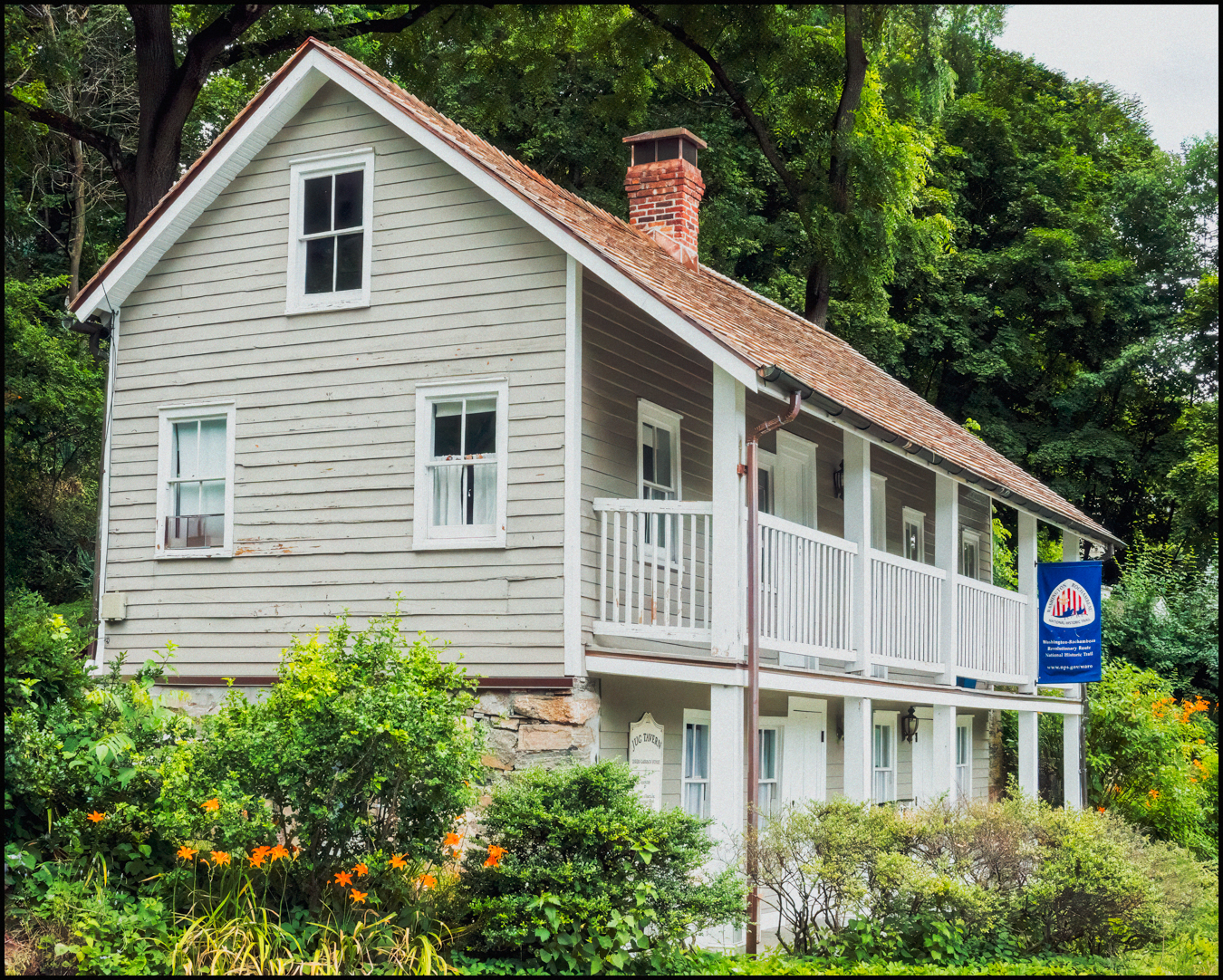
The Jug Tavern

The Jug Tavern is located in the Sparta section of Ossining, NY. It’s next to the Arcadian Shopping Center, and the CVS.

The Jug Tavern was built in about 1760 as the home of a tenant farmer, Peter Davis, who rented 200 acres of Philipsburg Manor, including the land that later became Sparta. The Manor was confiscated after the Revolutionary War by the Commissioners of Forfeitures because the Lord of the Manor, Frederick Philipse III, had been a loyalist during the war.

Davis bought his farm from the Commissioners in 1785 but defaulted on a mortgage on 70 acres of the land in 1794. The mortgaged land passed to James Drowley, who wanted to lay out a plan for a housing development on his new property, but he died before he could fulfill his dream. Drowley’s executors carried out his wishes by commissioning a survey and plan of Sparta, prepared in November 1795. The original of that survey is on display in The Jug Tavern.

For much more on the Jug Tavern see: The History of The Jug Tavern on The Jug Tavern of Sparta, Inc.

Taken with a Sony RX10 III

A red car

I came across this beautiful shiny, red car during one of my recent walks.

For those who are not car aficionados it’s a Citroën 2CV, Citroën being the manufacturer and 2CV meaning (in French) “”two horses” or “two horse power”, or to be precise “two taxable horsepower“. It was a low-cost car introduced at the 1948 Paris Salon de l’Automobile. It was built between 1948 and 1990 and has an air-cooled engine that is mounted in the front and drives the front wheels.

Conceived by Citroën Vice-President Pierre Boulanger to help motorise the large number of farmers still using horses and carts in 1930s France, the 2CV has a combination of innovative engineering and straightforward, utilitarian bodywork. The 2CV featured overall low cost of ownership, simplicity of maintenance, an easily serviced air-cooled engine (originally offering 6.7 kW (9 hp)), and minimal fuel consumption. In addition, it had been designed to cross a freshly ploughed field with a basket full of eggs on the passenger’s seat without breaking them, because of the great lack of paved roads in France at the time; with a long-travel suspension system, that connects front and rear wheels, giving a very soft ride.

Often called “an umbrella on wheels”, the fixed-profile convertible bodywork featured a full-width, canvas, roll-back sunroof, which accommodated oversized loads, and until 1955 even stretched to cover the car’s trunk, reaching almost down to the car’s rear bumper. Michelin introduced and first commercialised the revolutionary new radial tyre design with the introduction of the 2CV.

Between 1948 and 1990, more than 3.8 million 2CVs were produced, making it the world’s first front-wheel drive car to become a million seller after Citroën’s own earlier model, the more upscale Traction Avant, which had become the first front-wheel drive car to sell in similar six-figure numbers. The 2CV platform spawned many variants; the 2CV and its variants are collectively known as the A-Series. Notably these include the 2CV-based delivery vans known as fourgonnettes, the Ami, the Dyane, the Acadiane, and the Mehari. In total, Citroën manufactured over 9 million of the 2CVs and its derivative models. (Wikipedia)

It’s now become something of a cult car. There are still quite of them around, or at least there were when I was living in France in the 1990s.

Taken with a Sony RX10 III