A nearby tree

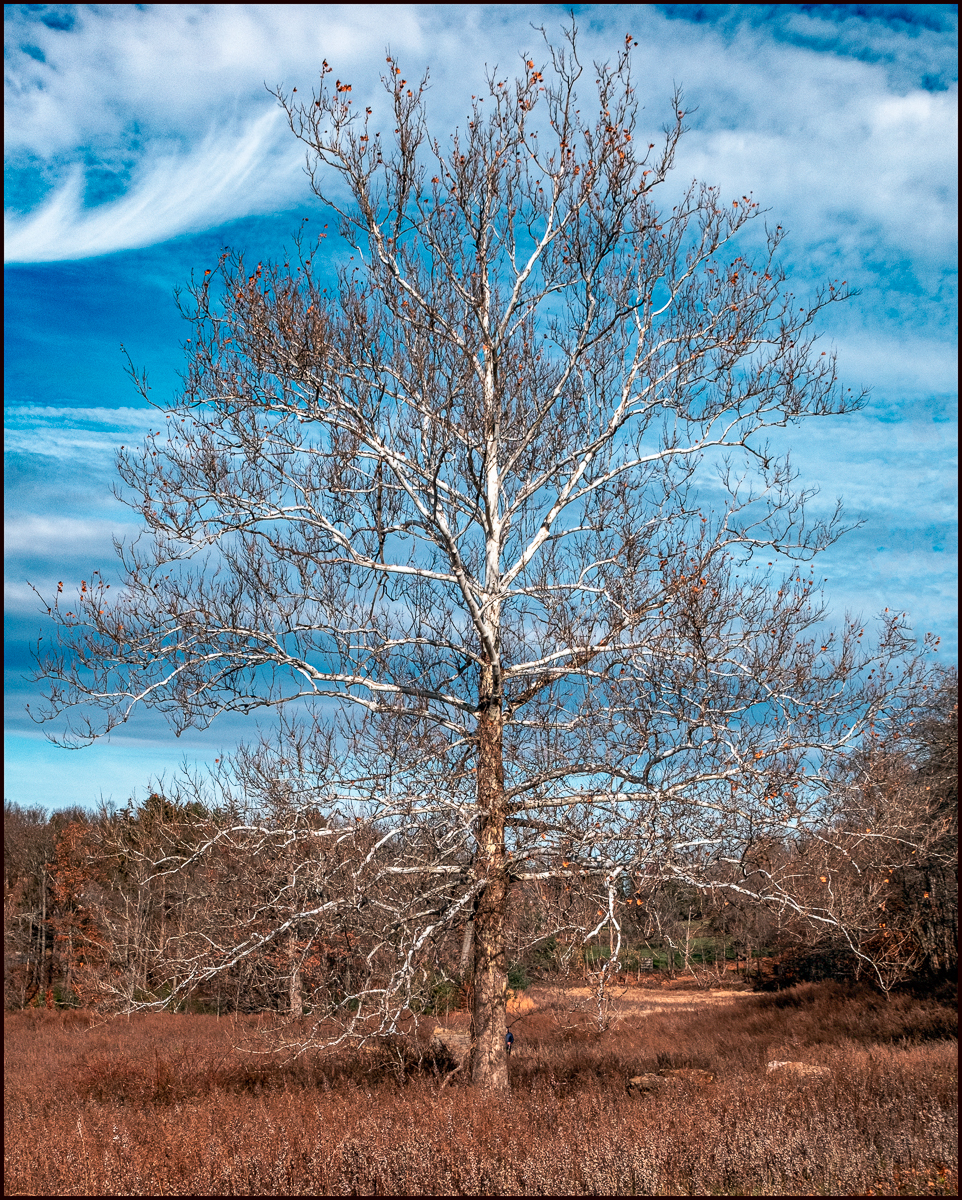
I’ve been taking pictures of this tree for quite some time. It’s near my house and when I first saw it I thought it was dead. It turned out that it wasn’t and now every time I walk by it I seemed compelled to take a picture.

This time the bright mid-day light really brought out the whites of the trunk and branches. I also liked the way the clouds looked.

Taken with a Fuji X-E3 and Fuji XC 16-50mm f3.5-5.6 OSS II

Something of an experiment – Feet in Manhattan (first version)

I’d been walking around in Manhattan for some time and was starting to feel tired. My feet in were hurting so I sat down on a bench and as I was sitting there I noticed all the people walking by and thought it might be interesting to take some pictures of their feet – essentially anything I could get without getting up from my seat. This is the result.

Taken with a Fuji X-E3 and Fuji XF 18mm f2 R.

Strange objects in Manhattan

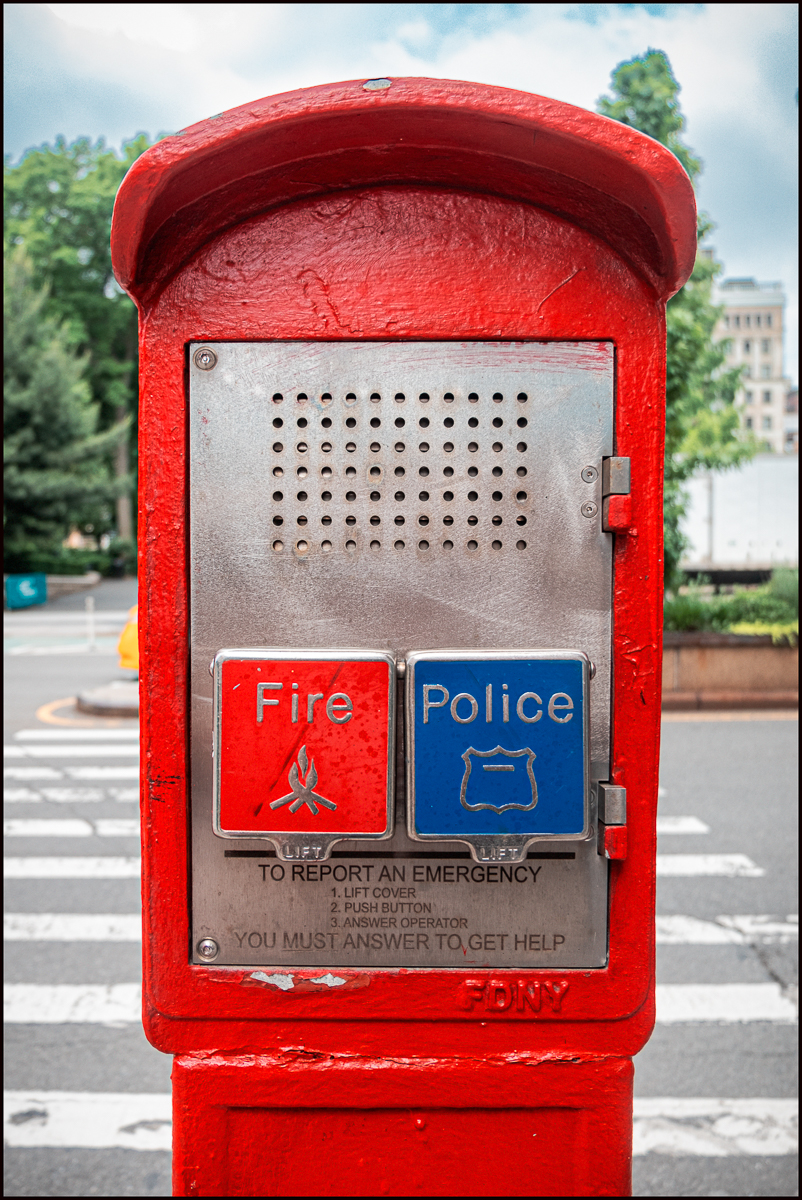
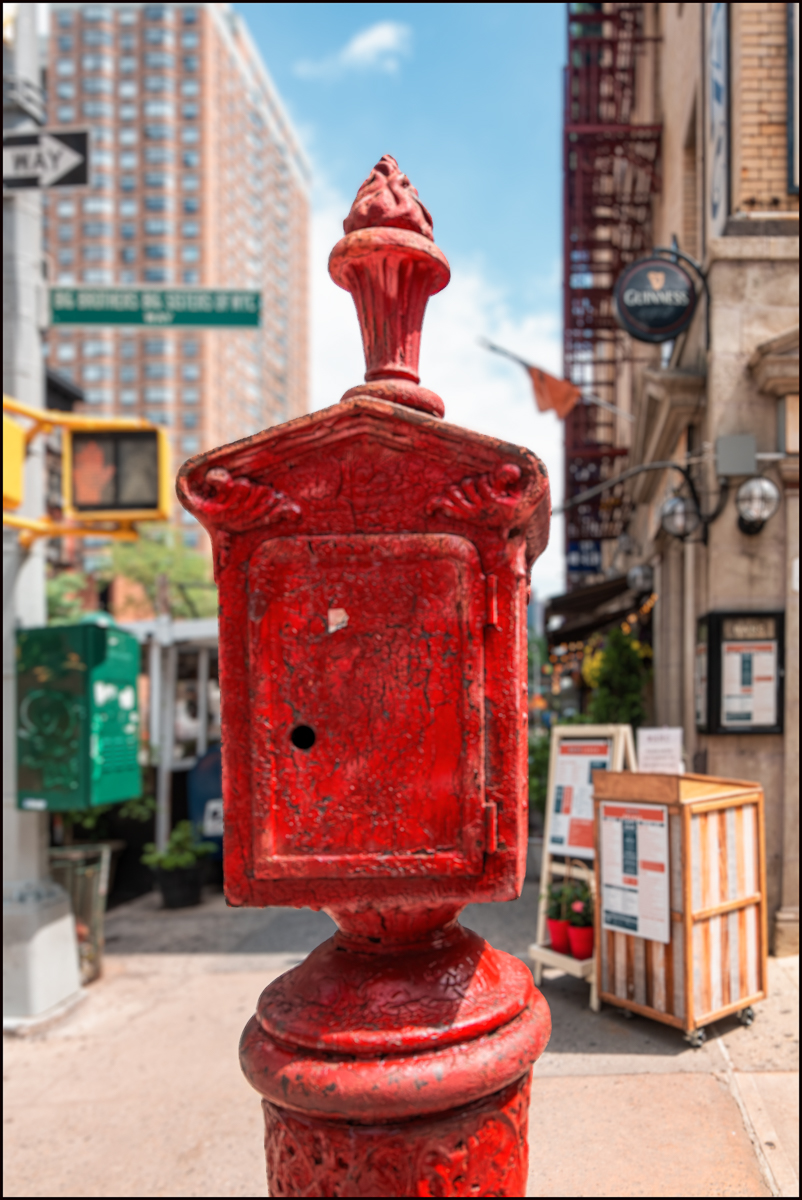
I came across these odd objects while walking around in Manhattan one day. I don’t really know what they are, but they look like some kind of emergency communications device. The second one below looks older than the one above.

After a bit more research I’ve discovered that they are indeed Police, Fire and Emergency call boxes. An article entitled: CITIES 101: RED FIRE ALARM BOXES IN NYC, DO THEY EVEN WORK? on Untapped New York provides more detail.

Throughout New York City, you may be familiar with these red fire alarm boxes that are supposed to summon the fire or police department in the event of an emergency. But how do they work? Many of them have been in the streets for over a century and for more than a decade, several initiatives have emerged to reassess their utility in today’s cell phone age.

The FDNY reports that only 2.6% of calls that they receive come from these boxes, which connect callers directly to their local fire dispatcher, as opposed to the 911 system which acts as a middle-man to the appropriate emergency services. However, 88% of calls from the City’s 15,000 fire boxes are false alarms.

The call boxes come in different shapes and sizes, representative of the decade during which they were installed. Most common are the stand alone rounded posts with a red torch on the top. Some are denoted by an orange bulb attached to a post above a box; these are some of the older ones, as the orange bulbs were used in the 1910s. According to The Works, by Kate Ascher, the oldest boxes date back to 1870:

“when the Fire Department installed fire alarm boxes on telegraph poles south of 14th Street. Though few boxes from that time have survived, a large number of those on the streets today still rely on the original technology: pulling a revolving coded-wheel mechanism sends a signal identifying the box number of the central office of the borough…and dispatchers there forward the alarm to the appropriate firehouse.”

The newer boxes are the ones with two buttons, specifying “Fire” or “Police,” and have a speaker system which the caller can use to speak with the emergency dispatcher. These were installed to lower the instances of false alarms, but pranksters still afflict the system even with these boxes. Posters featuring “Foxy the Firefighter” were pasted to the side of many fire posts in the 60’s and 70’s when false alarms were out of control (the FDNY reported 263,000 false alarms in 1977).

Since the mid-90s the City began to see the fire boxes as a nuisance and former Mayor Rudy Giuliani was the first to attempt to extinguish the problem. Mayor Bloomberg was a major proponent in favor of removing the City’s fire boxes as well (thousands of which are no longer working since Hurricane Sandy). But these removal attempts have received backlash from those who feel that they are crucial in the event of a power/telephone outage (like 9/11) or when servicing a deaf caller. “By removing this system, the city would be leaving our clients with no way to report emergencies from the street,” said Attorney Robert Stulberg, who represented the Civic Association of the Deaf of New York City in 2011 against the initiative. In 2011 it was estimated that the city would save $7 million a year in repair costs related to the fire boxes. To report an out of service call box in your neighborhood, call 311

Taken with a Fuji X-E3 and Fuji XF 35mm f1.4 R

More GAS: Nikon D800

For a while now I’ve been collecting old digital cameras. For how this started see: I don’t know what came over me

My latest acquisition is a Nikon D800, which I came across at a very reasonable price. I’d never tried a Nikon full frame camera and thought this might be a good place to start. It’s seen above with a battery grip and Nikon AF Nikkor 70-300mm f4-5.6 G.

The Nikon D800 is a 36.3-megapixel professional-grade full-frame digital single-lens reflex camera produced by Nikon Corporation. It was given a Gold Award by Digital Photography Review.

It was officially announced on February 7, 2012 and went on sale in late March 2012 for the suggested retail price of $2999.95 in the U.S., £2399 in the UK, and €2892 in the Eurozone. Shortly after the camera went on sale, Nikon’s UK subsidiary increased the price of the D800 in that market by £200 to £2599, saying that the original price was due to an “internal systems error”. However, Nikon honored the original price for all pre-orders placed before March 24, and added that no price changes would be made in other markets. (Wikipedia)

For a complete list of specifications see here:

I also came across an interesting piece on Ricks Reviews entitled: “Nikon D800, a 2022 review” in which he concludes:

The Nikon D800 still is a very impressive camera. Even today the resolution and dynamic range are high-end even compared to newly introduced cameras. That is very impressive for a camera that was introduced 5 years ago (Note: much the review is an updated version of a piece that was written in 2017 and updated in 2022. The author stands by his earlier comments). The Nikon D810 is a refined version of the original D800 and still is the go-to camera for professionals that need high resolution images. That say a lot since the D810 still uses (basically) the same sensor and AF system as the older D800. The camera is built to last and very durable. It is big and heavy, something you must be able to accept when you buy one. And to take full advantage of this camera you’ll also need sharp lenses, and most truly sharp lenses aren’t small or light either adding to the bulk and weight. Furthermore you need your shooting technique to be on the top of your game, use high shutter speeds to make sure you don’t have motion blur. And you have to fine tune the auto focus for all your lenses to make sure it is spot on. Only then you will see the magnificent image quality this camera is able to deliver.

I’d pretty much agree with everything he says.

Sample images:


Taken with a Fuji X-E3 and Fuji XF 35mm f1.4 R

The Kane House, Ossining

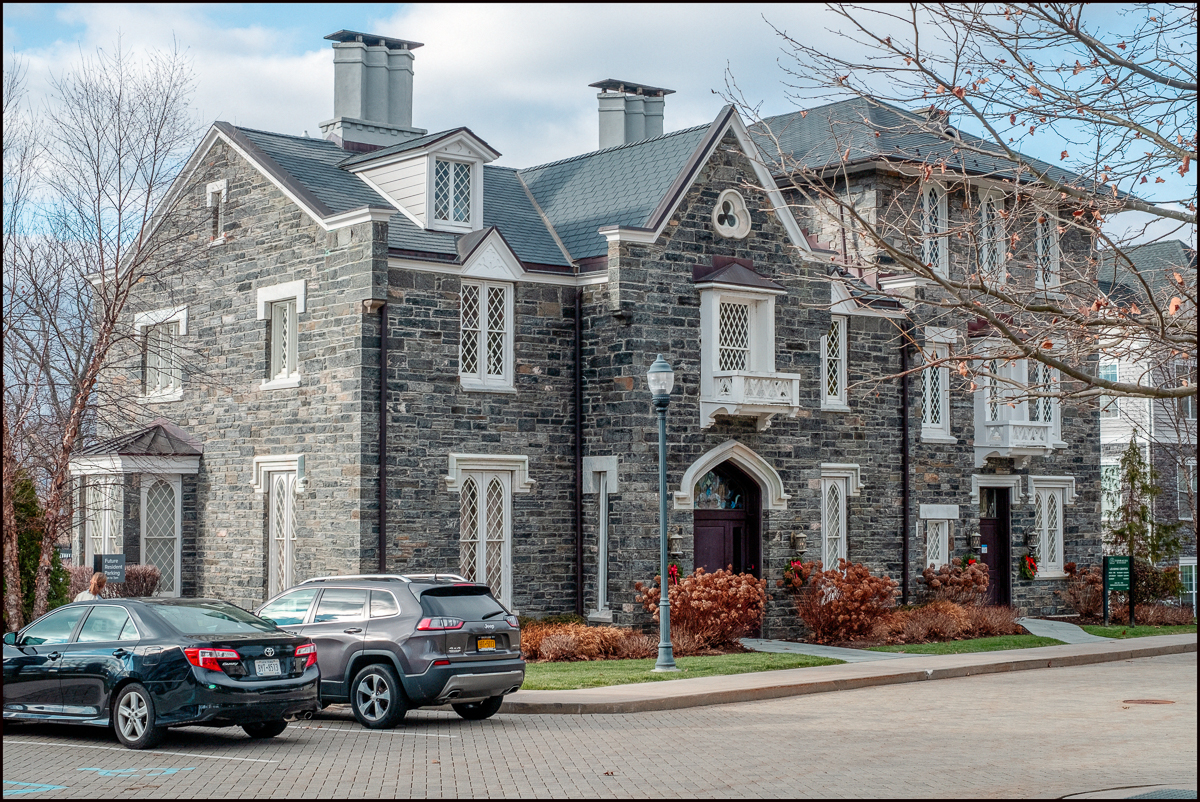
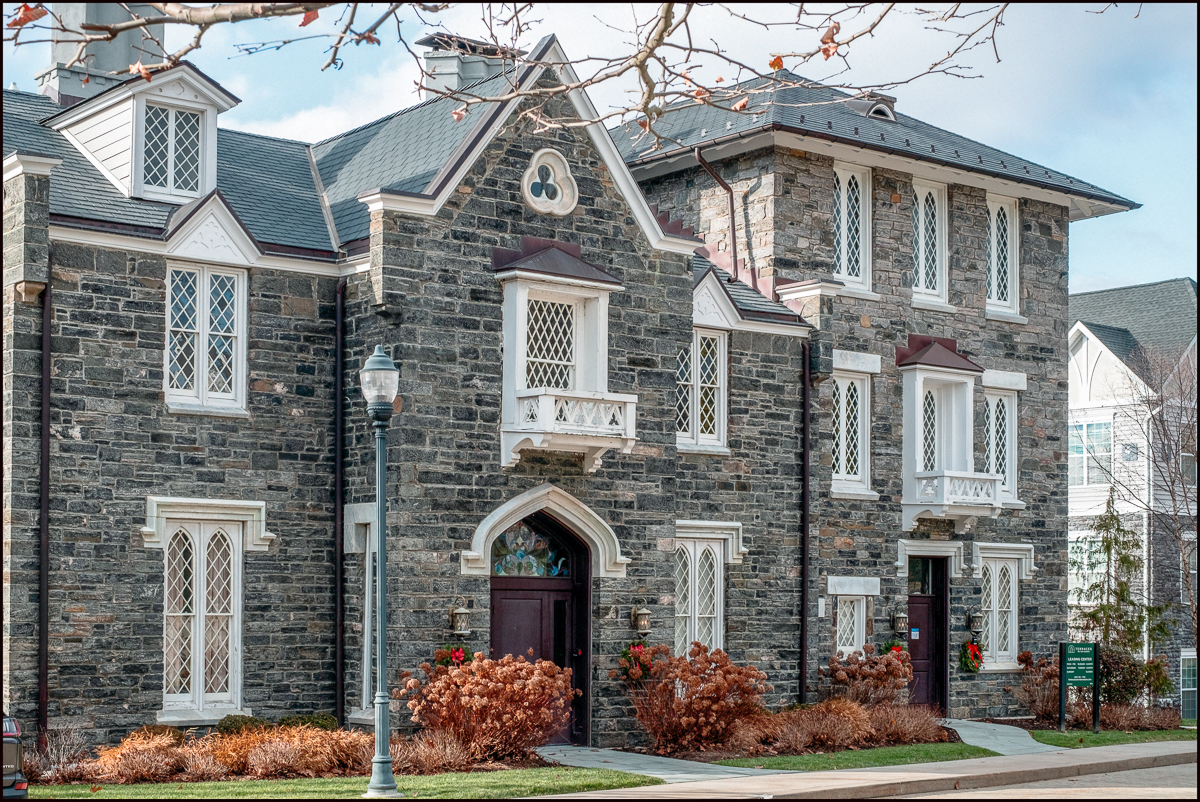
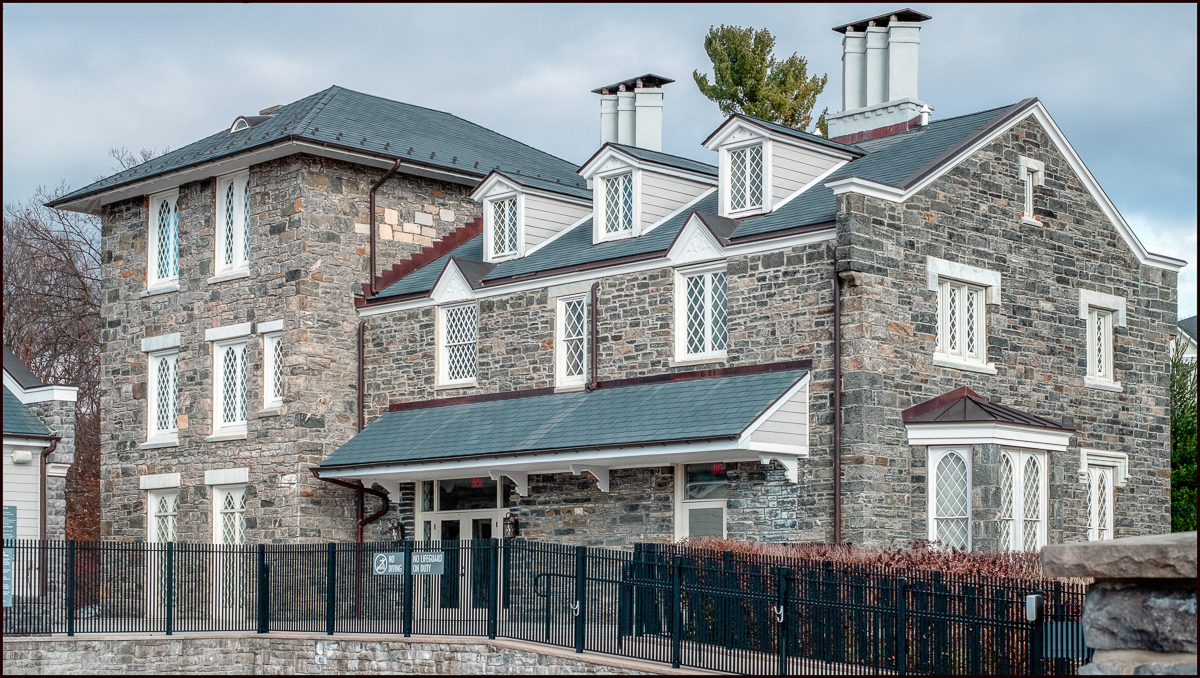
During a recent conversation the “Kane House” was mentioned. I didn’t know what it was at the time so I ‘googled’ and discovered that I’d come across it before. Probably about 20 years before I was walking up the Old Croton Aqueduct Trail and came across this building. I vaguely remember taking a few pictures of it, but I can no longer find them. Maybe they were so bad I deleted them.

In those days the house, which is located quite close to the Hudson River, was all by itself surrounded by trees, grass and bushes. That’s no longer the case. The piece below states that “the mansion is used as offices for the Mearl Corporation”. I’m not sure that that is the case either as the mansion is now completely surrounded by Terraces on the Hudson, which describes itself as follows:

Inspired by the clubhouse’s 19th century charm, Terraces on the Hudson marries the past and present through its historic property and modern amenities. The open-concept apartment homes are adorned with contemporary kitchens, walk-in closets, hard-surface flooring, and more. You’ll find upscale amenities including a state-of-the-art fitness center and swimming pool. Conveniently nestled alongside the Hudson River, residents also have unrestricted access to the surrounding landscape from our luxury apartments for rent in Ossining, NY.

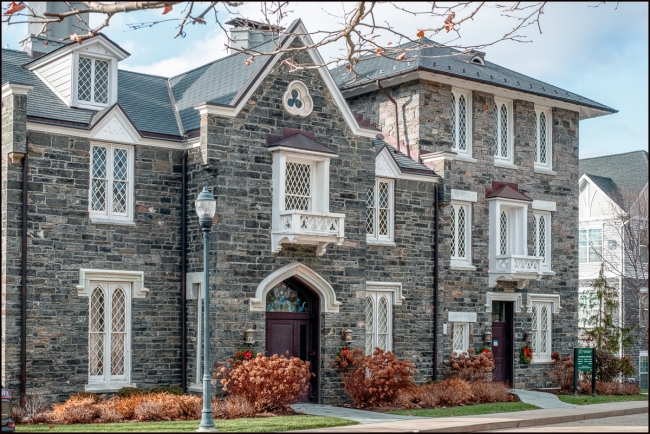
Of course I would rather it was as I first saw it. But it should be said that in those days it didn’t look in great shape. We should commend Terraces on the Hudson for not only not demolishing the mansion (as many others have done in similar circumstances), but also restoring it to its present condition (which looks pretty good to me).

“In the United States, 19th Century Gothic Revival residential architecture had its roots in the Hudson Valley. The renewal of interest in the style was spearheaded by the Newburgh-born landscape architect Andrew Jackson Downing (1815-1852) and his associates within the Picturesque movement, a school of design which sought to break from the dominance of Classical themes in the design ethos of the time and embrace the architecture of Medieval Europe. The architects of the Picturesque school believed that structures should be built in harmony with their natural surroundings and preferably sited in pastoral, rural settings. Houses built in this style utilized elements such as arched windows, vertical-oriented massing, and steeply pitched roofs to create a striking and imposing visual effect.
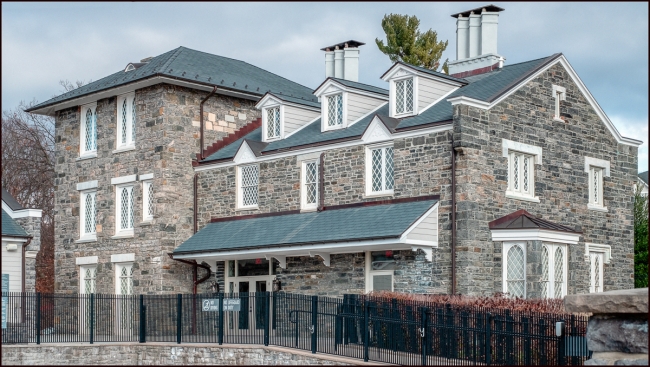
Kane House appears to have been built in two sections: the southern wing was constructed first, and contains many typical Gothic Revival elements, such as the steeply pitched center-gabled roof, the arched entryway over the front door, and diamond-shaped panes in most of the windows. The three-story northern wing, which was built at a later date than the southern portion, contains a hipped roof with a small eyebrow dormer, two elements atypical to Gothic Revival architecture. The house contains 20 rooms and has twelve fireplaces. A small wood-framed addition was also added to the northern wing at an unknown date. Kane House was constructed with hand-cut 24 inch thick granite.

Significance: Cultural and Architectural

Kane House is culturally significant for its association with the Kane family, a prominent family that lived in Ossining beginning in the mid 1800’s, and it is architecturally significant as an example of mid 19th century Gothic Revival architecture used in a residential housing context.

Narrative:

Kane House, also known by the name Woodlawn, is situated on a 17.7 acre estate off of North Highland Avenue. The original Kane estate was 46 acres in size and stretched from Highland Avenue to the Hudson River. The estate had originally been laid out as a subdivision when it was purchased in 1843. The Old Croton Aqueduct system, which was built several years prior to the construction of Kane House, extends north-south along the eastern boundary, while the Crawbuckie Nature Preserve is located to the southwest. Today, the mansion is used as offices for the Mearl Corporation.

The mansion was built around 1845 by John Innes Kane, a descendent of the prominent Astor family of New York. Kane’s son, John I. Kane II, lived in the home from the 1870’s until his death in the early 1900’s. Kane II and his wife Frances were heavily involved in the civic affairs of late 19th century Ossining, and Frances, a descendant of Benjamin Brandreth, played a pivotal role in the founding of the Ossining Historical Society in the early 1930’s.

Documented Sources of Information:

1. McAlester, Virginia and Lee “A Field Guide to American Houses”, (Alfred A. Knopf, New York, New York: 2003), 197-209.
2. Ossining Historical Society, “Images of America: Ossining Remembered”, (Charleston, SC: 1999), 66.
3. Sanchis, Frank E. “American Architecture: Westchester County, New York”, North River Press,(Croton-on-Hudson, NY: 1977), 76.” (Village of Ossining, New York Significant Sites and Structures Guide, April 2010)
Taken with a Fuji X-E3 and Fuji XF 35mm f1.4 R