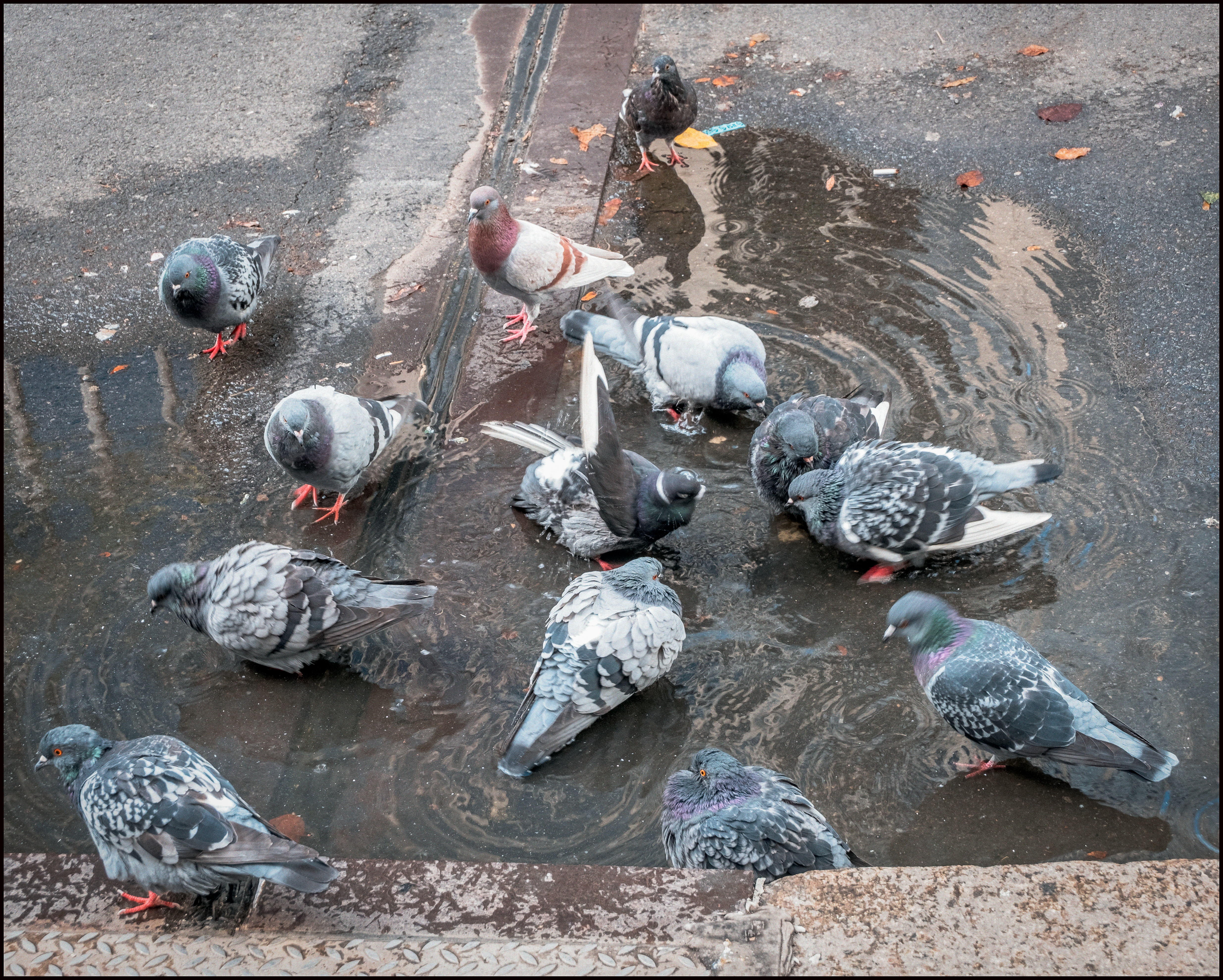
Manhattan, NY City. As I was about to cross 51st Street and Park Avenue I spotted these pigeons apparently having a great time splashing around in a puddle.
Taken with a Fuji X-E3 and Fuji XC 16-50mm f3.5-5.6 OSS II
Photographs and thoughts on photography and camera collecting

Manhattan, NY City. As I was about to cross 51st Street and Park Avenue I spotted these pigeons apparently having a great time splashing around in a puddle.
Taken with a Fuji X-E3 and Fuji XC 16-50mm f3.5-5.6 OSS II

I came across these blue flowers (weeds?) almost directly across the road from my house. Something about them reminded me of old autochrome images I had seen and loved in the Metropolitan Museum, NY.
According to the National Gallery of Art:
The Autochrome, a positive color transparency on glass, was invented by Auguste and Louis Lumière in 1907 and manufactured by them until 1933. Autochromes were made by coating a glass plate with a sticky varnish and dusting it with a layer of randomly distributed, translucent potato-starch grains. These grains, which were dyed red-orange, violet, and green, were then interspersed with fine black carbon dust, and again varnished. The plates were next coated with a light-sensitive gelatin silver-bromide or silver-iodide emulsion. When the plate was inserted into a camera, the light from the lens passed through the dyed starch grains, which acted as color filters before reaching the emulsion. After exposure, the plate was processed to make a unique, full-color, positive silver image.
Autochromes have a hazy, ethereal-looking quality, like a painting that isn’t actually a painting that is (at least in my experience) impossible to duplicate in digital photography, although the picture above comes close.
Incidentally isn’t “Lumière”, the name of the creators of the process a wonderful name in this context. If you don’t understand French the word means “light”.
Taken with a Sony A77II and Minolta 50mm f2.8 Macro lens

I’ve already done a couple of posts (see here and here) showing the exterior of this church. Unfortunately that’s usually all that I get as the churches are generally closed when I go by. On this occasion, however, I was sitting with my dog in the very pleasant garden when a man came out of the church. He came over to pet Harley and and we got talking. His name is Ken and he’s the church sexton so I asked him if it would be possible for me to go inside the church and take some pictures. Unfortunately I had the wrong camera/lens combination so I went home (which is luckily only about a five minute walk away) and got another camera and lens. Returning to the church I discovered that I’d left the SD card from this camera in the card reader so I didn’t have a memory card. I didn’t want to go home again so I told him I’d come back another day. And that’s what I did.
The church has a nice warm feel to it and the stained glass windows are nice, particularly the rose window by Tiffany.

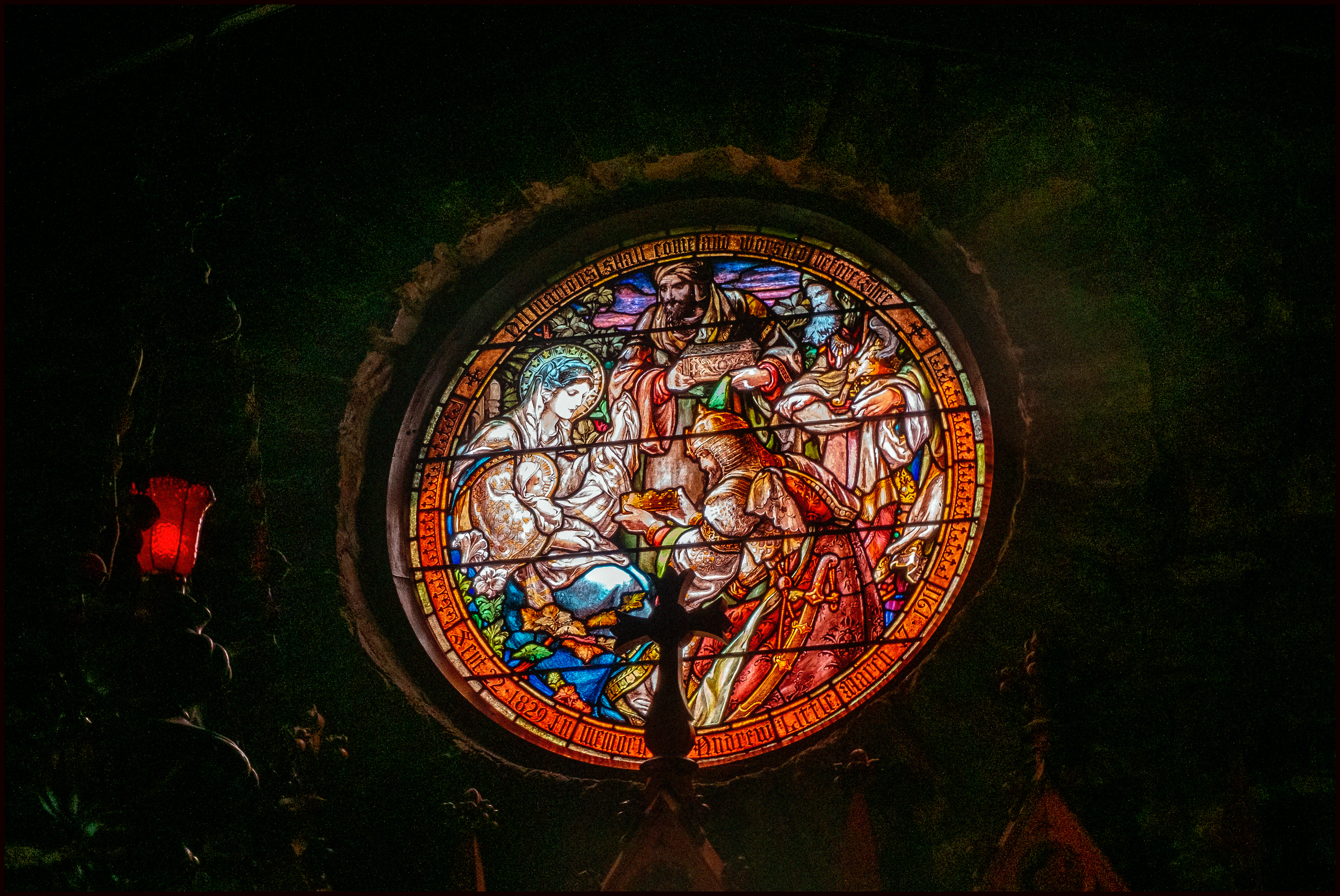
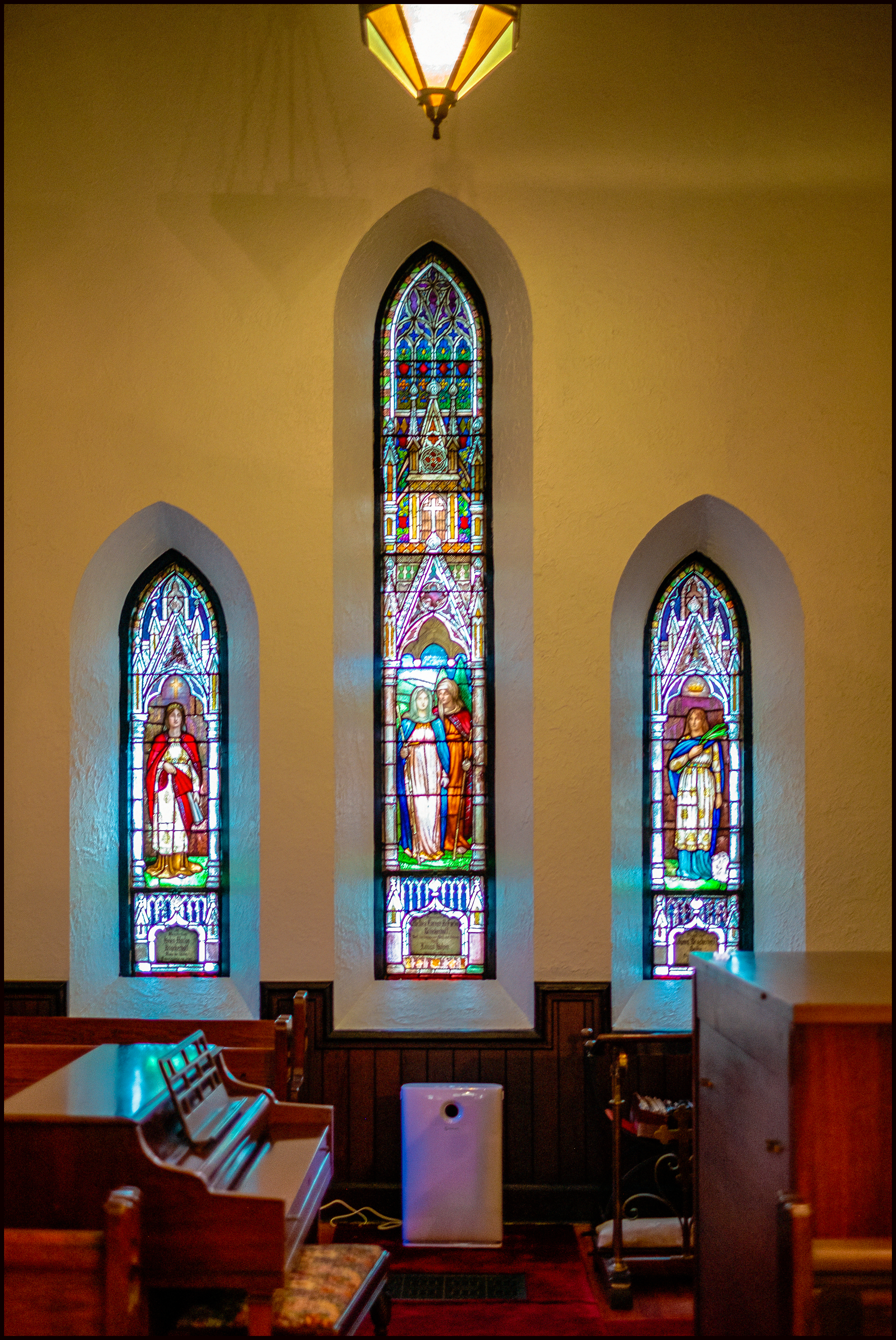



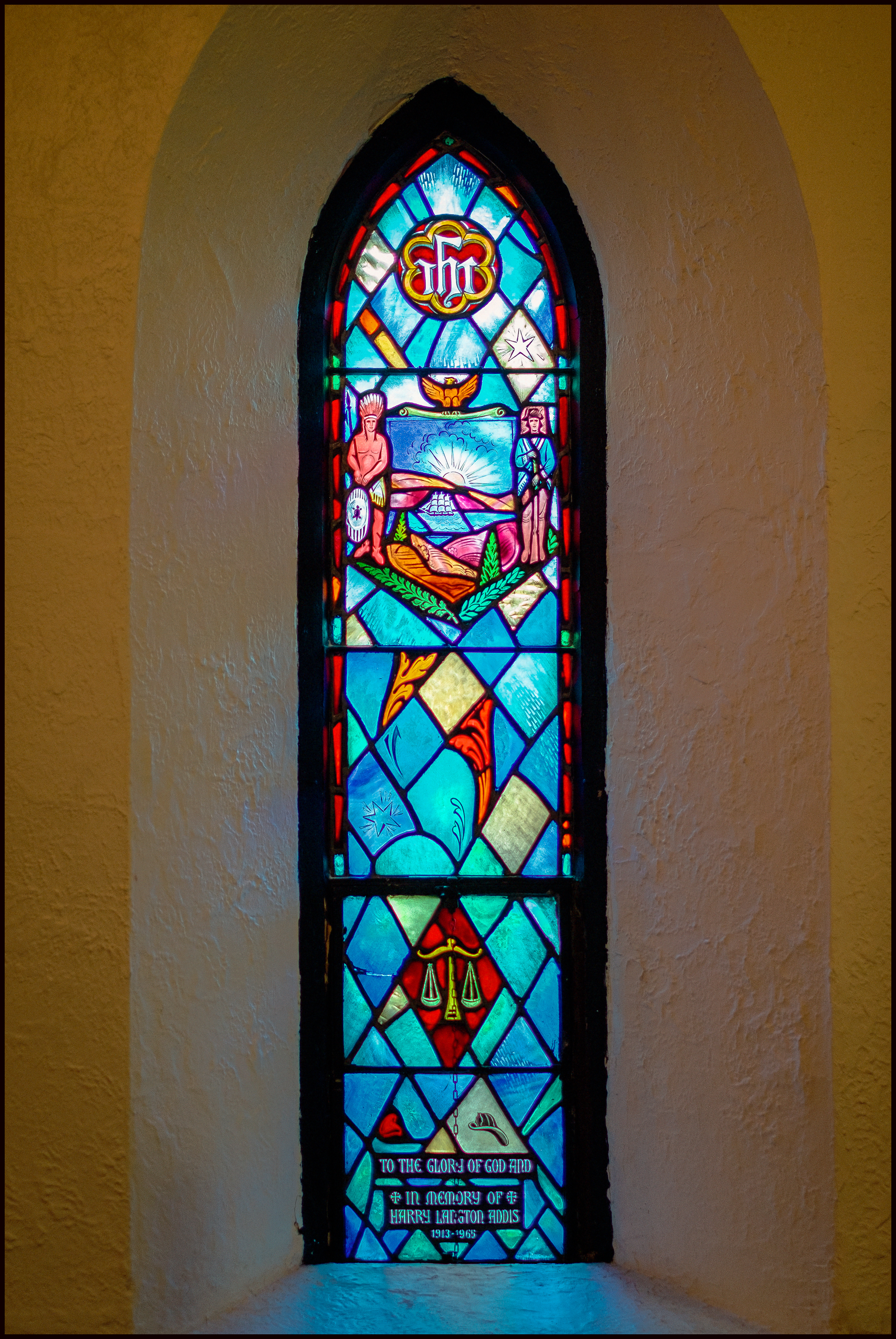

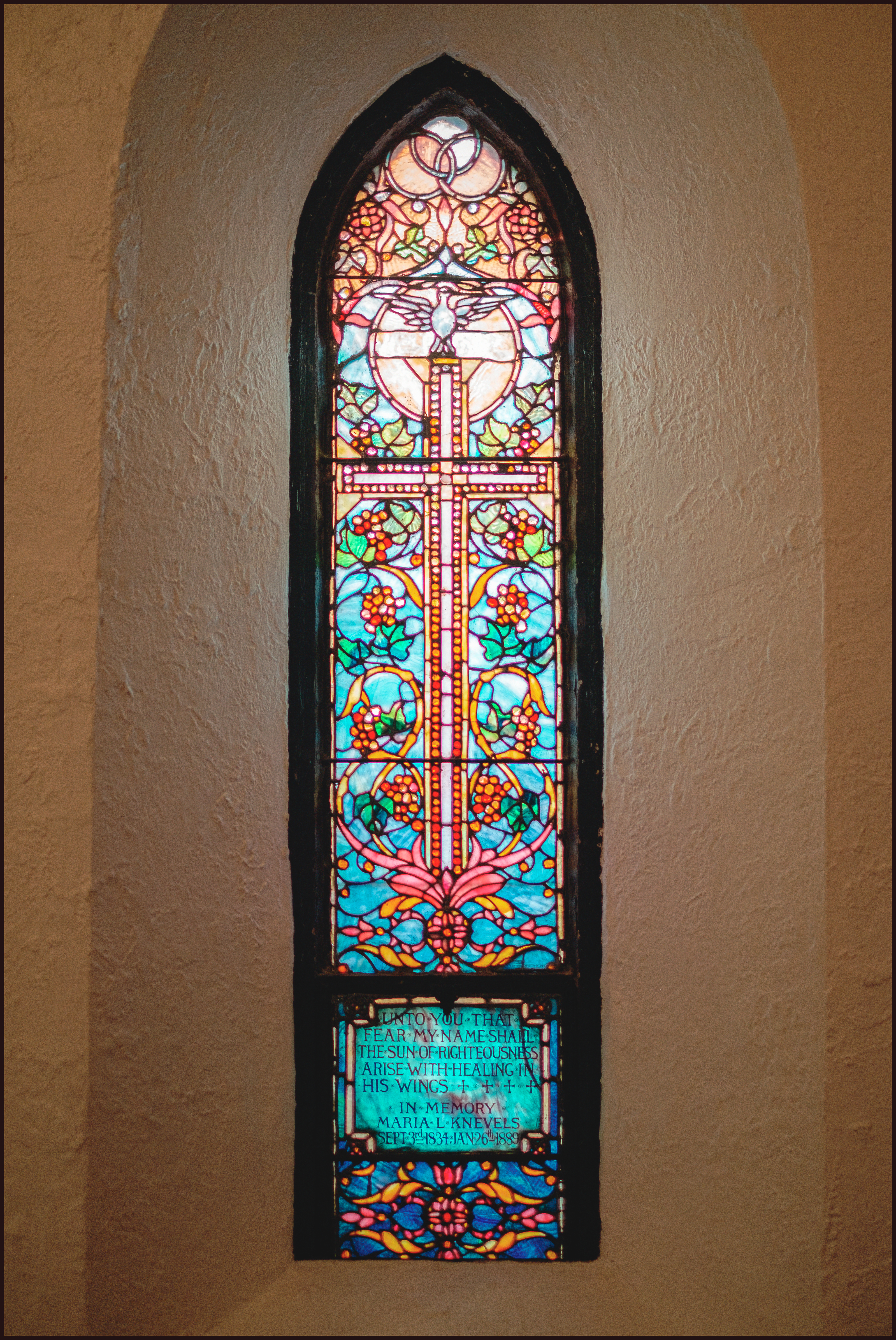


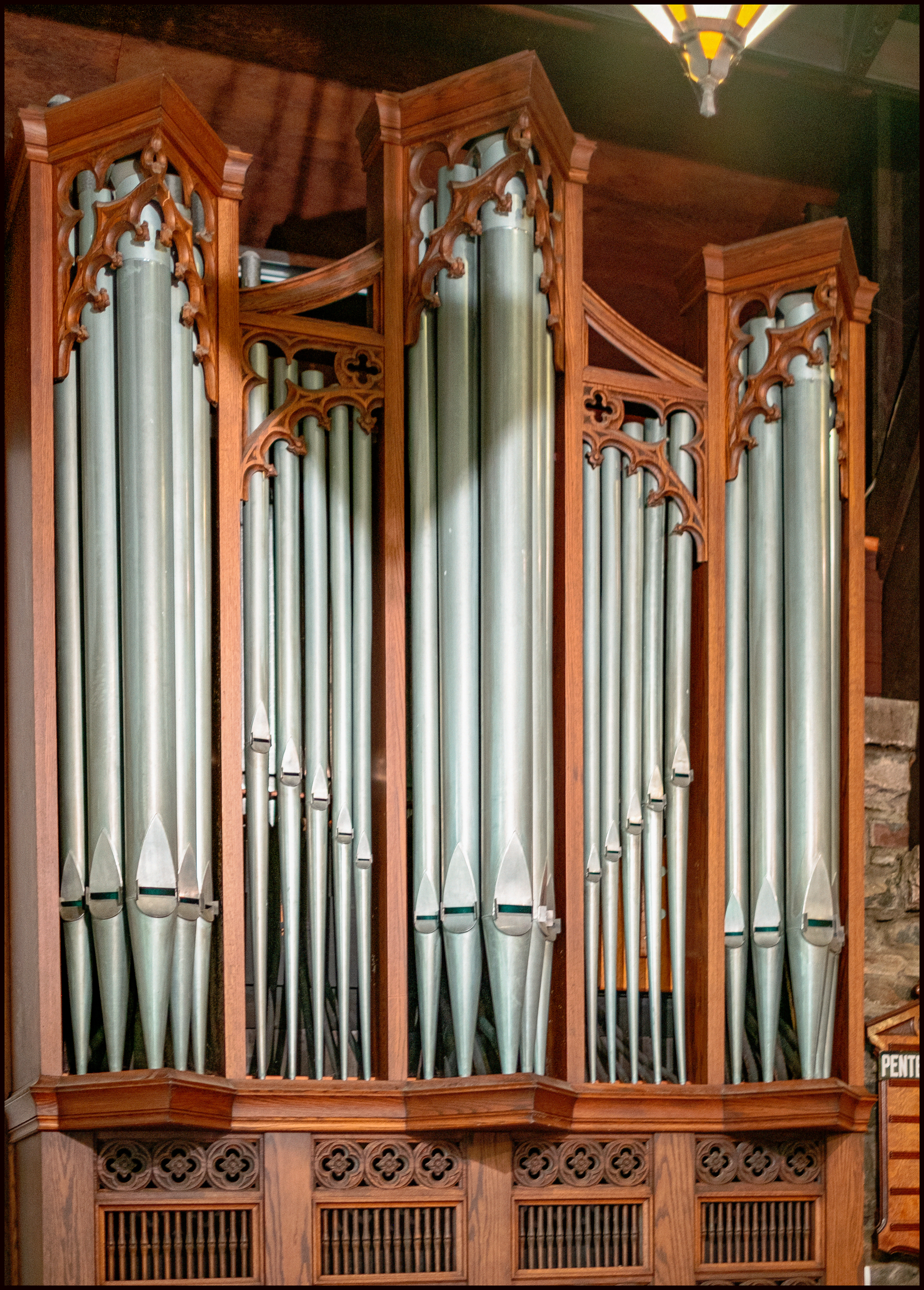
Taken with a Fuji X-E1, Fuji XC 16-50mm f3.5-5.6 OSS II and Fuji XF 35mm f1.4 R
A while back I bumped into this photographer on Youtube. His name is Alex Kilbee and his channel is rather different. Most photography related channels focus on gear. Camera reviews, what’s the best camera, best lens etc. He describes his channel as follows:
A channel dedicated to helping you discover more about the art and history of photography, so you can become a better photographer.
I am Alex, and I’ve been fortunate to be a professional photographer now for around 30 years.
Having a wider appreciation of the art of photography is the key to creating photographs that stand out from the crowd and speak with your own unique voice. Think of this channel as a free course in learning how to speak visually through your photography.
This recent video (above) is a good example. In it he considers why it is that Youtube tends to largely show the gear related content. He provides information on other photographers who provide other photographic content (some of which I already knew, a number I didn’t). Then, based on his knowledge of the Youtube algorithm he explains how you can get Youtube to show you more non-gear related content.
Great stuff! Take a look at his other videos.

In an earlier post I noted that I had started collect older digital cameras. Over time this has led to the acquisition of Canon EOS 5D; a Nikon D80; a couple of Micro 4/3 cameras – Lumix GF-1 and Olympus OM-D E-M10. I used to own a Fujifilm HS-10, which I didn’t like and eventually gave away. But I’d never used a Fujifilm X series camera. After waiting a while I found an X-E1 with a 35mm f1.4 lens for a very good price (the camera/lens combination cost less than the cost of the lens alone so the body was essentially free).
The Fujifilm X-E1 came out in 2013 and features:
A contemporary DP Review article concludes:
“Conclusion – Pros
Conclusion – Cons (my reaction in parentheses)
Overall Conclusion
There’s a lot to be said for form as well as function and there’s no question the Fujifilm X-series cameras elicit a certain response from those of us who enjoy both photography and well-built gadgets. What’s great about the X-series cameras and lenses is they don’t just look like old photographic tools, they integrate digital and analog controls very successfully. Also, the old-style analog dials are really excellent ways of helping conceptualize things like shutter speed and aperture, the two main elements of photography one has to understand to use cameras effectively.
Those who already understand the concepts generally have no trouble understanding numbers on an LCD, but those who are learning can benefit from seeing the numbers laid out in a linear fashion; and the truth is I still find it helpful to turn a dial to adjust aperture, as I can do with the X-E1. For beginners, having that dial wrapped around the lens completely differentiates it from the body-bound shutter speed dial.
When using one of the XF prime lenses, the main photographic interface elements are right up front and visible, in the form of physical dials. Photography students would do well to secure a prime lens for this reason (as well as others).
Kit lens users will have to pay attention to the numbers on the LCD.
But that’s not all Fujifilm did right with the X-series cameras. Their simple button arrangements also make accessing common functions convenient. Important functions like Drive mode, Exposure, and Autofocus are dedicated to three buttons left of the LCD – a good position to adjust each setting. At first having a button for Drive mode seemed unnatural compared to a dial, but Fujifilm’s inclusion of fast access to bracketing modes made those even more useful. The Quick Menu allows access to almost all the other important adjustments the average still photographer will want to make, including things like ISO, resolution, and aspect ratio. Only one analog control needs fixing: the somewhat loose Exposure Compensation dial, which can be rotated accidentally, both in the hand and when being carried around or put in and taken out of a camera bag.
Of course, the elephant in the room is video. Although the X-E1’s design philosophy is based around giving you all the direct manual control you could ever need, this does not apply to video, which overall seems as much of an afterthought as it is in the X-Pro 1 and X100. For now, the X-series is simply not competitive with its peers in terms of video functionality.
As impressive as the Hybrid Viewfinder is on the other cameras in the X-series, the X-E1’s electronic viewfinder is excellent. Compared to the X-Pro 1’s finder in electronic mode, the X-E1 offers a better and higher-resolution image, but of course it can’t pull of the X-Pro 1’s impressive trick of switching to an optical view for those times when you want a literal ‘window’ on the world in front of your lens. The X-E1’s EVF cannot replace the X-Pro 1’s OVF but if you don’t really need or want an optical finder, the X-E1 is clearly a better choice than the X-Pro 1, thanks to its superior EVF and lower overall cost.
Optics
Arguably, it was very important that the X-E1, being the first ‘prosumer’ offering in the X-series, could be coupled with a zoom lens, and fortunately the new 18-55mm F2.8-4 R lens performs very well. Although pricey compared to typical ‘kit’ options, the higher cost is justified by very good optical performance, and solid image stabilization, with an unusually fast maximum aperture.
In addition to the 18-55, the X-E1 owner can also mount any of Fujifilm’s high quality XF prime lenses, the 18mm, 35mm, and 60mm, and now the new 14mm as well. After using all of them, I settled on the 35mm for most of my shots; its 53mm equivalence was just about right for most of my favorite subjects.
The built-in flash, while handy, produces the typical harsh frontal illumination we like to avoid. However, we liked the (undocumented) ability to bend back the flash to bounce light off the ceiling for a slightly more natural look, especially when shooting interior portraits.
Image Quality
Image quality is where the X-E1 shines, turning out JPEG images with extremely low noise, even at its highest ISO setting of 25,600. Contrast can be a little low in default JPEGs but this can be tweaked, although switching to Velvia film mode pumps contrast and color a little too much for most situations.
Shooting in Raw mode gives you a lot of control over brightness and color adjustments post-capture (as well as noise and sharpness) but X-E1 buyers should be aware that Silkypix, which is bundled with the X-E1, is one of the least enjoyable raw-conversion platforms out there, despite being very capable. Fortunately, after shaky beginnings, third-party raw support is finally pretty robust, with both Capture One and Adobe offering good support, closing the gap between the X-E1 and its conventional bayer-pattern competition when it comes to shooting and processing raw files.
If you’re a user of Adobe Photoshop Lightroom 4, or Photoshop CS6 and you haven’t already downloaded the release candidate of Adobe Camera Raw 7.4, we suggest you do so immediately.
It’s also worth noting that as we’ve come to expect from Fujifilm’s X-series, the X-E1’s built-in raw converter is excellent, offering all of the essential tonal and color adjustments that make shooting raw so useful, and delivering JPEGs that match in-camera JPEGs in terms of quality. The recent emergence of robust third-party raw support makes the X-E1 even more attractive, since it effectively makes it less of a risk. If you buy an X-E1, you don’t need worry that its raw files won’t fit into your usual workflow, which fundamentally alters the camera’s value proposition, and indeed that of the X-system as a whole. Both the significantly improved third party raw support and the development of lenses like the new 18-55mm zoom signal the maturation of the X-system for enthusiasts, and we can’t wait to see what comes next.
The Final Word
Overall, we really enjoyed shooting with the Fujifilm X-E1, and I’m very pleased with the images I got out of it. The camera crashed on occasion (it wouldn’t be a new X-series camera if it didn’t have some bugs…), leaving buttons unresponsive, and focus and exposure sometimes delivered odd results, but powering off usually cleared the error.
Ultimately, the Fujifilm X-E1 is a great little camera with a unique, retro design aesthetic, which works with a slowly growing selection of impressive lenses, and brings home images from both bright and dark places that rival some pretty heavy hitters. From the simple slab-sided design to Fujifilm’s enthusiast-friendly control logic, the X-E1 is tuned for the enthusiast photographer who likes straightforward controls and a no-nonsense emphasis on still photography. As such, despite it’s sub-par movie mode and less than stellar autofocus performance, it earns our coveted gold award, by a whisker.”
Below some pictures taken with this camera/lens combination during my first outing with it walking around my neighborhood.



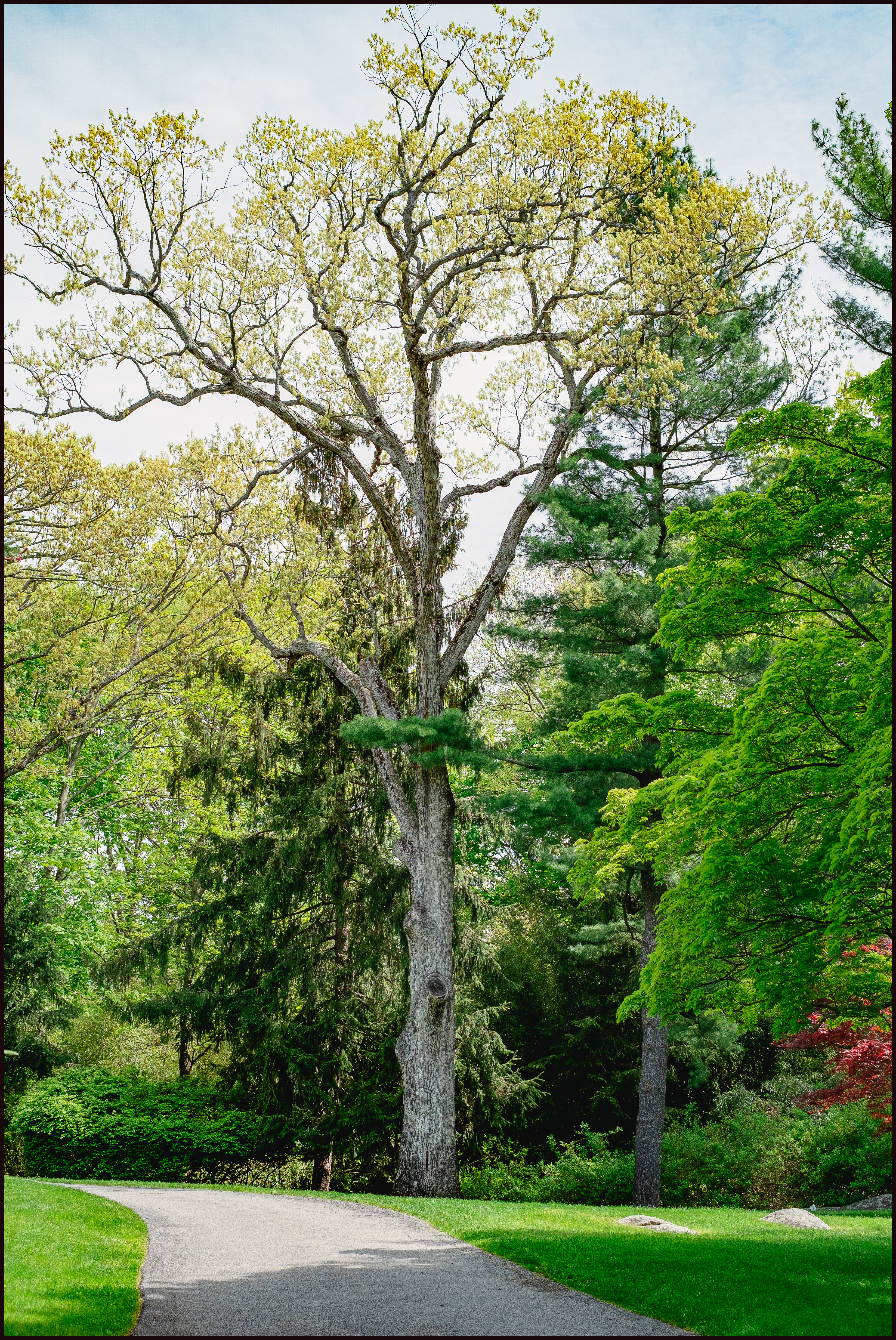




Camera picture taken with a Sony A77II and Minolta 50mm f2.8 Macro lens. Other pictures taken with a Fuji X-E1 and Fuji XF 35mm f1.4 R