
Geese at nearby Gedney Park where I took Harley for a one hour walk.


Taken with a Sony A6000 and E 18-55mm f3.5-5.6 OSS
Photographs and thoughts on photography and camera collecting

Geese at nearby Gedney Park where I took Harley for a one hour walk.
Taken with a Sony A6000 and E 18-55mm f3.5-5.6 OSS
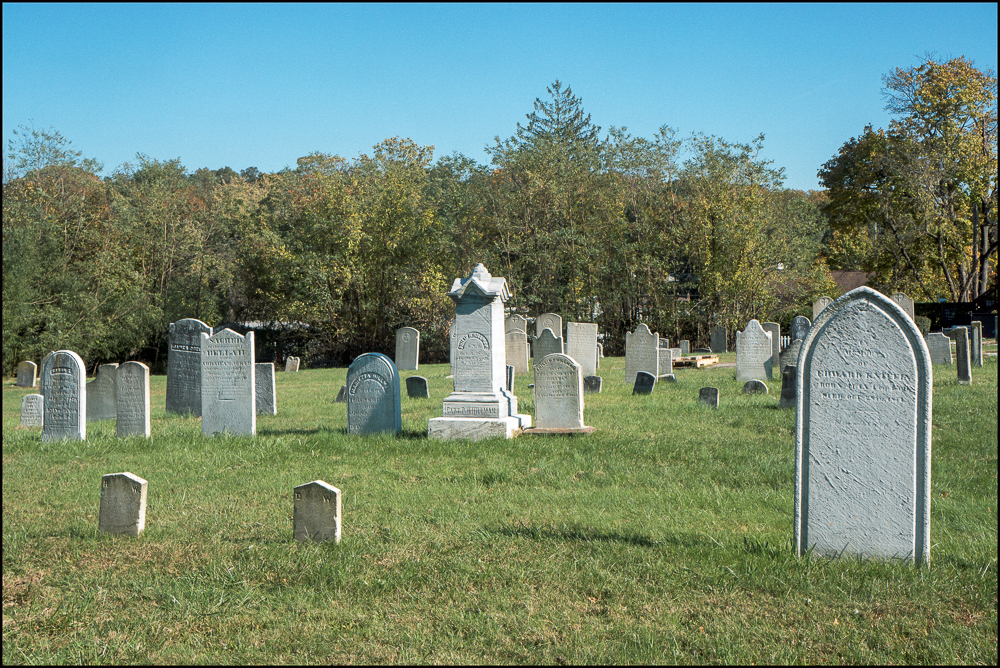
Almost directly opposite the house with the wrought iron railings described in my last post is a small and unassuming cemetery. It’s called the Little White Church Cemetery and its interesting for a number of reasons:
1. There is no little white church. “On 43 Ashford Avenue in Dobbs Ferry, on nearly 3 acres of land, stands a peculiar sight, a cemetery named for a church, yet there is no church on this ground. Even if a church stood there, the name of the cemetery would not match the name of the church, for surely, no one would actually name their church The Little White Church. The land on which this cemetery now stands once belonged to Dirck Storm, who at some point in the 1800s, sold it to Martin and Rebeccah Lefurgy. In 1823 the couple sold it to a group of Presbyterian ministers looking to form a church. Two years later, they officially founded their church. At the time of its founding the congregation consisted of only six members. The name of this church was the South Presbyterian Church of Greenburgh (I can only assume that the church was small and white and popularly known as “The Little White Church”), which still exists today, although at a different location. Its members gave it the nickname The Little White Church. In 1842, Martin and Rebeccah Lefurgy’s son, Isaac, gave the church an additional half acre. The church conducted religious services and burials on the property from the time of its founding until 1869 when it moved to a new location on 515 Broadway. The building was torn down in 1883 and the property was then sold to Dr. Champion Judson who on his death deeded it to The Village of Dobbs Ferry”.
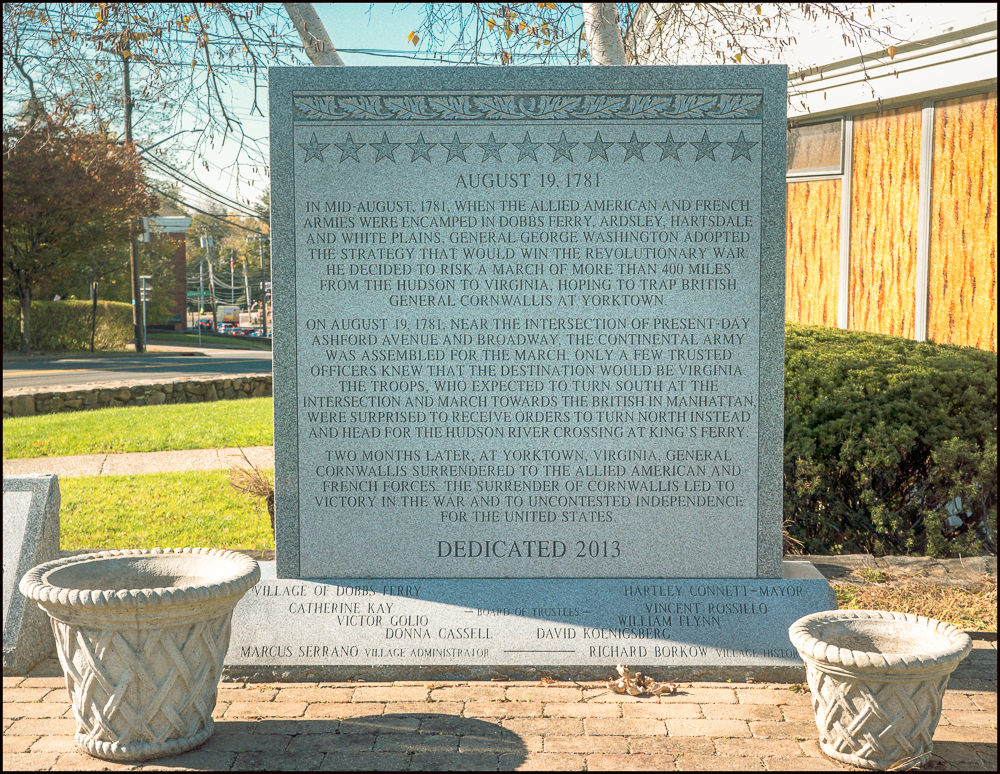
2. There is an interesting Revolutionary War connection. A monument in the cemetery reads: “August 19, 1781. In mid-August 1781, when the allied American and French armies were encamped in Dobbs Ferry, Ardsley, Hartsdale and White Plains, General George Washington adopted the strategy that would win the Revolutionary War. He decided to risk a march of more than 400 miles from the Hudson to Virginia. Hoping to trap British General Cornwallis at Yorktown.
On August 19, 1781, near the intersection of present day Ashford Avenue and Broadway, the Continental Army was assembled for the march. Only a few trusted officers knew that the destination would be Virginia. The troops, who expected to turn South at the intersection and march towards the British in Manhattan were surprised to receive orders to turn North instead and head for the Hudson River Crossing at Kings Ferry.
Two months later, at Yorktown, Virginia General Cornwallis surrendered to the allied American and French forces. The surrender of Cornwallis led to victory in the war and to uncontested independence for the United States. Dedicated 2013”.
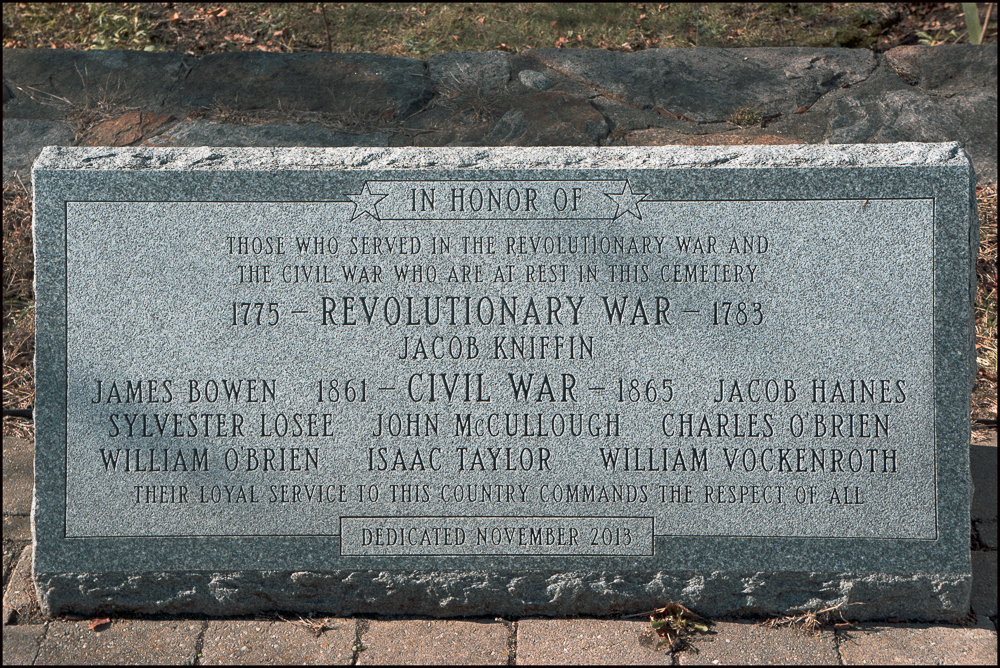
3. A number of Civil War soldiers (including one general: Brigadier General James Bowen) are buried here.
Taken with a Sony A6000 and E 18-55mm f3.5-5.6 OSS
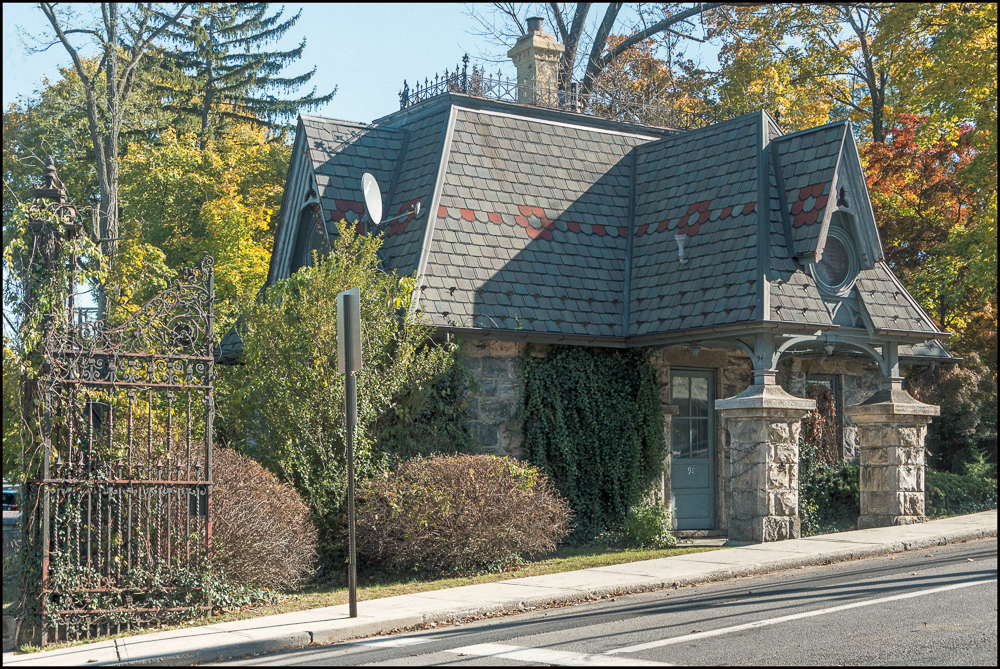
I found myself in Dobbs Ferry, NY the other day and came across this lovely old building with its spectacular wrought iron fence. The style of the building and the fact that the fence is on both sides of Beacon Hill Drive makes me suspect that it was a gatehouse of some kind. But to what? I’ve so far been unable to find any additional information.
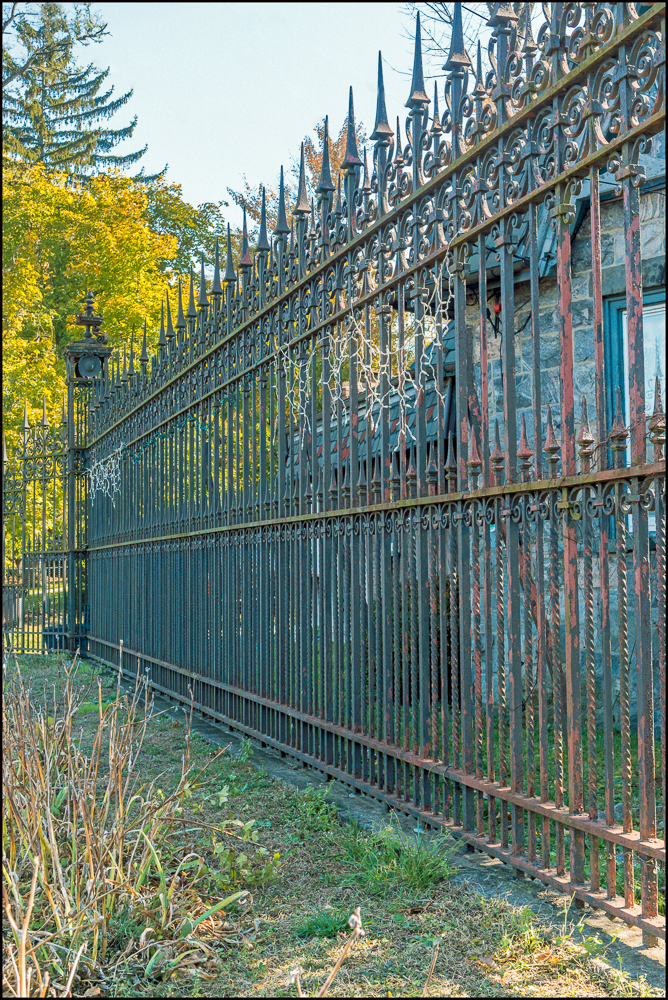
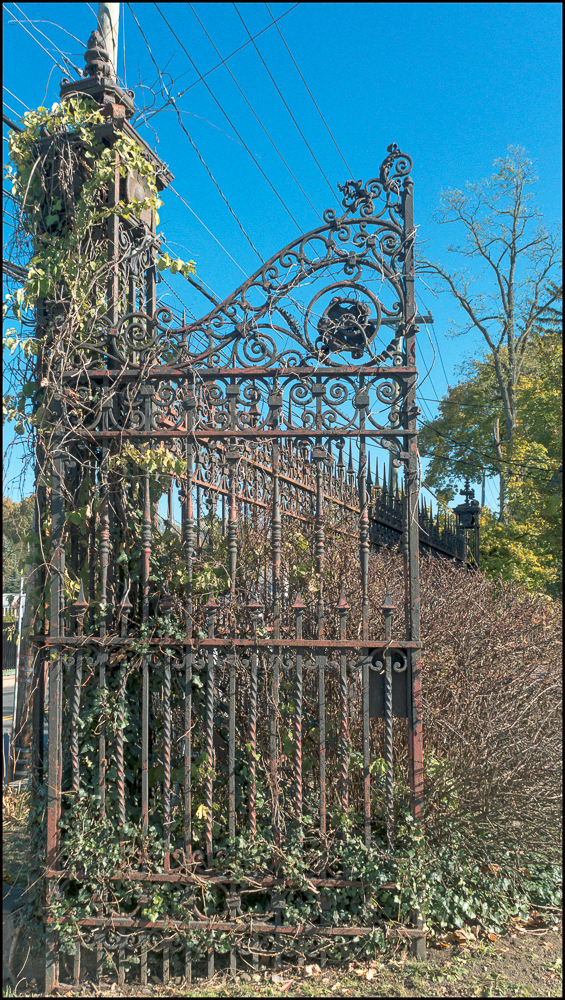
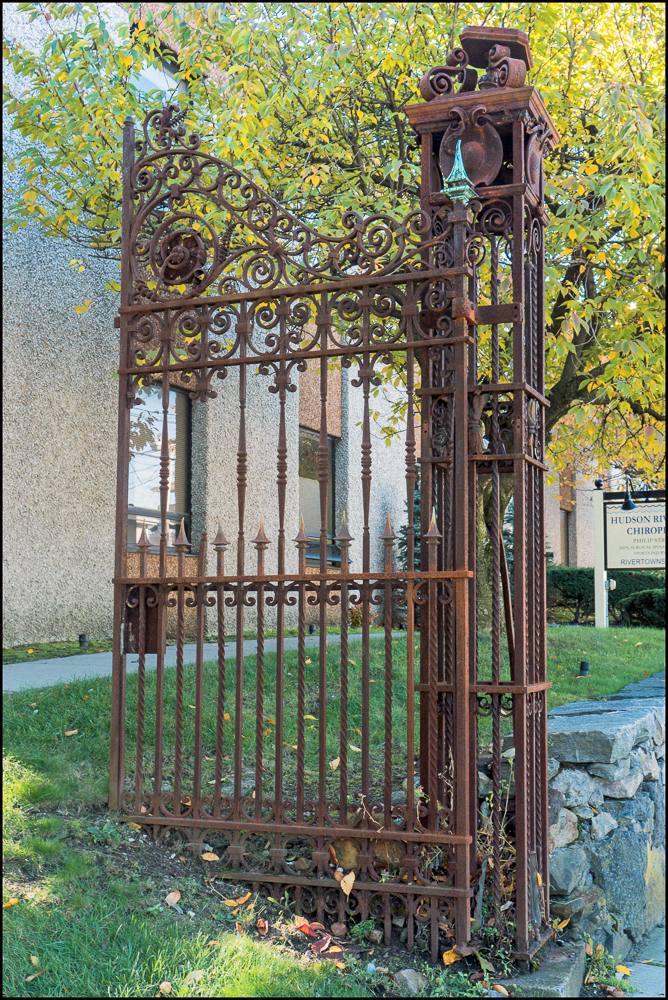
Taken with a Sony A6000 and E 18-55mm f3.5-5.6 OSS
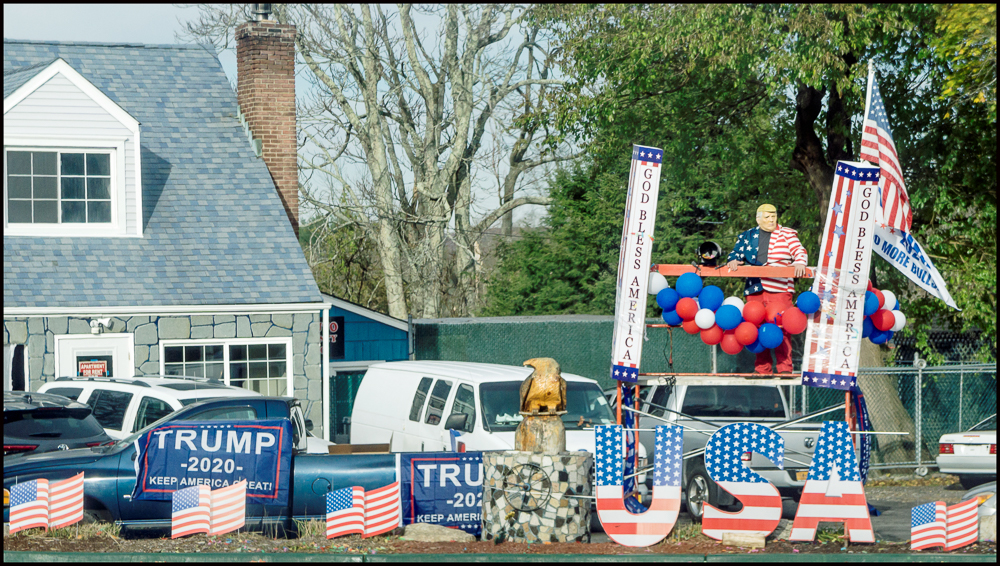
On election day 2020 I had to go up to the lake house. On the way I stopped at Flory’s convenience store on Secor Road. This was the scene that I saw across the road.
The guy standing on top of the car is not a mannequin, rather he’s a real person wearing a Donald Trump mask. He was waving to passersby and seemed to be having a great time.
It little further down the road there’s an overpass over the Taconic State Parkway. Two other people were walking back and forth across the bridge. One was waving a Trump flag and the other a US flag.
Note that this post does not imply that I am a Trump supporter. I just couldn’t find anything handy related to the Biden/Harris campaign.
Taken with a Sony A6000 and E 18-55mm f3.5-5.6 OSS

A while back I picked a copy of “Edward Weston Omnibus. A Critical Anthology. Edited by Beaumont Newhall and Amy Conger, Gibbs M. Smith, Peregrine Smith Books, Salt Lake City, 1984.”
An Amazon Reviewer describes it as follows:
Edward Weston is one of the 20th century photographers who influenced many artists and left a unique and everlasting work of art to people who appreciate and understand his work. His aesthetic approach for photography makes him different in terms of the value, meaning, and dedication he has for his work of art. One can appreciate his ability to manipulate and distort the images of objects to make them appear in uncommon ways. He has an extraordinary skill for approaching and viewing subjects through his camera to capture details, light, shade, texture and movement in ensemble.
The book, Edward Weston Omnibus, holds a collection of critical articles written by his closest friends, journalists, and artists such as Diego Rivera, Ansel Adams. The articles were mainly written by his contemporaries who, in response to exhibitions of his works, admired, commented, questioned and in some cases challenged his style of photography that evolved from years of work in the West, Mexico and California in particular. The book also consists Weston’s responses to his critics and pictures of some of his works. His countless photographs of subjects such as still life, landscape and portraits were admired and praised for the flawless visibility of their elements. The book may help readers to familiarize themselves with Weston’s style of photography, in particular his selection of his subjects and his vantage points that are crucially responsible for creating fine prints.
There are around 50 articles, all of them quite short. In addition there are 44 plates of Weston photographs.