Another Bird

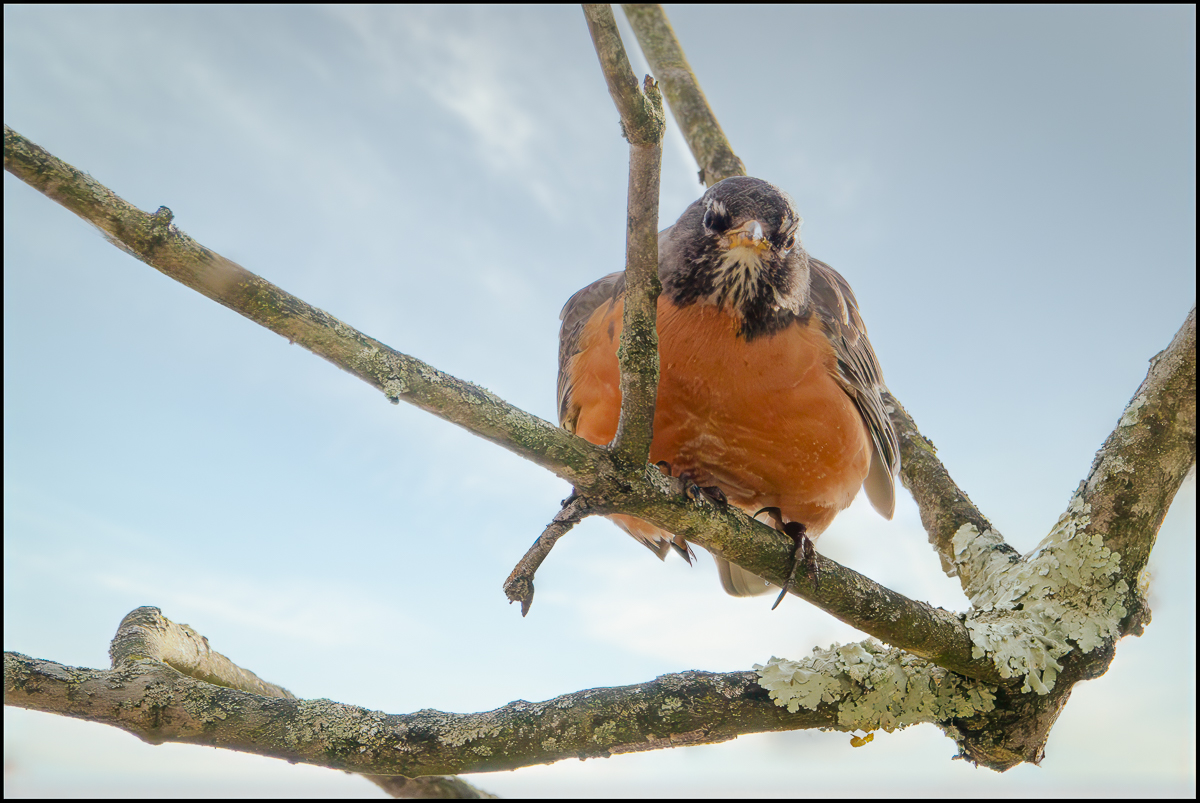
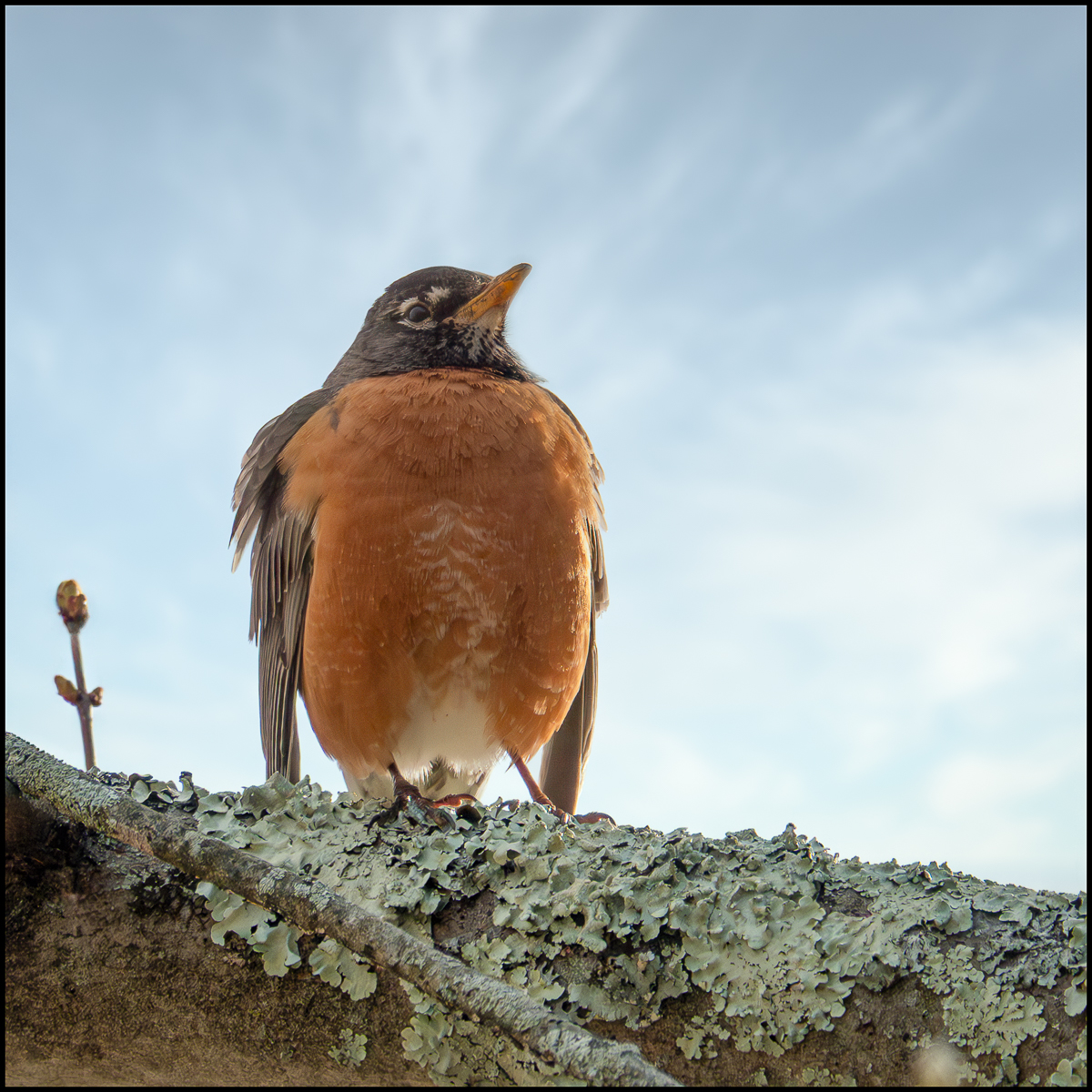
I think it’s an American Robin. It’s a nice bird, but not a cute as its European cousin. I noticed it while sitting/reading on my balcony. It was in a nearby tree.
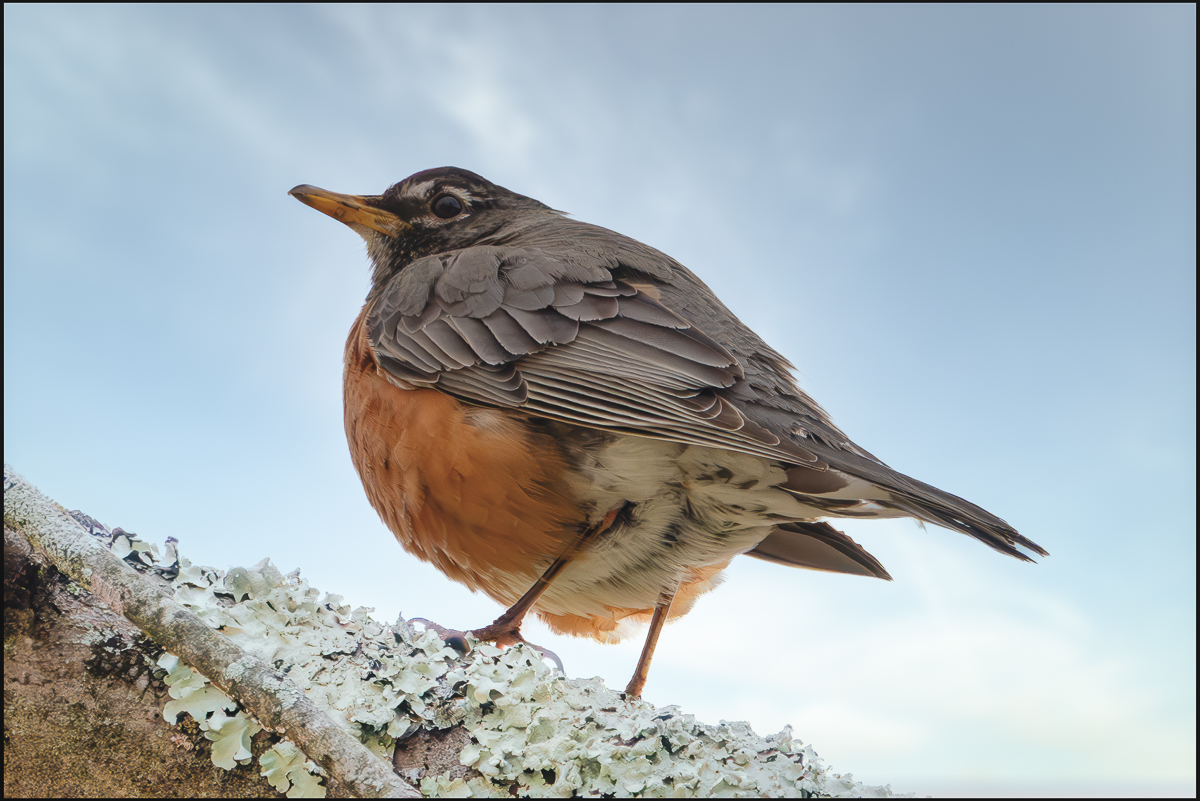
Some interesting facts about the American Robin:

  • An American Robin can produce three successful broods in one year. On average, though, only 40 percent of nests successfully produce young. Only 25 percent of those fledged young survive to November. From that point on, about half of the robins alive in any year will make it to the next. Despite the fact that a lucky robin can live to be 14 years old, the entire population turns over on average every six years.
  • Although robins are considered harbingers of spring, many American Robins spend the whole winter in their breeding range. But because they spend more time roosting in trees and less time in your yard, you’re much less likely to see them. The number of robins present in the northern parts of the range varies each year with the local conditions.
  • Robins eat a lot of fruit in fall and winter. When they eat honeysuckle berries exclusively, they sometimes become intoxicated.
  • Robin roosts can be huge, sometimes including a quarter-million birds during winter. In summer, females sleep at their nests and males gather at roosts. As young robins become independent, they join the males. Female adults go to the roosts only after they have finished nesting.
  • Robins eat different types of food depending on the time of day: more earthworms in the morning and more fruit later in the day. Because the robin forages largely on lawns, it is vulnerable to pesticide poisoning and can be an important indicator of chemical pollution.
  • The oldest recorded American Robin was 13 years and 11 months old.
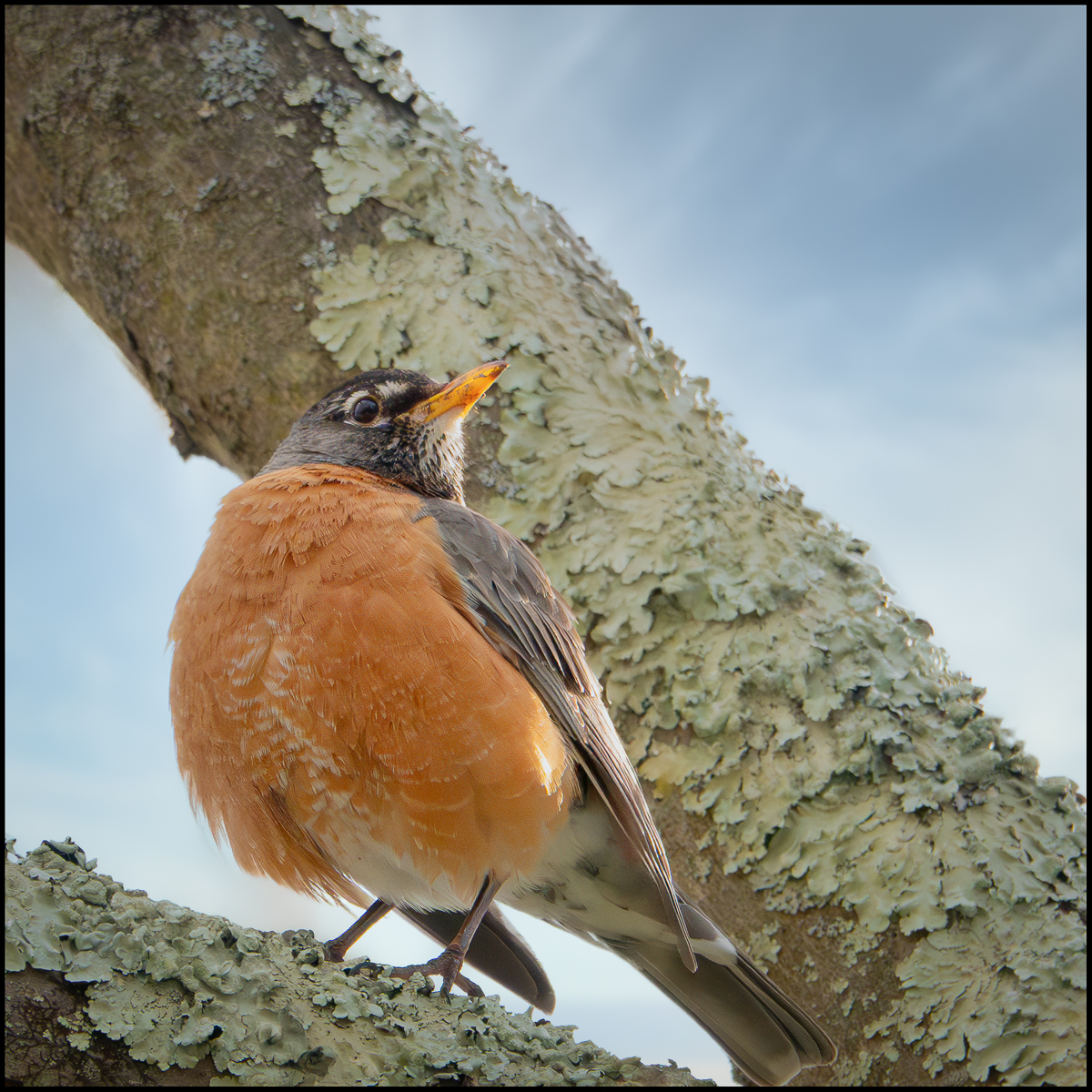

Taken with a Sony RX10 IV
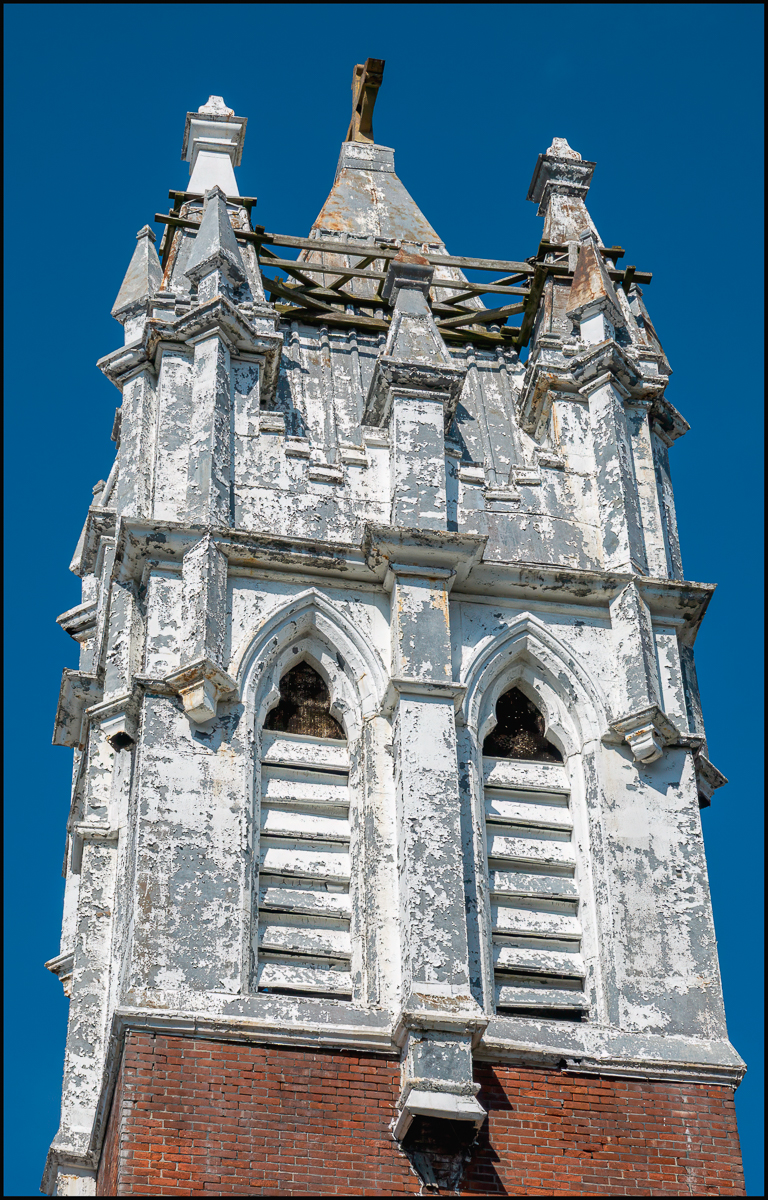
Could use a coat of paint

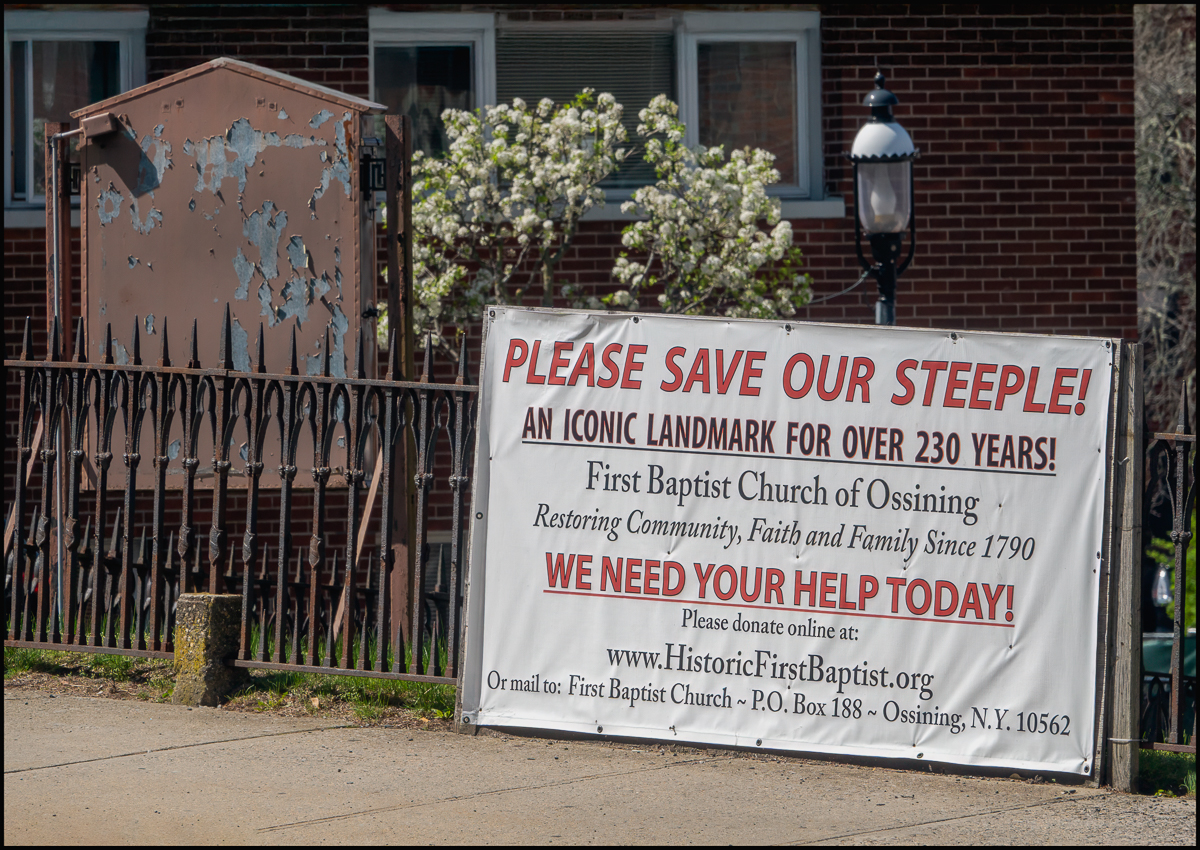
It seems that the church administration has the same idea (see image below)

As indicated in the sign, this is the First Baptist Church of Ossining:

High Victorian Gothic architecture, which evolved from the older Gothic Revival style, differs from that style in its use of contrasting polychromatic bands on the exterior wall surfaces and more elaborate decorative elements. This style was usually reserved for public buildings such as schools or churches. As it is related to the Gothic Revival style, structures in this style also contain such elements as steeply pitched rooflines, elaborate ornamentation, and a predominantly vertical orientation.

The First Baptist Church consists of two sections: a rectangular main section and a smaller, perpendicular northern section. The main section’s 100-foot-tall spire, which is surrounded by 16 pinnacles, was added in 1894. Older photographs show that the building originally had an
ornamental roof cresting that was subsequently removed at an unknown date. The structure is capped with a gray slate gable roof with four gabled dormers. Each contains a large, pointed arch window and elaborate decorative exterior woodwork around the gables. The pointed arch-shaped double front doors at the main entryway facing Church Street are surrounded with polychrome brick trim and a decorative fanlight above the door. Eight stained glass windows located around the perimeter of the structure illustrate scenes from the Bible. The church is constructed with brick and limestone.

Significance: Architectural and Cultural

The First Baptist Church was added to the National Register of Historic Places in 1973 as architecturally significant for its status as the best example of High Victorian Gothic architecture in the Village. Other examples include the First Presbyterian Church (see entry) and the First Baptist Church (see entry). The nomination took place prior to the 1989 designation of the Downtown Ossining Historic District in which the Church is located and listed as a contributing structure. The Church is also culturally significant for its association with its founder, Captain Elijah Hunter (1749-1815), a Sing Sing-based landowner and businessman who later served as the first Supervisor for the Town of Mount Pleasant prior to the formal incorporation of Sing Sing Village in 1813; the Sing Sing Baptist Congregation, founded in 1786; and for its overall role in the cultural life of the Village since its construction in 1874.

The First Baptist Church, completed in 1874, is actually the second structure to occupy the site at 1 Church St; the first was constructed in the early 19th Century to house the Sing Sing Baptist Congregation. This congregation was founded in April of 1786 by Captain Elijah Hunter, a Revolutionary War spy who was the founder of the hamlet Hunter’s Landing, an early waterfront settlement located near the current-day train station which grew to later become part of Sing Sing Village. Hunter chose a triangular-shaped site at the center of the Village near the convergence of the Albany Post Road (known today as Highland Avenue or Route 9), Croton Avenue, and Main Street in order to maximize its visibility and emphasize its central importance to Ossining’s religious life. The original First Baptist Church was a place where blacks and whites would worship side by side in a setting that permitted a degree of equality that did not exist elsewhere, a tradition that continued with the construction of the current structure. The original church building was demolished once the size of the congregation grew too large, and the present structure was built on the same site. The church was designed by J. Walsh, a Brooklyn-based architect, and was built for a cost of $75,000 in 1874 dollars.

Documented Sources of Information:

1. First Baptist Church “Historic First Baptist Church: History.” http://historicfirstbaptist.org/history.html (accessed April 17th, 2009).
2. Nomination Application for National Register of Historic Places, “First Baptist Church”, 1973, Ossining Historical Society Archives.
3. Ossining Historical Society, “Images of America: Ossining Remembered”, (Charleston, SC: 1999), 98.
4. Scharf, Thomas, J. “History of Westchester County, NY”, (Philadelphia, PA: 1886), 338.
5. Williams, Gray. “Picturing Our Past: National Register Sites in Westchester County”, Westchester County Historical Society, (Canada: 2003), 274-275.

Village of Ossining Significant Sites and Structures Guide, page 192.

Taken with a Sony RX10 IV

The Gasman Cameth

In my last post I mentioned that I was expecting someone from ConEd to come this morning to inspect my gas meter.

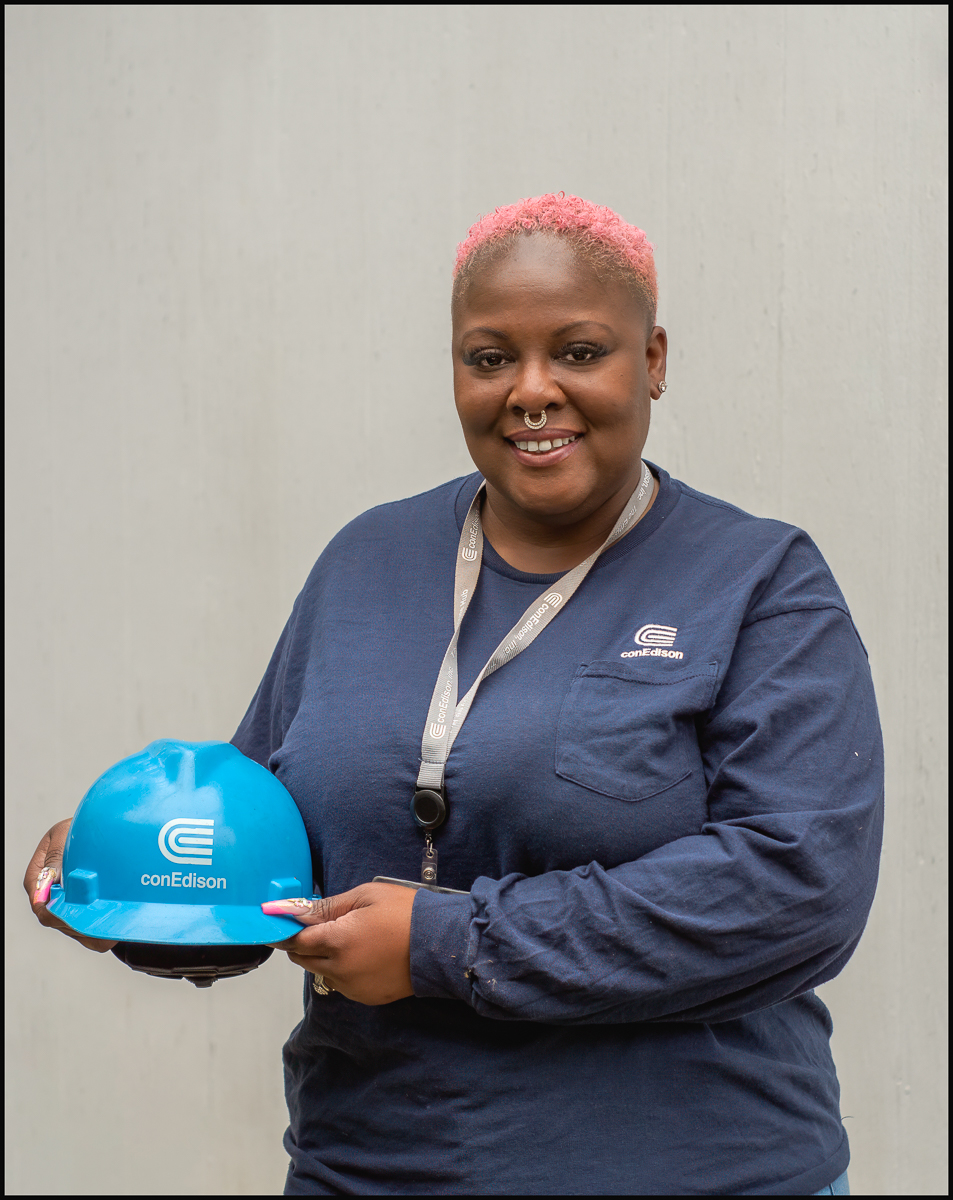
The person in question came around 9:50am, inspected the meter and installed a remote gas detector. Except it wasn’t a “gasman”. Rather she was a very pleasant young “gaswoman” called Jasmine (the same name as my younger daughter).

I was fascinated by her pink hair and asked her if I could take a couple of pictures. She kindly agreed.

Taken with a Sony A77II and a Minolta Maxxum AF50mm f1.7

The Gasman Cometh

I have an appointment tomorrow with Consolidated Edison (Coned) to inspect my gas meter. It seems that New York State Law requires them to do this periodically.

I was sitting reading, a few minutes ago and suddenly a song from my childhood came to mind. It was released in 1956 and was performed by a duo called Flanders and Swann and it’s called “The Gasman Cometh”. These are the lyrics:

T’was on the Monday morning, the gas man came to call,
The gas tap wouldn’t turn, I wasn’t getting gas at all;
He tore out all the skirting boards to try and find the main,
And I had to call a carpenter to put them back again!

Oh, it all makes work for the working man to do…

T’was on the Tuesday morning, the carpenter came round:
He hammered and he chiseled and he said “Look what I’ve found!
Your joists are full of dry rot, but I’ll put them all to rights!”
Then he nailed right through a cable and out went all the lights!

Oh, it all makes work for the working man to do…

T’was on a Wednesday morning, the electrician came:
He called me ‘Mr. Sanderson’, which isn’t quite the name;
He couldn’t reach the fuse box without standing on the bin,
And his foot went through a window, so I called the glazier in!

Oh, it all makes work for the working man to do…

T’was on the Thursday morning, the glazier came along
With his blowtorch, and his putty, and his merry glazier’s song;
He put another pane in, it took no time at all
But I had to get a painter in to come and paint the wall!

Oh, it all makes work for the working man to do…

T’was on a Friday morning the painter made a start,
With undercoats and overcoats he painted every part,
Every nook and every cranny; but I found when he was gone
He’d painted over the gas tap and I couldn’t turn it on!

Oh, it all makes work for the working man to do…

On Saturday and Sunday they do no work at all;
So it was on the Monday morning that the gas man came to call!

Inevitably there’s a video of them performing the song on YouTube. It’s worth watching to hear the performance and to also hear the lengthy and quite amusing introduction.

Taken with a Sony RX100 VII

A new personal Photobook

A couple of weeks ago I felt like going for a walk in the woods. I almost talked myself out of it. The woods would be bare, the light was wrong etc. It would have been so easy to stay home and read. But I forced myself to go to some nearby woodland. It’s called the Hardscrabble Wilderness Area.

This 235-acre green space features an undisturbed pond, and a leisurely hiking trail, suitable for moderate hikers, children, and canine companions (providing that you stick to the rather draconian dog walking rules).

Westchester County, NY is known for its beautiful trees, especially dazzling in Autumn. Blooming tulip trees, hemlocks, sassafras, red maple, and flowering dogwood make the Hardscrabble Wilderness Area a glorious day trip, hike, or picnic spot. This area also features wildflowers and is a popular destination for birdwatching.

I decided to explore an area that I hadn’t been to before. I’d noticed it before, but the problem was that I usually walked the white trail, which is quite long and the area I wanted to explore was right at the end. By the time I got there I was usually quite tired and didn’t feel like exploring further.

This time I had a brainwave. I would still walk the white trail, but in the opposite direction. That way the part I wanted to explore would be near the beginning of my walk. Don’t know why I didn’t think of that before

Previous visits had been in Summer and I couldn’t see the area I was interested in too well because of the leaves. In that sense the bare trees were an advantage.

I came across a number of interesting rock outcroppings, which I thought would work well in black and white. Had a great time.