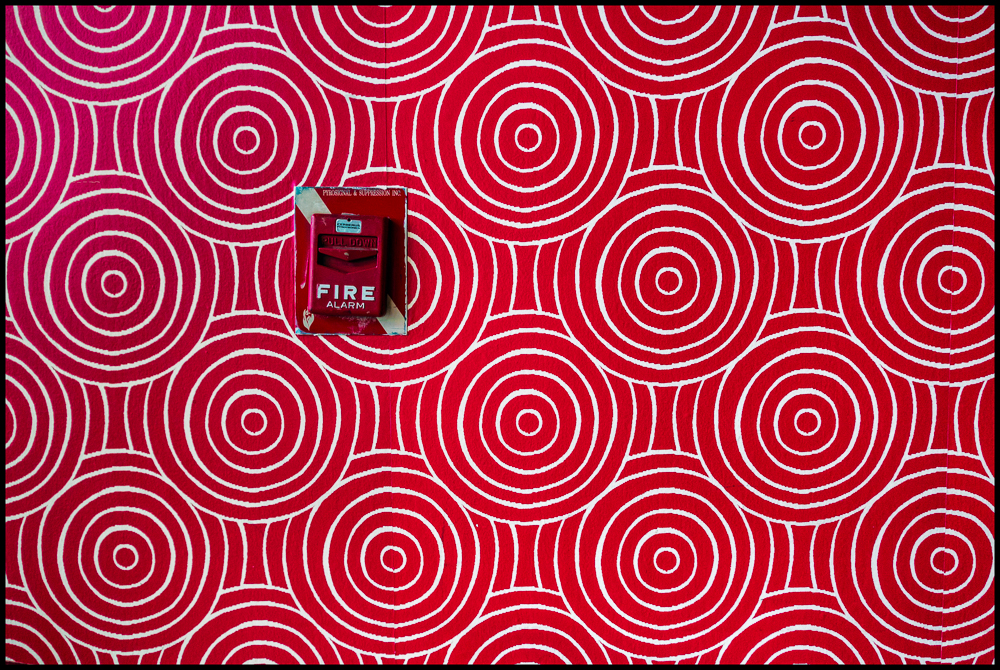
Red switch on a red wall. Seen just by the door when leaving Bluefin Restaurant.
Taken with a Sony RX-100 M3.
Photographs and thoughts on photography and camera collecting
Red switch on a red wall. Seen just by the door when leaving Bluefin Restaurant.
Taken with a Sony RX-100 M3.

We went into New York City the other day to have lunch with old friends at Bluefin, which is situated right on Father Duffy Square.
As we approached the restaurant we noticed this large, wooden (Is it made of wood? I’m not sure) statue that we’d not seen before.
According to Timeout it’s by artist Mel Chin:
Climate change and New York City’s maritime history are the intertwined themes in this pair of public art projects. In Wake, a 21-foot-tall animatronic female sculpture (a replica of the figurehead the once graced the prow of the 19th-century clipper ship, USS Nightingale—which, during its lifetime, included guns and slaves as part of the manifest) presides over an installation of wooden ribs that evoke a shipwreck or the skeleton of a sea creature. Meanwhile, in a nearby pavilion, Unmoored invites visitors to don VR goggles and view Times Square as it would appear after rising sea levels transform it into a midtown version of Waterworld.
For additional information on what’s quite a complex installation see: Artist Mel Chin Floods Times Square With Virtual Reality Art to Sound the Alarm on Climate Change
Taken with a Sony RX-100 M3.
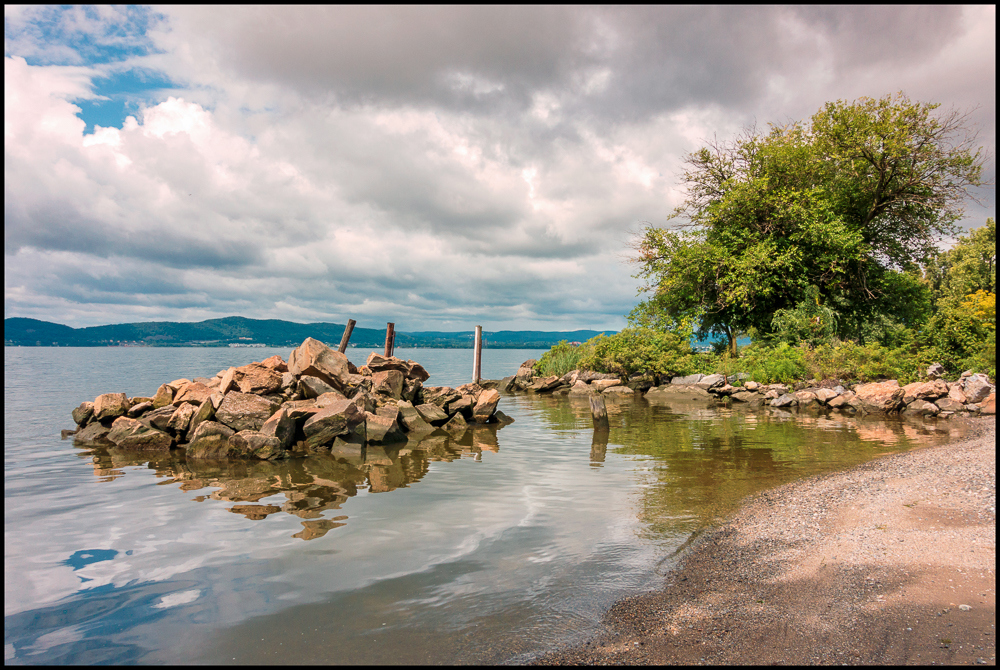
I often take the dog for a walk at Croton Landing Park and I’ve taken lots of pictures there over the years. Somehow, however, I’ve managed to miss this tiny cove – until now.
Taken with a Sony RX-100 M3.
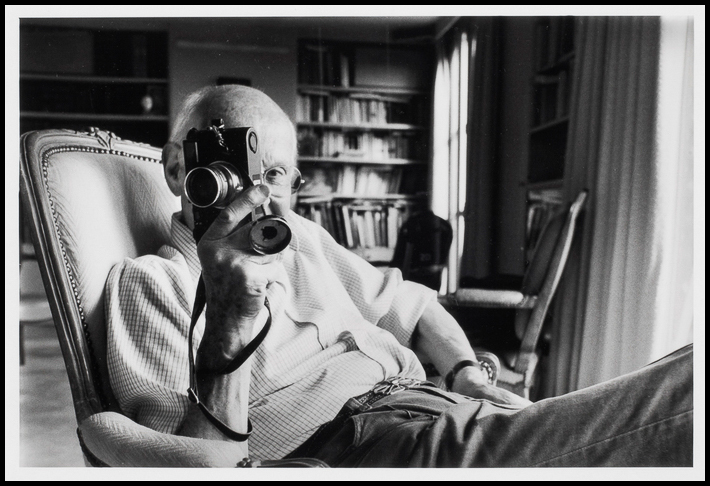
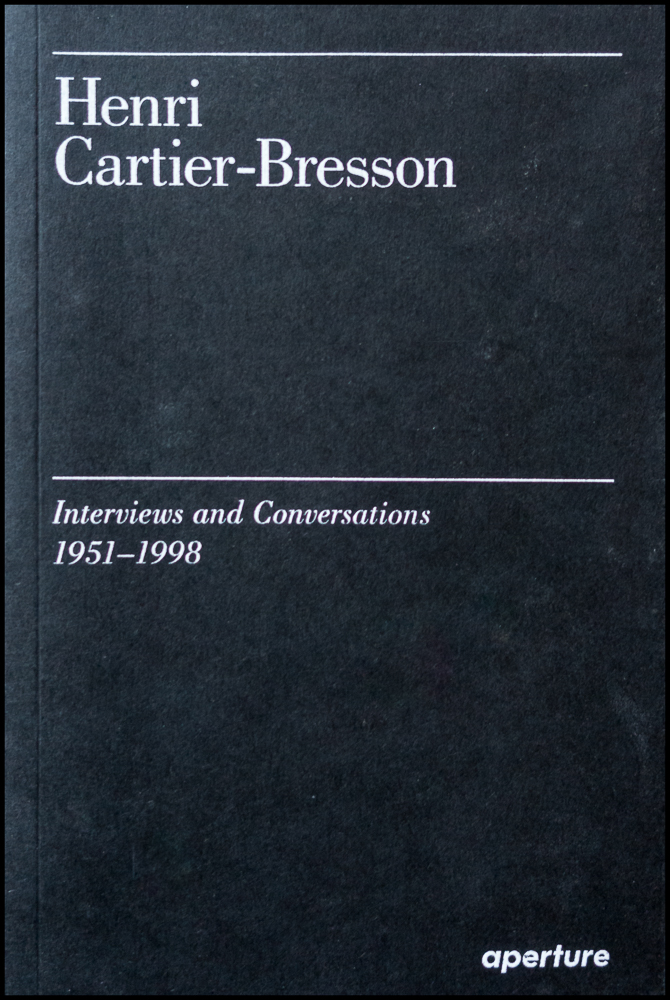
Today marks the 110th Anniversary of one of the greatest of all photographers (and a personal favorite of mine): Henri Cartier-Bresson.
It also gives me the opportunity to highlight a publication I picked up a couple of months ago at the International Center of Photography: Henri Cartier-Bresson. Interviews and Conversations 1951-1998. It contains 12 interviews with the Master. As the foreword says:
Henri Cartier-Bresson often defined himself as a visual person. “I watch, watch, watch. I understand things through my eyes.” he wrote in 1963. Throughout his life, his preferred language was the image. He did take a lot of notes during his reporting and kept a constant correspondence with his family, but in the end he wrote little about his own photographic practice…it is in fact in his interviews that Cartier-Bresson’s liveliest thinking can be found. It is the one place where the photographer has indeed not been sparing with his words.
…
Most of these talks have not been reissued since their publication and are therefore difficult to find. They reveal a fascinating and passionate Cartier-Bresson, who talks about his photography, comments on the state of the world, and reflects on his path. Spread over nearly half a century, his word make it possible to perceive the evolution of the photographer’s thinking: he backs down from his comments, changes his mind, sometimes contradicts himself. The image that the interviews give of Cartier-Bresson is not frozen in legend, but on the contrary, alive and kicking.
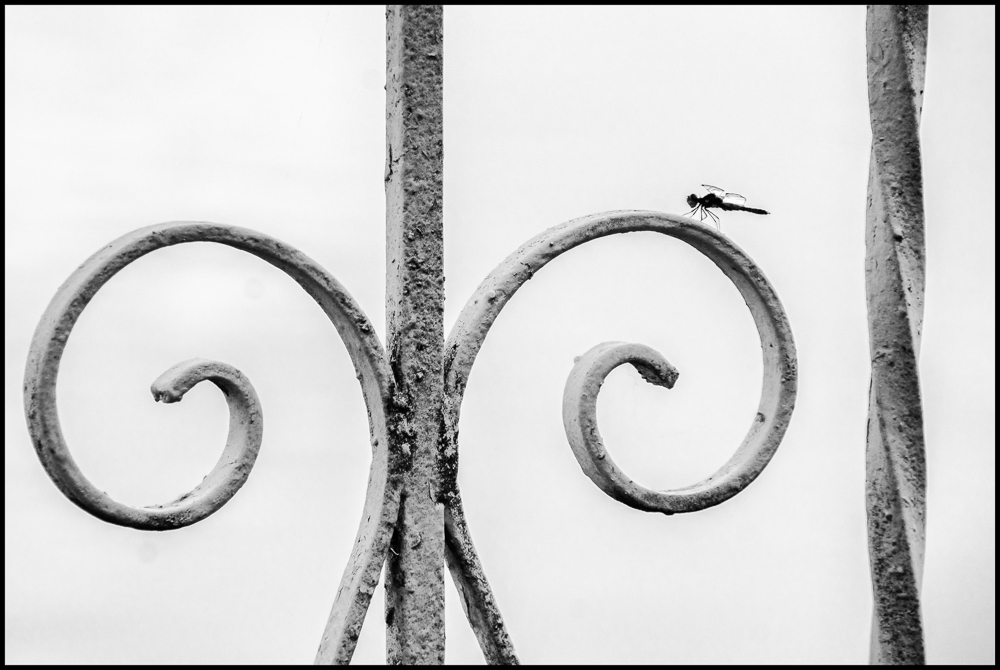
I was sitting on our dock fulfilling my responsibility to take pictures of our visitors when I saw this dragonfly (if that’s what it is) alight on the wrought iron fence.
Taken with a Sony A77II and Tamron A18 AF 18-250mm f3.5-6.3.