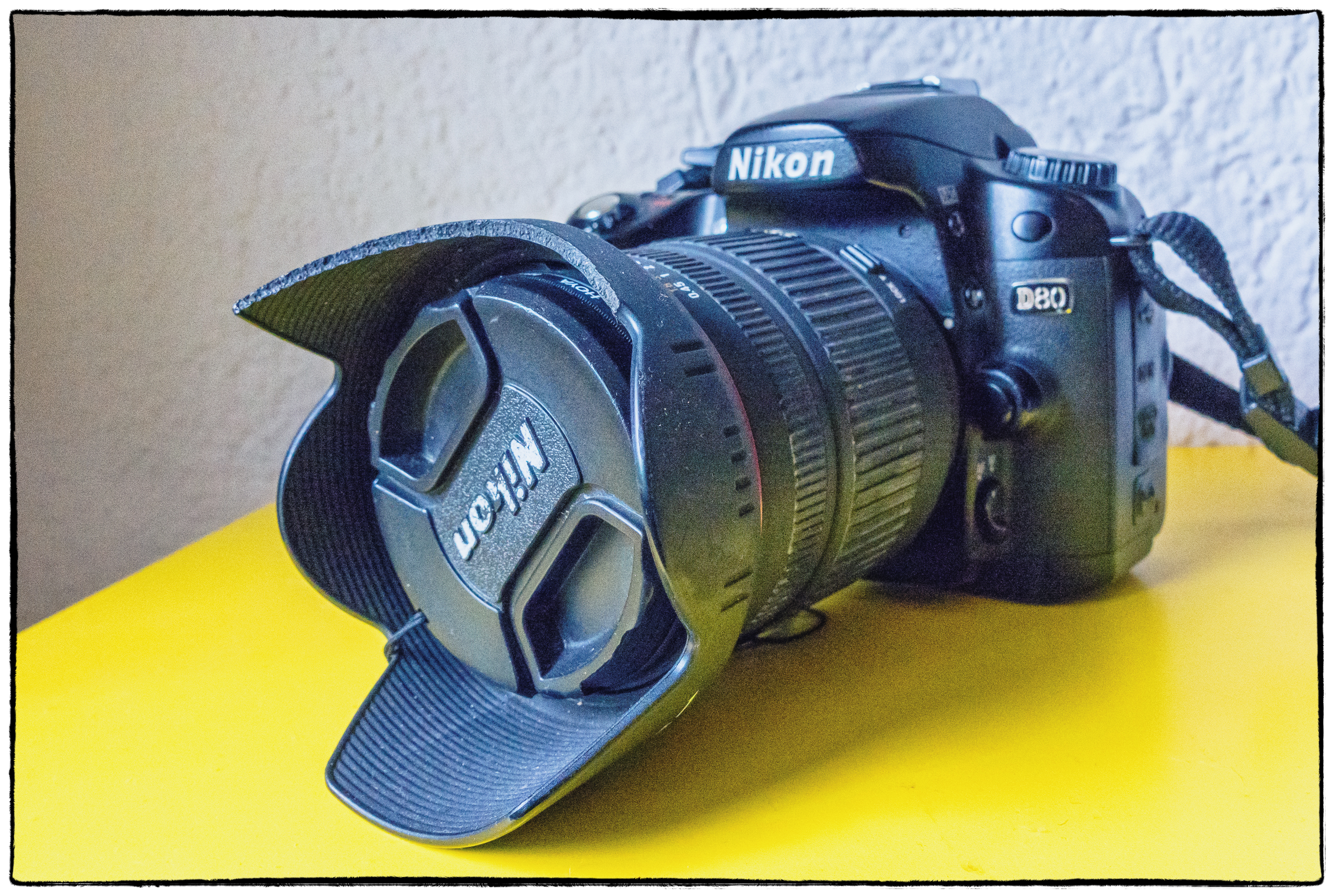
A borrowed camera: Nikon D80

The only camera I took on my recent trip to Geneva was my Sony RX100 M3. I love this camera, but the compromise for such a small camera with a relatively large sensor is that the lens only zooms to th 35mm equivalent of 70mm. I thought I might need something with a longer zoom (and of course I won’t miss the opportunity to try out a new camera) so I asked my son-in-law if I could borrow his Nikon D80 and Sigma 18-200mm f3.5-f6.3 lens. He agreed.

The Nikon D80 became available in the US around September, 2006. It has a 10.2 Megapixel CCD sensor and when it came out it was considered as an enthusiast camera fitting in between the entry-level D50 and the semi-professional / professional D200.

On picking it up it felt solid and well built. It powered up quickly and felt very responsive. Focus was quick and accurate and the viewfinder was large and precise. A nice feature was the LCD panel on the top plate. Although I didn’t try to customize the camera much, it was obvious that there were many options to do so. Menus were intuitive and easy to use. The LCD monitor was decent considering the age of the camera. Battery life seemed to be pretty good.

Images had good resolution and great detail and I really liked the colors. Exposure was all I wanted it to be.

I didn’t find anything much that I didn’t like.

Although this camera is now over 10 years old it’s extremely capable and I very much enjoyed using it. For general photography and web use, and if you don’t need to print much larger than 8×10 (and most people don’t) this is a fine camera. They seem to sell on ebay for about $100 for just the body, and maybe around $200 with a lens (when it first came out I believe it sold in the $1,000-$1,200 range).

Digital review has a detailed review.

As for the lens. A 15 August, 2005 review in Ephotozine, concludes:

This lens once again proves that it is extremely difficult to produce the ideal all-in-one lens. Whilst this one is very good at the wide end, it does start to show the limitations of the design type at the long end. But if you consider the advantages of just having the one lens and the reduction in lens changes that could let in dust, there are some saving graces. All in all it is a nice lens if you can put up with the long end fall off.

In summary the main positive points of the Sigma 18-200mm f/3.5-6.3 DC are:

  • Performance at wide end
  • Focal Range
  • Size and weight
  • Easy Manual Focus

Negative points are:

  • Optical quality falls off towards telephoto end
  • Autofocus a little noisy and slow.

I was fine with the results produced.

For some pictures taken with this camera see:
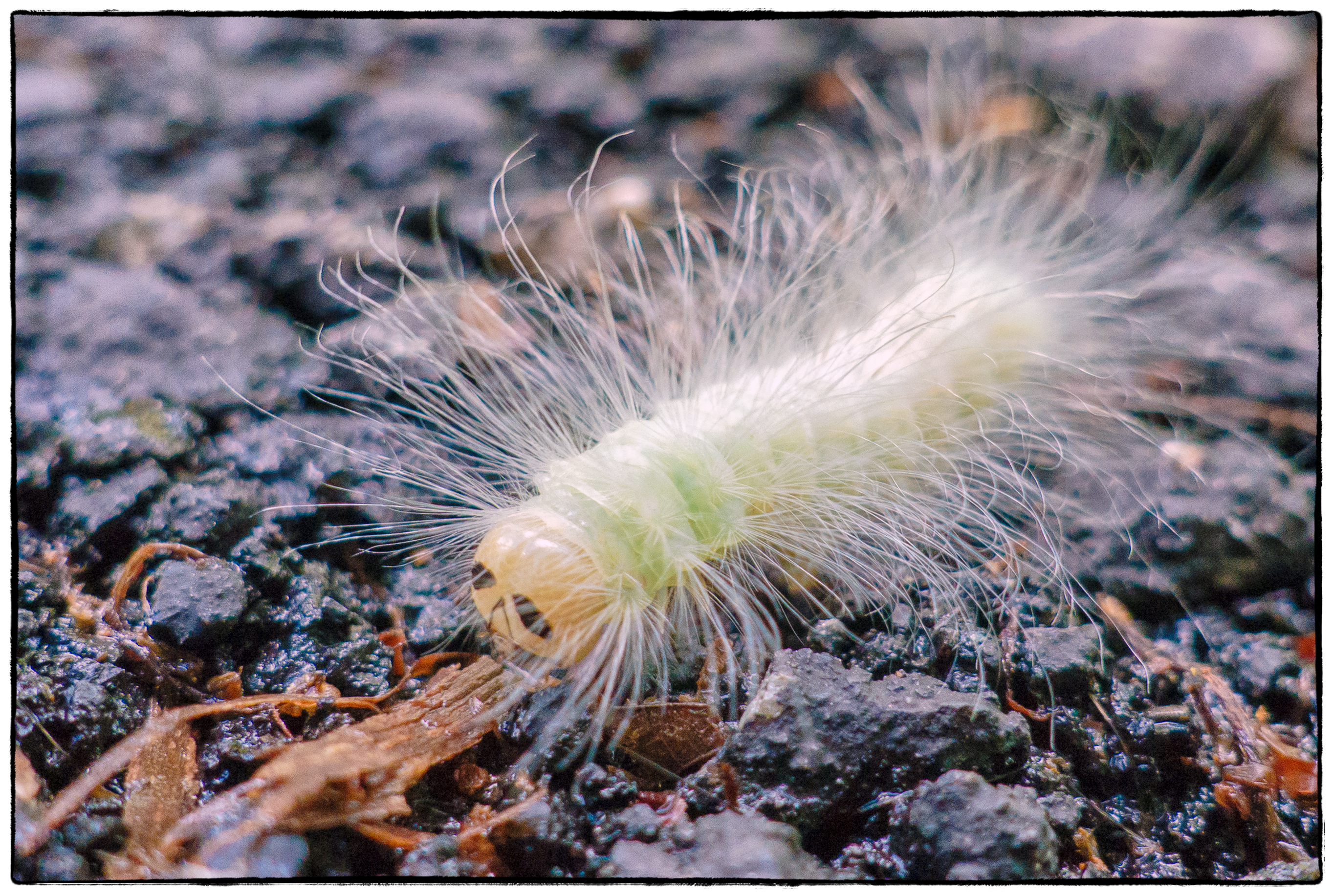
Hairy White Caterpillar

I was walking the dog around Lake Shore Road, when I noticed some movement around my feet. Looking down I saw this fluffy looking creature. I’m not entirely sure what it is, but I suspect it’s the caterpillar stage of Cycnia tenera or the dogbane tiger moth.

The markings on the head gave the impression of a sad little face (I’m pretty sure it’s not. I don’t think caterpillars have such large eyes. I imagine that they’re probably markings to deter predators).

Whatever it is I had no intention of touching it as I’ve read that some of these fuzzy/hairy caterpillars are quite toxic.

Apparently bats won’t eat the adult moths, as the moths emit clicking noises, which upset the bat’s sonar. Fascinating stuff.

Yellow

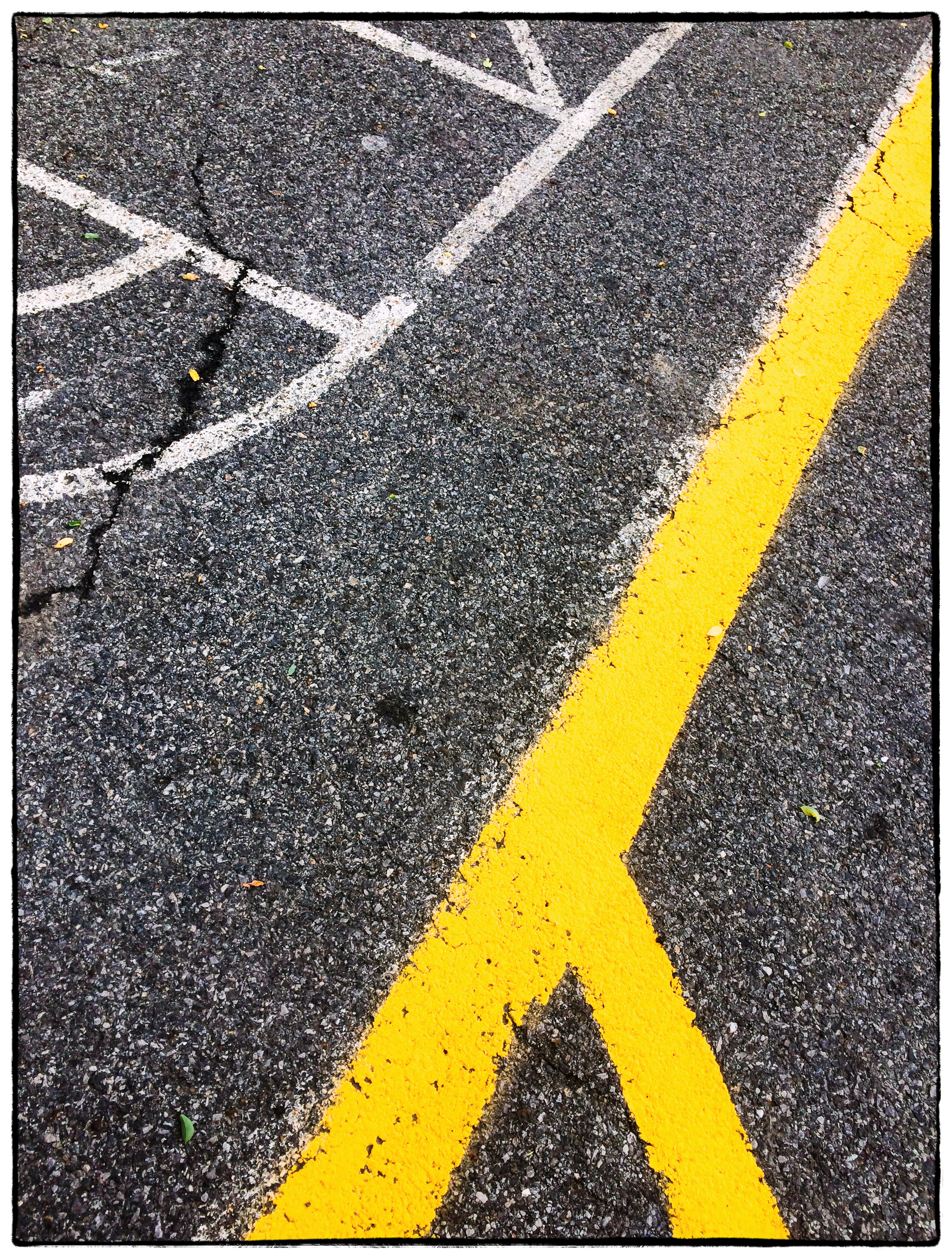
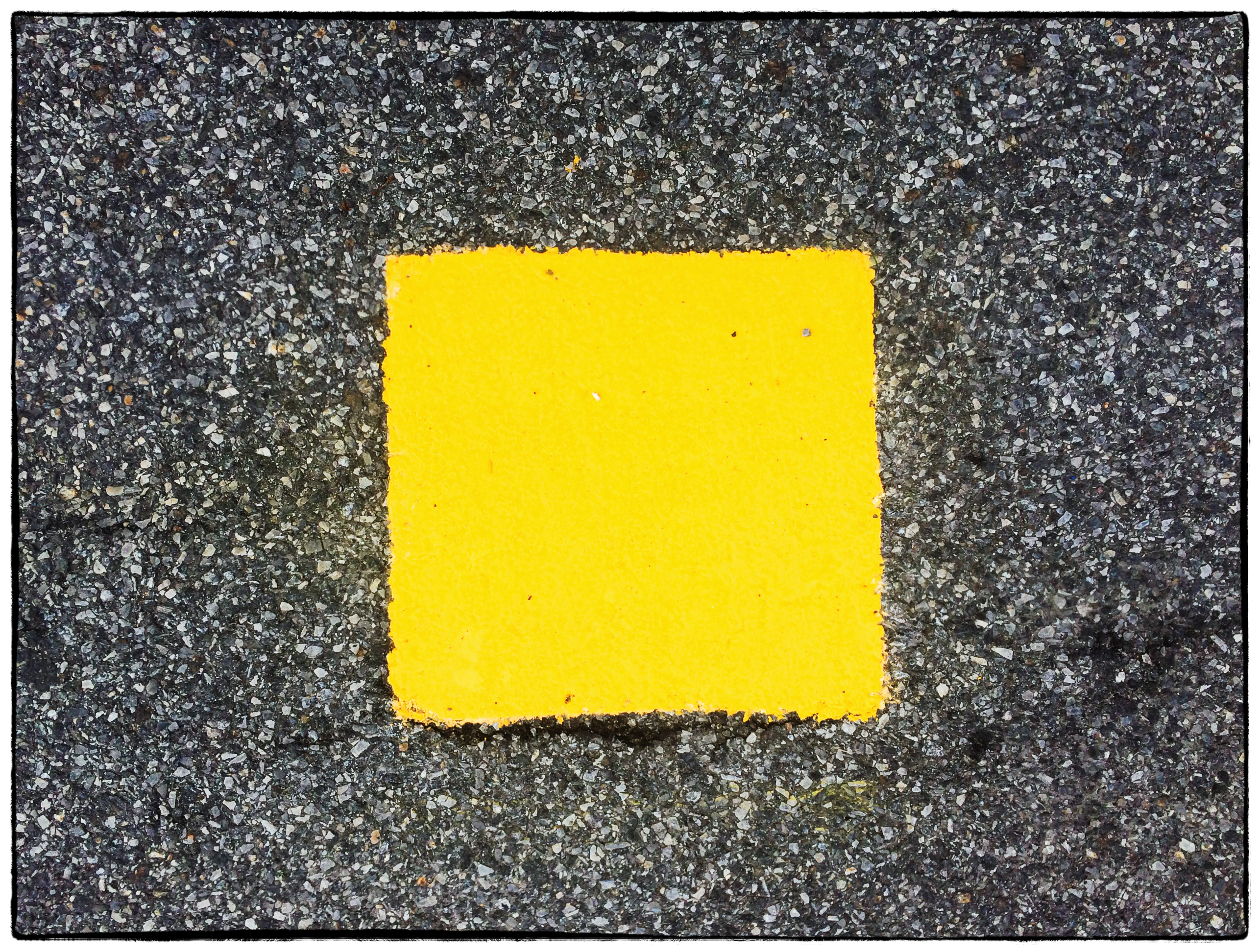
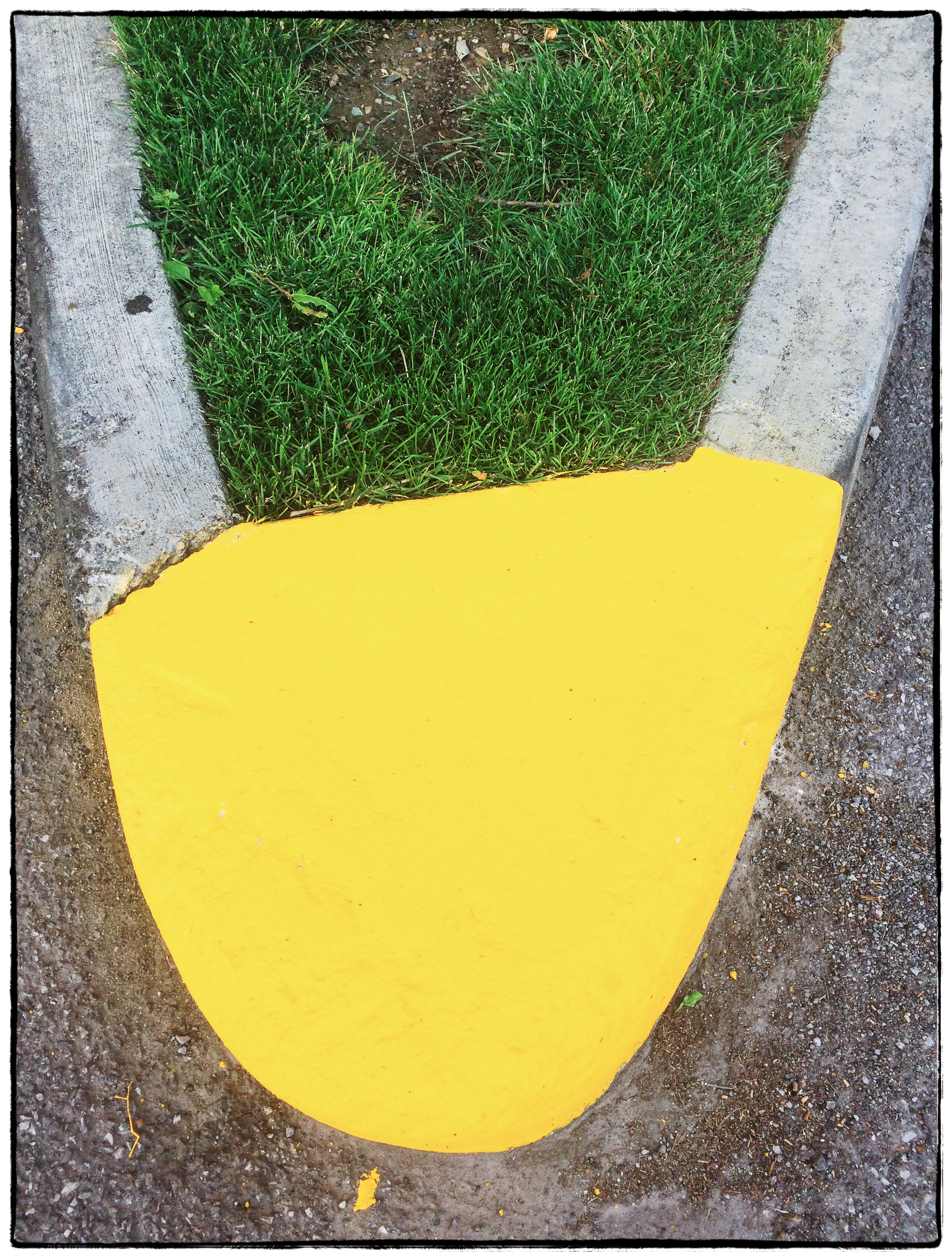
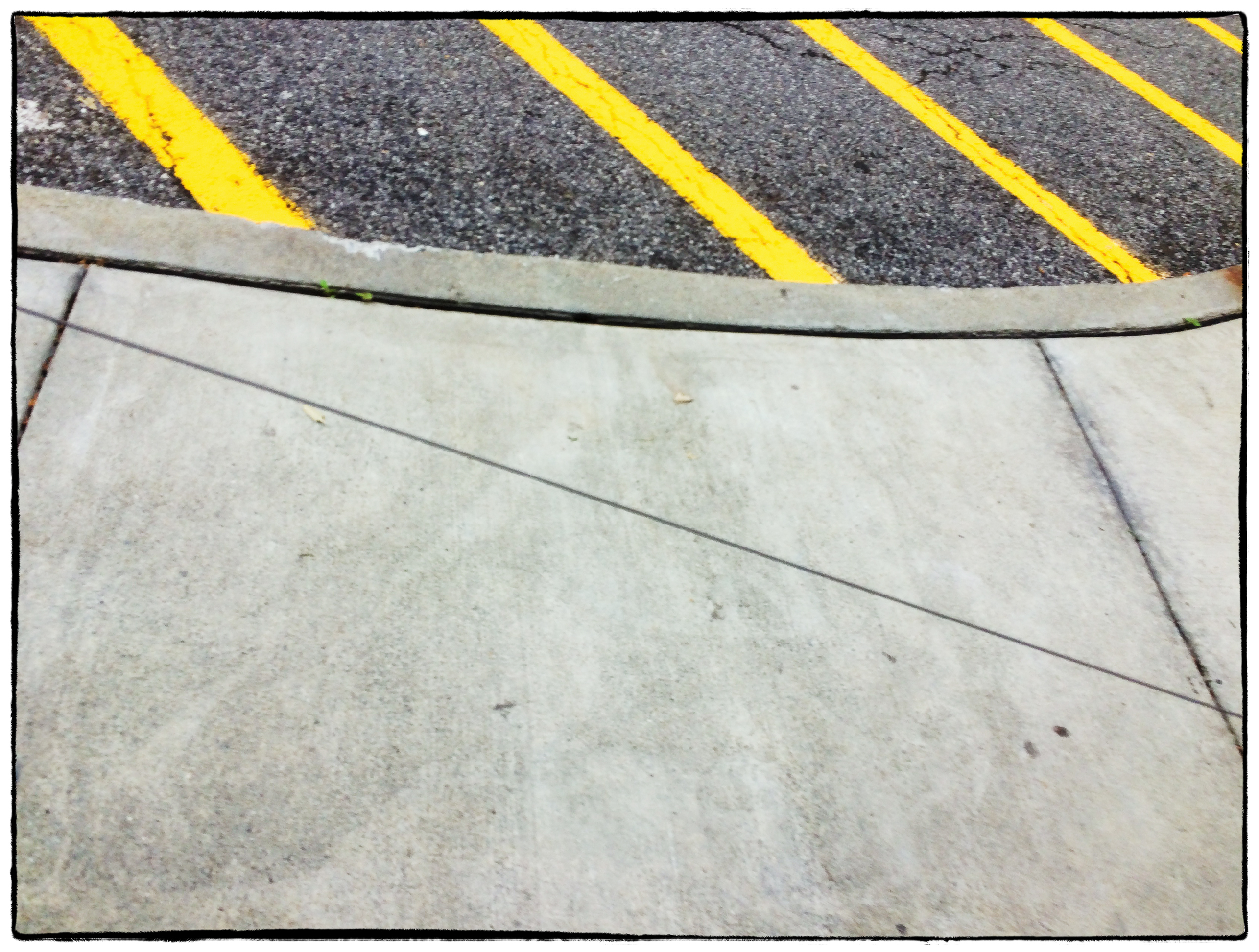
While waiting for my wife to finish her dance class I took the dog for a walk around the parking lot. After a while I noticed flashes of bright yellow on the ground – lines, curves, shapes.

Another example (see also: Cracks) of how it can be good to look down.

Taken with an iphone 5s – the only camera I had with me.

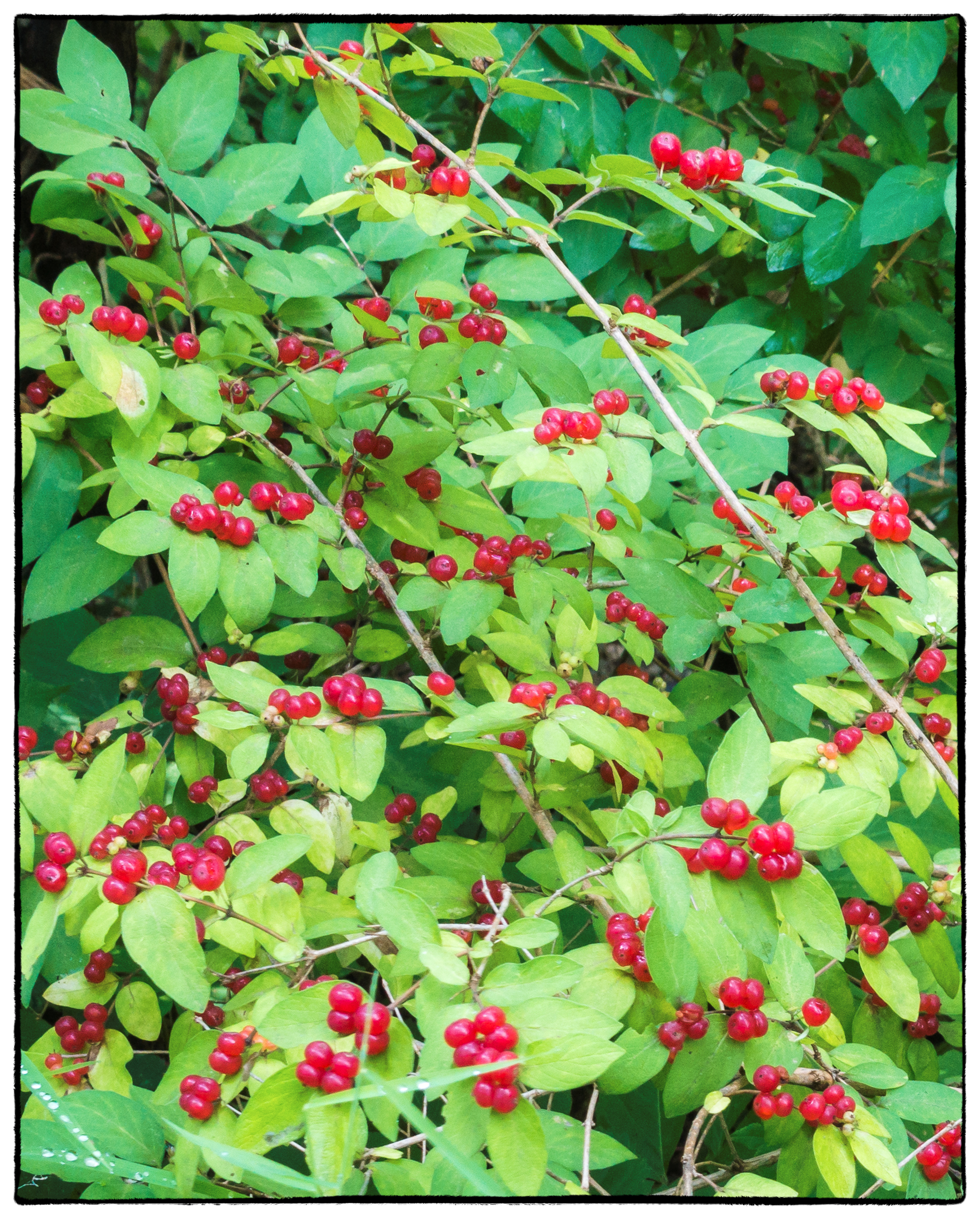
By the roadside 28: Aronia arbutifolia?

Yet another plant I had difficulty identifying. It seems that a lot of plants in NY State bear red berries, and they all look more or less the same to me.

My best guess is that this is Aronia arbutifolia, or Red Chokeberry described by the Missouri Botanical Garden as:

Aronia arbutifolia, commonly called red chokeberry, is a deciduous, multi-stemmed shrub that is native to both wet and dry thickets in Eastern North America (Nova Scotia and Ontario to Ohio south to Texas and Florida). It typically grows in a vase-shaped form to 6-10’ tall and to 3-6′ wide, but tends to sucker and form colonies. Clusters (corymbs) of white to light pink, 5-petaled flowers (1/3”diameter) appear in spring. Flowers are followed by abundant glossy red fruits (1/4” diameter) which appear in dense clusters along the branches. Fruits ripen in late summer and persist on the shrub throughout fall and well into winter. Elliptic to oblong to obovate leaves (to 3 1/2” long) are glossy dark green above and pubescent grayish-green beneath. Foliage turns bright red in autumn and compares favorably with burning bush (Euonymus alatus) for excellence of fall color. Fruits are sometimes used to make tasty jams and jellies. Aronia arbutifolia is synonymous with Pyrus arbutifolis and Photinia pyrifolia.

Genus name comes from the Greek word aria the name for a species of Sorbus of which the fruits resemble chokeberry.

Specific epithet means having leaves like Arbutus.

Common name is in reference to the tart and bitter berries which are technically edible but are so astringent as to cause choking in those who try.