Canon EOS 888 Results

This was my September film camera and it gave me more problems than I’d anticipated.

I’d mentioned in earlier posts that compact, point and shoot cameras were appealing because they allowed me to focus more on the photograph, and less on the camera operation. At the same time I also mentioned that I disliked these cameras because they didn’t give me any feedback at all on what they were doing: e.g. what aperture was chosen, what shutter speed etc.

I knew that this camera had fairly limited functionality and began to think of it as a kind of point and shoot camera with interchangeable lenses that would give me the kind of feedback I needed. And perhaps it would, but after only using it once I found it a bit of a struggle – not so much because of the camera itself, but rather because it forced me to use it in ways that are not my custom.

I started off using it in the fully automatic, programme mode. This worked fine, but the combination of the camera and lens (I’d thought to use it with the rather slow Sigma 70-210mm f4-5.6 UC-II that my friend gave me along with the camera) in the fairly low, early morning light led to it at times selecting shutter speeds too slow for my liking.

So I thought I’d try it in shutter priority mode instead. I usually use aperture priority, but my beloved Minolta Hi-Matic 7sII is shutter priority and I have no problem using it. Just set the shutter and see what aperture is being selected and then adjust as necessary to get the aperture you want. Unfortunately the selected shutter speed is not shown in the viewfinder, only in the top panel LCD. So the process is rather: set the shutter speed, take the camera away from your eye; check the aperture; put the camera back to your eye; repeat until you get something you want. Annoying to say the least.

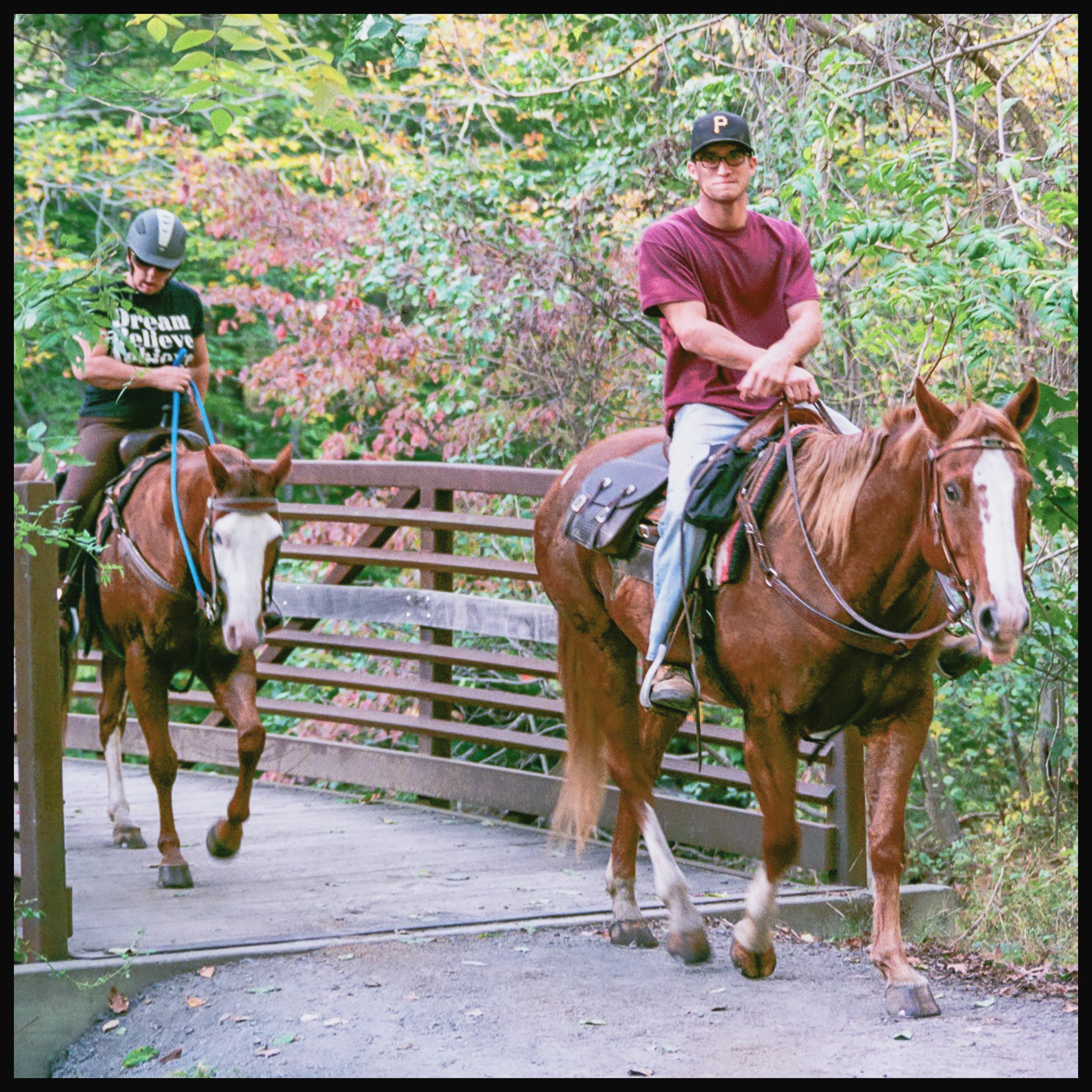
I must say though that when the conditions were bright enough the camera in programme mode did well. The picture of the horses below is a good example. They came around a bend in the trail and I didn’t see them coming until very late. I had just enough time to lift he camera to my eye and press the shutter release. If I’d had to think about the settings I would have missed the picture.

So my overall impression is that this is a fairly good beginner camera (probably perfect for the friend who gave it to me) and when the conditions are right (i.e. bright sunny day) can produce decent pictures. I’m quite satisfied with the pictures in this post. I also feel that some of my problems would disappear if I were to use the camera more and become more familiar with it. After all this was the first time I’d used it.

Now I have a bit of a dilemma: do I use this camera again (perhaps with a faster lens – I have a Canon EF 50mm f1.8) or to do I select another of my many camera as my October film camera? I think it will probably be the latter. I didn’t like using this one that much (I much preferred using my August film camera – an Olympus OM2-n MD) that, for now, I’d feel inclined to use it again. I may come back to it at some time the future though.

The first two pictures were taken within a five minute was from where I live; the second two at Rockefeller State Park preserve during a dog walk with some friends; and the last two at Law Park, our town park.

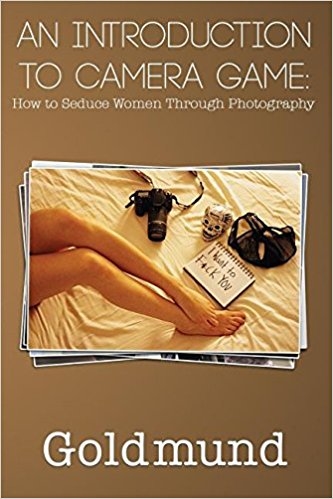
One photography book I certainly won’t be reading

It’s An Introduction to Camera Game: How to Seduce Women Through Photography and it’s described on Amazon.com as follows:

Photography is an art that is as enriching as it is seductive. It can open up new ways of looking at the world, train you to become more social, and create opportunities to meet an endless amount of attractive women. This guide will: Suggest the proper equipment needed to get started. Teach you techniques to become proficient using a camera. Explain different ‘projects’ that will make it easy for you to approach girls on the street and get them excited to be involved in your photos. Include tips on how to easily set up dates and seduce the women you meet. And much more… If you are interested at all in photography and meeting women, An Introduction to Camera Game is the best place to get started.

Thankfully the reviews are, with a couple of exceptions, universally bad. Even though I’m not a professional photgrapher, nor am I female, one of the comments pretty much sums up my own views:

As a professional (female) photographer, this makes my blood boil. There are already too many predatory photographers in this world who coax girls into “modeling” for them, when their intentions are simply to get a girl in an isolated setting and (usually) semi-undressed. This book encourages sexual harassment between “photographers” and models, and damages the reputation of the rest of the professionals in our industry. DO NOT purchase this book and support someone who thinks that photography is a means to “seduce” women.

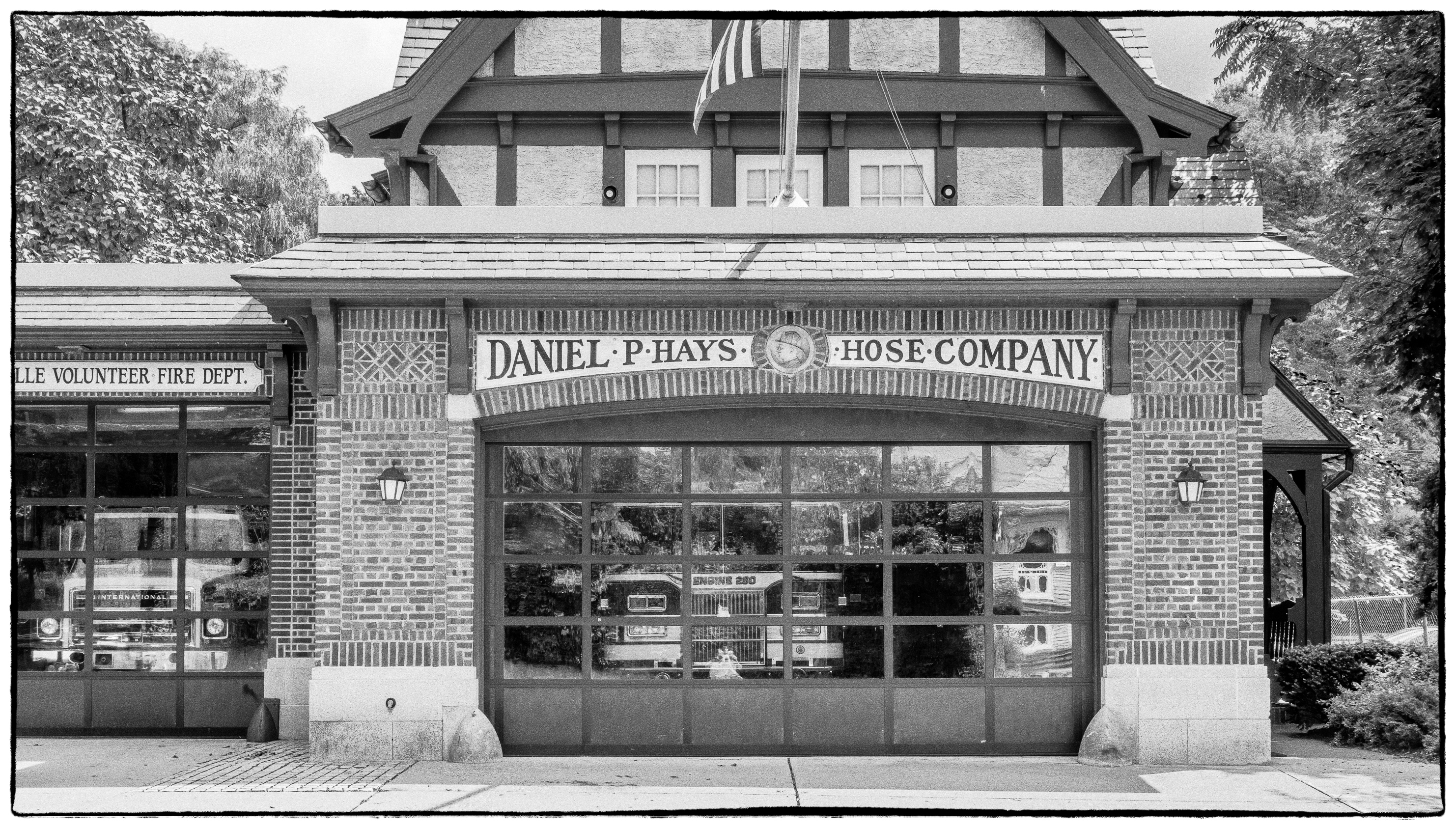
A Walk Around Pleasantville – Daniel P. Hays Hose Company

The ‘Daniel P. Hays’ in the title is descended from an eminent Pleasantville family. His forefathers came from Holland and one of them fought in the Revolutionary War.

According to an article (dated April 22, 1990) by James Feron in the New York Times entitled A Family’s History in Letters, Ledgers and Deeds:

While David was serving with the American forces on Long Island in the Revolutionary War, the British burned the Hays home in Bedford, and then burned the entire village. In bed with a newborn infant, Esther Hays had refused to disclose the whereabouts of a party of patriots attempting to drive a herd of cattle through the British lines to the American camp at White Plains.

Servants removed Esther and her infant and hid them in the woods until they could be rescued. Among the young boys engaged in moving the cattle through enemy lines was a son, Jacob, then 7 years old. Jacob later became New York City’s High Constable, or chief of police, for nearly a half-century.

The infant Hays, the youngest of four daughters and three sons, became celebrated as Benjamin Etting Hays, who lived in Pleastantville for 75 years. He gave pastureland to the village for its first public school ”for the full enjoyment and benefit of all inhabitants,” he wrote, ”without any discrimination whatsoever.”

Uncle Ben’s Deeds

Having inherited the farm from his father, he lent money at no interest to his neighbors, following the Biblical injunction, and for those and other deeds ”Uncle Ben,” as he was known, was characterized by the Methodist minister as ”the best Christian around.”

In fact, he remained an observant Jew throughout his life, not an easy task living apart from a Jewish community, and learned how to slaughter meat so it would be kosher. Mr. Maass, who has studied the Hays papers and will speak about them at Sunday’s gathering, said that ”the documents and material include a certificate from an itinerant rabbi authorizing Mr. Hays to commit kosher slaughter, and the knife he was given to do it.”

David Hays inherited the Pleasantville farm from Benjamin, but he had other interests, moving to New York City to become a pharmacist. He was one of the founders of the New York College of Pharmacy. He sold the property but later his son Daniel Peixotto Hays, a partner in a successful law firm, began buying back the Hays land, eventually acquiring 52 acres, including the homestead.

Several years later he had built a new home and had established himself in the village, as his grandfather had. He was the Village Counsel, helped sponsor the village library, led the fight to incorporate the village and served for seven years as its second mayor.

Homestead Is Torn Down

Daniel and his wife, Rachel, had five children. They spent winters in the city and summers in the new home in Pleasantville, filling it with friends and relatives. They included Daniel’s sister, Rachel; her husband, Cyrus Sulzberger, and their son, Arthur Hays Sulzberger, publisher of The New York Times from 1935 to 1961.

Daniel Hays died in 1923 and three years later the old homestead was torn down. That year, the village named a local fire company the Daniel P. Hays Hose Company for the man they called ”the patron saint of the village.” One of Daniel’s children, a daughter, Mabel, remained in Pleasantville, living on family land.

She died in 1965, but her husband, Irving Lachenbruch, and their daughter, Alva L. Middleton, remained in a white frame house directly across the street from the site of the old homestead. In 1977, the mansion on the hill – known as ”the Hays place” – and six acres were donated by its most recent owner, Anthony J. De Vito, to the St. Jude’s Habilitation Institute for children with multiple handicaps.

Taken with a Sony RX100 M3.