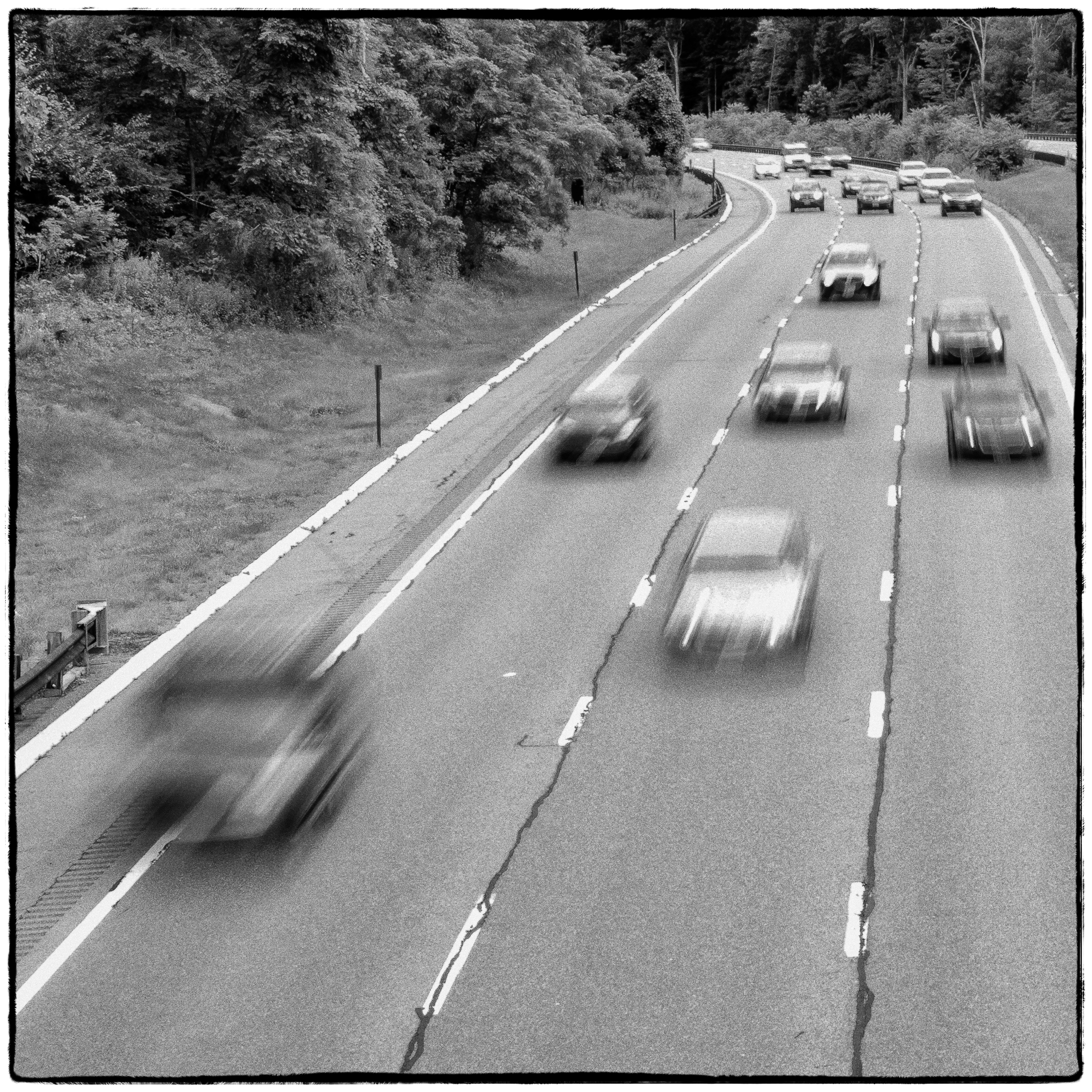
This was taken from the overpass between Woodlands Legacy Fields Park and Granite Knolls Park in the town of Yorktown, NY.
I wanted to capture something of the hustle, bustle and motion of the Taconic State Parkway.
Taken with a Sony RX100 M3.
Photographs and thoughts on photography and camera collecting

This was taken from the overpass between Woodlands Legacy Fields Park and Granite Knolls Park in the town of Yorktown, NY.
I wanted to capture something of the hustle, bustle and motion of the Taconic State Parkway.
Taken with a Sony RX100 M3.

Seen in a nearby Barnes and Noble. I guess I must have been in the F*ch/Sh*t section at the time. It’s nice to see such classy titles are available to us.
Taken with an iPhone 5s

Seen in the outdoor seating area at Kobu Asian Bistro on the lake in Mahopac, NY.
Taken with an Apple iPhone 5s.
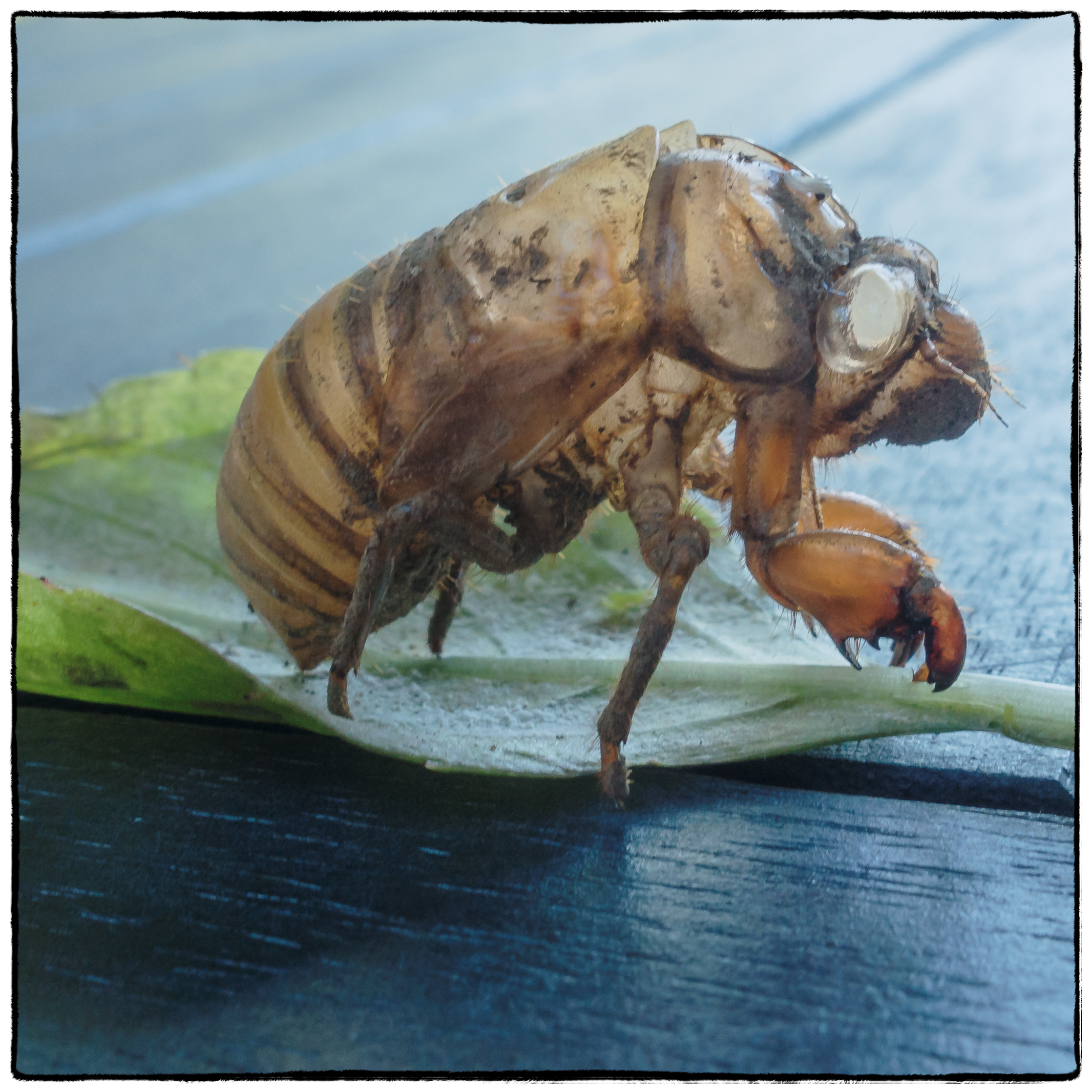
My wife recently came across this scary looking creature in our garden. It’s a bit over one inch long and is actually just an empty shell, the top of which has split and something has emerged (think Alien). After some advice seeking and research I’ve concluded that it’s the nymph form of a cicada.
According to Wikipedia:
In some species of cicada, the males remain in one location and call to attract females. Sometimes several males aggregate and call in chorus. In other species, the males move from place to place, usually with quieter calls while searching for females. The Tettigarctidae differ from other cicadas in producing vibrations in the substrate rather than audible sounds. After mating, the female cuts slits into the bark of a twig where she deposits her eggs.
When the eggs hatch, the newly hatched nymphs drop to the ground and burrow. Cicadas live underground as nymphs for most of their lives at depths down to about 2.5 metres (8 ft). Nymphs have strong front legs for digging and excavating chambers in close proximity to roots where they feed on xylem sap. In the process, their bodies and interior of the burrow become coated in anal fluids. In wet habitats, larger species construct mud towers above ground in order to aerate their burrows. In the final nymphal instar, they construct an exit tunnel to the surface and emerge. They then moult (shed their skins) on a nearby plant for the last time, and emerge as adults. The exuviae or abandoned exoskeletons remain, still clinging to the bark of the tree.
Cicada exuvia. Most cicadas go through a life cycle that lasts from two to five years. Some species have much longer life cycles, such as the North American genus, Magicicada, which has a number of distinct “broods” that go through either a 17-year or, in some parts of the world, a 13-year life cycle. The long life cycles may have developed as a response to predators, such as the cicada killer wasp and praying mantis. A specialist predator with a shorter life cycle of at least two years could not reliably prey upon the cicadas.
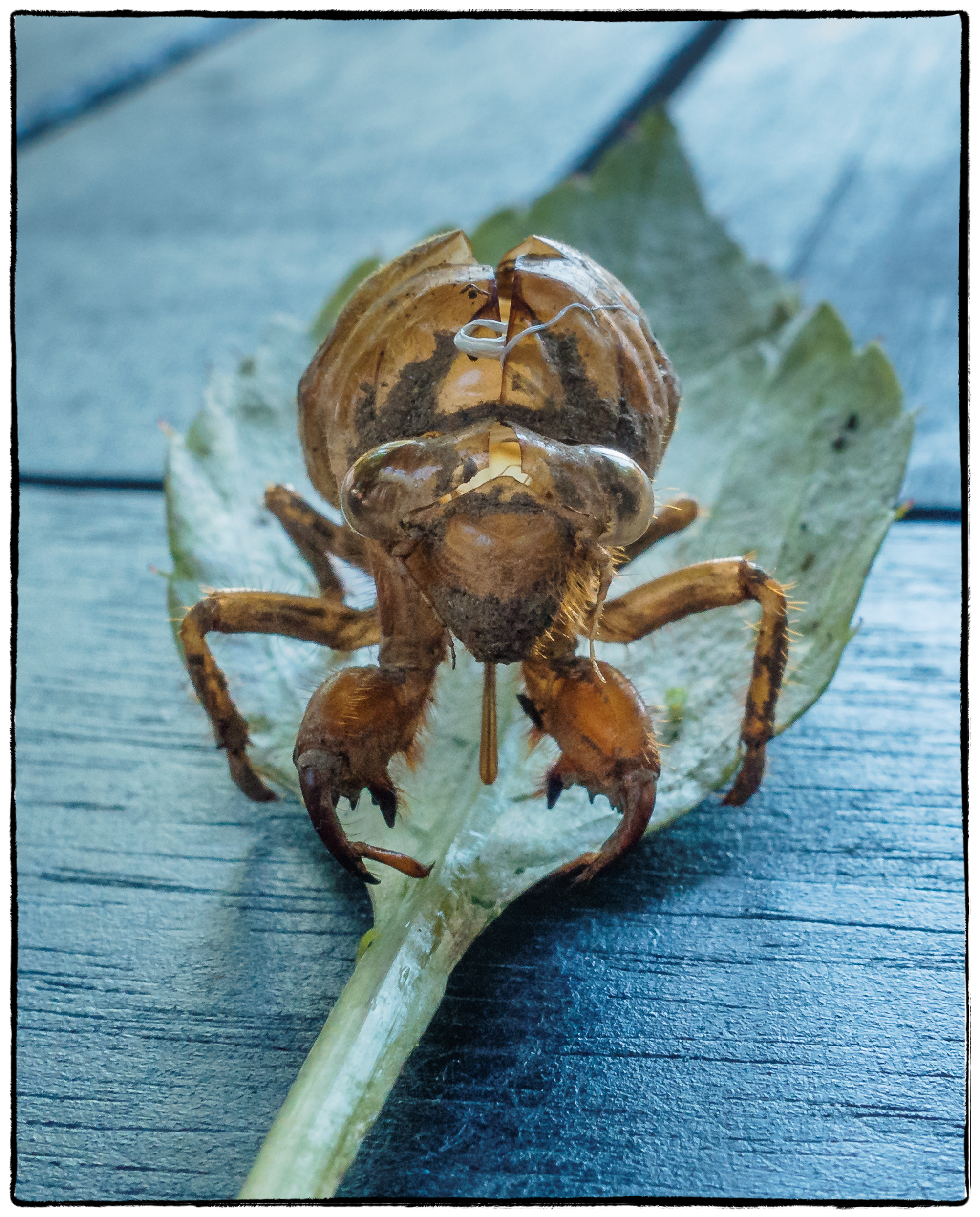
We’ve also seen the adult in our garden (see: Large bug: Cicada?)
Taken with a Sony RX100 M3.

We stopped at the farmers market at the Tompkins Corners Cultural Center (Formerly the United Methodist Church) and I pretty much finished the roll of film in the Olympus Infinity Stylus (Mju).
Again I’m very pleased at how these came out.
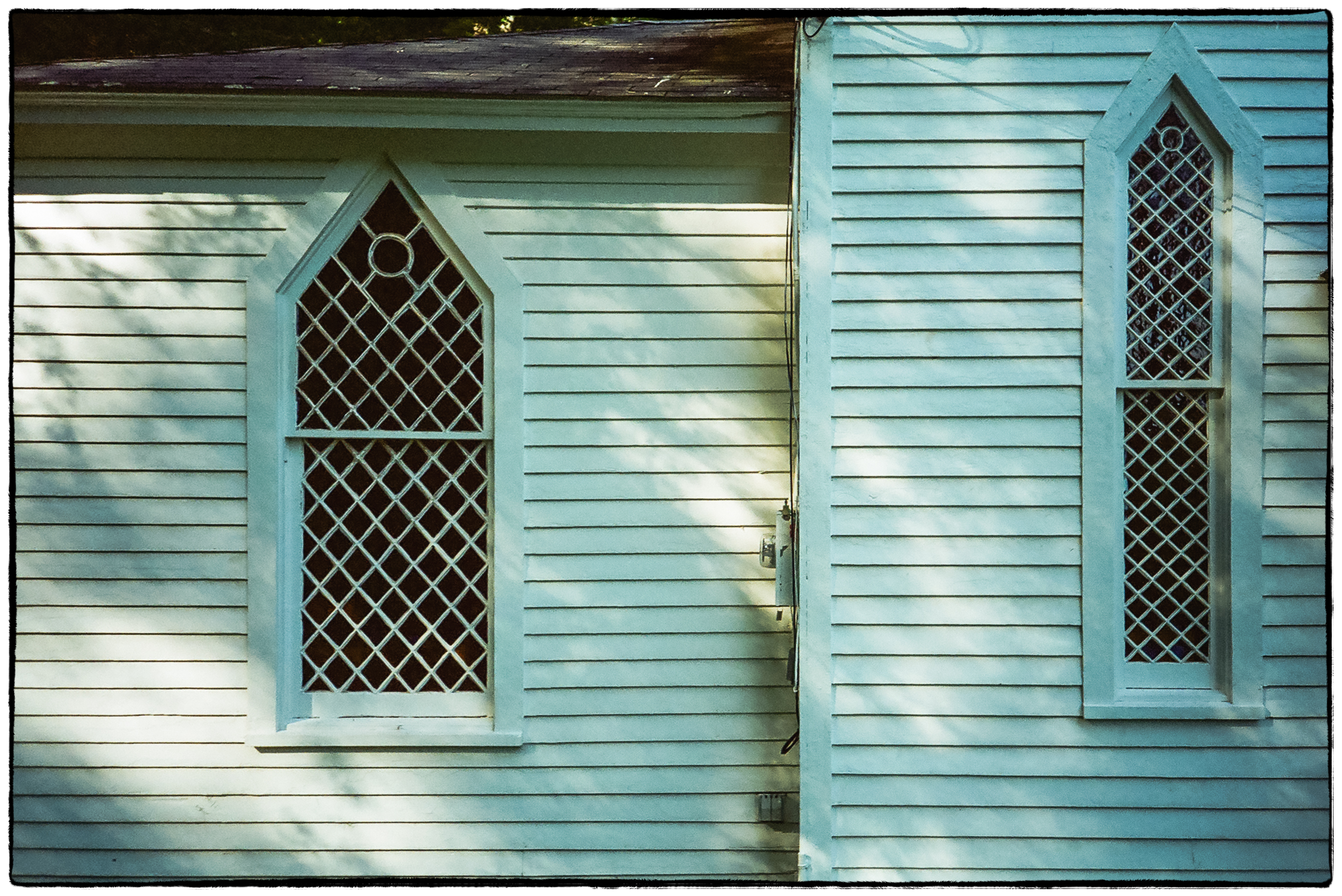
Church Windows.
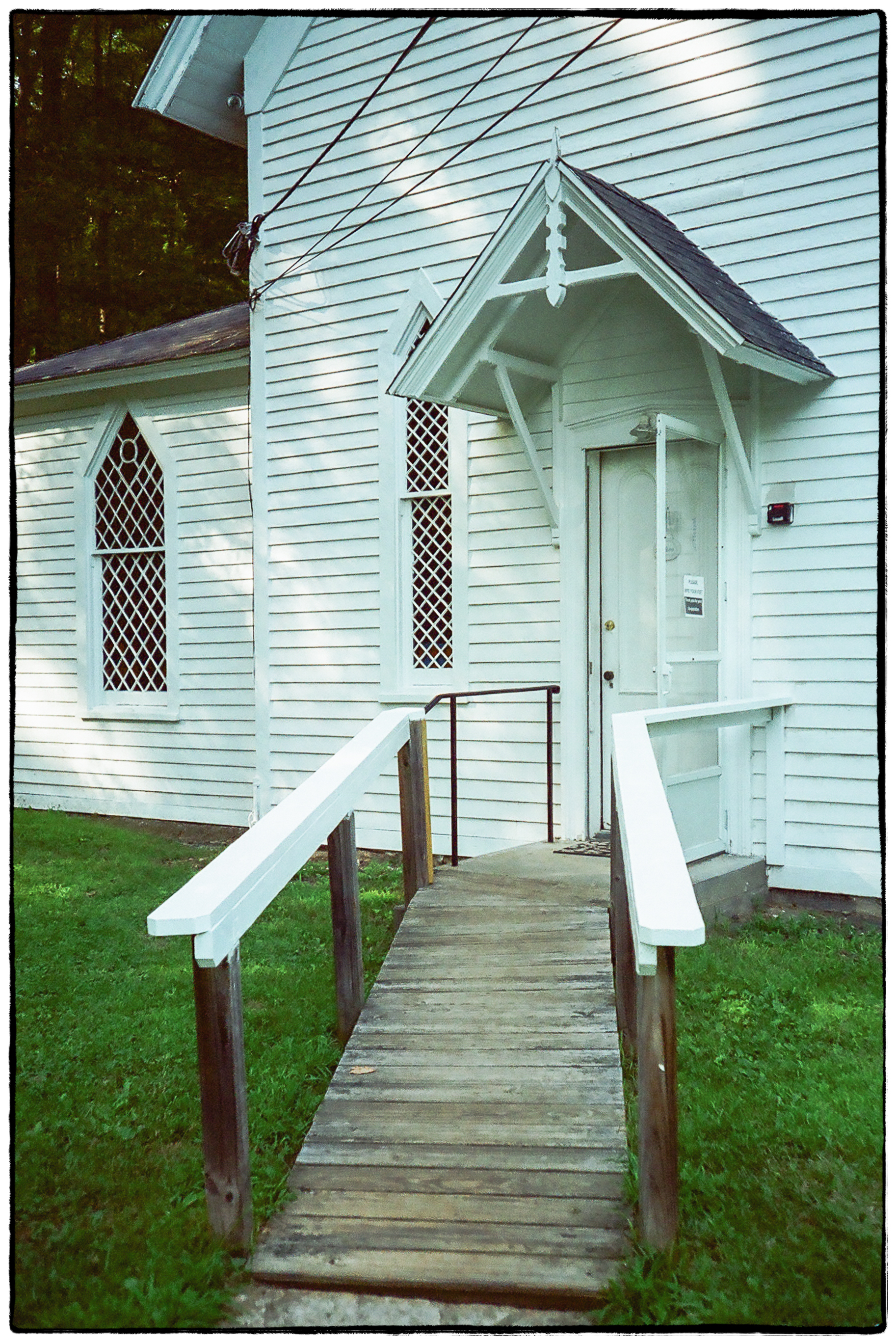
Side Entrance.
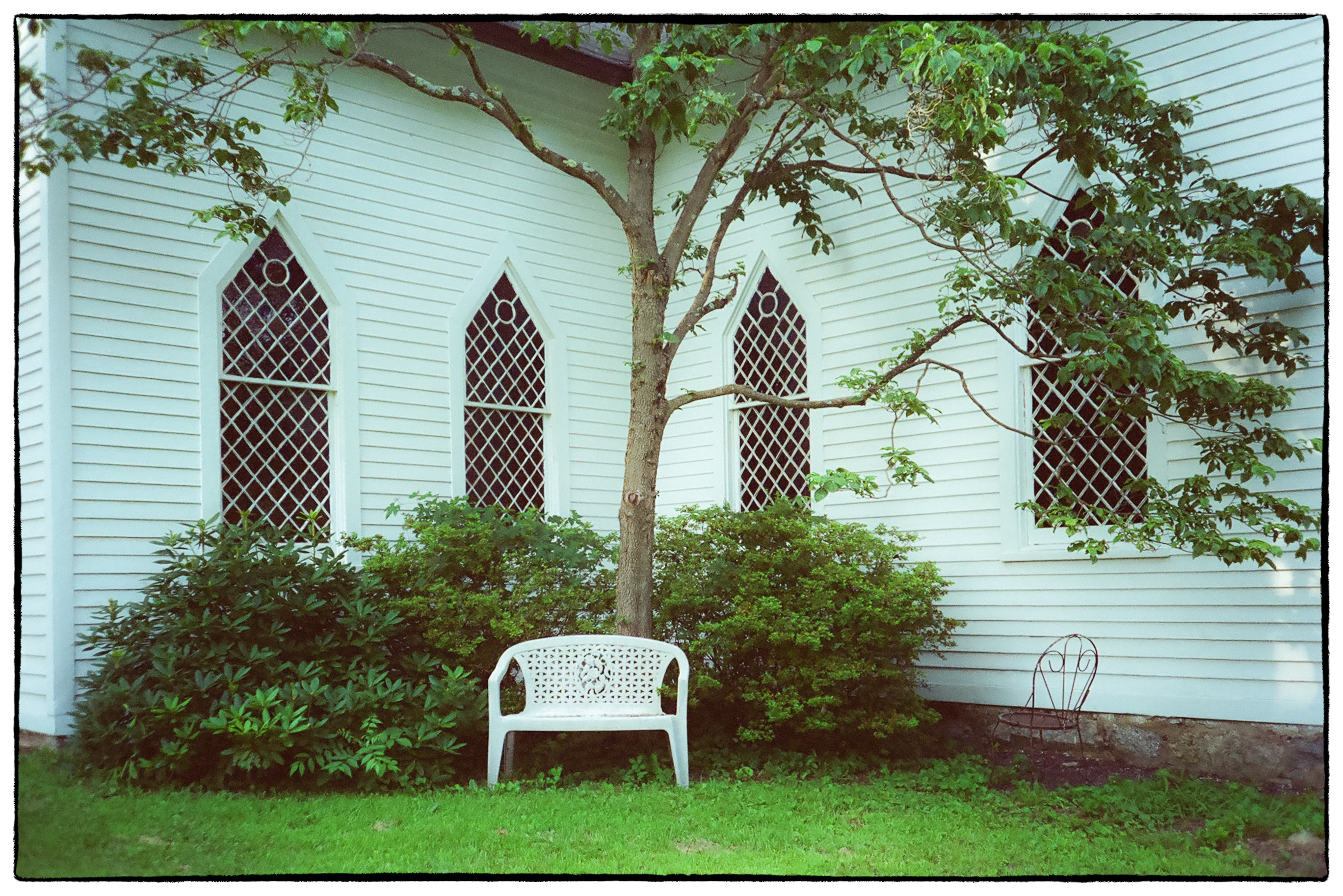
Church with tree and bench.
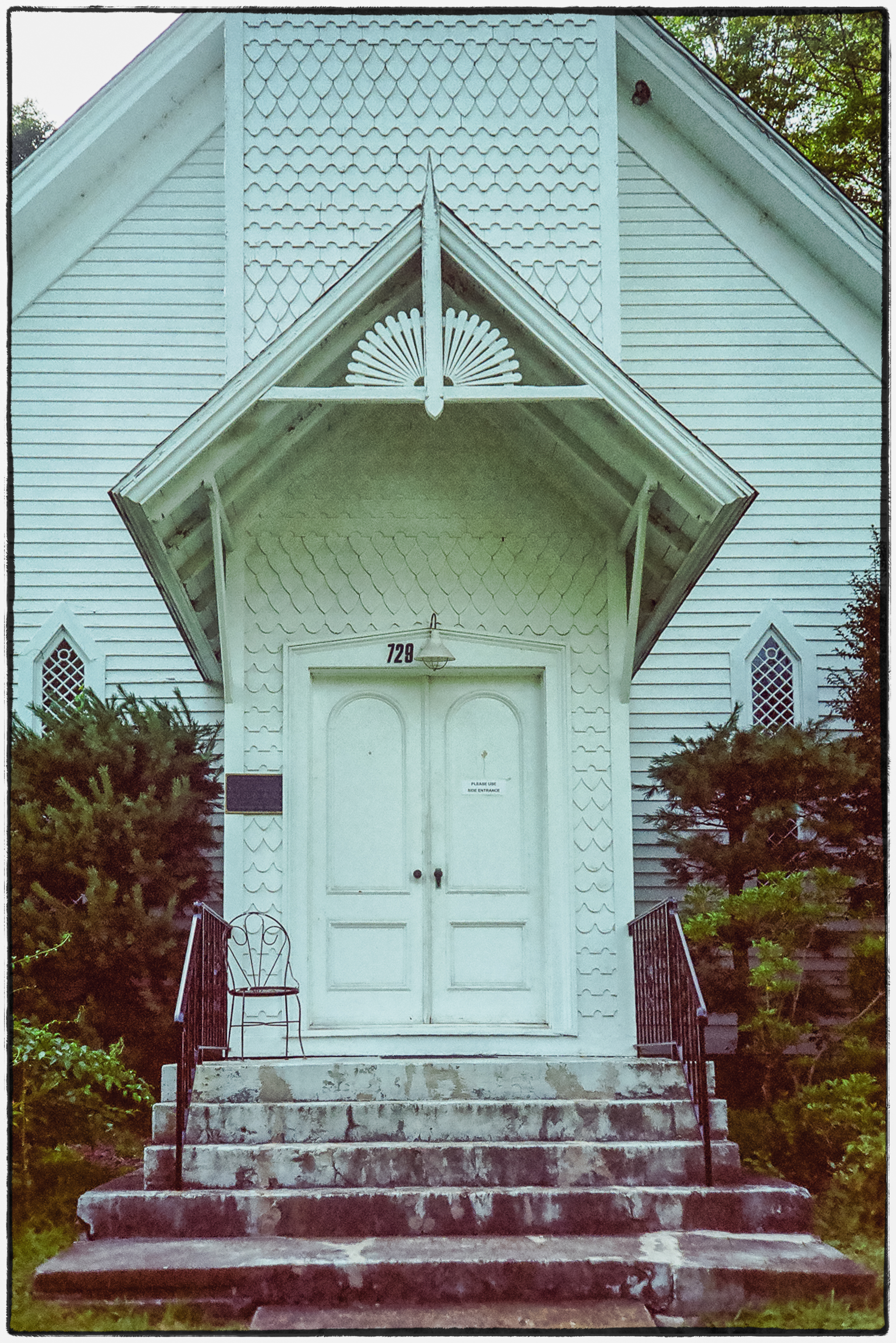
Main Entrance.