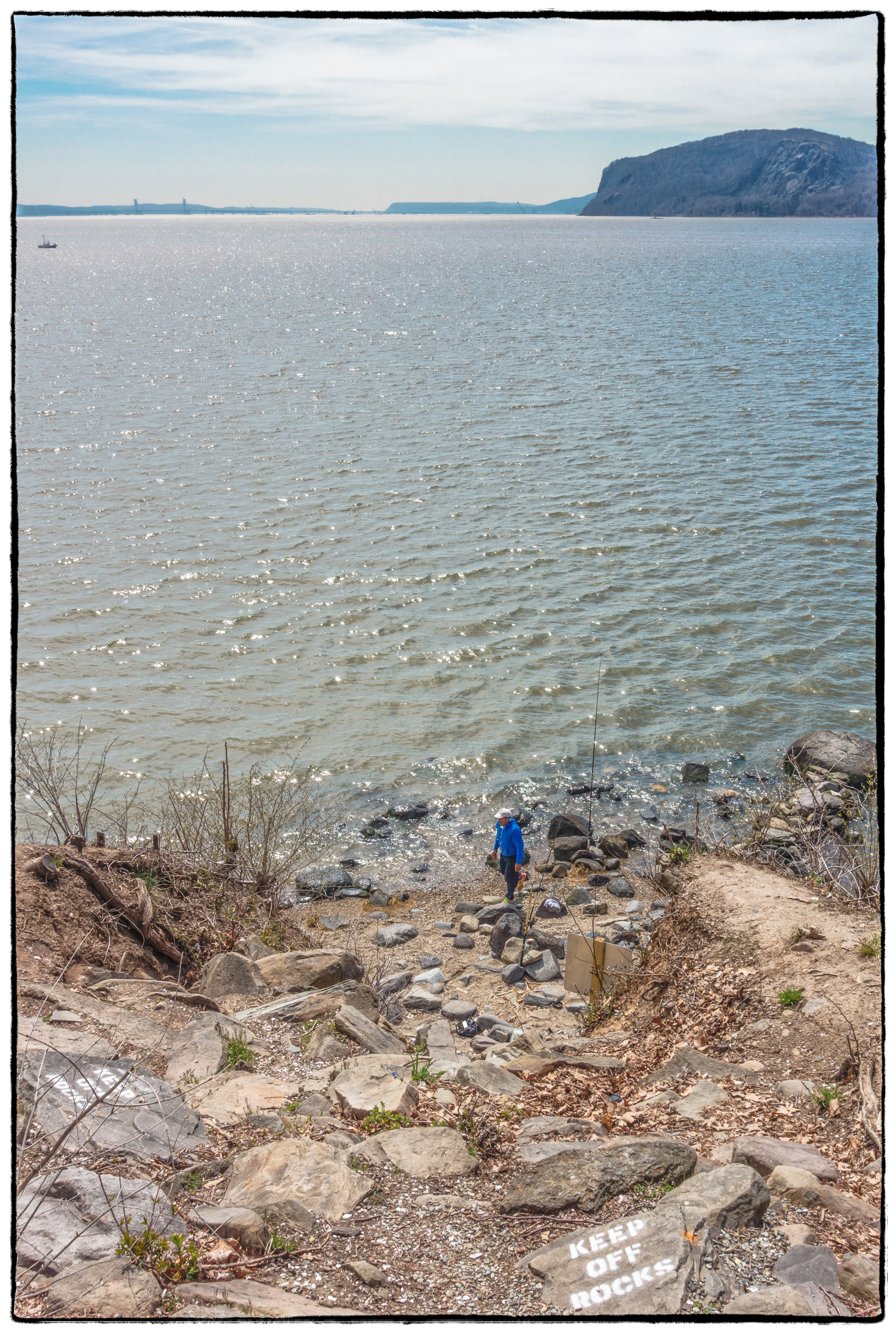
As far south as you can get on Croton Point, this area is known as Teller’s Point. The viewpoint is to the south with Hook Mountain State Park on the right and in the distance the Tappan Zee bridge. I liked the lettering on the rocks: “Keep off the Rocks”. I imagine it would quite difficult to walk down to the water without stepping on the rocks.
Croton Point – Yew Trees
In the previous post (See: Croton Point – Cabins) I referred to a piece by Sarah Gibbs Underhill (a descendant of the original owners of “Interwasser”, a mansion, which once stood on Croton Point) in which she said: “The four yew trees are still standing, and have grown to heights of 60 to 100 feet. Since this species can live to be up to 1,000 years old, I have undertaken the task of tending to their health.”
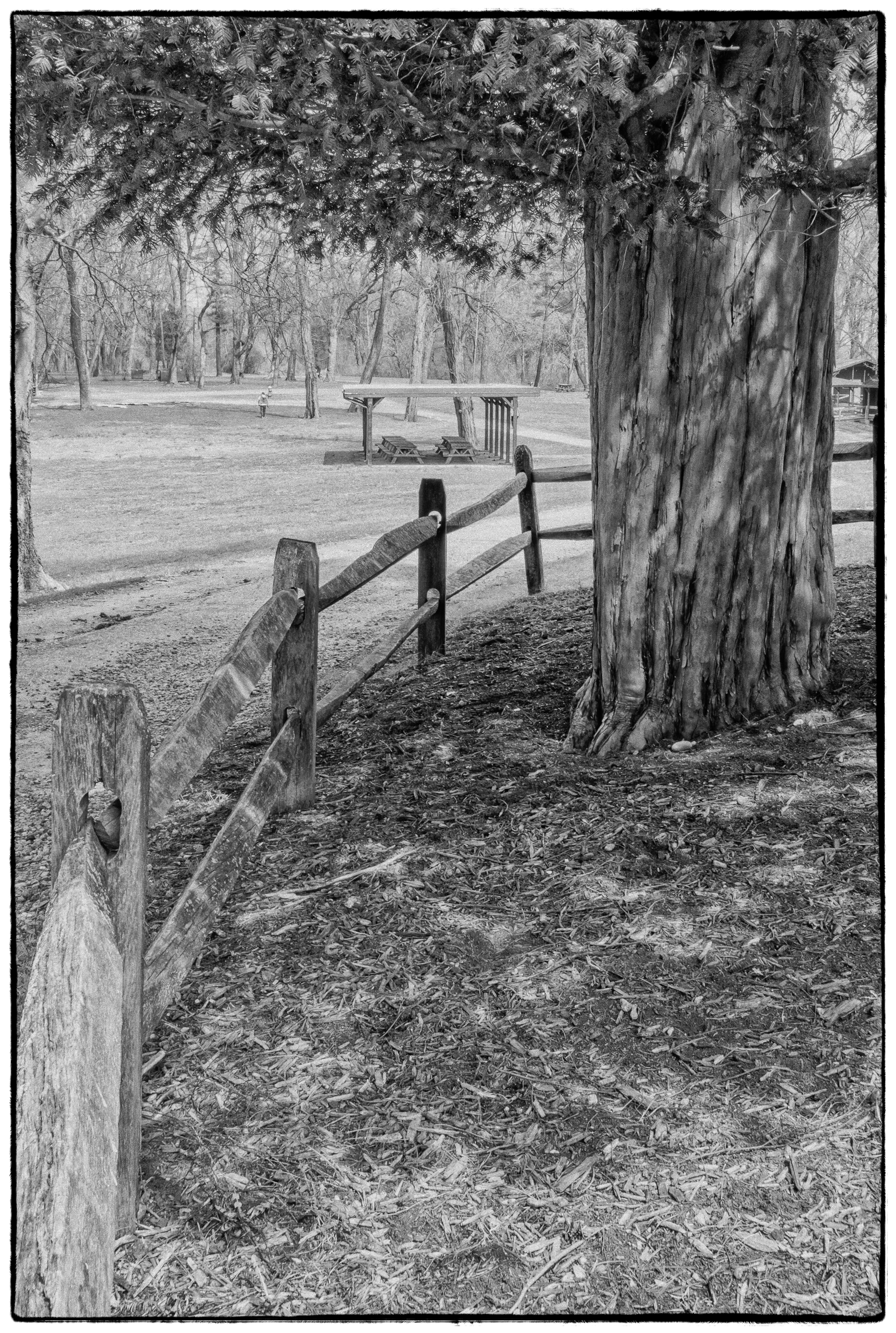
As the photographs in this post show, the yew trees are, indeed, still there. A nearby plaque reads:
Historic Croton Yews. These four ENGLISH YEWS (taxus baccata) were planted by Dr. Richard Underhill in the mid 1800s when he lived here with his family. Their mansion stood nearby overlooking the Hudson River. The yews were purchased for thirty-seven and 1/2 cents each from a nursery in Flushing, NY. They are now on the New York State Historic Tree Register.
In the old days my country, the United Kingdom (although it wasn’t known as such at the time), was known for its use of the longbow (e.g. as at the Battle of Agincourt). Longbows were generally made from Yew trees.
Croton Point – Cabins
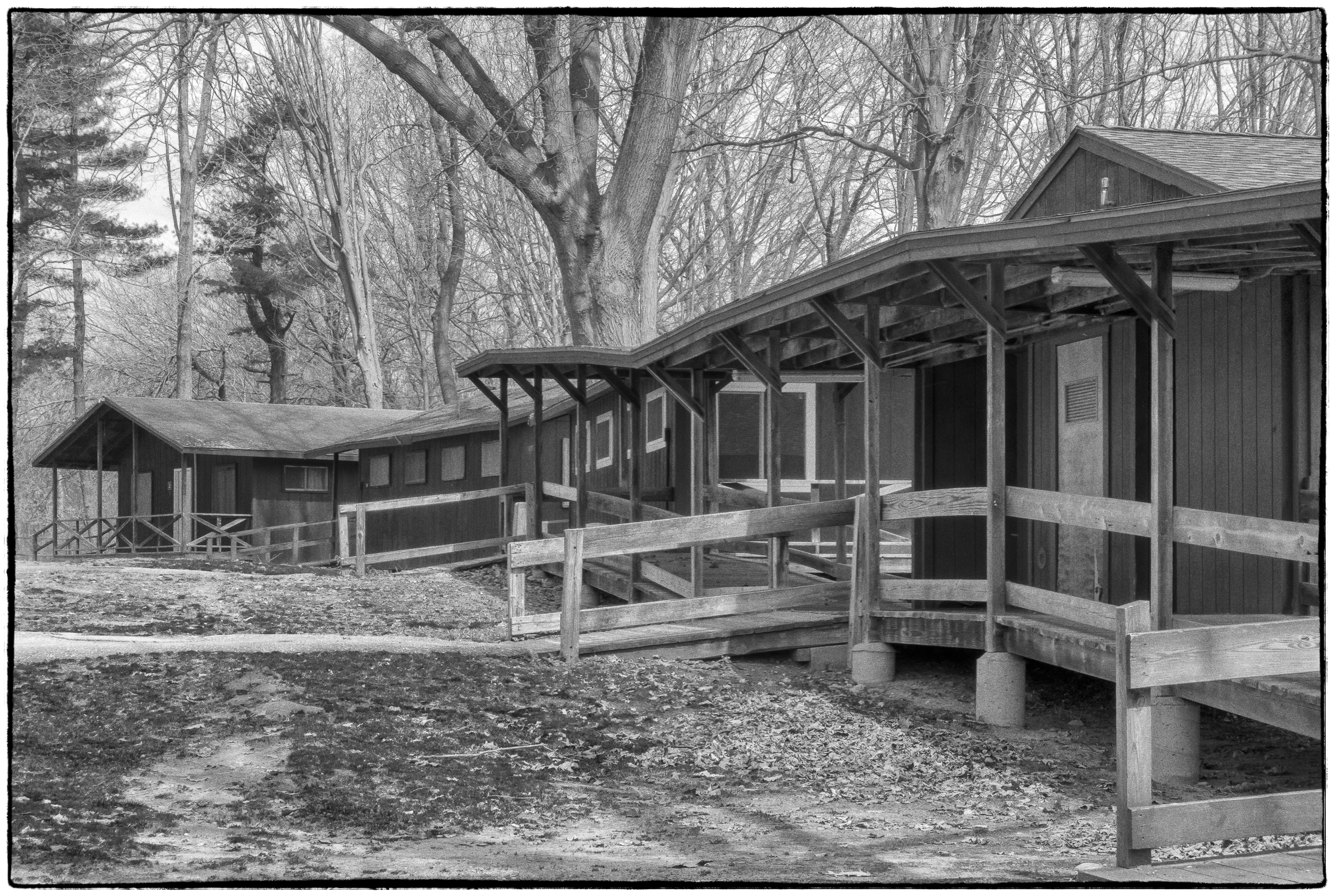
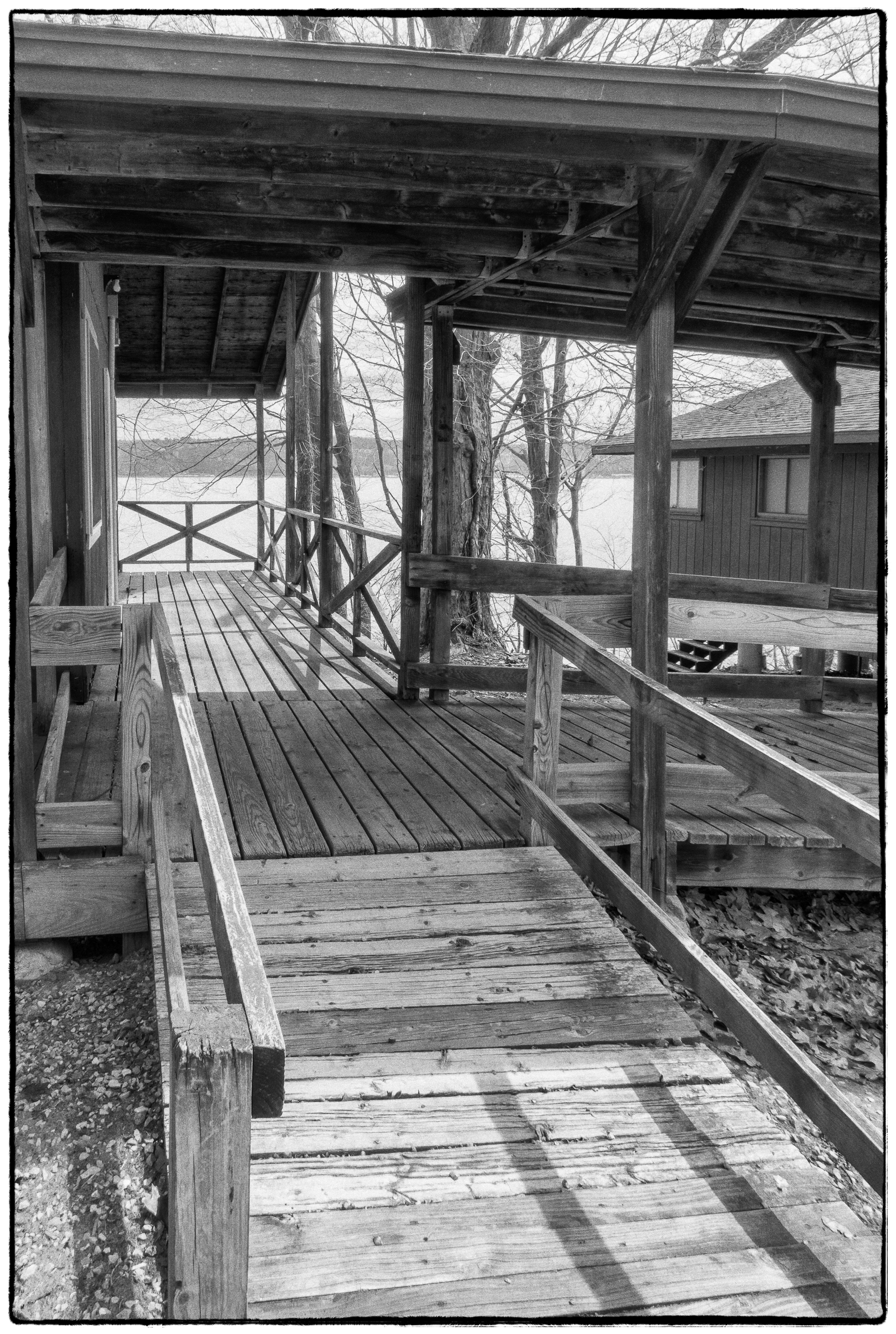
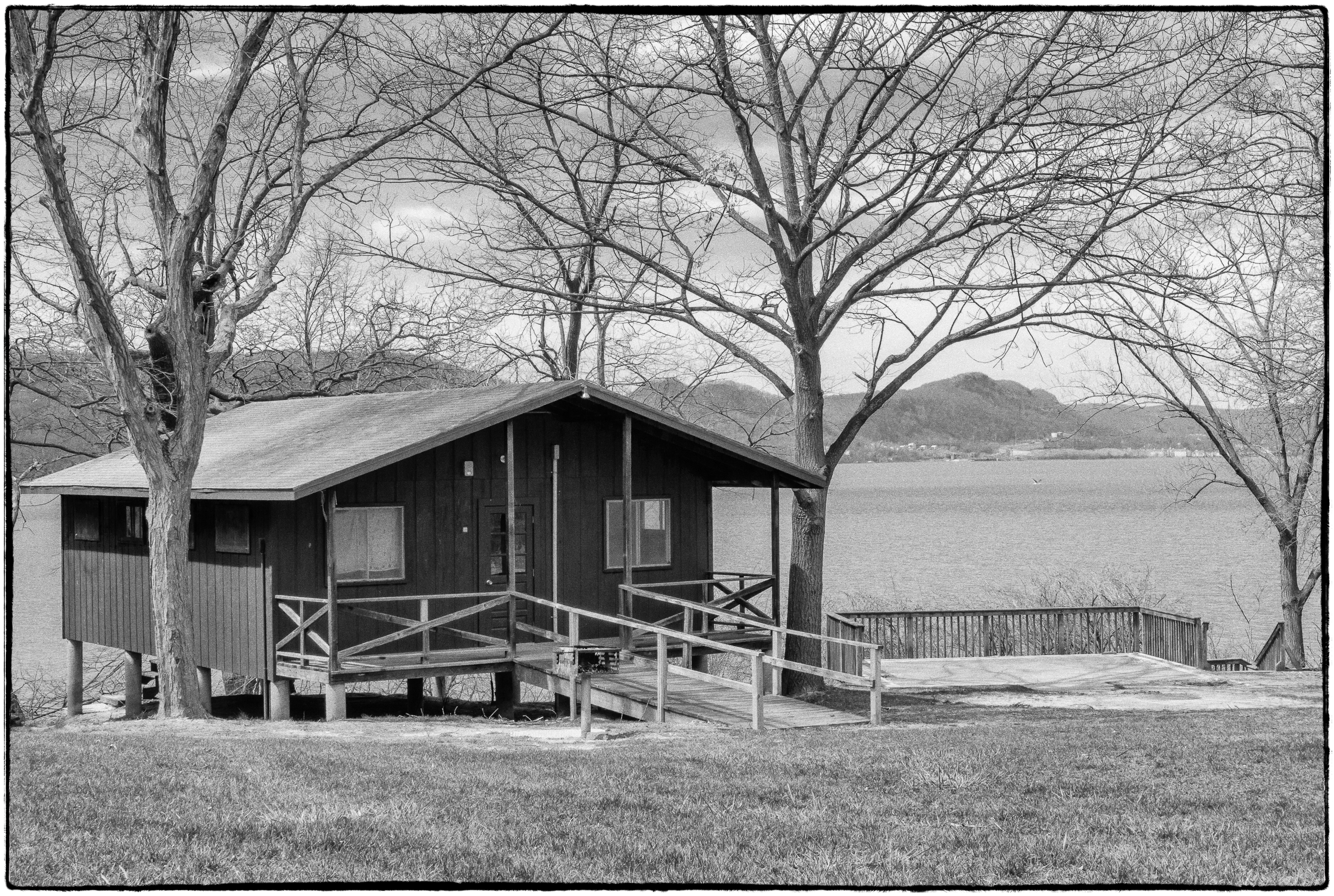
Near the southernmost tip of Croton Point, Teller’s Point are a number of wooden cabins. I couldn’t see inside, but I could see toilet facilities outside and from reading I’m led to believe that the cabins have electricity, water and at least in some cases have tv (although apparently ancient tv sets). The location of the cabins is superb with views out over Croton Bay for those on one side of Teller’s Point and of the Hudson River on the other.
It’s perhaps not surprising that the views are so spectacular because it’s here that the old mansion used to stand. It was called Interwasser (meaning between waters) and additional information can be found in an interesting piece by Sarah Gibbs Underhill (a descendant of the original owners) entitled Tales from Croton Point on Brickcollecting.com (more on the connection to brick making later).
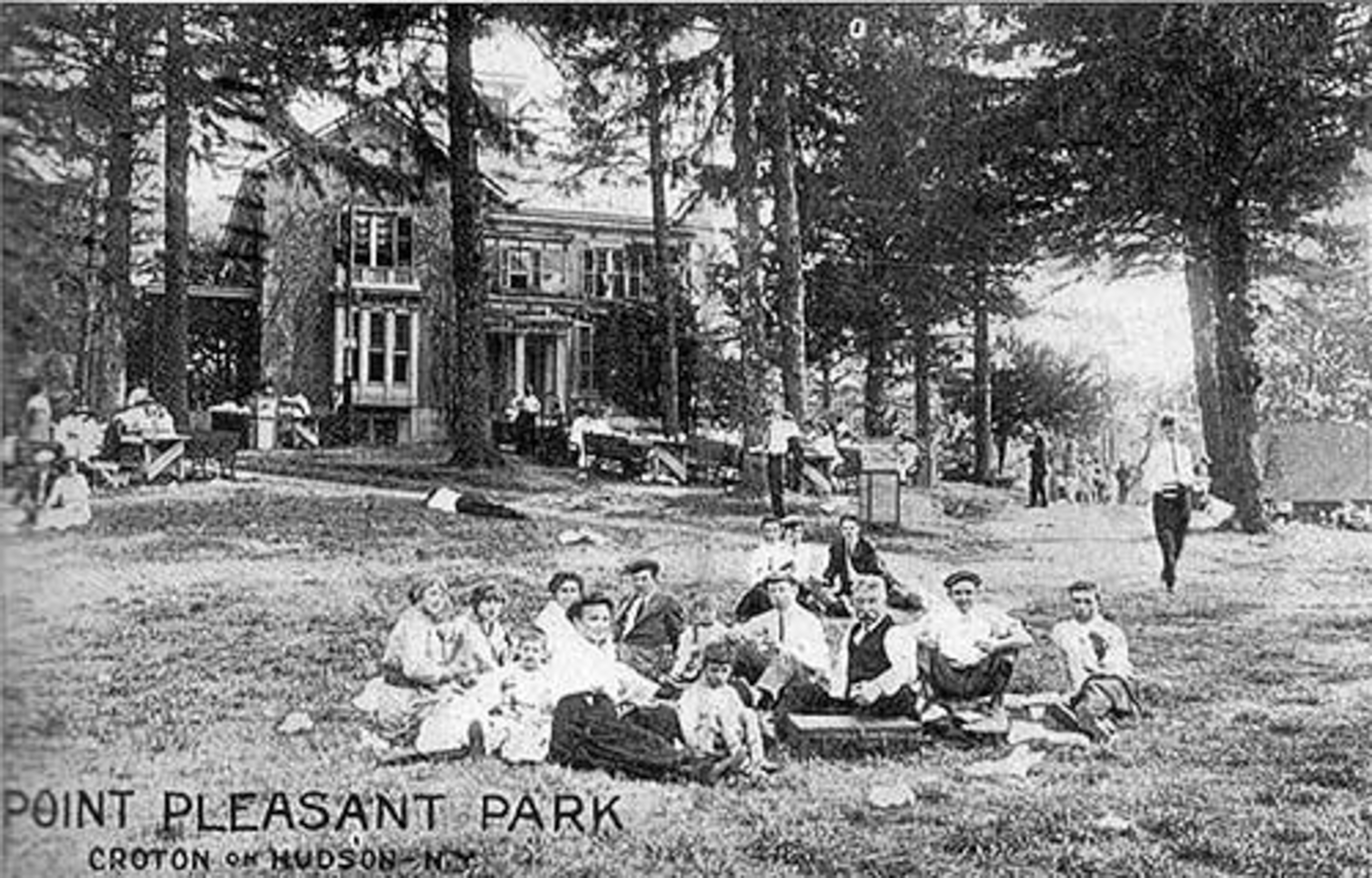
Picnicing on the Lawn at Interwasser, Croton Point, NY from the piece mentioned above.
Dr. Richard T. Underhill, b. 1802, the vintner and proprietor of the southern part of Croton Point, had discontinued his medical practice in New York City to take up residence out on the tip of the Point. He built an Italianate villa there in 1846 as his residence which he christened “Interwasser”. In 1850 four English yew trees were planted in front of this home and I can imagine his brother William, of the IXL word-play, having a lot of fun with the term “U’s yews”.
Today few traces of the house remain; only a few Ashlar marble foundation stones peeking out of the ground, and an old stone hitching post. I pitch my tent on this site during the Clearwater festival and enjoy the site inhabited by my forebears. Cooled by river breezes and with wonderful views of the Hudson (more so in the winter when the leaves are off the trees), it is still a spectacular spot. The four yew trees are still standing, and have grown to heights of 60 to 100 feet. Since this species can live to be up to 1,000 years old, I have undertaken the task of tending to their health (see press release below). An unpublished but formally written historical account left by an Underhill descendant in the Westchester County Historical Society collection describes “Interwasser” thus: “Ashlar marble quarried at (nearby) Sing-Sing and cut by prison labor formed the basement while the upper portion was stuccoed brick. Over the front door was a tower room enjoying extensive views up and down the river. It was another large and commodious house given to hospitality and one of the show pieces in the county. Visitors from far and near were attracted to the Point houses, as traditions and letters bear ample testimony. Among the many assets of the place were shad fishing and crabbing, duck shooting and hunting, boating and skating, together with the wonderful gardens and orchards and all permeated with the most cordial atmosphere.”
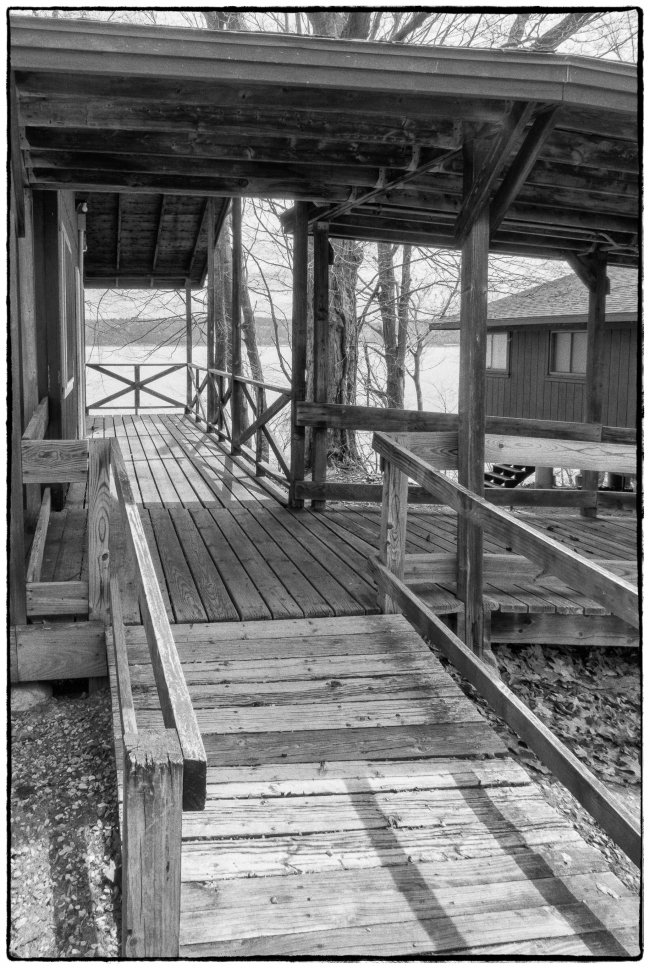
Cabin facing Croton Bay with the Bay in the background.
Cabin facing the Hudson River with the river in the background.

Croton Point – Riverdrifters Gallery
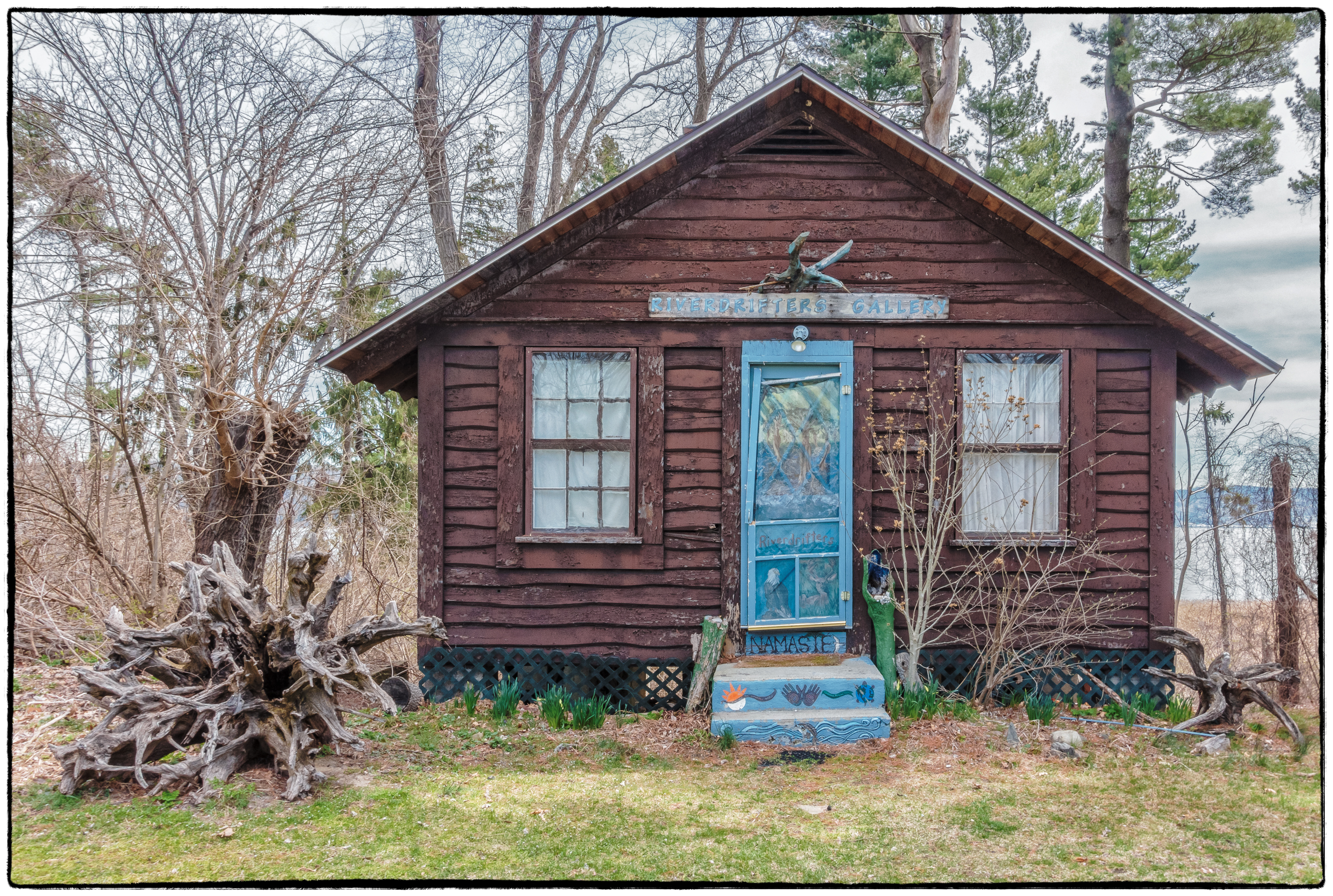
This rustic building is the Riverdrifters Gallery, founded by Barbara Hunt and Jeanne D. Shaw. According to a 2008 post on Crotonblog entitled: The Artists and the Driftwood Sculptures:
Barbara Hunt and Jeanne D. Shaw, artists and co-founders of the new Riverdrifters Gallery in Croton Point Park, hosted a phenomenal program for young and old on the beach at Croton Point Park, on Saturday, April 5.
Barbara and Jeanne wanted to offer the community an opportunity to connect with the earth, a stranger, and the artist within. They achieved their goals and more.
On Saturday starting around 11:00 AM people began showing up on the beach. The directions were simple, make art using only what you can find here on the beach, later to be recycled appropriately. After you make your art you must connect it to someone else’s art.
By 4:00 PM the beach was covered in fairy huts, horse barns, ships, there was even a horse ready to take jump. Each piece of art was not only connected to the next but it connected to the Hudson River as well.
When I went by the gallery was closed. I hope that this was because I picked the wrong day, or because the Summer season had not actually officially started yet and not because the gallery had closed for good. I’ll have to go back and check.
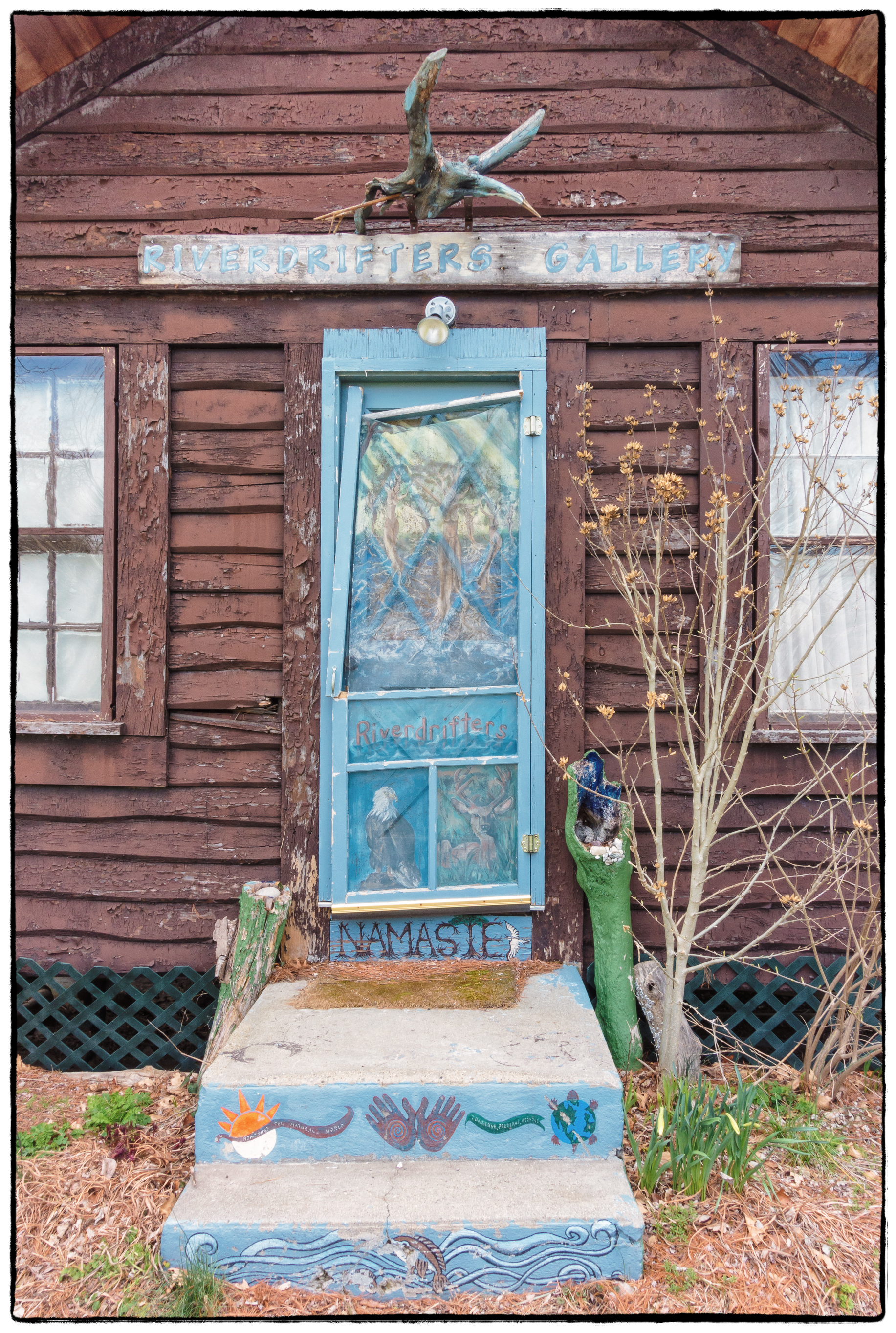
Doorway
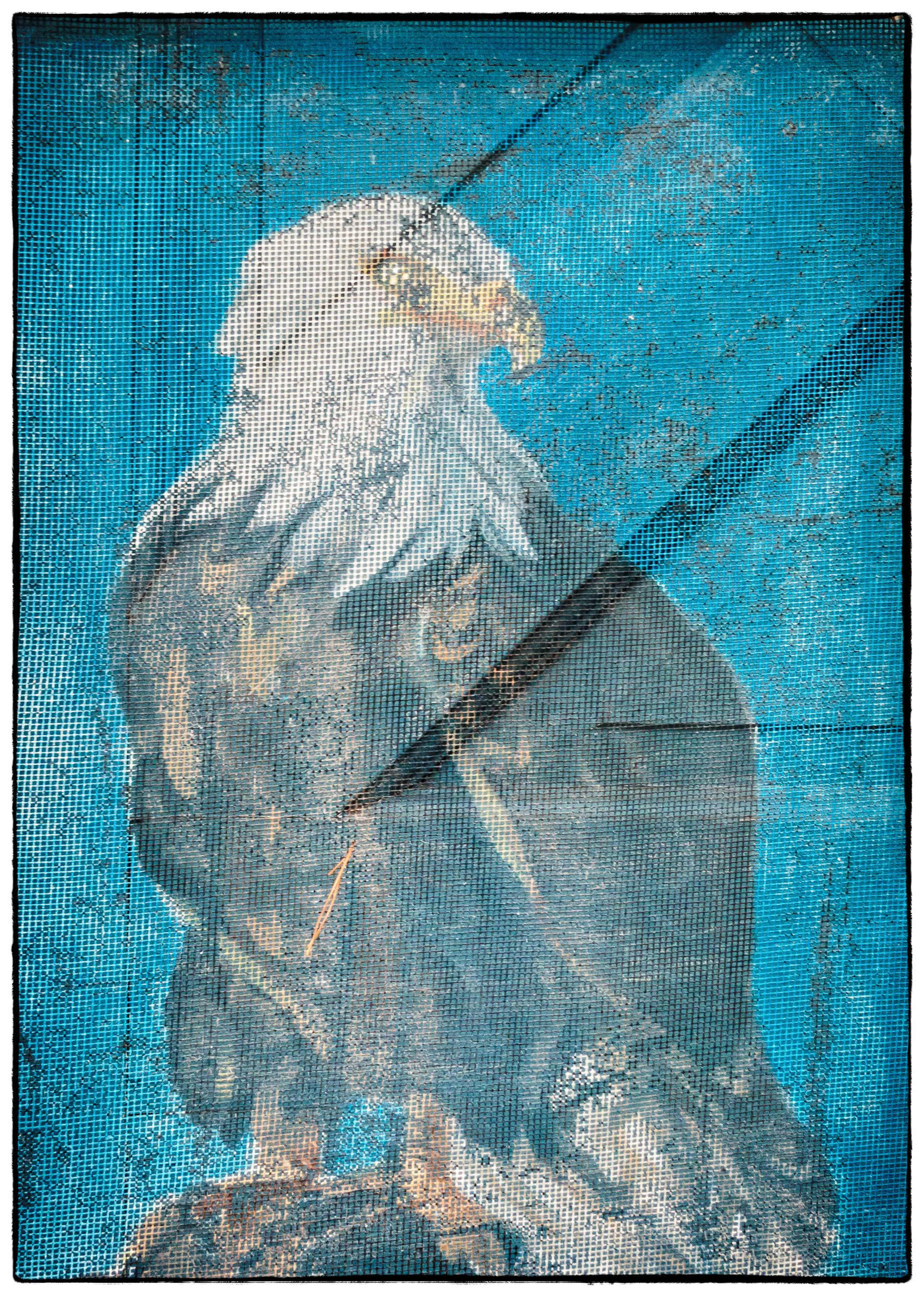
Detail of one of the panels in the doorway: Bald Headed Eagle
Croton Point – RV Park
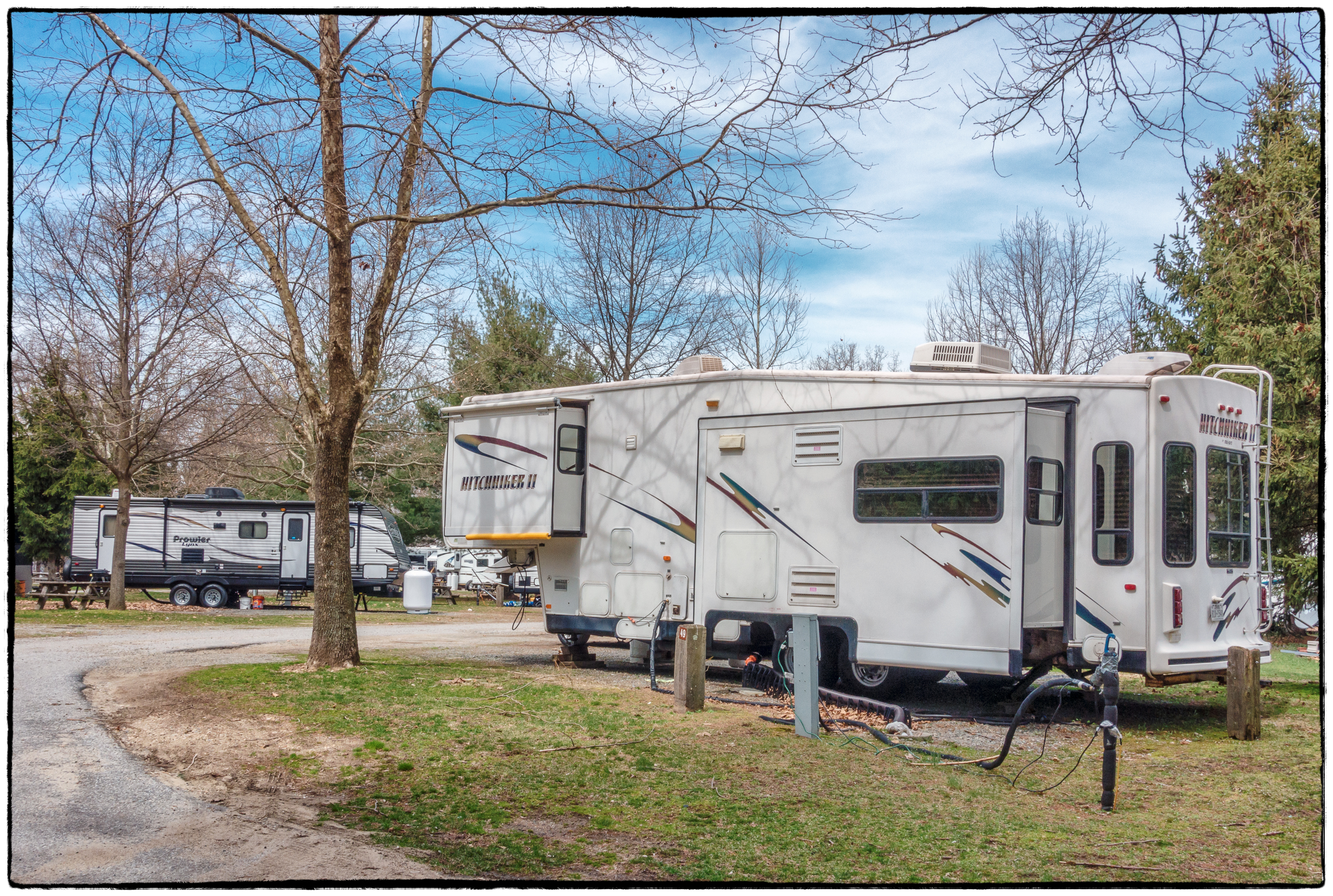
I’d never noticed this RV park before. Maybe I’d just not walked by this particular part of the park, or maybe I’d just been there at the wrong time of year. I’m not sure how I feel about it. While people should certainly have the right to visit such pleasant places, I can’t help but feel that these huge vehicles distract from the picturesque nature of the place. They’re certainly not the most attractive things I’ve ever seen. But then again it’s pretty easy to avoid seeing them. There are many places in the park where you’d never even know they existed.
It seems that I’m not the only person to have concerns though, particularly since some of the RV owners are living the park year round. According to a 2015 article in the Journal News entitled: Croton Point RV park riles conservationists:
A growing number of conservationists, however, have raised questions about year-round living in the 500-acre park, which is a destination for bird watchers, dog walkers, model-airplane aficionados and folk-music enthusiasts.
Tom Andersen, who chairs the Pound Ridge Open Space Advisory Committee, was disturbed this fall when he saw the RV colony at Croton Point, and suggested Tax Watch investigate. After reading last week’s column, Andersen, who negotiated major Westchester open-space acquisitions as project director at the Westchester Land Trust, said the county had turned the park into a money-making housing operation.
“The park is supposed to be a place for recreation, not a trailer park,” said Andersen. “It’s nice the RV owners are paying, and it’s nice the county is doing a favor for people living there. But you can’t live in a park. That’s not consistent with park use. A park is for people to camp for weekends, or weeks. But it’s not for people to move in.
I have to say that I agree.