A treasured memory

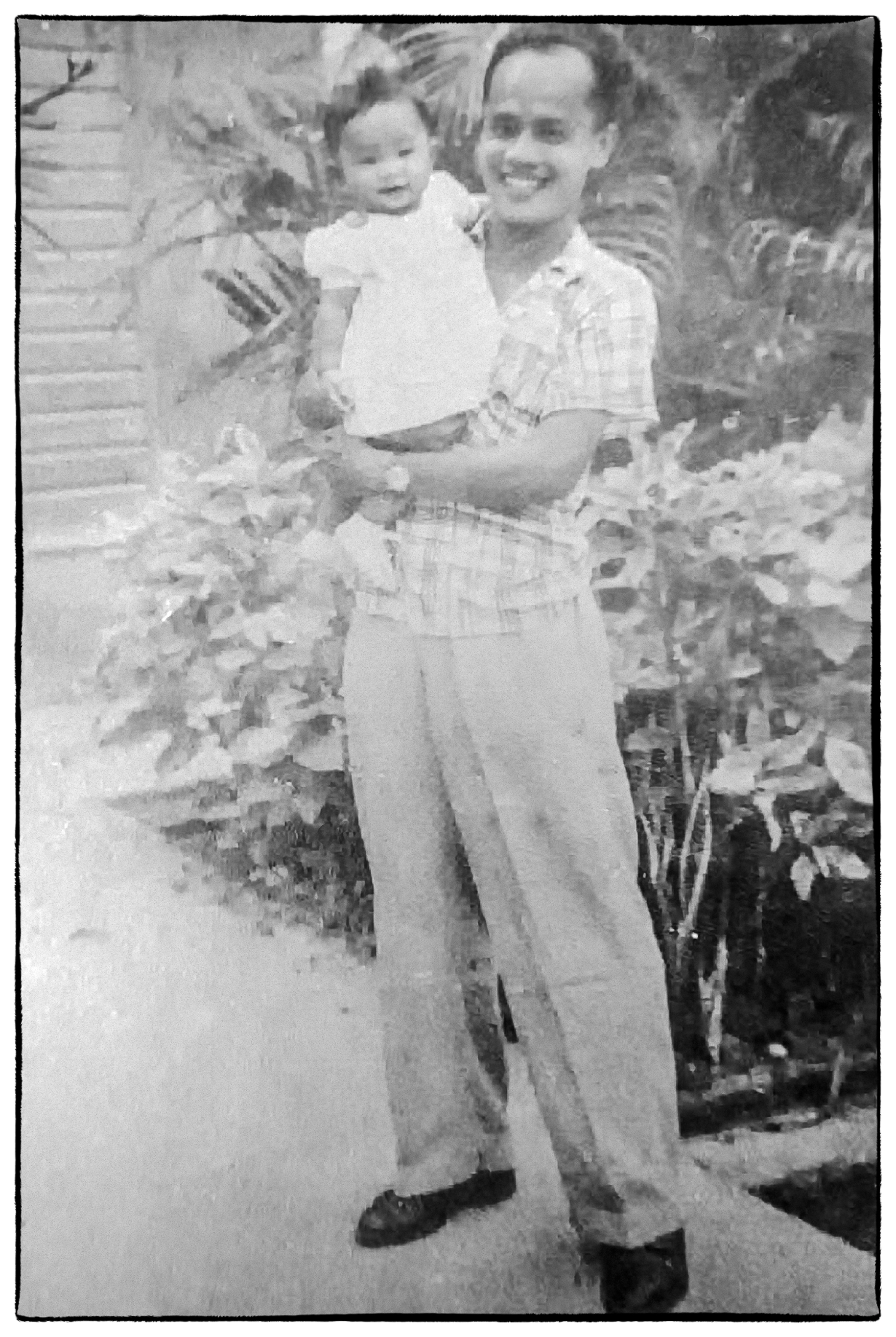
We recently received this picture from one of my wife’s relatives. The small child is my wife aged about 6 months, being held by her father. It’s was very low resolution scan, full of spots and other marks i.e. not a particularly good scan.

I was able to eliminate many of the marks and improve the overall exposure. I printed it on our Canon Selphy CP 1200 (see: Another Christmas Present) and it actually printed much better than it appears on screen.

It’s not a brilliant picture, but it’s one of very pictures that my wife has of herself with her father. She is the oldest child and has five brothers. My sense is that she was always very close to her father, who passed away in his 50s (way too early) in 1978.

So for all it’s faults this picture will remain a treasured memory. They both look very happy.

Canon Eos 650 – Results

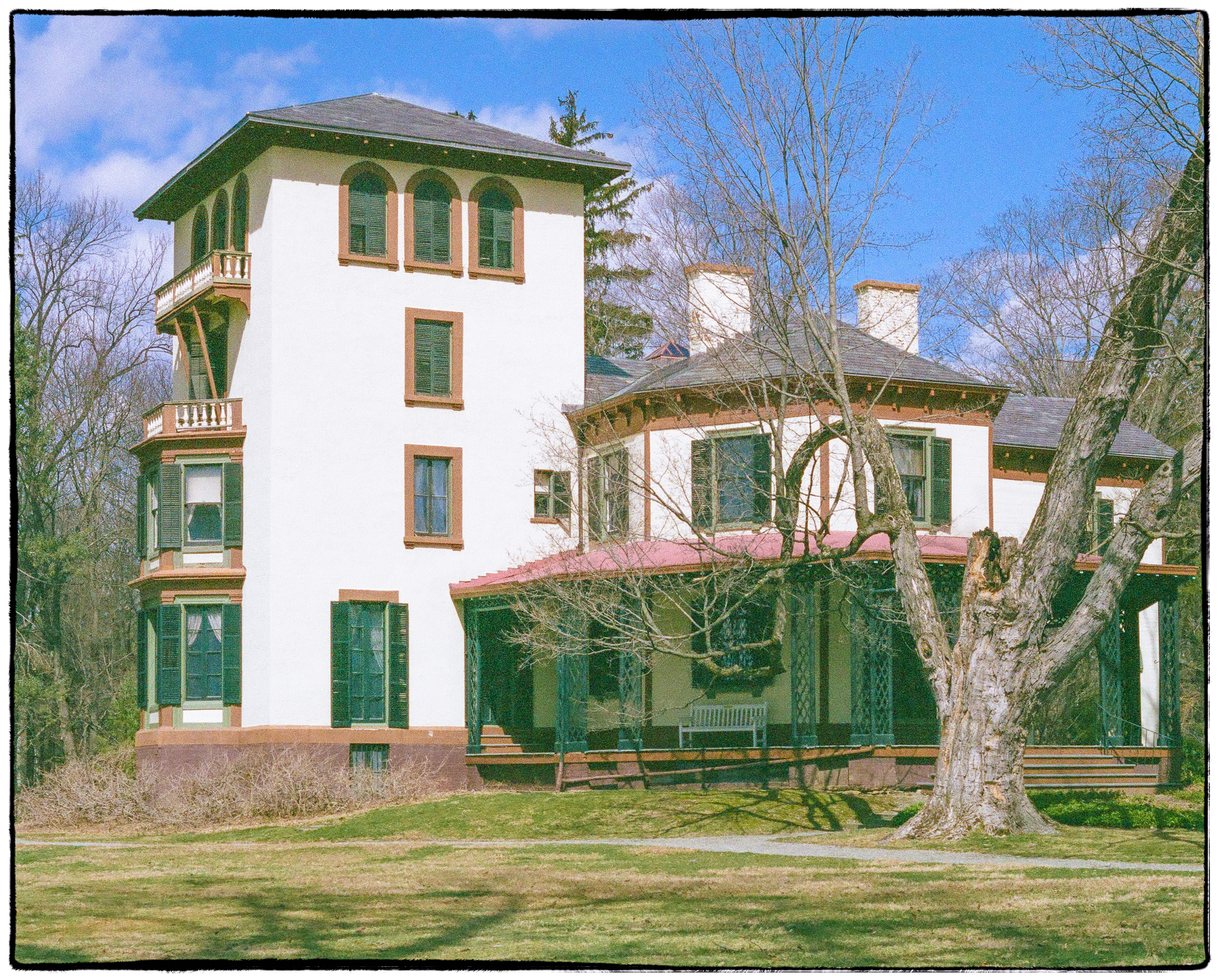
Here a few results from my March Film camera: a Canon EOS 650 with Canon EF 50mm f1.8. The pictures were taken at Locust Grove, the former home of Samuel F.B. Morse the renowned inventor, and unknown to me until our visit accomplished painter (particularly of portraits). Above is the house. I also took along a digital camera so I’ll say more about the house when I post those pictures. I used a very old (I don’t recall exactly how old, but definitely many years old) roll of Agfa Vista 200 that I had lying around.

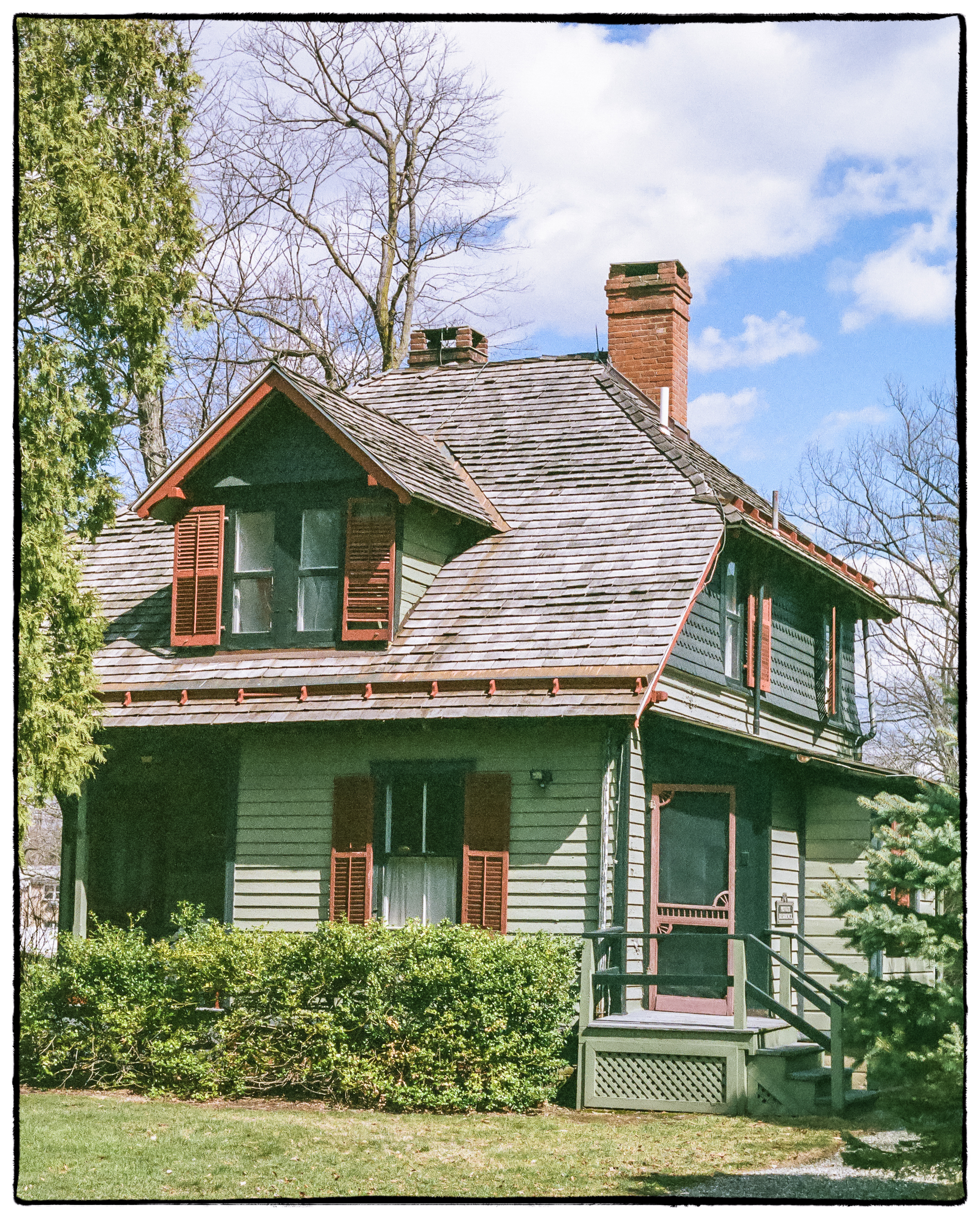
The Caretaker’s Cottage.

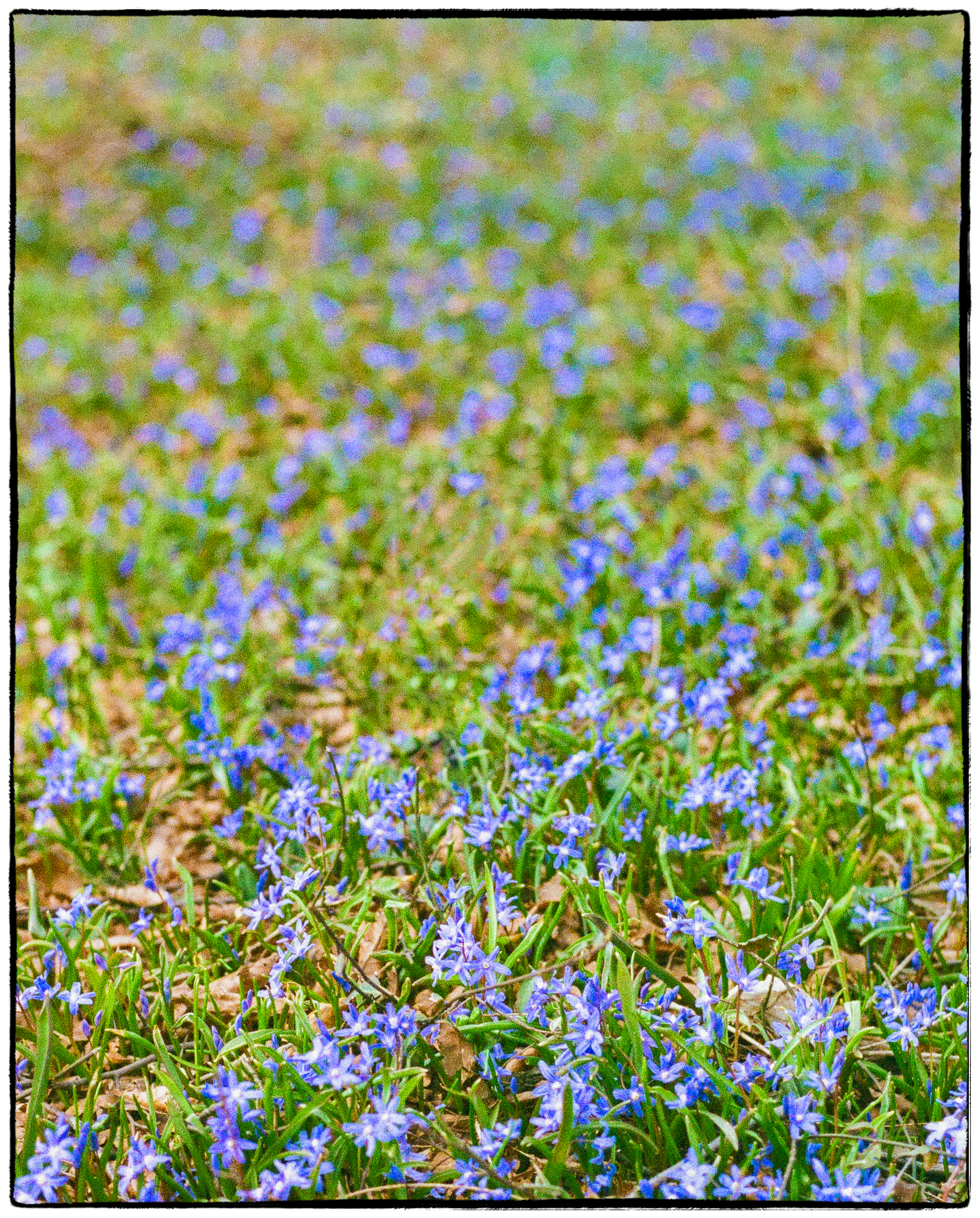
Blue flowers. These were all over.

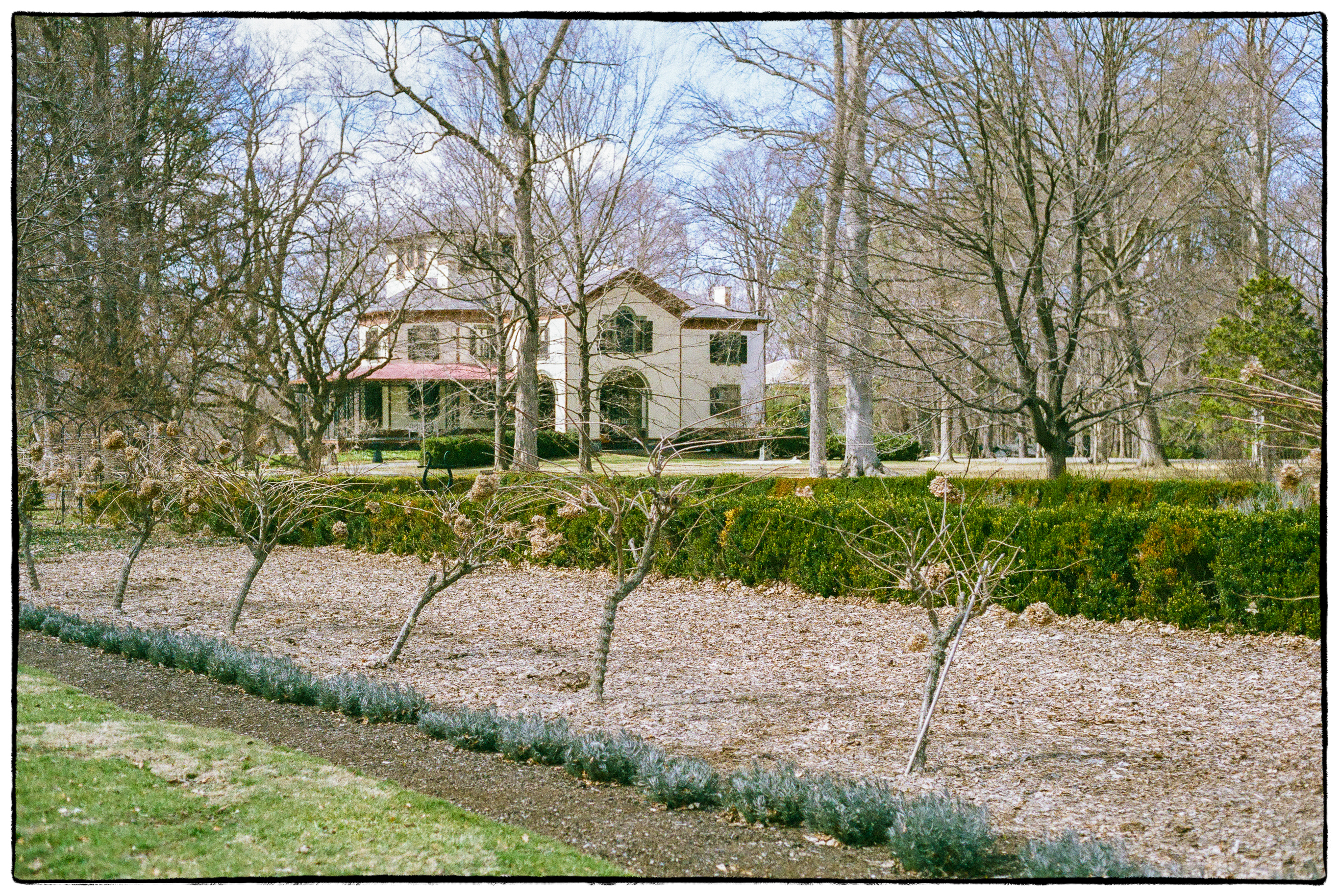
View of the house from the gardens. Here I tried the “Depth” mode where you set the closest point you want to be in focus, then the farthest point and the camera selects the optimal aperture to achieve this. I’ve read that this was also available on the EOS-1N, but I can’t recall seeing it on any non-Canon camera. It seemed to work.

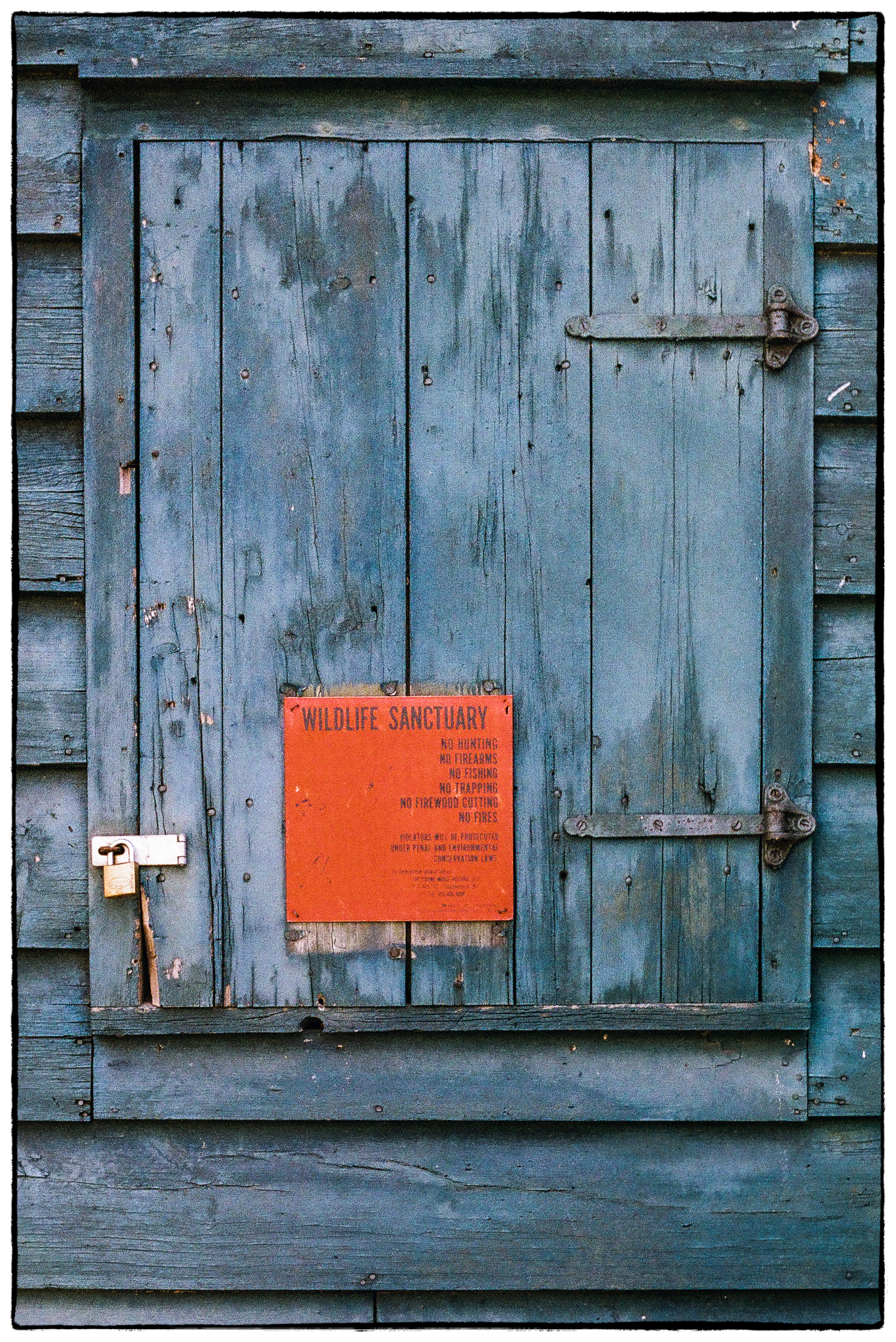
Barn Door

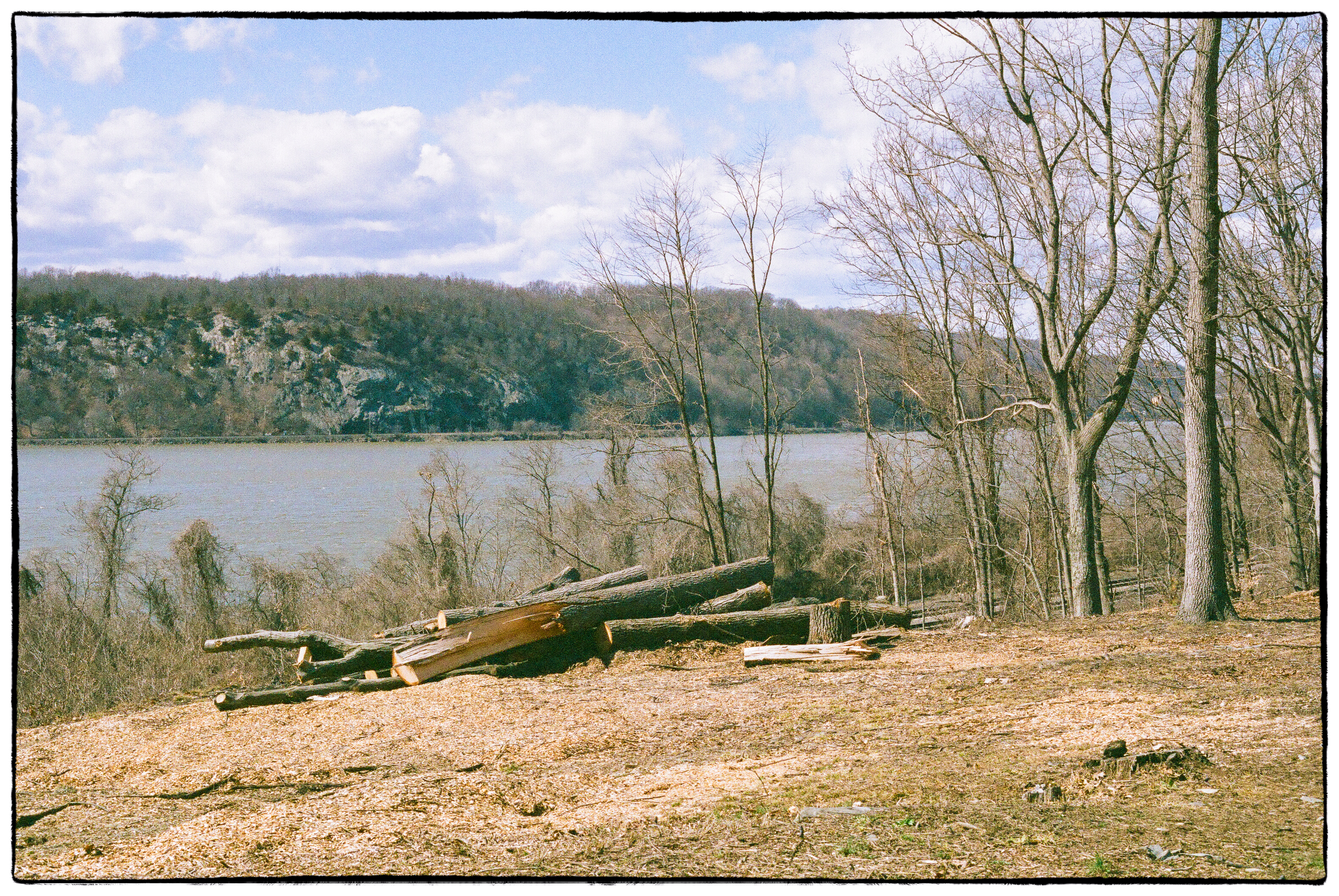
Hudson View

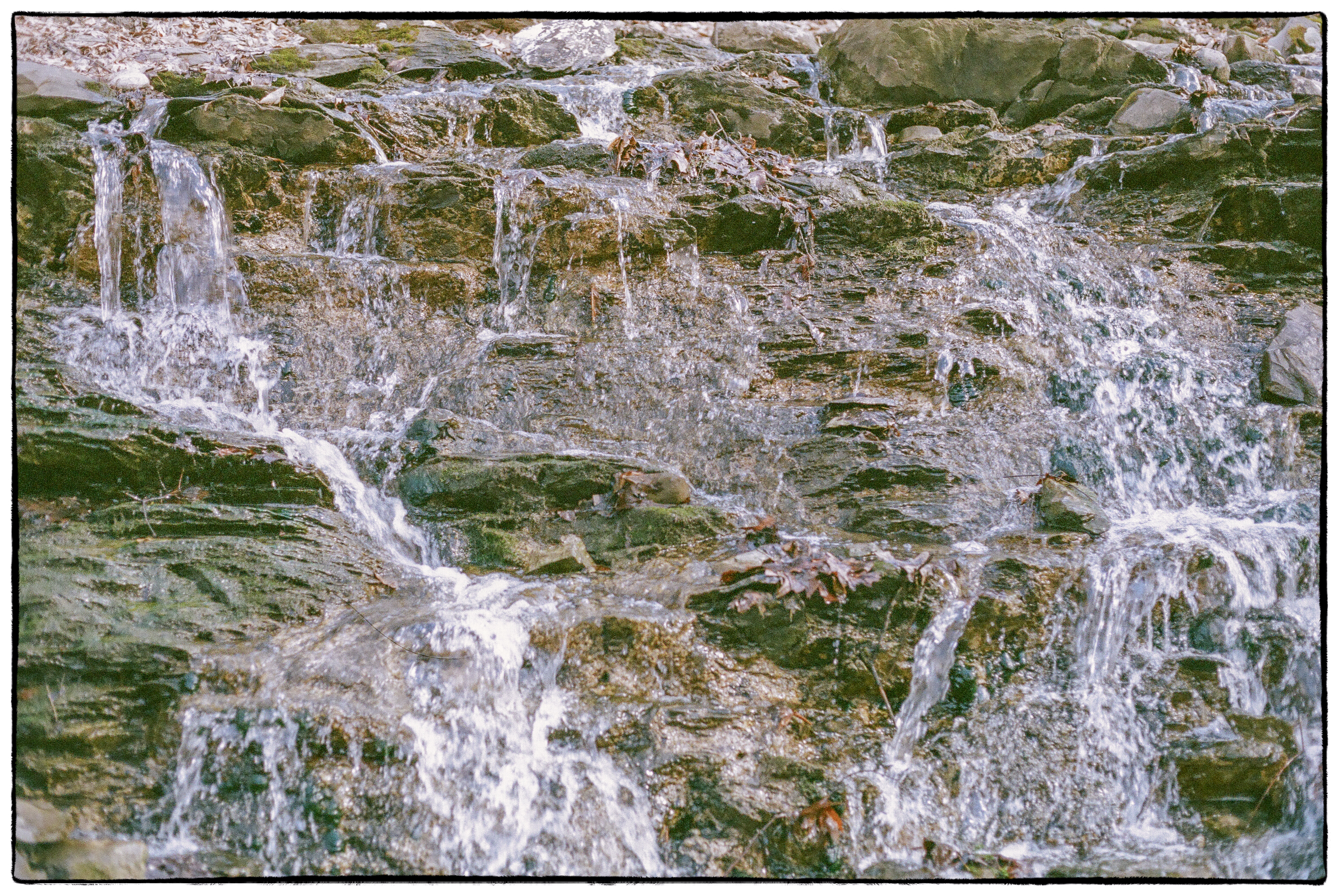
Cascade

I enjoyed using the camera. It feels solid and reliable and the fairly minimal set of controls were easy to use. Focus was fast enough for my needs. I read on the internet somewhere (unfortunately I can’t remember where and I can’t seem to find it again) that the camera does not rewind automatically and that you have to manually press a button to get it to do so. This is definitely not the case (although there is a button that you can press to rewind mid-roll if you wish). Mine kept on until the end of the roll and then rewound automatically. It’s quite noisy when it rewinds. For my type of photography it doesn’t much matter, but if you wanted to remain unobtrusive (e.g. at a wedding, during a performance etc.) this would be a definite disadvantage.

All the pictures I took had something of a green cast. I suspect this is because of the ancient film I used. One of these days I’ll try a new film and see what I get.

It’s a lot of fun to use, with nothing to get in the way of the photographic experience.

Taschen 20th Century Photography

I like these small, but thick Taschen books. They’re quite easy to carry around and I find that if I leave a copy on a nearby table I often pick it up when I have a moment or two to spare – just to browse. They’re also quite inexpensive (about $20 in this case).

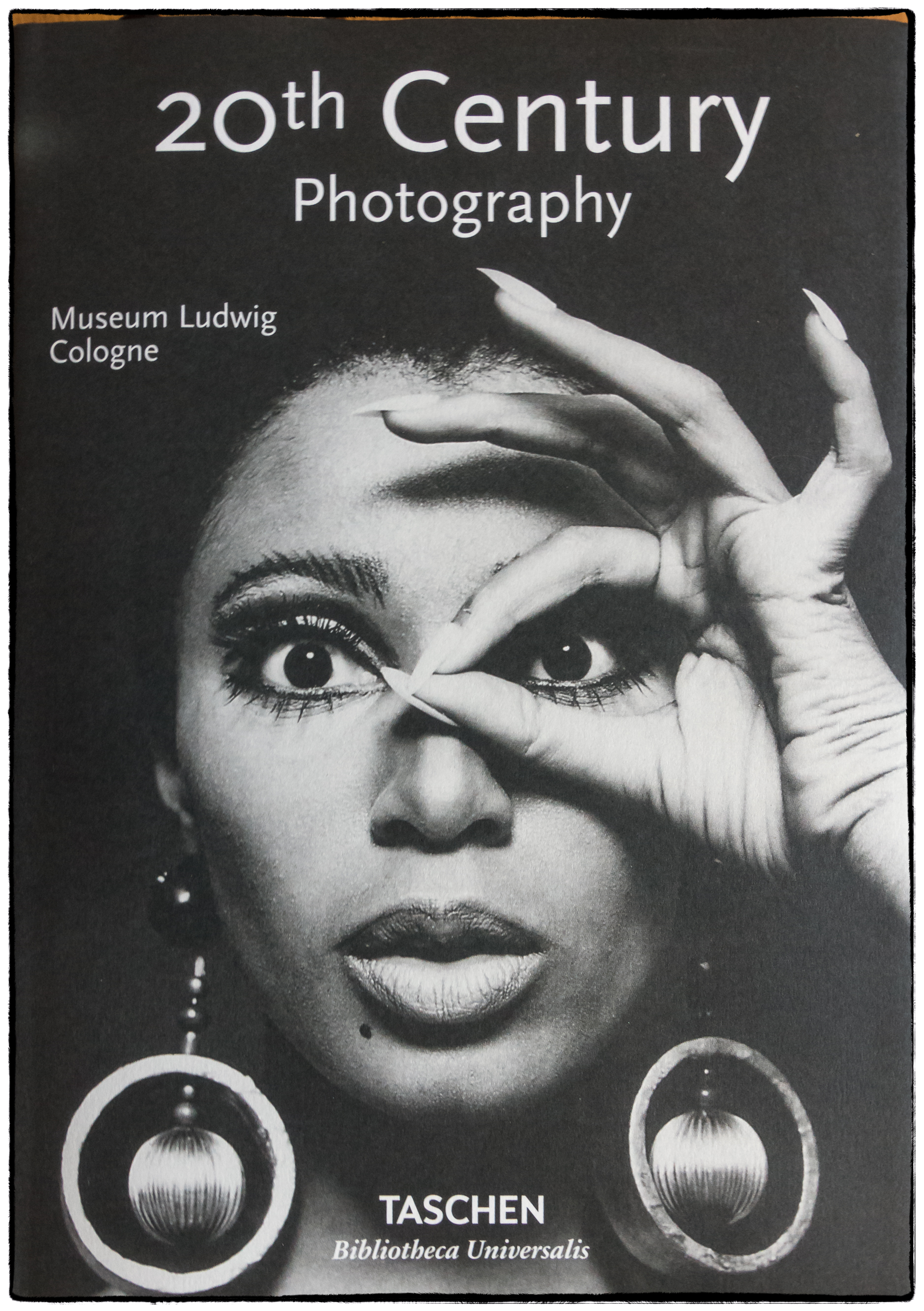
This one is entitled 20th Century Photography and contains over 850 photgraphs from a large number of photographers (each photographer has his/her own short textual summary). Of course the pictures are necessarily quite small so you can’t see them in their full glory, but that’s fine for this type of overview.

One thing I missed when I bought the book was that this is 20th Century Photography as represented by the L. Fritz Huber Collection of Cologne’s Museum Ludwig. I have a few other ‘History of Photgraphy’ type books and they tend to be dominated by the usual suspects (e.g. Bresson, Frank, Stand, Adams, Weston etc.) mostly either American photographers or photographers who have worked in the US (with a few of the more famous non-American photographers sprinkled in). This books seems to have a more European orientation. Yes, many of the usual suspects are still there, but quite a few are missing – presumably because the Museum Ludwig does not have them in its collection. Some notable absentees are: Nan Golding, Diane Arbus, William Eggleston, Lee Friedlander, Gary Winogrand, Robert Frank, Cindy Sherman, Imogen Cunningham and Minor White. These are just a few that I noticed. There are certainly more.

The lack of these famous photographers is offset by the large number of photographers I’d never heard of: e.g. Hugo Smölz (interesting architectural photography); Friedrich Seidenstücker (a chronicler Berlin Life); Jean Le Gac (narrative art) and many, many more too numerous to mention.

I’m glad I bought it.

The photograph above is from the books’s cover and is Charlotte March, Donyale Luna with Earrings for Tween magazine, 1966 Gruber Collection.

Blue Door

I’ve taken a picture of this blue door before (see first picture in: Cold Spring in Color).

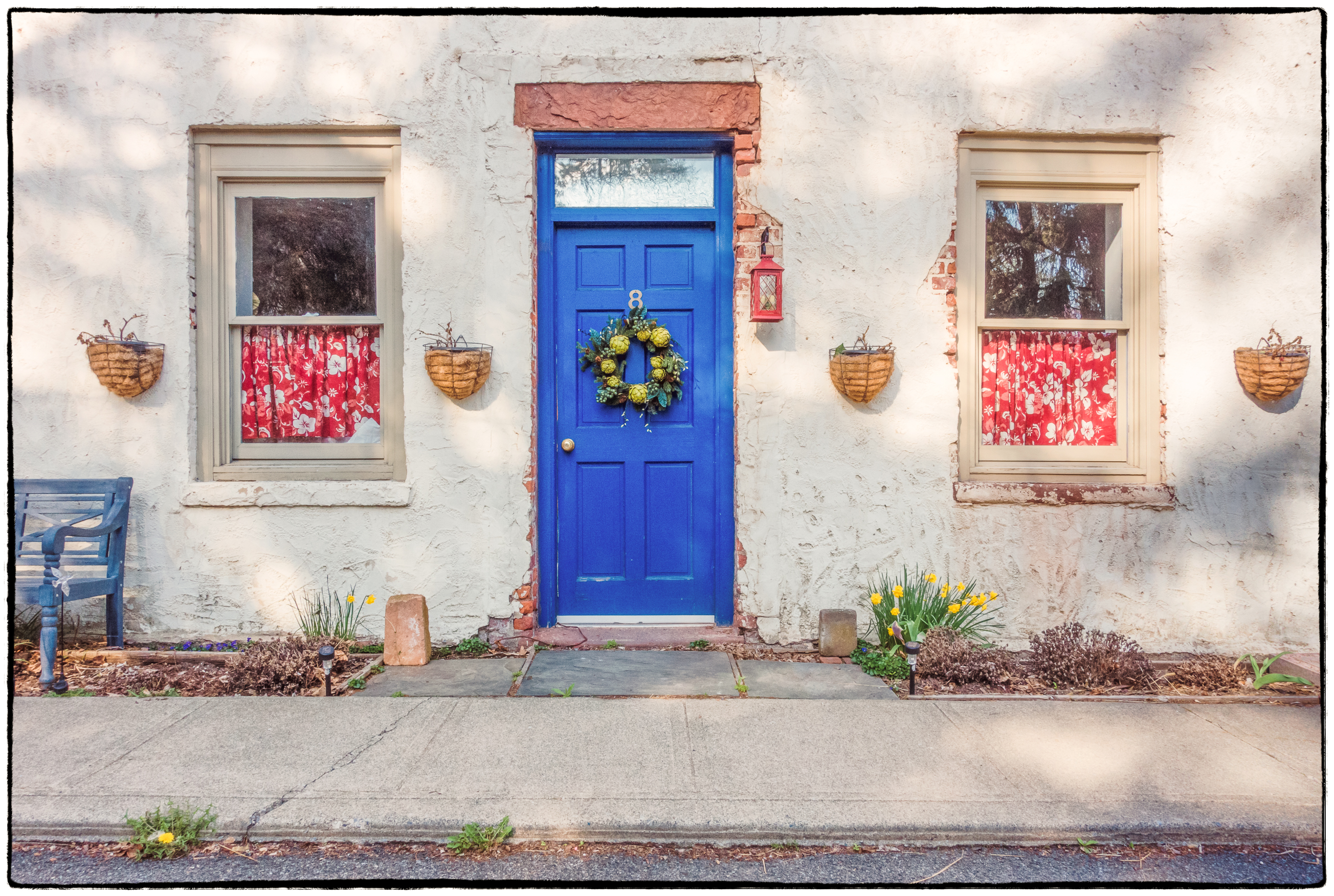
I think this is a better picture though. I love the colors. Blue is my favorite color and I find this particular shade to be very attractive. But then you also have the more muted blue of the bench of the left. There are also greens in the wreath, and yellows in the daffodils and the dandelion by the curb. And of course the bright reds of the curtains and the hanging lamp.

Lots of bright colors, but then there are also earthtones: the subdued reds of the lintel, the bricks and the stones in front of the door; the tan window frames and wall; the browns of the planters.

I also liked the textures of the wall, the bricks, the sidewalk and the road and the dappled sunlight filtering across everything.

It all felt very Spring-like and cheerful.

Taken down by the Hudson in Cold Spring, NY with a Sony RX100 MIII.