The Making of “Exiles”

This is the kind of book that makes me want to give up photography. The images are just so far beyond anything I’d ever be able to make.

I subscribe to many photography-related YouTube channels. T. Hopper‘s is one of the more interesting. She recently posted a video on Joseph Koudelka. Other than the famous picture of the arm, the watch and Prague, and that he was a Magnum photographer I didn’t know much about him. Since I don’t need much of an excuse to buy a photobook I immediately went online to buy one. This is what I came up with.

At the moment I’m so blown away by this book that I’m at a loss for words, so I’ll content myself with merely copying what Amazon has to say about it. Later, when I’ve had more time to absorb it I may come back with some thoughts of my own.

“Koudelka’s unsentimental, stark, brooding, intensely human imagery reflects his own spirit, the very essence of an exile who is at home wherever his wandering body finds haven in the night.”–Cornell Capa

In 1988, Josef Koudelka published what was to become one of his most famous and canonical series: Exiles. These gorgeously austere black-and-white images described the travels and everyday life of the peoples he encountered while roaming Europe. Josef Koudelka: The Making of Exiles is an exploration of the genesis and the making of this photographic journey.

Enhanced by numerous photographs that have never been published―in particular the photographer’s self-portraits―and captions by Koudelka, it includes numerous archival documents (such as reproductions of his travel journals), thumbnail reproductions of the book’s layout, an introduction by curator Clément Chéroux and an essay by photo-historian Michel Frizot, who spent hours interviewing Koudelka.

Josef Koudelka was born in Moravia in 1938. Initially an aeronautic engineer, he launched full time into photography in the late sixties. In 1968, he photographed the Soviet invasion of Czechoslovakia, publishing the results under the pseudonym P.P. (Prague Photographer). Koudelka left Czechoslovakia in 1970 and was briefly stateless before obtaining political asylum in England. Shortly afterwards, he joined Magnum Photos. In 1975 he published Gypsies. Koudelka has exhibited at the MoMA and at the International Centre of Photography in New York, at the Hayward Gallery in London, the Stedelijk Museum in Amsterdam and the Palais de Tokyo in Paris.
V. Everit Macy Grave Site

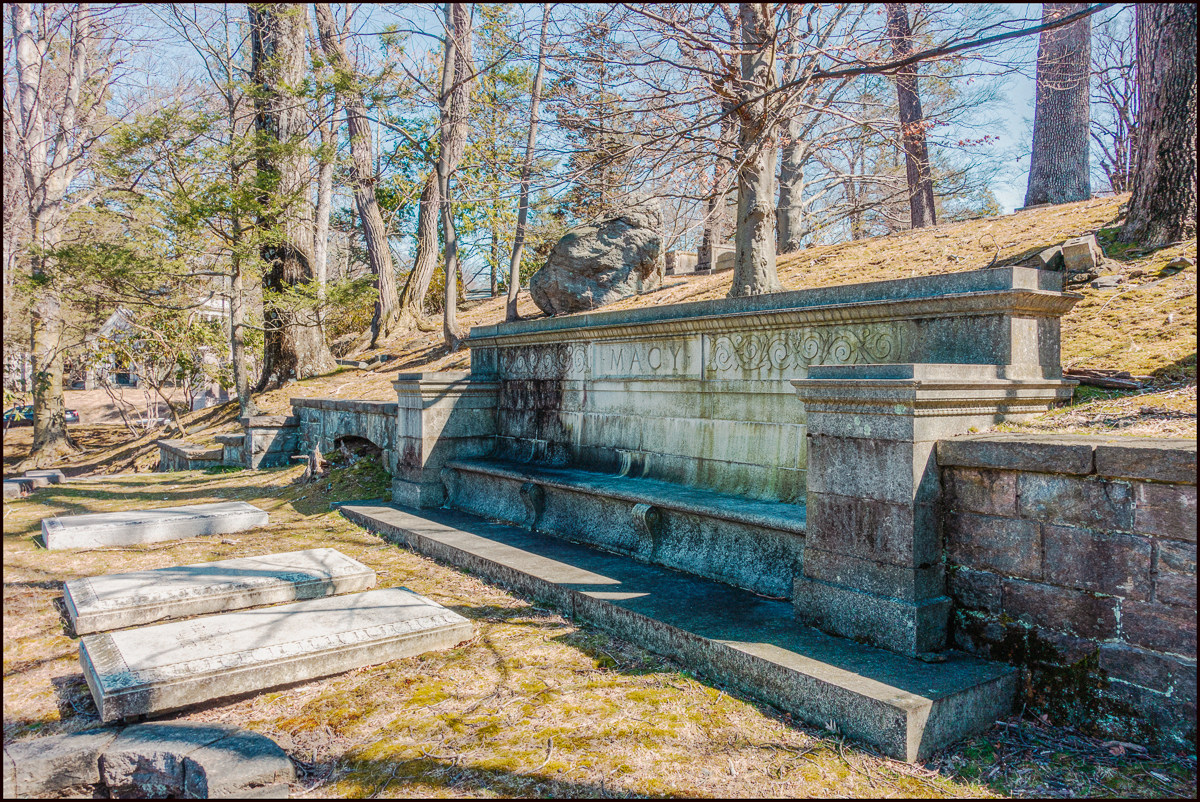
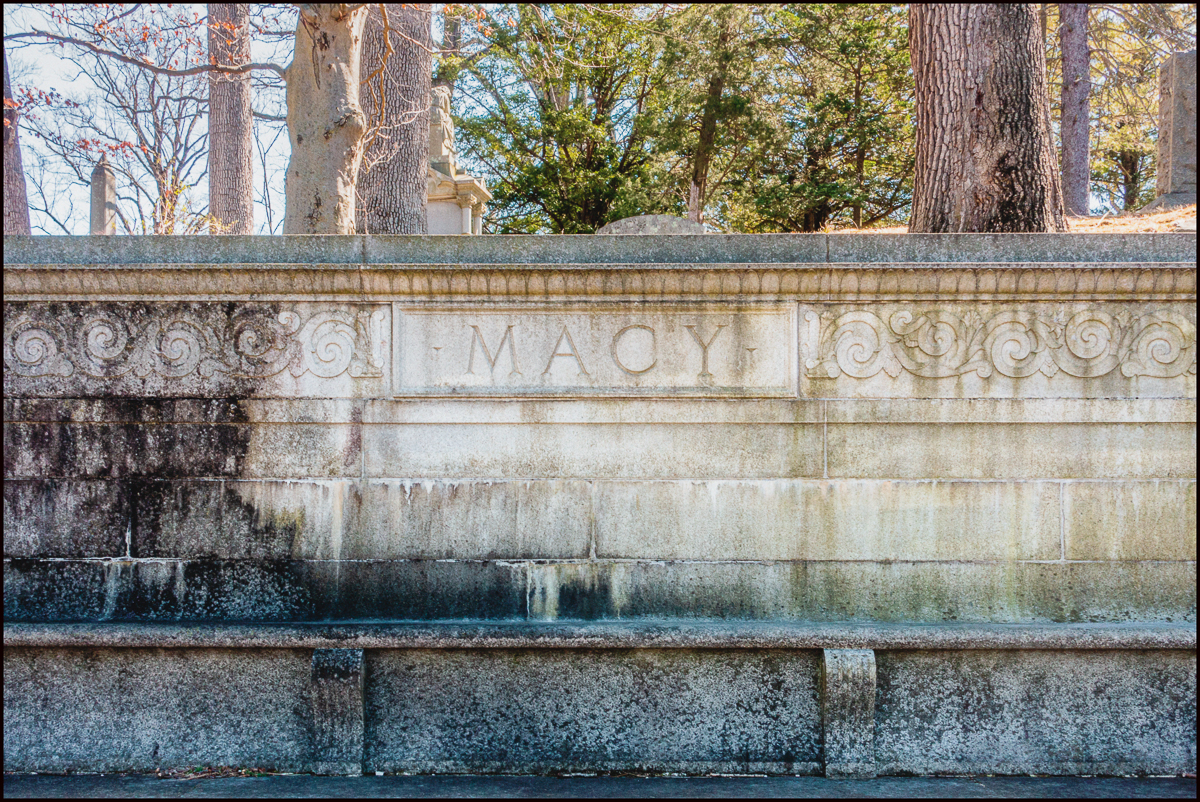
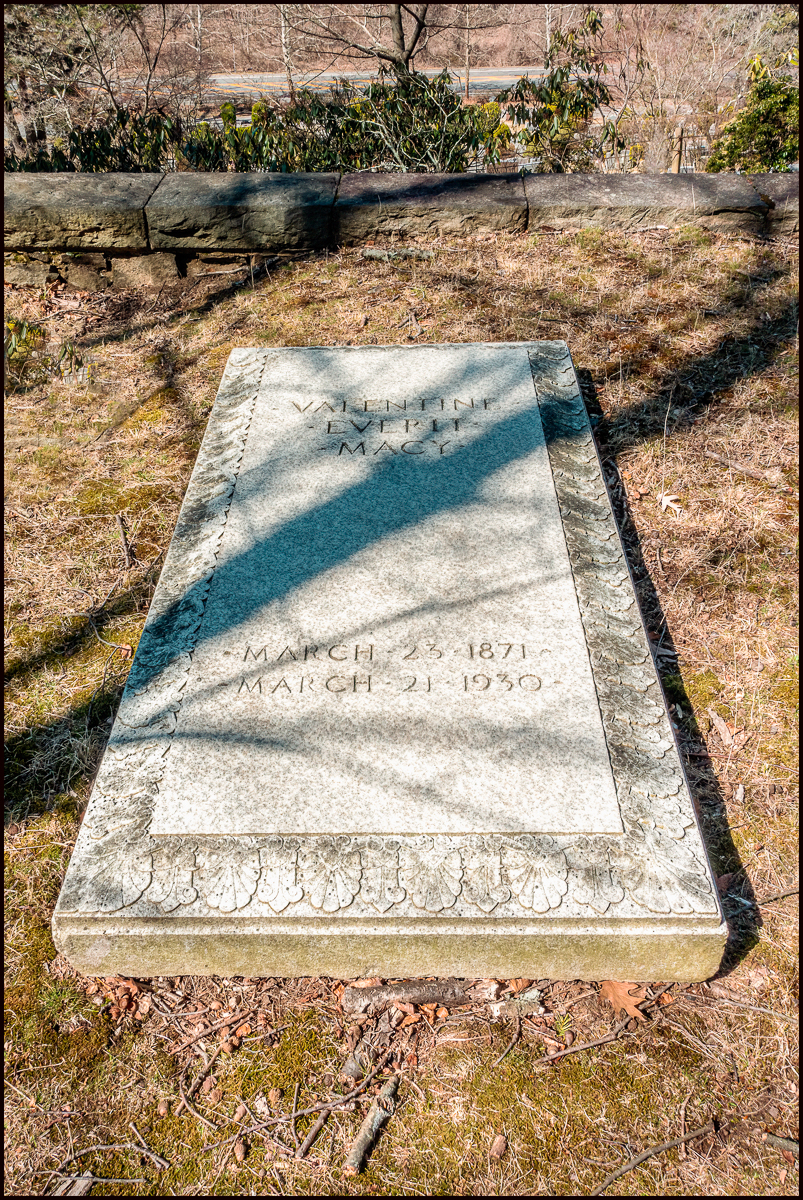
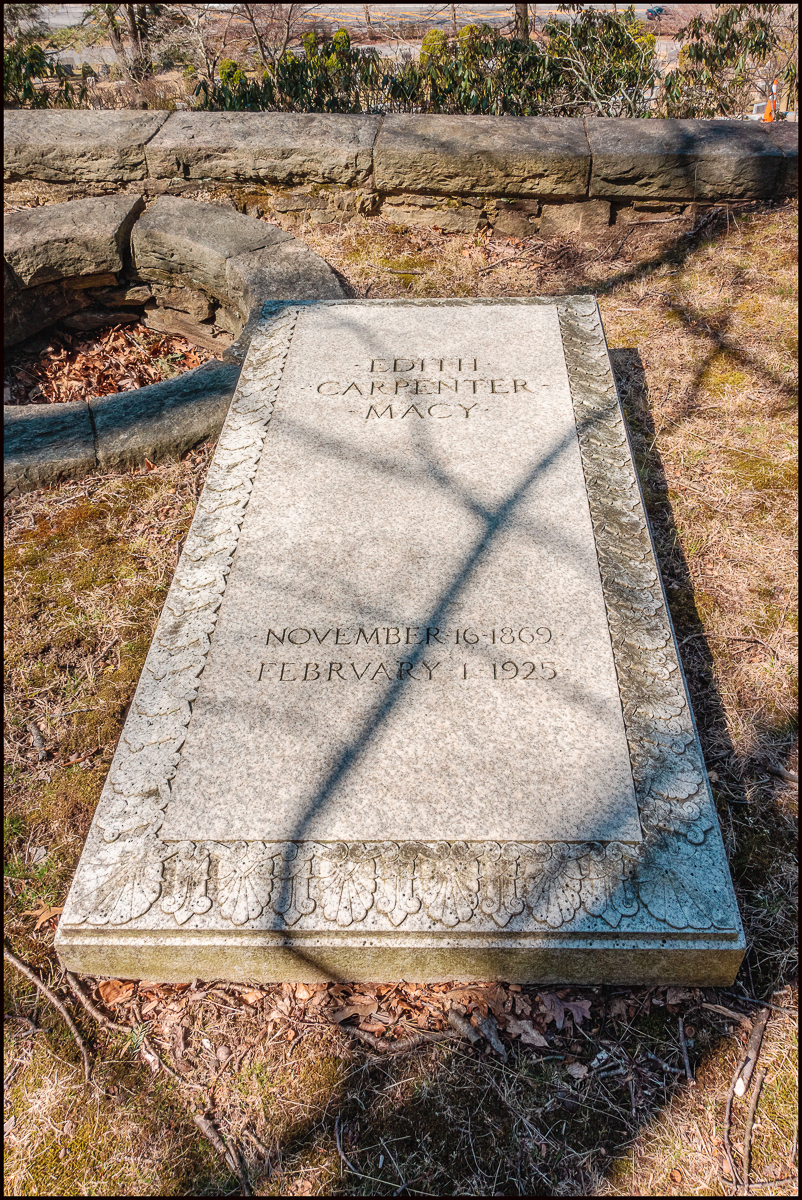
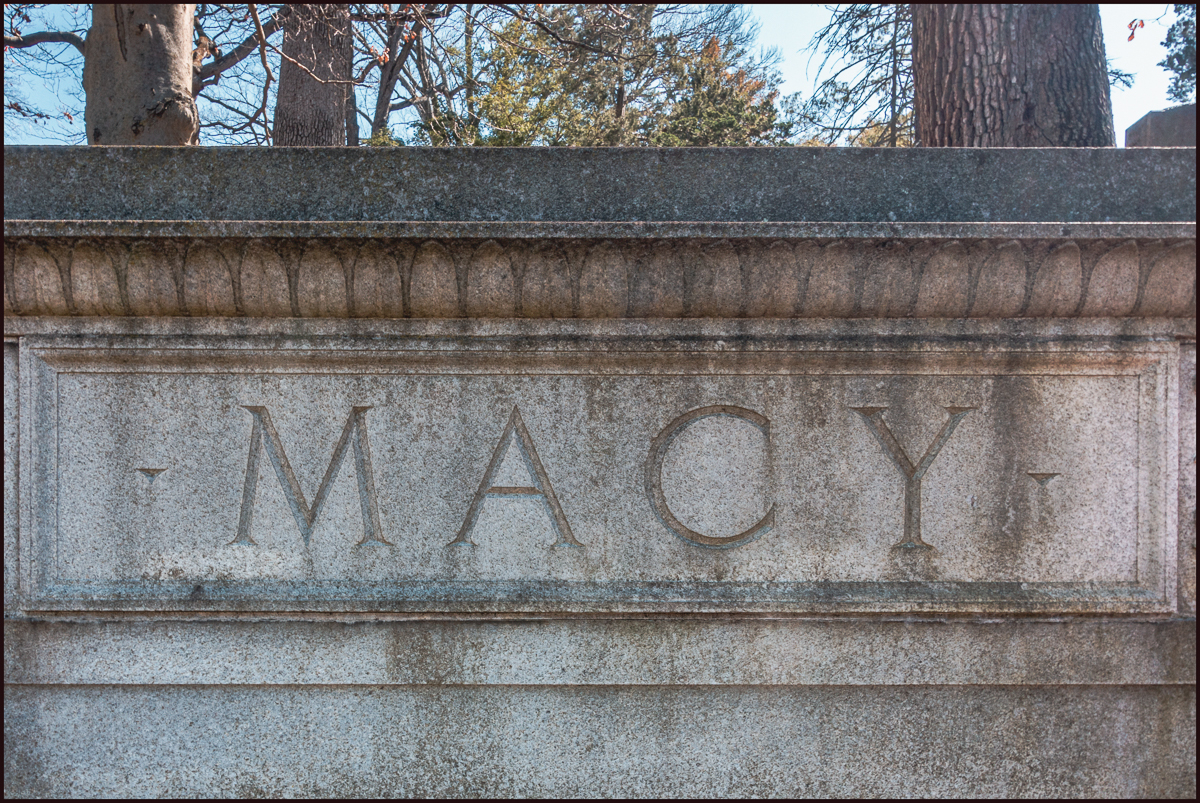
A little over a month ago I did a post on A Wealthy Man. In that post I included a picture I’d found on the internet showing his grave site (actually it’s not just him. His wife, Edith is also there as are a number of other Macy’s). I wasn’t too happy with that picture so I returned to Sleepy Hollow Cemetery with a friend to take my own pictures.

The gravesite is actually on two levels. The lower level seems to be empty. The upper level contains a large bench overlooking the graves themselves and the River Hudson.


View of the bench.


Another view of the bench.


Grave of V. Everit Macy. For more information see: A Wealthy Man


Grave of Edith Carpenter Macy. For more information see: A Wealthy Man

I had walked past this grave site many times before and was surprised that I had not noticed to whom it belonged. I guess that was before my involvement with the Briarcliff Manor-Scarborough Historical Society.

I was even more surprised to discover that next to this gravesite is another magnificent monument, this time to James Speyer. I’d even taken a picture of this before (See: Sleepy Hollow Cemetery- Structures, Final Picture). The Speyer and Macy gravesites are right next to each other, just as their estates were across the road from each other in Briarcliff Manor. I was amazed that I’d missed the Speyer gravesite on the many occasions I’d walked by it. My house is on what used to be the Speyer Estate. (See: Here’s where we live).

I took some pictures of the Speyer grave site too. It looks a lot different from when I took the earlier picture. Then it was difficult to make out anything. It was extremely dirty. Now it looks as if it’s been recently cleaned. I’ll post the pictures soon.

Taken with a Sony RX100 M3.

Wells Fargo Mural

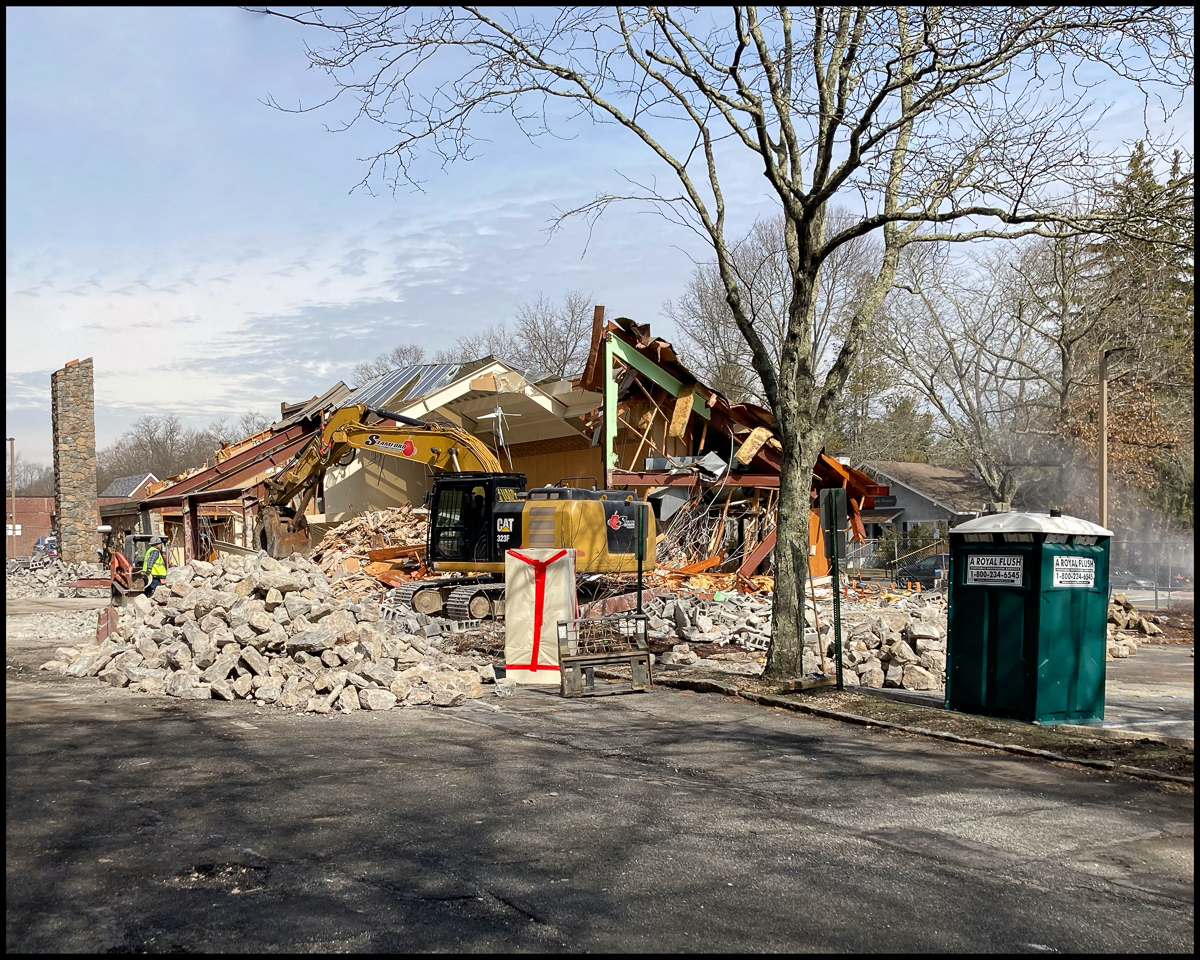
A while ago we (the Briarcliff Manor-Scarborough Historical Society) learned that the empty Wells Fargo bank on Pleasantville Road was to be demolished, but it wasn’t until just before the demolition was to take place that we learned the exact date. We weren’t all that interested in the bank building itself. Rather we were concerned about the fate of a mural inside the building. It was likely that the mural could not be saved, but we thought that we could at least get a photograph of it so that there would at least be some record.

We rushed over, but unfortunately we were too late! The mural had already gone. Needless to say we were disappointed.

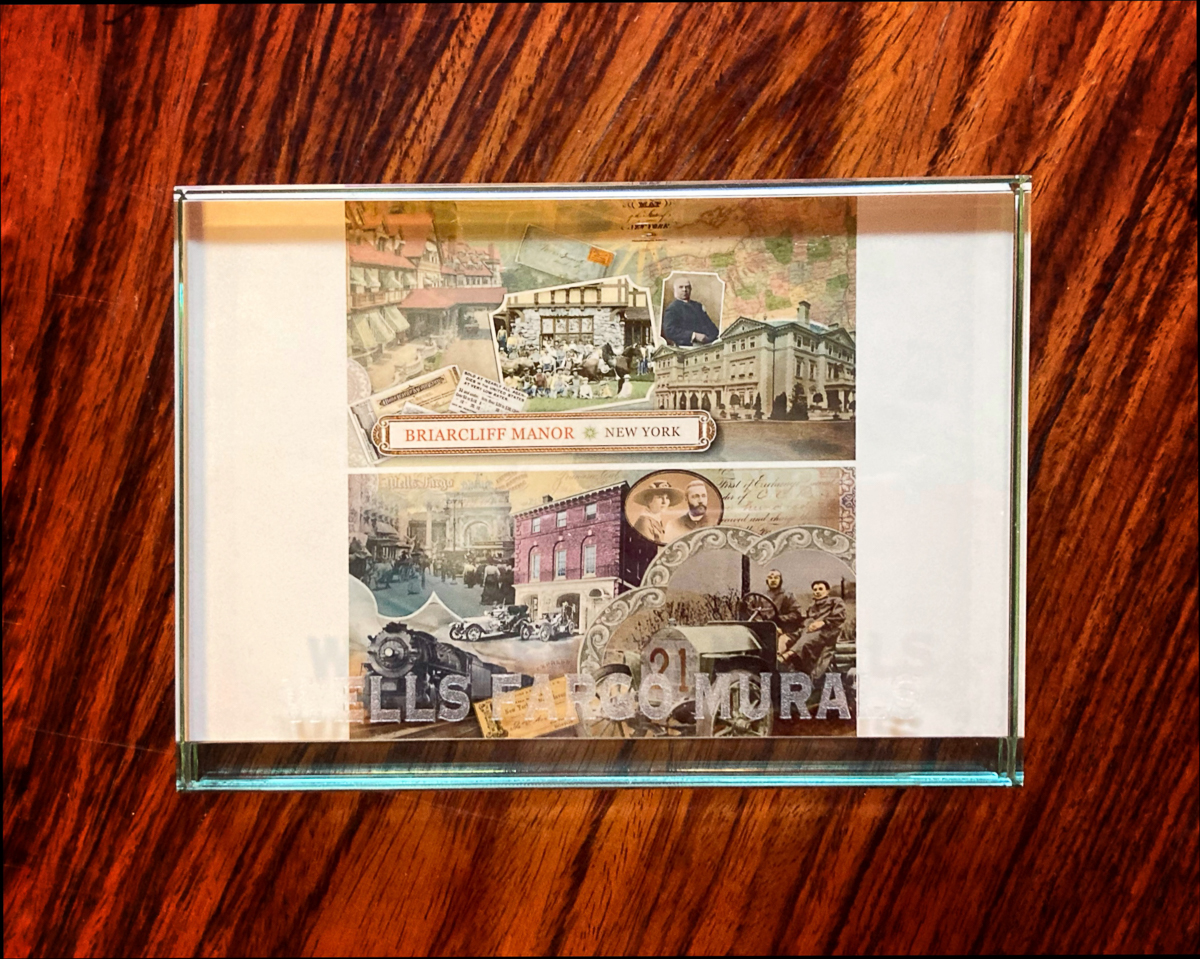
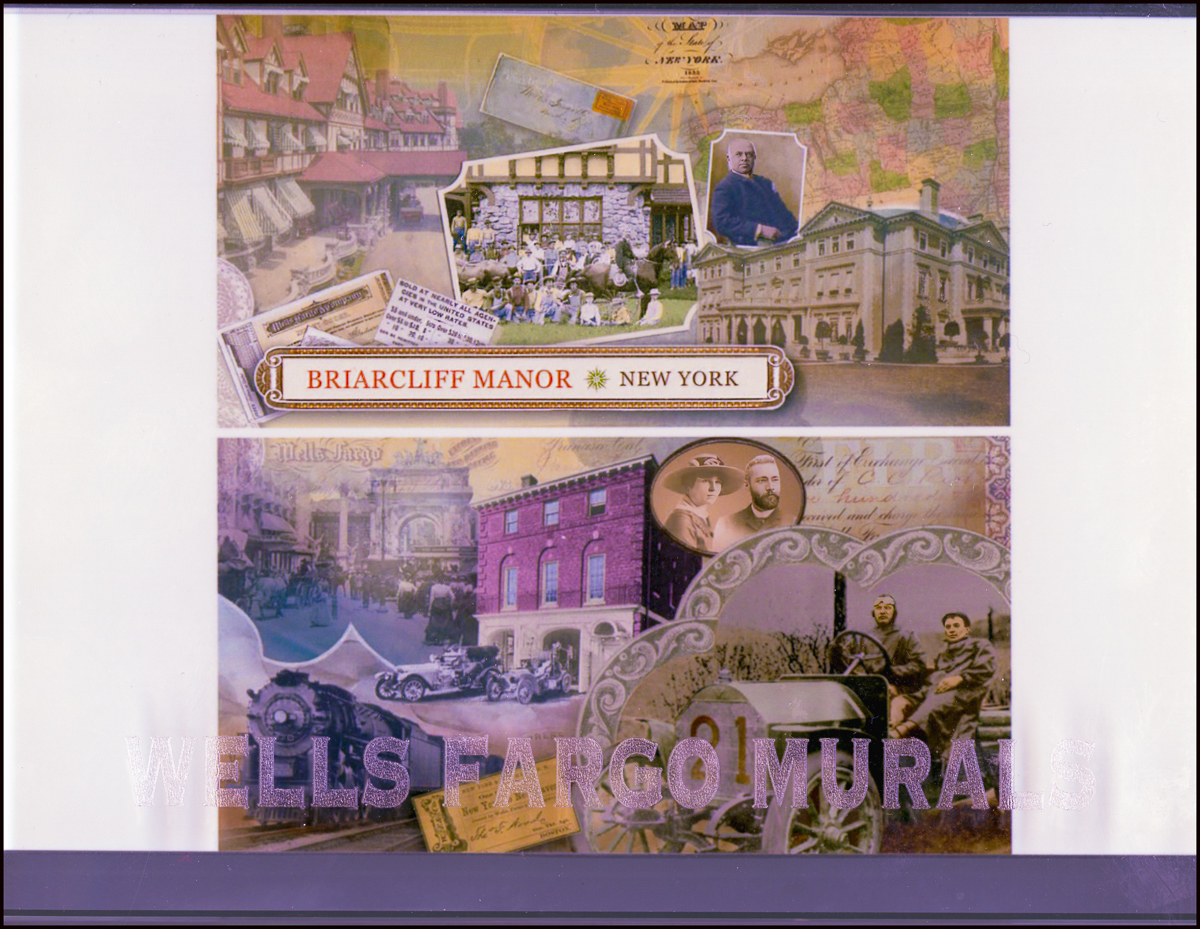
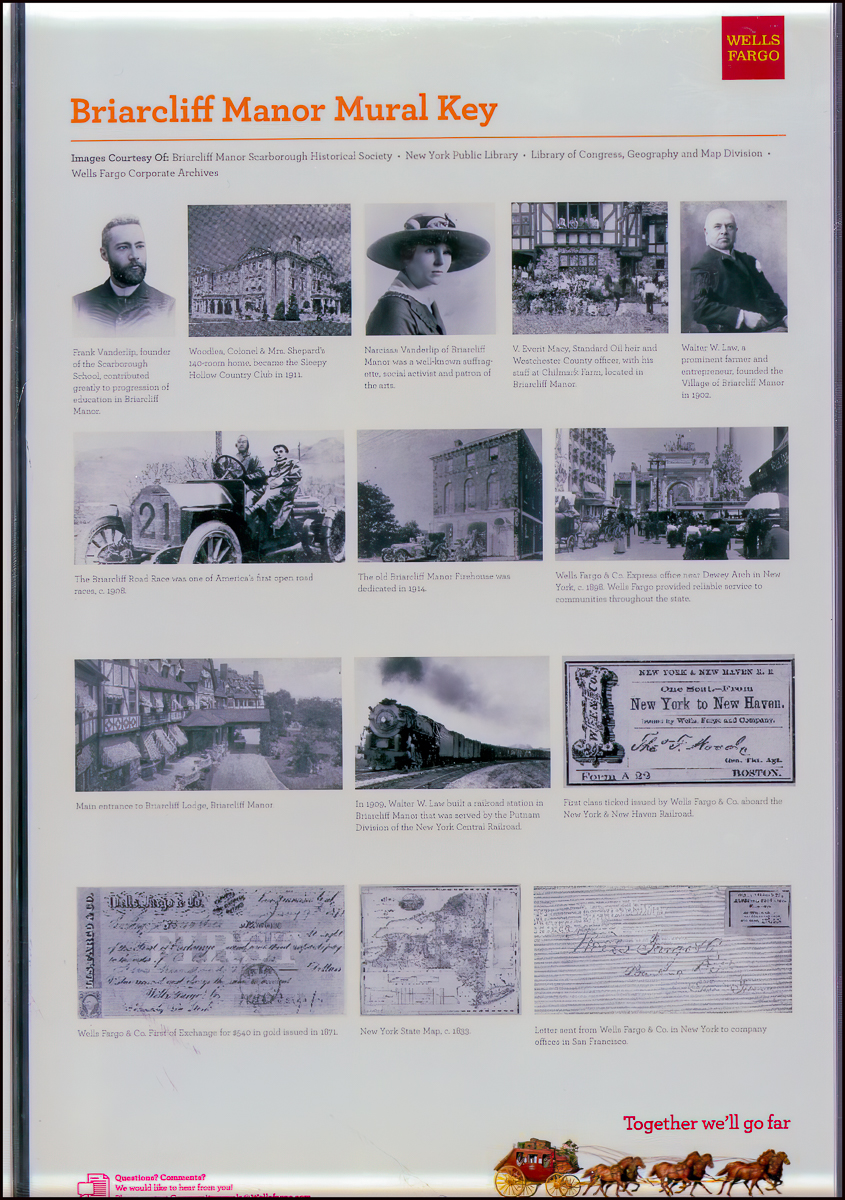
However, our Executive Director, Karen Smith was recently going through some boxes and she came across what we believe is a paperweight. On one side it has a picture of the mural with the words: “Wells Fargo Mural” and on the other side an index to all the elements used in making the mural. Everything is encased in glass.


The paperweight (if that’s what it is)


The front of the paperweight. Challenge to Briarcliff Manor Residents: How many people, places or things do you recognize? Don’t cheat by looking at the index on the rear of the paperweight (next photograph).


The rear of the paperweight provides an index to the individual elements used in the mural. It’s difficult to read. If you’re in Briarcliff Manor you might want to come to the Historical Center and check out the original.

Taken with an iPhone SE II (first two pictures, remaining pictures scanned).

The Trial of Major John André

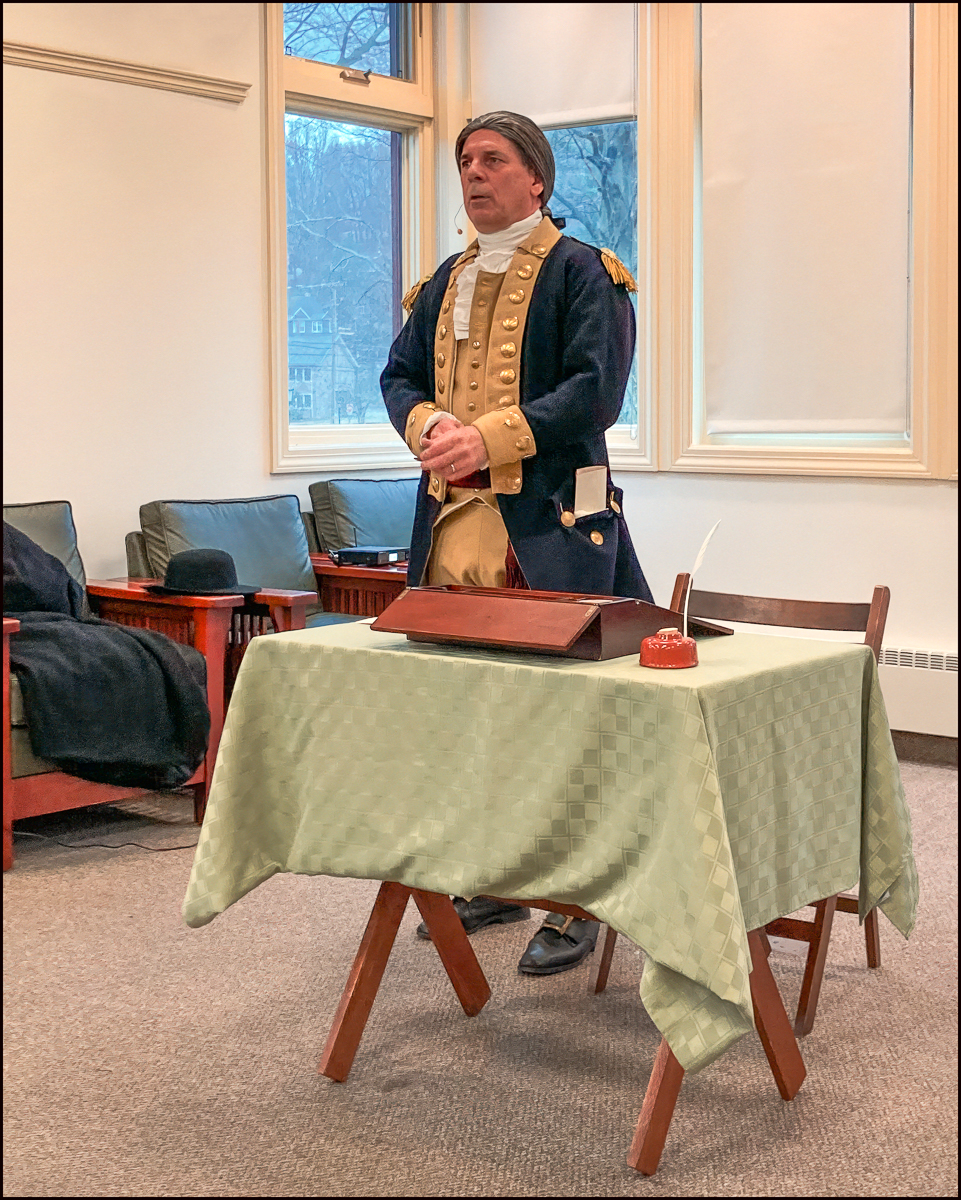
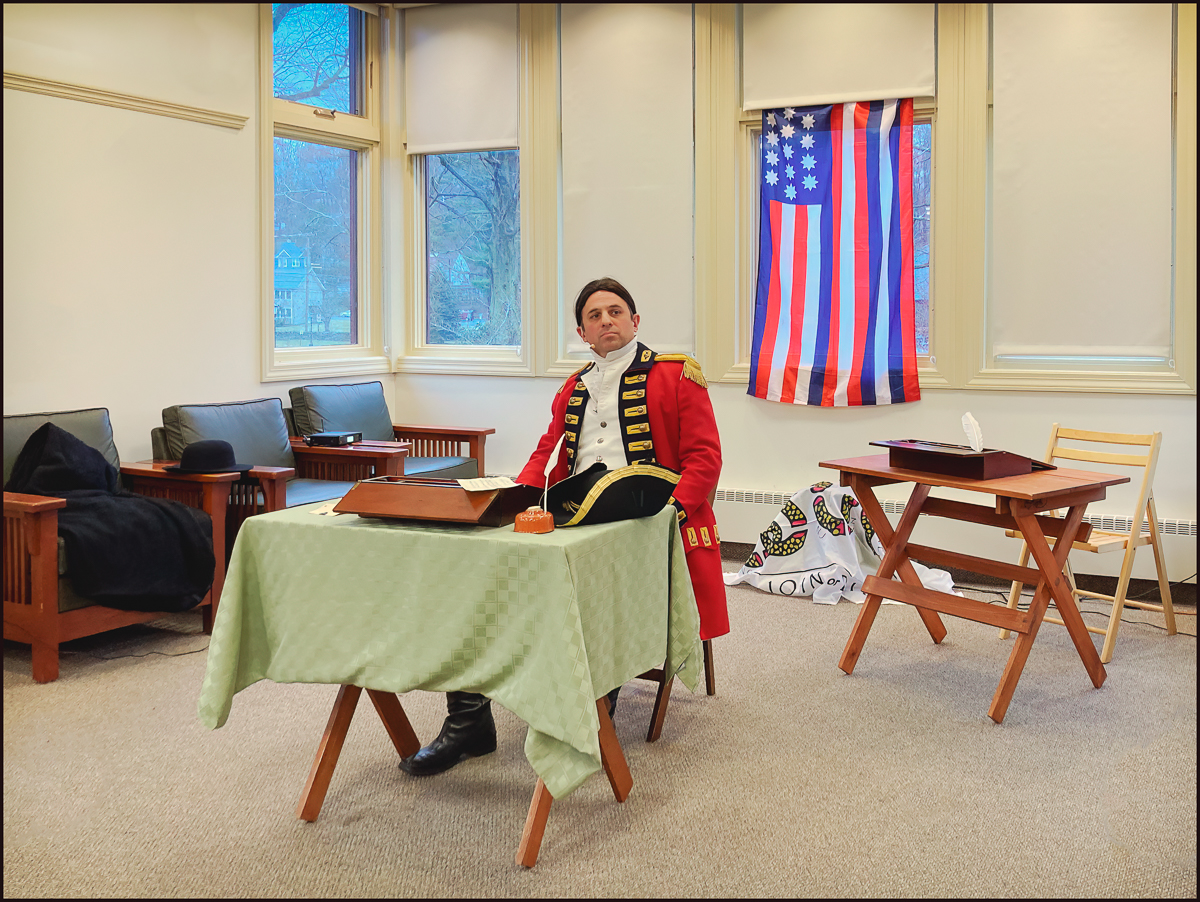
Yesterday I attended an interesting (for those who are interested in US Revolutionary War History, of course) presentation (actually more of a re-enactment) of The Trial of Major John André. It was organized by Revolutionary Westchester 250 as one of the many events and programs commemorating the American Revolution in Westchester County, in the run up to the 250 Anniversary in 2026. The two excellent performers were from “Drama From the Past, LLC. First Person Historical Performances”. The re-enactment was hosted by the Briarcliff Manor Public Library.

For those (particularly my friends in the UK) who may not be familiar with the story I’ll include this short quote from a recent article:

“It is September 29, 1780, the start of André’s trial. General George Washington has just learned the devastating news that American General Benedict Arnold has betrayed his Country and was about to surrender Fortress West Point to the British. Arnold’s accomplice, British Major John André, was captured in Tarrytown, by militiamen John Paulding, David Williams and Isaac Van Wart. André now faces a military tribunal at the Old Dutch Church in Tappan, NY. A Board of Officers has been appointed to decide whether or not he is an officer of the British Army or a spy. Having been captured behind enemy lines, out of uniform and carrying incriminating documents, André is faced with a monumental task of wriggling free from the grim fate that awaits.”

Great fun. I really enjoyed it.

Above: Gary Petagine plays Judge Advocate John Laurence, who prosecuted.

Below: Sean Grady (who portrays Major André). I was sorely tempted to ask him if I could try on his jacket.😀He did a great British accent too.

Taken with an iPhone SE II.