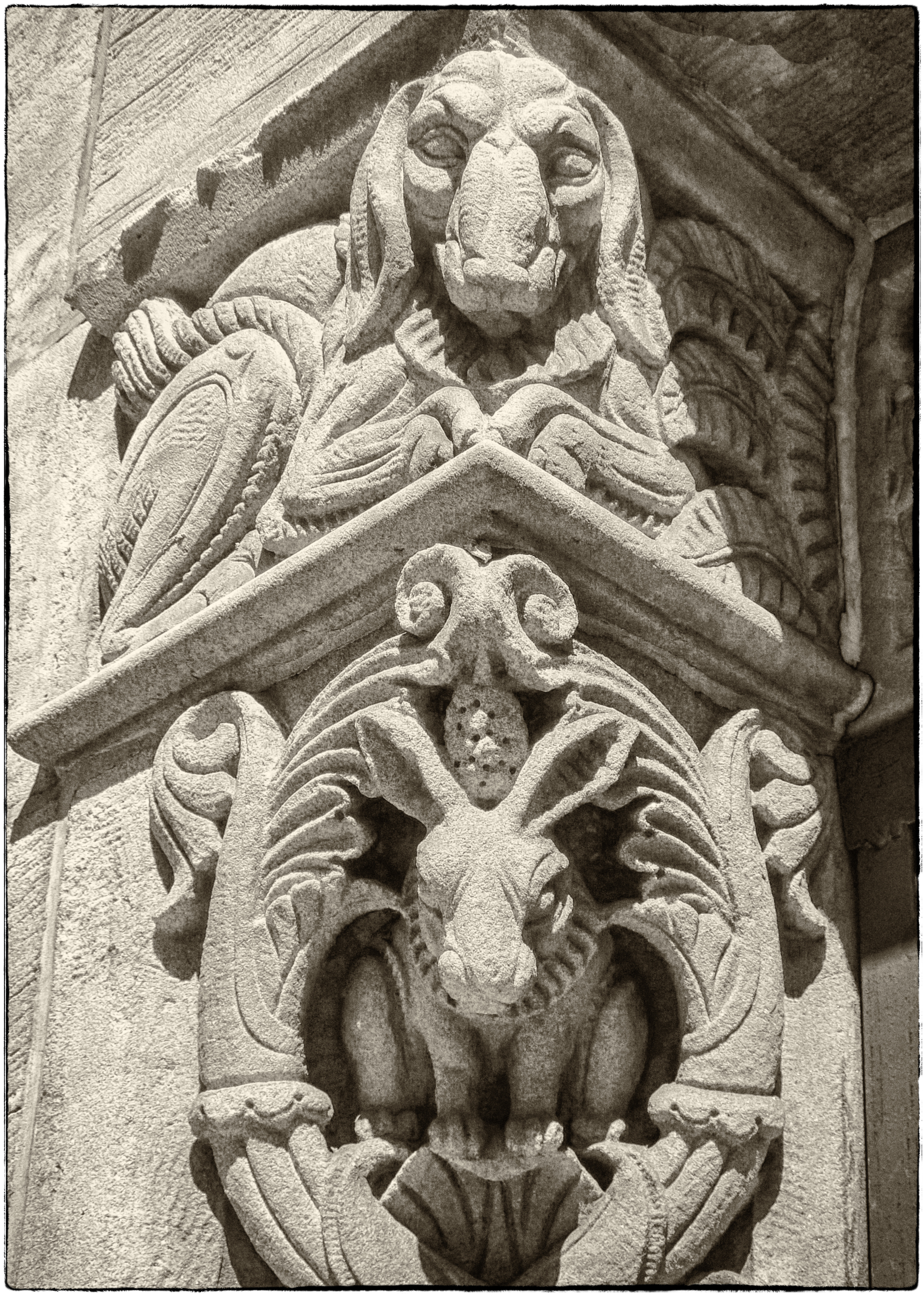
Scary sculpture on a building in Manhattan

Taken in March, 2012 with a Panasonic Lumix ZS-7. This architectural feature is fairly high up on a building in Manhattan. For all its failings (smeary images, green cast, over-aggressive noise control – many of them fairly typical of small sensor compact cameras) the ZS-7 has one great advantage: its 25-300mm zoom range. Although it was often fairly hard to hold it steady at the 300mm end and the image on the screen was usually quite jerky, the long zoom range often came in handy. I was just about to say that this was true in the case of this picture when I thought to check only to discover that it was taken at only 63mm (35mm equivalent). I guess it wasn’t as high up as I thought.

Dudoir anyone?

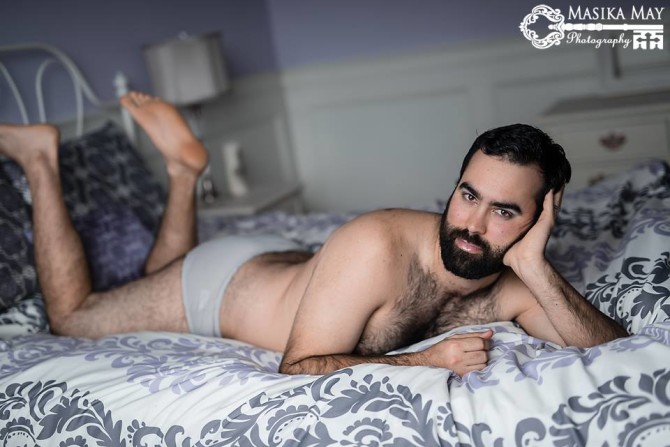
There is a type of photography called Boudoir. Originally Boudoir refereed to a location in the house, usually the lady’s room, but this term has been borrowed for intimate female photography.“The most common manifestation of contemporary boudoir photography is to take variations of candid and posed photographs of the subject partly clothed or in lingerie. Nudity is more often implied than explicit“#Of course it would be an extremely interesting experiment to swap the lady for a dude. And this is exactly what Masika May did.

Source: What Would It Look Like If Men Did Boudoir – DIY Photography

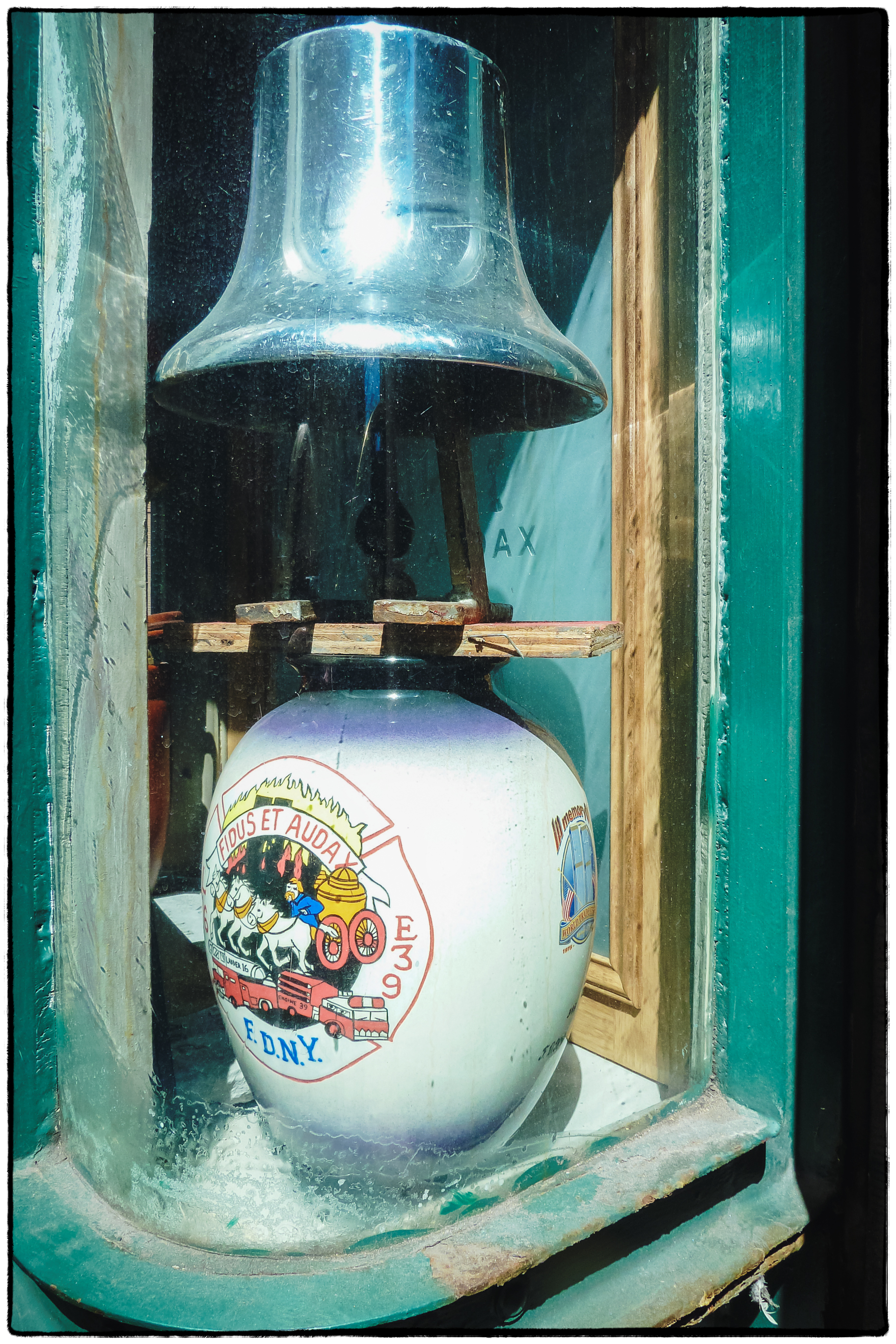
Engine Company 39, Ladder Company 16, FDNY

I took this picture back in March, 2012. I don’t really remember why, but I suspect it was because of the contrast between the ceramic jar (or whatever it is) and the bell. They looked kind of incongruous together. Looking at it today I realized that I didn’t really know what is was and I’d forgotten where it was. After a bit of “googling” I tracked it down to a display window at a fire station house around 136 East 67th Street in Manhattan, NY City. I must have seen the station house at the time – it has two large, bright red doors so I could hardly have missed it. In fact I’m surprised that I don’t have a picture of the facade. The display is right at the edge of the station house and I suspect that I didn’t even realize that it was part of it when I took the picture.

So as the title of this post suggests this is Engine Company 39, Ladder Company 16, FDNY. It’s now a historic landmark. The proceedings of the Historic Landmarks Commission can be found here. They provie a lot more information including the following summary:

Fire Engine Company 39 and Ladder Company 16 Station House is an outstanding example of late nineteenth century civic architecture. Built in 1884-86, the six-story Romanesque Revival structure was designed by N. LeBrun & Son for the headquarters of the New York Fire Department and to provide fire protection in a neighborhood that was experiencing considerable growth and change. Between 1879 and 1894 LeBrun was closely associated with the department, designing more than 40 buildings. Unlike many modest mid-block firehouses, the East 67th Street building served multiple functions, providing space for two fire companies, the offices of the Commissioners, and various departmental bureaux. Restored in 1992, the East 67th Street building provides a superb centerpiece in one of New York’s best-preserved rows of nineteenth century public architecture

There’s also a photographic connection to this company. See Lasting Image Of 9/11 An Inspiration To Engine 39 & Ladder 16 In Manhattan. As the article states:

A photo showing two of New York City’s bravest that died on that day hangs in the firehouse on East 67th Street. The scene is repeated, etched on the front doors and forever in the hearts of the firefighters who work there today.

Rattazzi has worked there for 13 years. On Sept. 11, 2001, he raced to the World Trade Center with Lt. Raymond Murphy and Firefighter Robert Curatolo. He snapped the picture just after the first tower collapsed.

“We’re in the middle of West Street walking south. I’m probably 15 feet behind them. I was just pointing at the steel in street and, fortunately, they came out,” Rattazzi said.

Rattazzi pointed out where Murphy was in the picture, in the lower corner, and that only Curatolo’s shoulder was visible.

DuBois: “This is literally the last time you saw these guys?”

Rattazzi: “Yes.”

In the chaos after the collapse the men separated. While Rattazzi assisted an injured firefighter Murphy and Curatolo headed into the rubble to find other victims.

But minutes later, as the North Tower collapsed, both men were lost. Rattazzi was the only man to make it back that day.

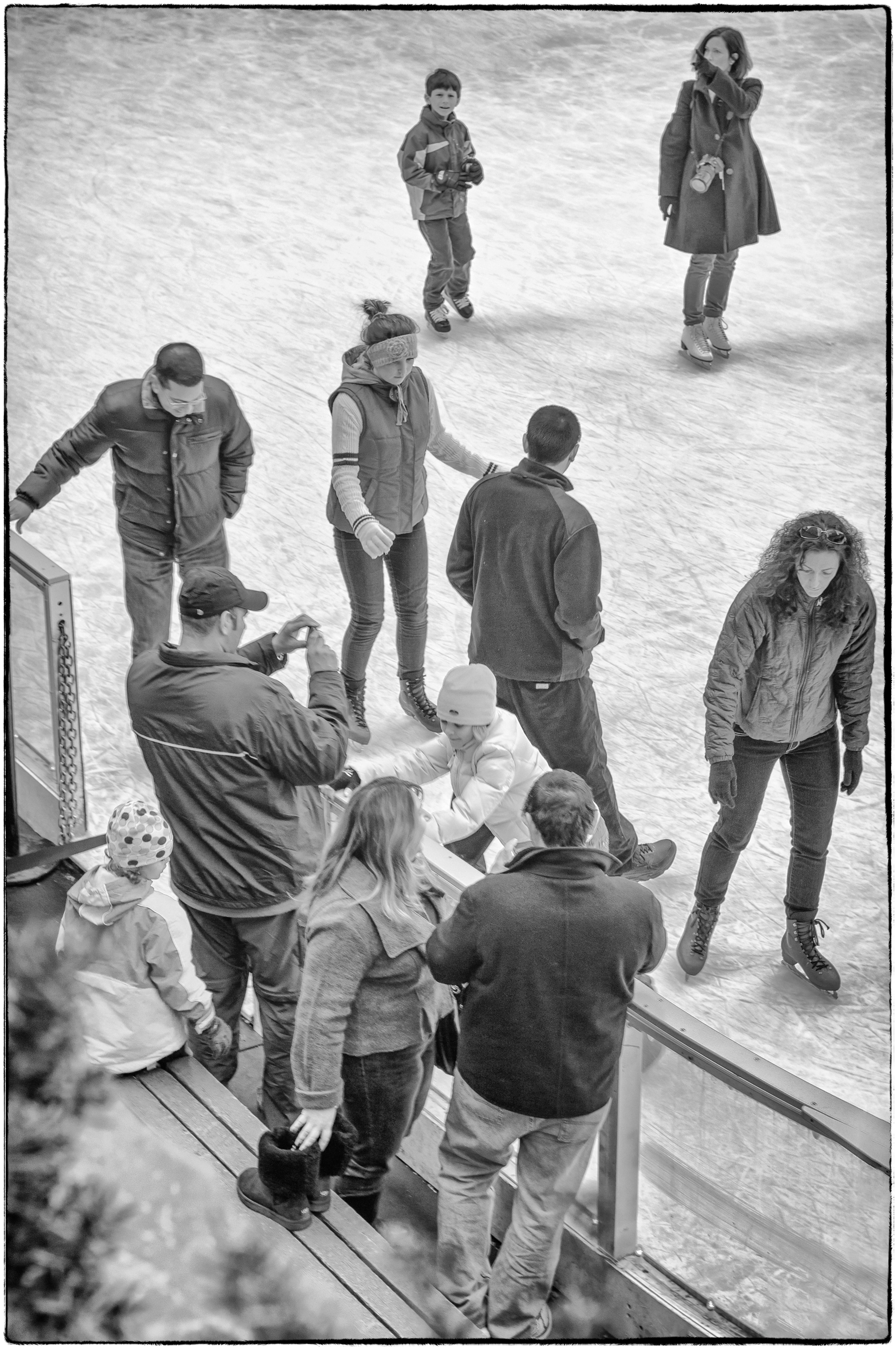
Skaters at Rockefeller Center

This is another one of those pictures that I like without knowing exactly why. When I took it I remember that what impressed me was the movement of the skaters around the rink. Some were extremely graceful, others less so. I’ve never been on ice skates in my life and my occasional forays into roller skating have not been especially successful. So I have lots of admiration for anyone who’s able to stay upright for more than a couple of seconds. I think this picture captures a little of the “hurly burly” of the Rockefeller Center skating ring. I like a number of the details: the guy on the left who looks as if he’s standing only because he’s holding onto the rail; the woman to his right who looks terrified and is holding on out of sheer concentration; the man taking pictures; the woman next to him holding onto a pair of boots; another girl who looks as if she’s fallen forward but just managed to avoid hitting the ice by grabbing onto the rail; the man walking on the ice apparently without ice skates; the boy to the top left who looks so comfortable on his skates that he doesn’t even need to look down, instead looking up at the observers. If I didn’t know better I’d think he’d seen me taking the picture.

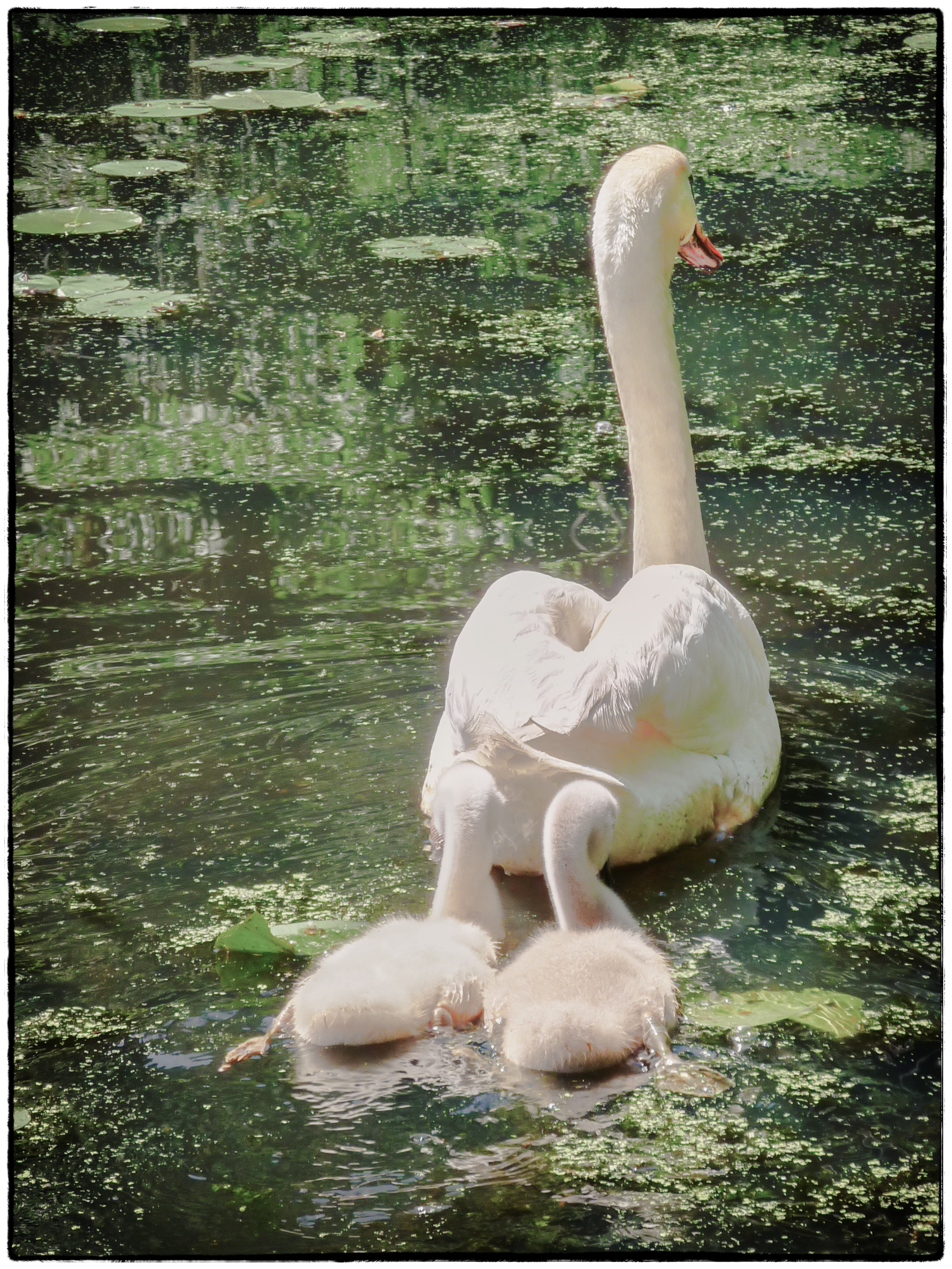
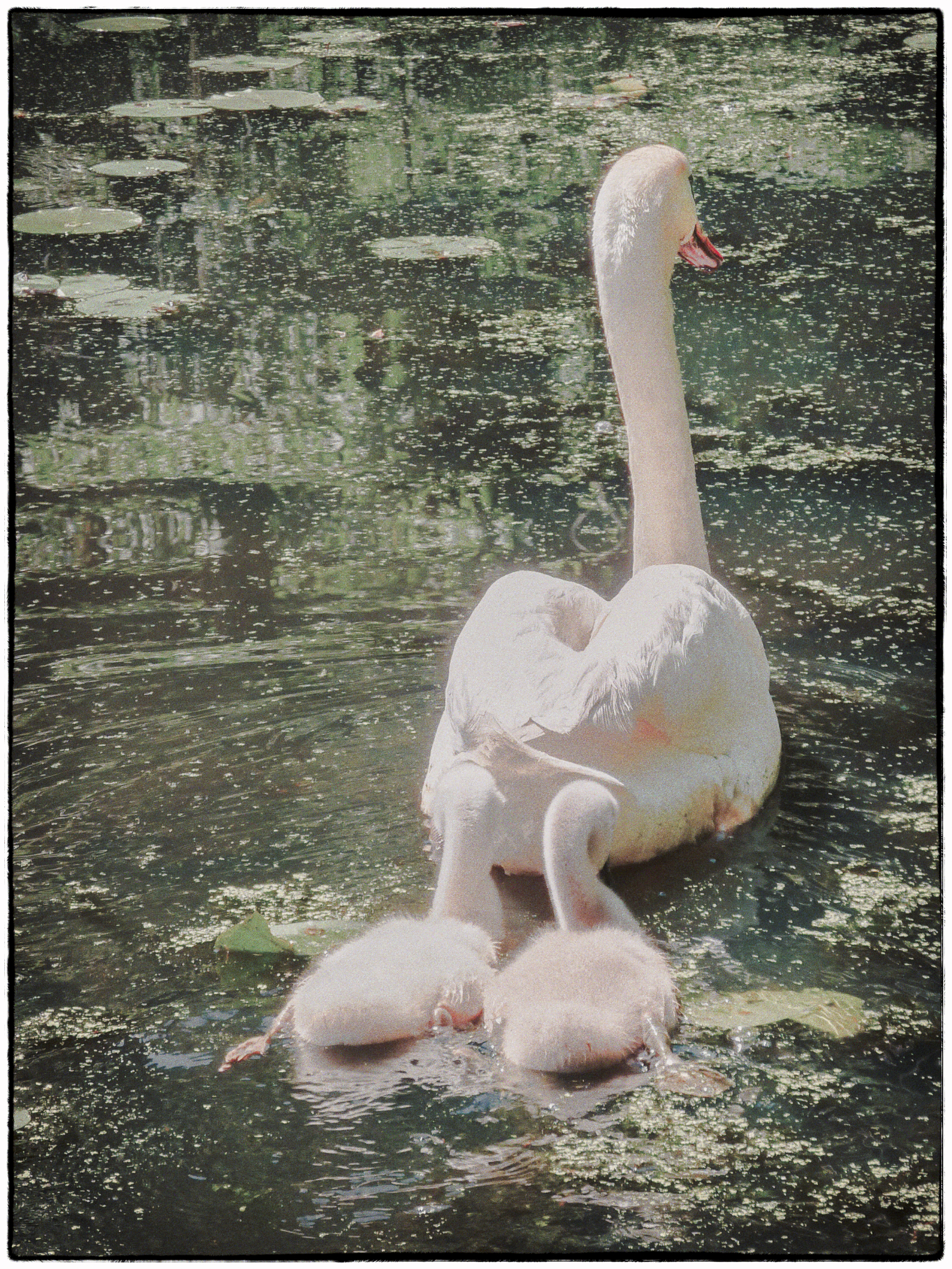
A trio of swans

While I quite like this composition it’s marred by the fact that it was a very bright contrasty day and the camera, a Panasonic Lumix ZS3 suffered from the typical problems of a small-sensor camera including a low dynamic range. So the highlights on the swan’s back are virtually blown out. To make matters worse the camera was only capable of shooting in jpg (i.e. no RAW), which limited the possibility of recovering the highlights. What’s the lesson here? I suppose if I hadn’t been rushing I might thought a bit more about this possibility and under-exposed somewhat to preserve the highlights. It would have probably been easier to recover the shadow detail. Well – you live and learn. Hopefully if a similar situation arises I’ll do better.

Another possibility might be to add a significant amount of film grain, which to a certain extent masks the “blown” highlights – see below: