Film Camera 2019/5 – Olympus IS-3 – Results


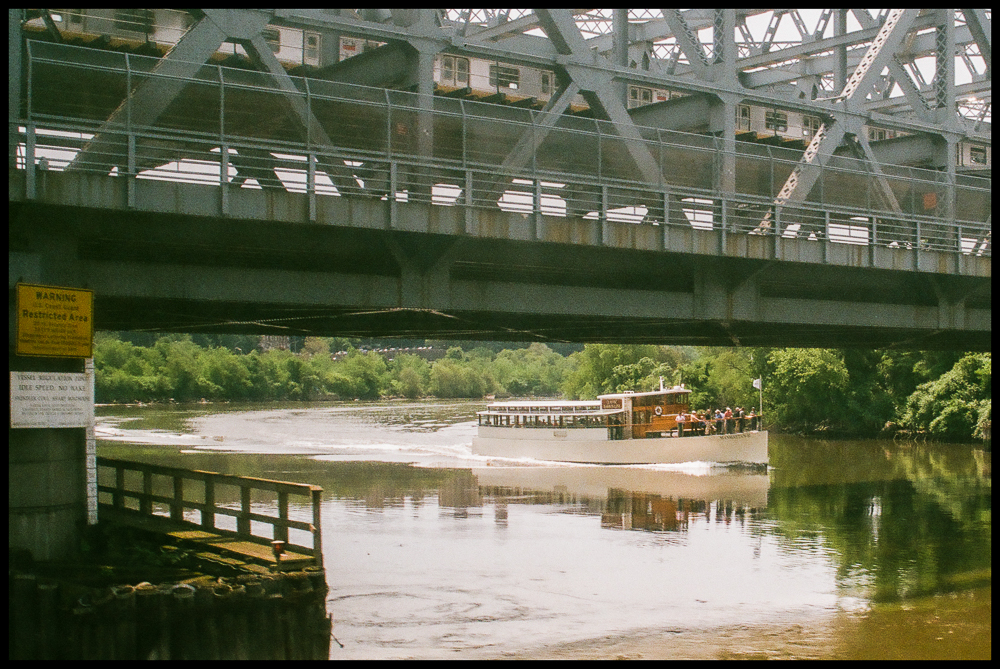
Boat passing under the Broadway Bridge over the Harlem River, New York City.

You can find this camera for a very low price. I can understand why. It’s quite large, quite heavy and it’s impossible to put it in a pocket. It has a fixed lens, so no opportunity to changes lenses if you need to. The power zoom might be off-putting to some. The lens (f4.5 to f5.6) could be a little faster, but I don’t do much low light photography so I didn’t have a problem. All in all it’s a rather odd camera, the precursor to later generations of bridge cameras.


Iris in Law Park, Briarcliff Manor

However, I found that I rather enjoyed using it. Yes, it’s large but I found the ‘heft’ to be reassuring. I feels like it’s well built and I found it comfortable to hold. I did find the power zoom switch to be uncomfortable at first, but it didn’t take me long to get used to it. Yes, you’re limited to a fixed lens but I found the 35-180mm focal length to be useful and at least I didn’t have to cart around additional lenses. As my eyes worsen with age I found the autofocus to be helpful, as is the use of easy to find AA batteries. The lens is excellent. Any problems with sharpness in the pictures are probably because of me rather than the lens. I tended to forget that at its long end this is a 180 mm lens, and that consequently I should make sure that my shutter speed is at least 1/250 of a second. I suspect that this caused some lens shake problems, but surprisingly not too bad.


Bull statue outside a Ben and Jack’s Steakhouse in New York City.

I had one problem that was specific to my particular camera. There’s some kind of LCD bleed in the viewfinder that makes it hard (at times impossible) to see the aperture and shutter speed settings. I can always look at the rear panel for this information so it’s not much of a problem.


Two mallards in Downing Park, Newburgh.

So I’m happy to have this camera and I’m quite impressed with the results delivered. Since the one I have is “cosmetically challenged” and has the LCD bleed problem I’m considering getting another one – in better condition.


Fountain in Law Park, Briarcliff Manor.


Statue in our garden.

For more pictures taken with this camera see:

A Woodland Path
The Chrysler Building
Another view of the Polly Pond
Ducks and Ducklings again
The train now arriving…
Lifeguard on duty

Pictures taken with Fujicolor Superia X-TRA400

Film Camera 2019/5 – Olympus IS-3

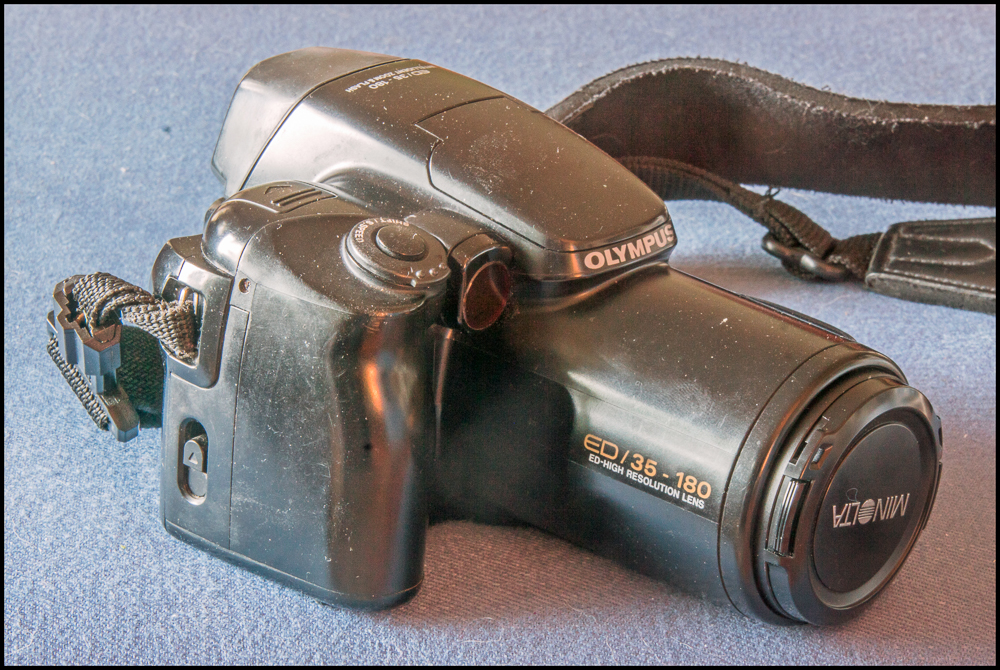
I recently picked up this camera for next to nothing (the film and the processing cost significantly more than the camera did). It’s an Olympus IS-3 (also known as IS-3000 in Europe and L-3000 in Japan) and it came out in 1992. I was interested in it because it’s a bit out of the ordinary (as an early attempt at a bridge camera) and was reputed to have an excellent lens.

Cosmetically it’s not in the greatest shape, but everything seems to work as it should (we’ll see). The only problem I’ve noticed is an LCD bleed in the viewfinder. It’s still just about usable (except in really bright light) and in any case I can always take a quick look at the large rear LCD screen if I need to so it’s not all that much of a problem.

This particular camera features the date back (which I’ll never use) and is called the IS-3 DLX QD.

It has a 35-180mm f4.5-5.6 lens comprising 16 elements in 15 groups focusing down to 1.2 meters (0.6m in macro mode).

Shutter speeds range from 15 seconds to 1/2000 second plus ‘B’. Manual shutter speed range at F8: 60 sec.~1 sec.; Programmed shutter speed range: 4 sec.~1/2000 sec. Flash synch is 1/100 second.

Focus modes include Single Auto Focus; Continuous Auto Focus, and Power Focus (manual focus).

The viewfinder (85% coverage) includes: the following information: Autofocus Frame; Spot Frame; Panorama Marks; Autofocus Indicator; Shutter Speed; Aperture Setting; Spot Metering; Macro Mode; Exposure Compensation / Manual Exposure; Flash Symbol.

Exposure consists of a TTL light metering system with fuzzy logic ESP light metering including center-weighted average light metering and spot metering (don’t ask me what that last sentence means). Exposure compensation is in the range of +/- 4ev in 1/3rd step increments. ISO is determined by DX coding in the range of ISO 25-5000. The following exposure modes are supported: Aperture Preferred AE; Shutter Preferred AE; Manual Exposure; Program; Sport Program (Stop Action); Portrait Program; Landscape Program; Night Program.

The camera has a built in flash with guide number of 28 (auto tele) or 20 (auto wide, manual). A dedicated flash unit (G40) was also available.

Power comes from two 3V lithium batteries (CR 123A or DL 123A).

It’s a solid feeling camera weighing 960 g. with the following dimensions (width, height, depth): 112x93x173mm.

Wide angle, tele and macro converters were also available.

For an overview of of the series see: Olympus IS-Series, which is complete up to this model.

Film Camera 2019/4 – Canon Sureshot Owl – Results

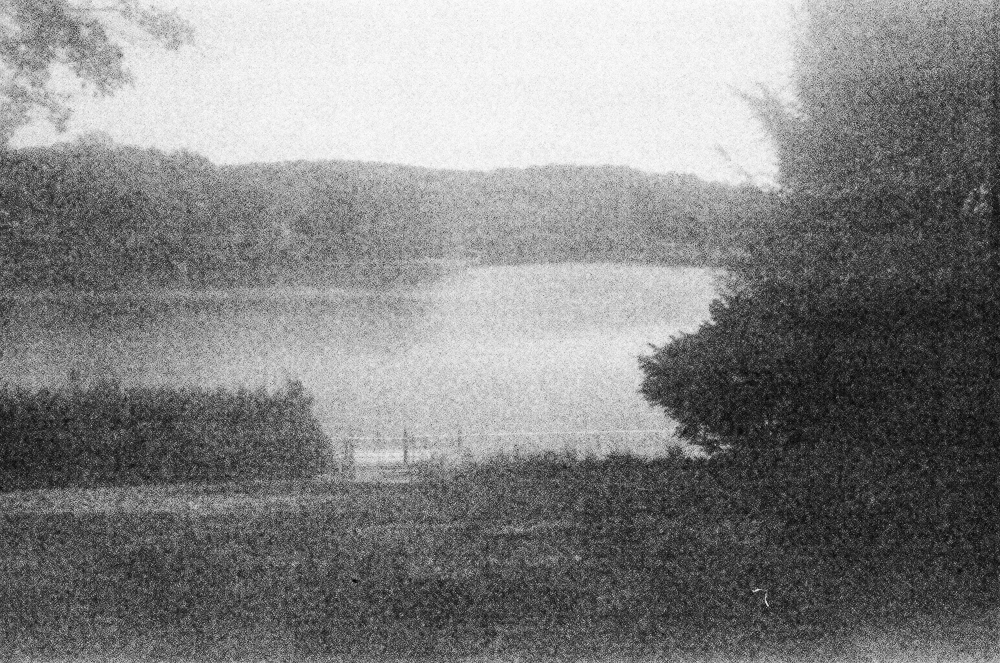
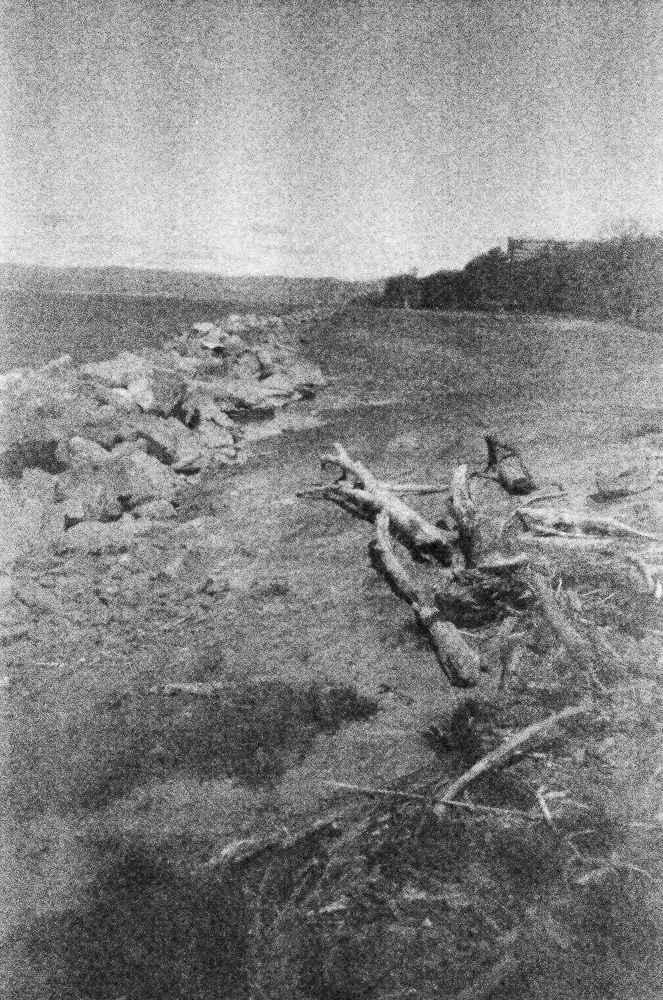
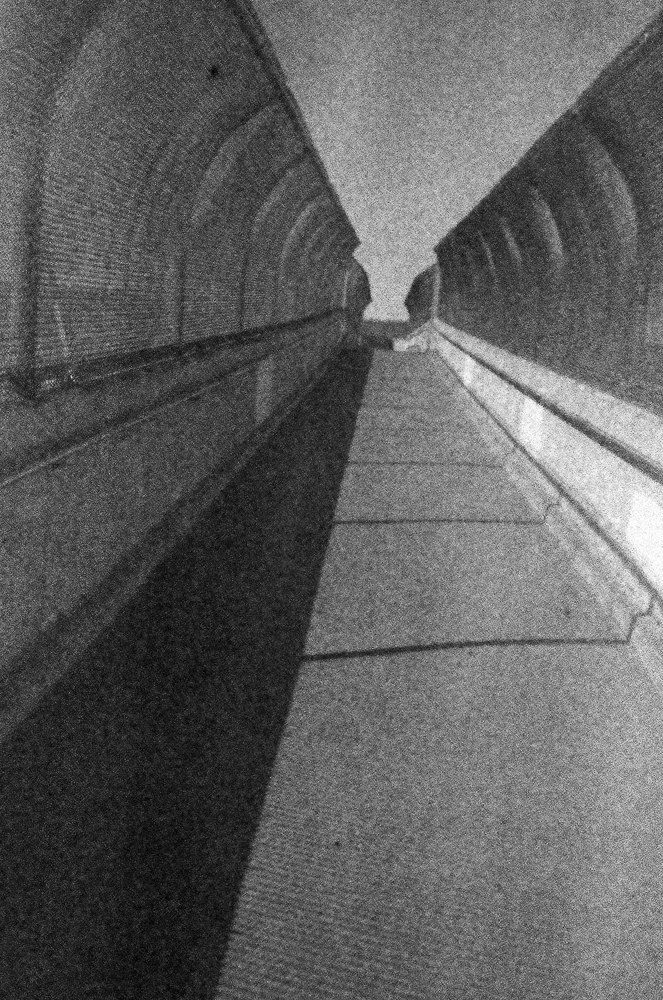
So how did it go with the camera. In a word – disastrous!

When I got the scans back I could barely see anything. Looking at the histogram everything was clustered into a small area in the middle, indicating that there was virtually no contrast at all (I think).

I’ve used quite a number of old film cameras and even though I’ve lost a few frames here and then I’ve never had something like this: a complete roll that’s useless. I’ve no idea what went wrong. Was it something I did? I doubt it. The camera has little in the way of controls so I doubt I could have set something incorrectly. I noted that the camera already had a film inside when I got it. I have no idea how long it had been there. Could it have degraded to such an extent that this happened? Maybe a problem with the camera itself? It seemed to be working, but who knows?

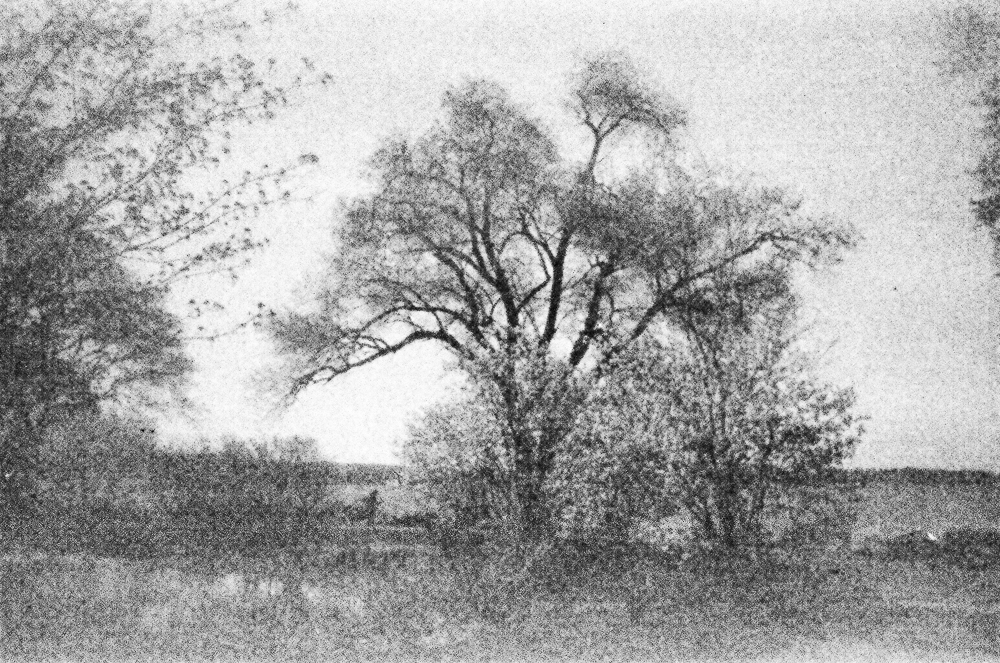
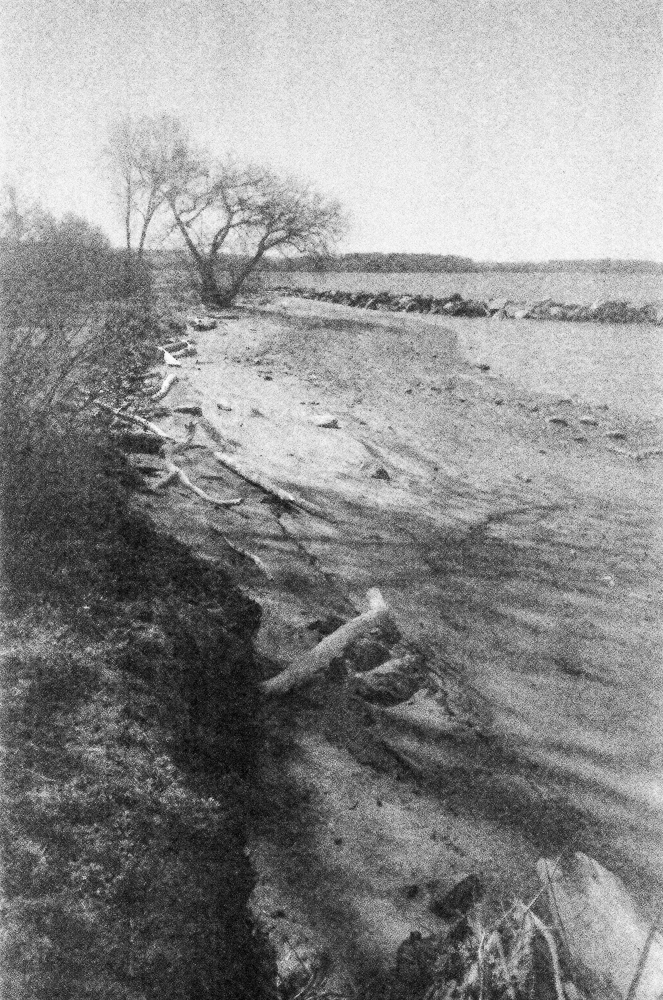
After some tweaking in Lightroom I managed to make the images visible if nothing else. I’ve posted a few here since I think it’s worth celebrating failures as well as successes. They remind me of some of pictures I’ve seen from the very early days of photography.

I’m tempted to try the camera again with a fresh roll of film to see what I get. But the cost of the film plus the cost of processing and scanning deters me. But I can be stubborn and I’d really like to know if the camera is working even if, at its best, it’s probably not such a great camera. We’ll see.


Film Camera 2019/4 – Canon Sureshot Owl

This wasn’t supposed to be my next film camera. I had hoped to use a recently acquired Minolta Maxxum 7. In fact I was actually rather excited to use it, but unfortunately it was dead on arrival (See: A couple of Ebay experiences for more info).

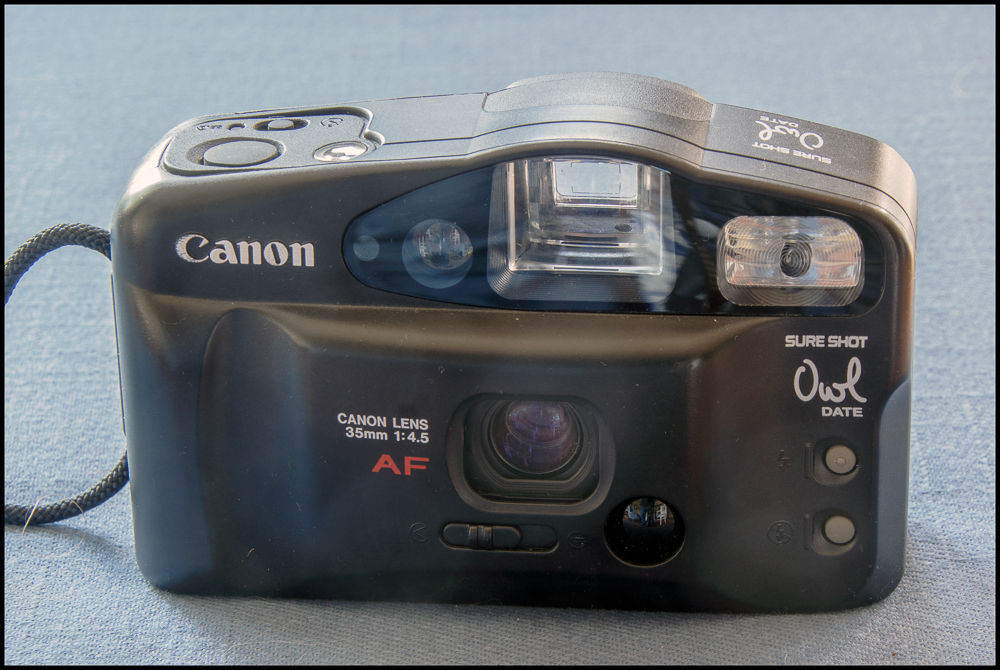
So I reached for the nearest film camera. It turned out to be a Canon Sureshot Owl, which was one of a number of old point and shoot cameras given to me by a neighbor a while back (See: A bag full of cameras). One of the reasons I selected it was because it already had a film in it.

It’s a very basic, point and shoot camera with little in the way of controls. There’s a review of it here: The Canon Sure Shot Owl / Prima AF-7. I probably would not have paid much attention to if it weren’t for one thing: it has a really huge, clear and bright viewfinder. As the review states:

The first thing that strikes you about this camera is the viewfinder: it is bright and beautiful! It is a really great viewfinder.

I guess this quote also from the review just about sums it up:

Shooting the camera, for a modern DSLR user, takes some getting used to. Firstly, there is nothing to do except point the camera and press the shutter button. There is no feedback from the camera on what is happening. You don’t know what shutter speed was used, you don’t know what f/stop was used, and you don’t know what focal distance was used. Very disconcerting for someone used to controlling every aspect of the process.

So a fairly typical point and shoot camera. Off we go. Results to follow.

.