“Beaux Arts architecture was an ostentatious style that incorporated elements of Federal and Greek Revival styles as well as the architecture of the High Renaissance and Baroque eras. The style is named after the Ecole des Beaux-Arts, the Parisian fine arts school where the greatest
practitioners of the style learned their trade. The style came about as a result of the World’s Columbian Exposition in Chicago in 1893, a centerpiece of which was a large group of classical styled buildings known as the The White City constructed by the renowned architect Daniel
Burnham (1846-1912). Beaux Arts architecture was characterized by the eclectic use of classical detailing, employing arched window openings and entryways along with elaborate cornices. The style was typically usually utilized in buildings such as banks, schools, post offices, libraries, and other government structures.
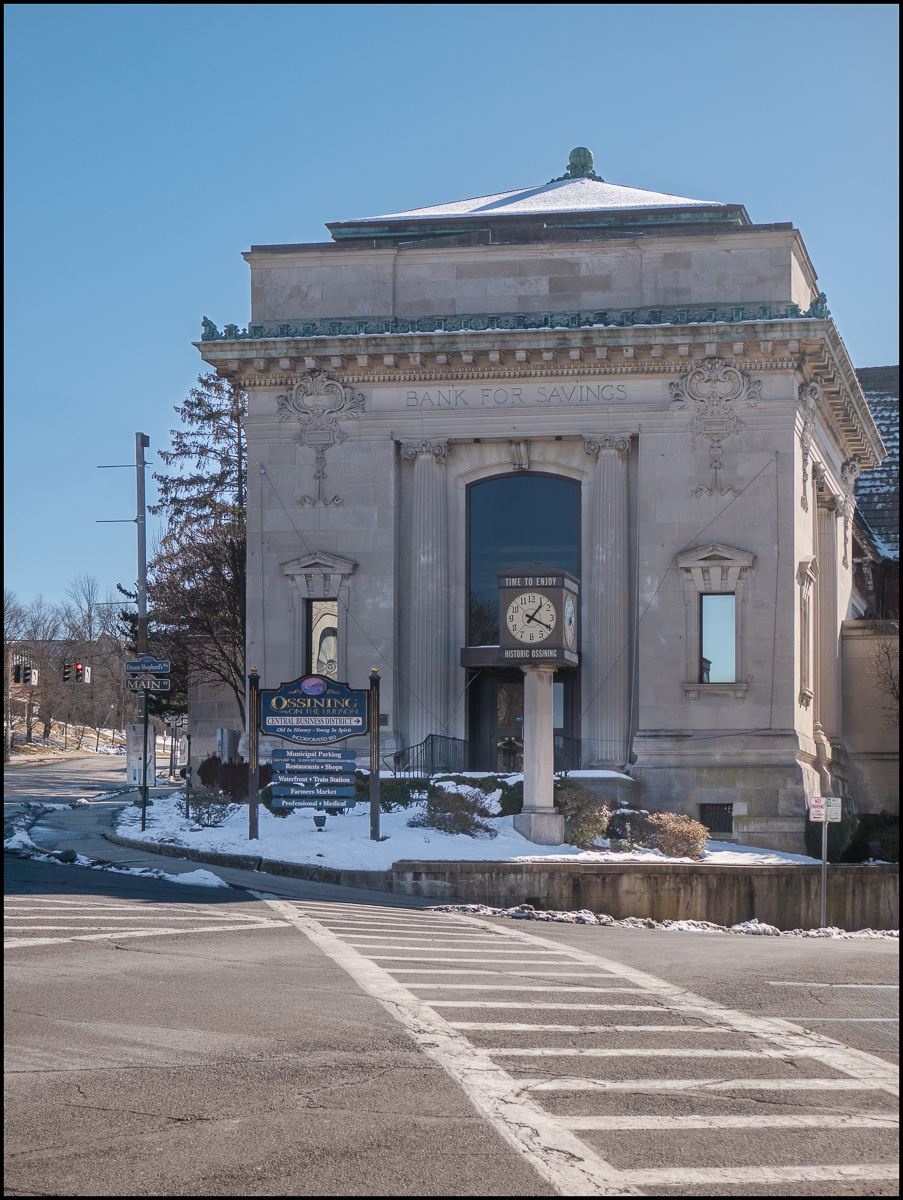
The Bank for Savings contains much of the elaborate decorative detailing that exemplifies the Beaux Arts style. Fluted Ionic columns flank the main entryway and the windows on the east and west façades, along with arches over the window openings. The building is capped with a
pyramidal roof. The roofline is surrounded with a molded cornice enriched with copper detailing and a full entablature with cartouches. The small rectangular windows located on the lower portions of the east, west, and north façades contain bracketed sills and triangular pediments
above each window. A one-story addition was constructed on the rear of the building in 1949.. The Bank for Savings was constructed from limestone.
The Ossining Bank for Savings is architecturally significant as one of the best preserved examples of Beaux Arts architecture in Westchester County. It is also the only commercial example of Beaux Arts architecture in Ossining and is listed on the National Register as a
contributing structure within the Downtown Ossining Historic District
The Ossining Bank for Savings, was constructed in 1908 to serve as the bank’s headquarters. The Bank closed in 1983 and has been vacant since. With its location at the intersections of Highland Avenue, Croton Avenue, and Main Street, the building is a well-known Ossining landmark.
Architect Lansing C. Holden of New York City, who designed the Bank for Savings, was a past president of both the Architectural League as well as the New York Chapter of the AIA and was an AIA Fellow, a title bestowed upon eminent architects who have made outstanding contributions to the profession. Holden was also responsible for writing a large part of the AIA’s ethics code.” (Village of Ossining Significant Sites and Structures Guide, page 227)
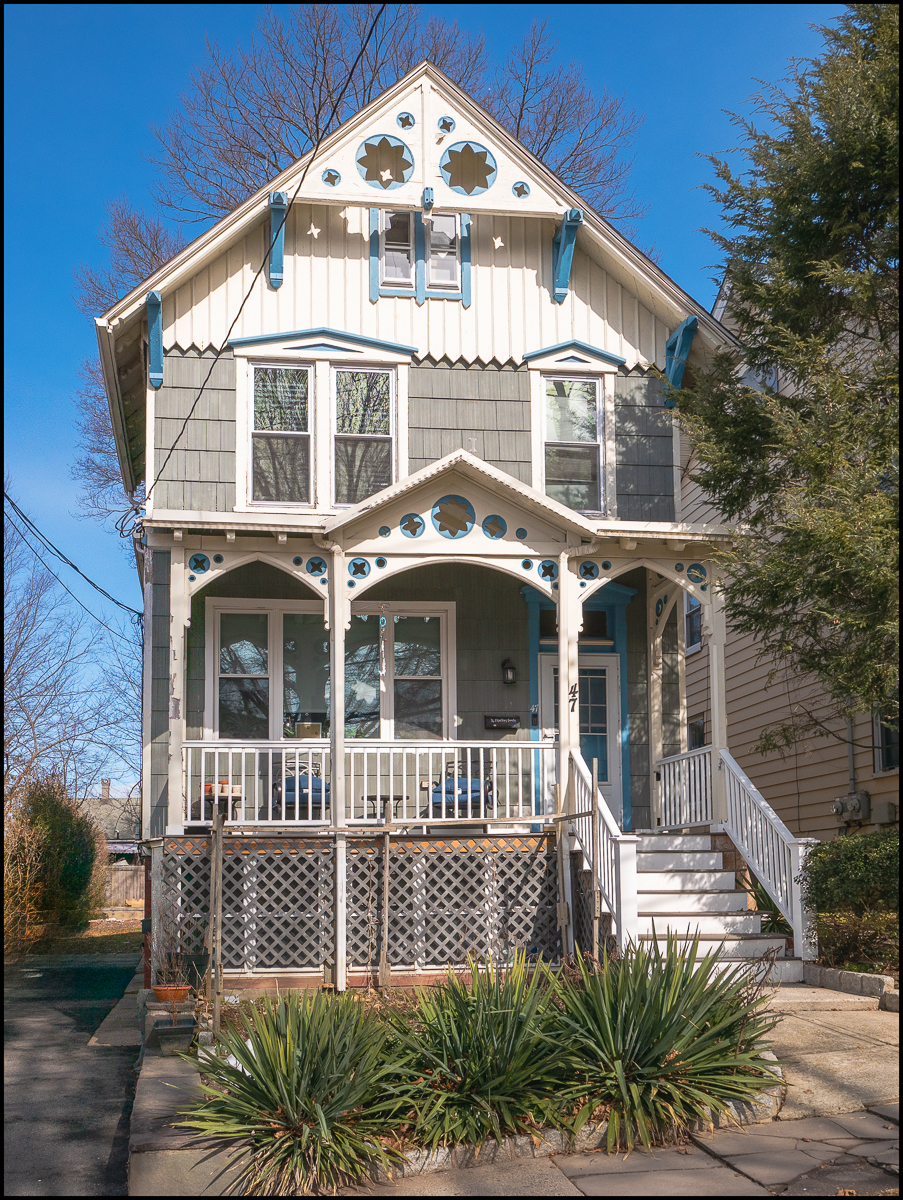
Taken with Panasonic Lumix GX 85 and Panasonic Lumix G Vario 14-42 f3.5-4.6 II