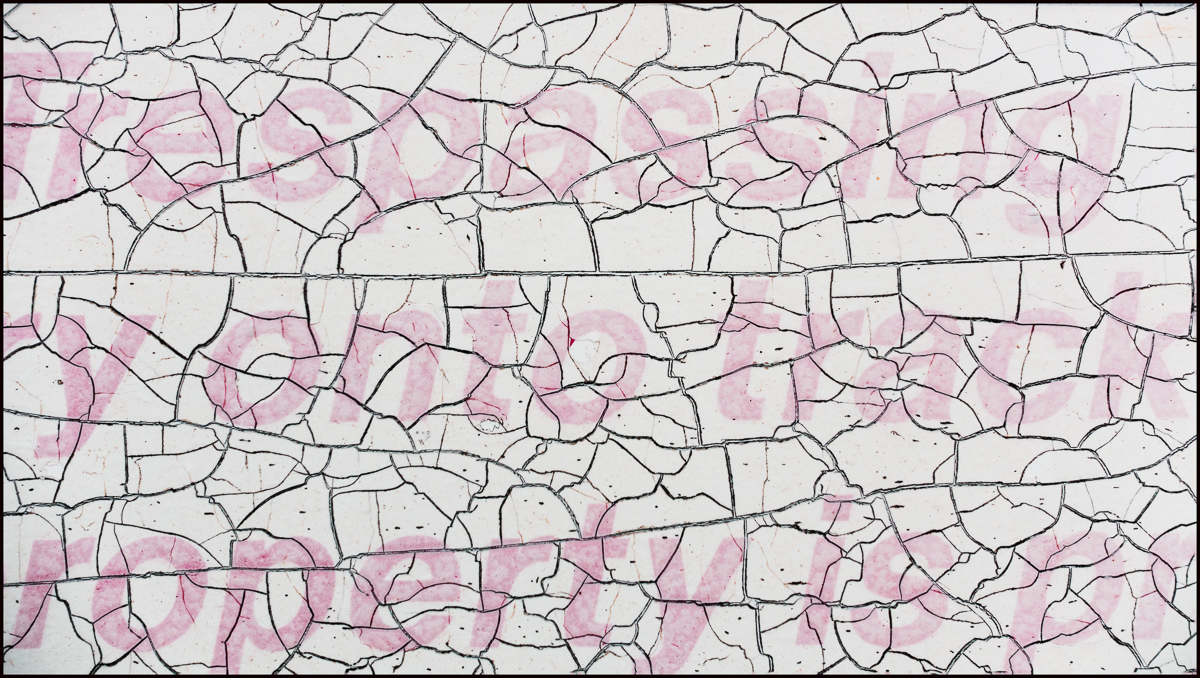
Seen at Scarborough Metro-North station while waiting for a train to New York City. The cracks seemed to give it an almost abstract composition.
Taken with a Sony RX100 M3.
Photographs and thoughts on photography and camera collecting

Seen at Scarborough Metro-North station while waiting for a train to New York City. The cracks seemed to give it an almost abstract composition.
Taken with a Sony RX100 M3.
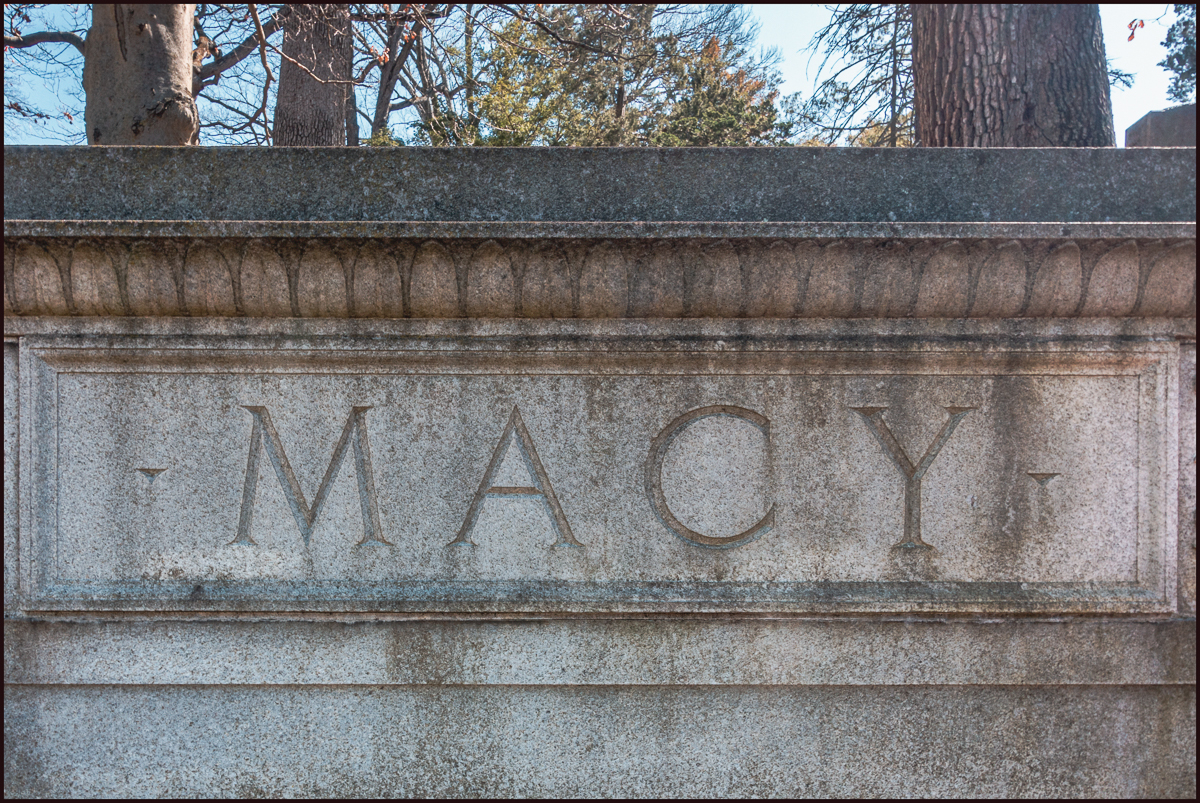
A little over a month ago I did a post on A Wealthy Man. In that post I included a picture I’d found on the internet showing his grave site (actually it’s not just him. His wife, Edith is also there as are a number of other Macy’s). I wasn’t too happy with that picture so I returned to Sleepy Hollow Cemetery with a friend to take my own pictures.
The gravesite is actually on two levels. The lower level seems to be empty. The upper level contains a large bench overlooking the graves themselves and the River Hudson.
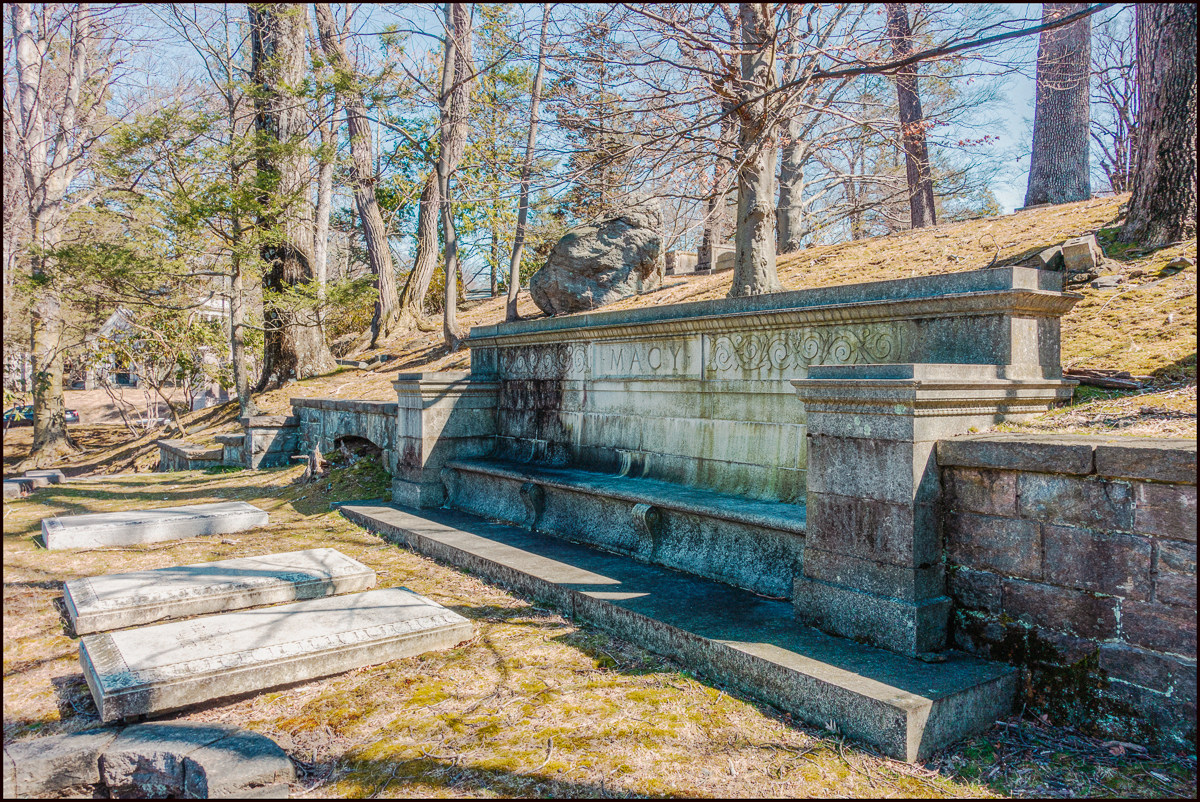
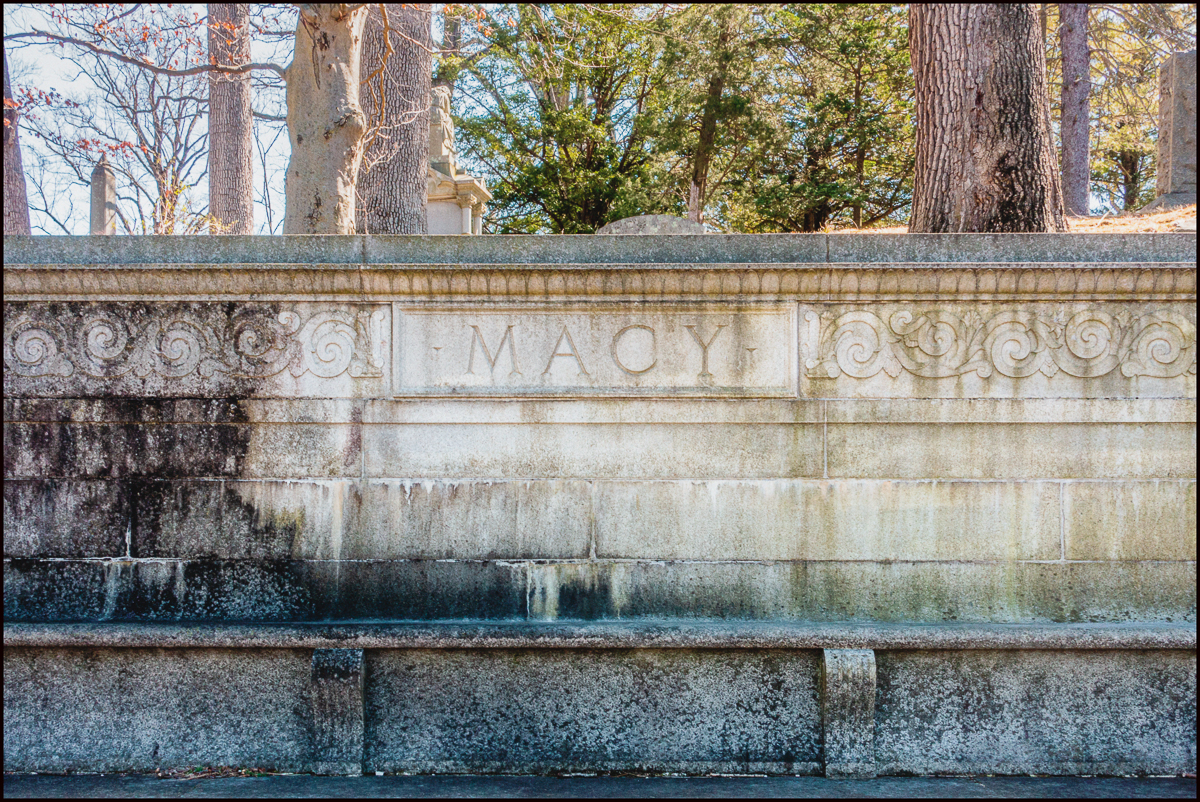
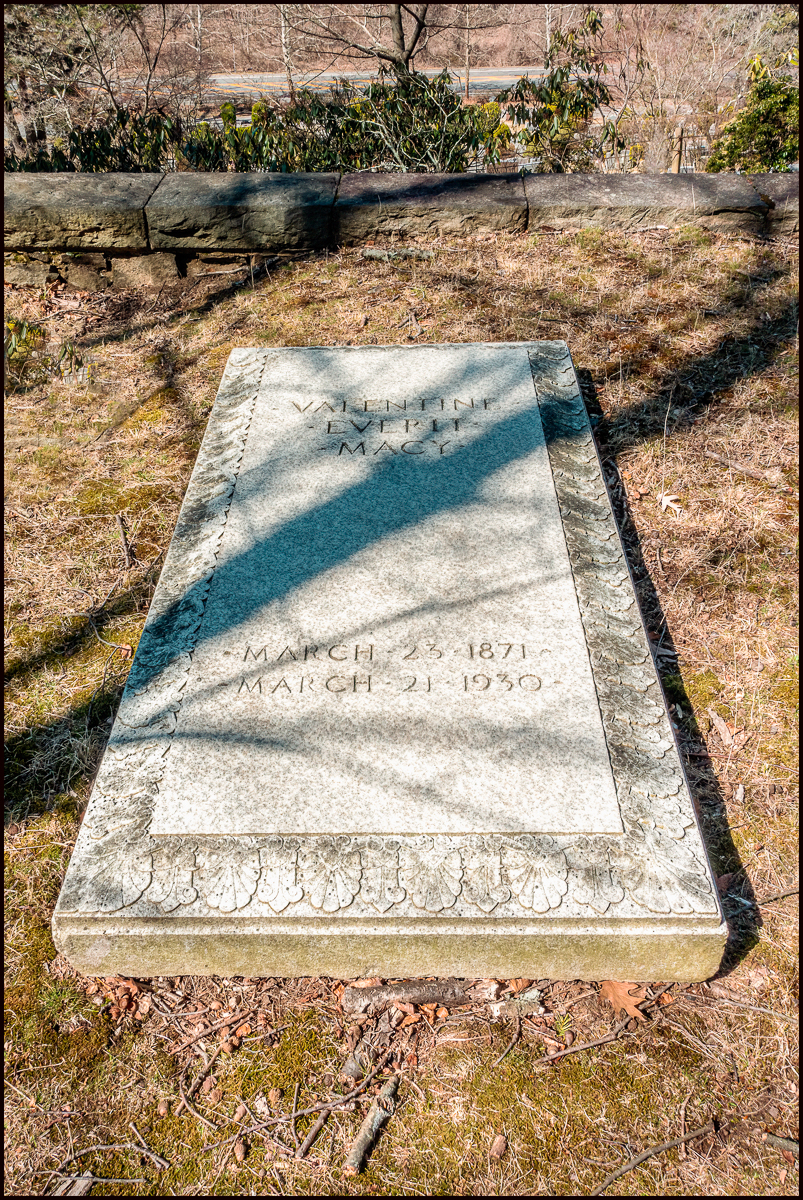
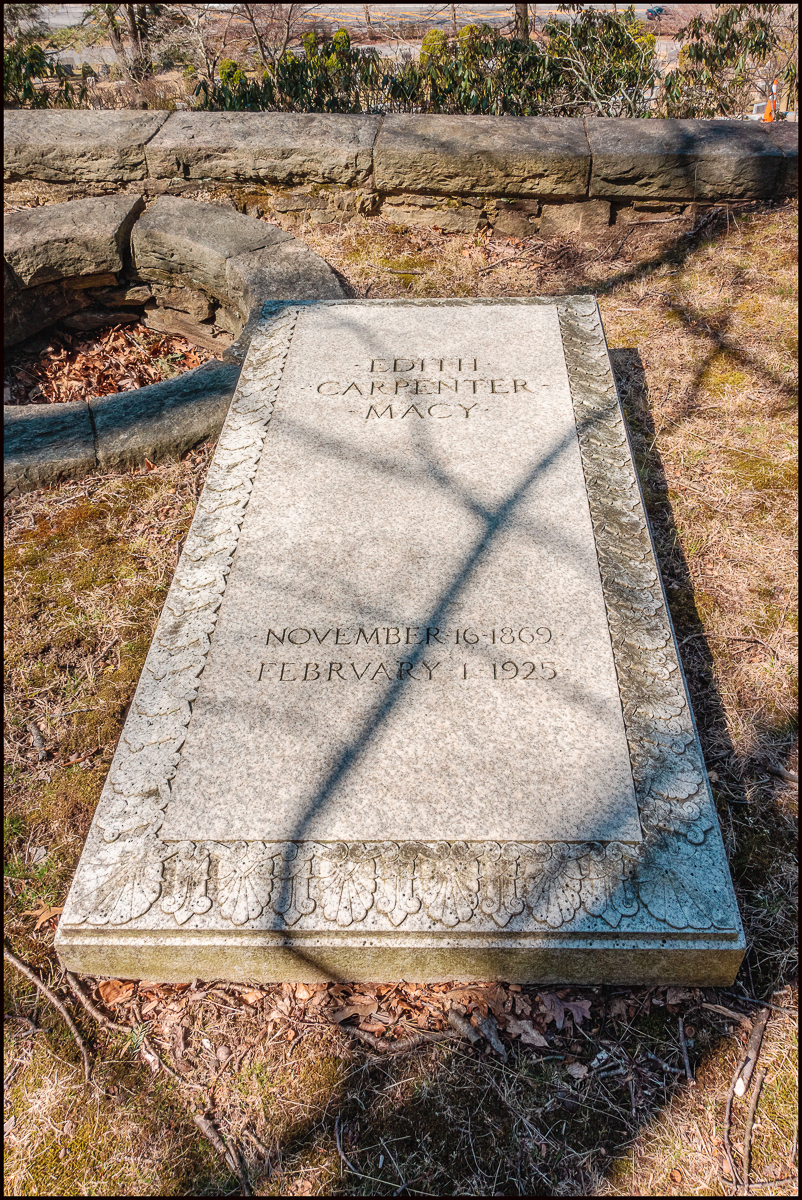
I had walked past this grave site many times before and was surprised that I had not noticed to whom it belonged. I guess that was before my involvement with the Briarcliff Manor-Scarborough Historical Society.
I was even more surprised to discover that next to this gravesite is another magnificent monument, this time to James Speyer. I’d even taken a picture of this before (See: Sleepy Hollow Cemetery- Structures, Final Picture). The Speyer and Macy gravesites are right next to each other, just as their estates were across the road from each other in Briarcliff Manor. I was amazed that I’d missed the Speyer gravesite on the many occasions I’d walked by it. My house is on what used to be the Speyer Estate. (See: Here’s where we live).
I took some pictures of the Speyer grave site too. It looks a lot different from when I took the earlier picture. Then it was difficult to make out anything. It was extremely dirty. Now it looks as if it’s been recently cleaned. I’ll post the pictures soon.
Taken with a Sony RX100 M3.
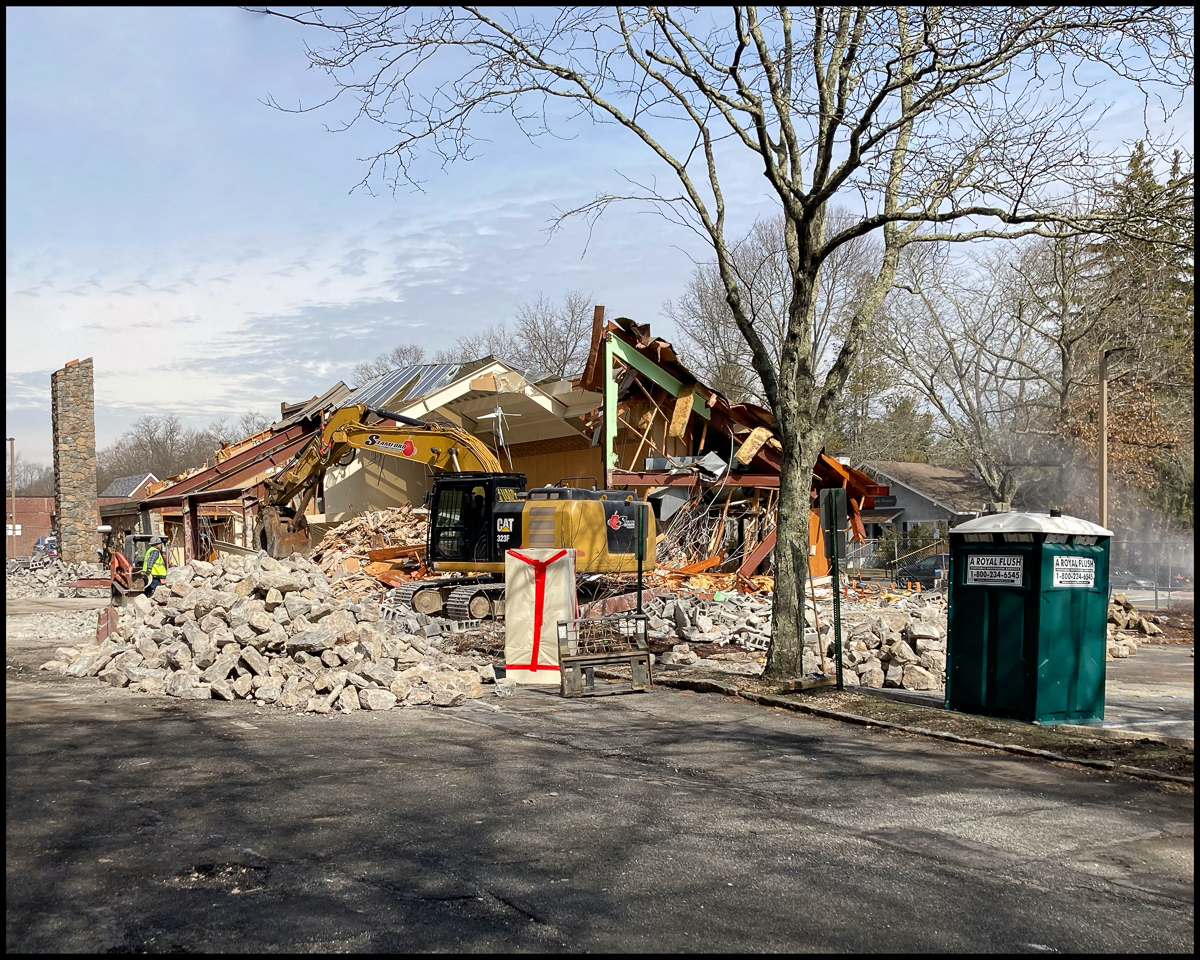
A while ago we (the Briarcliff Manor-Scarborough Historical Society) learned that the empty Wells Fargo bank on Pleasantville Road was to be demolished, but it wasn’t until just before the demolition was to take place that we learned the exact date. We weren’t all that interested in the bank building itself. Rather we were concerned about the fate of a mural inside the building. It was likely that the mural could not be saved, but we thought that we could at least get a photograph of it so that there would at least be some record.
We rushed over, but unfortunately we were too late! The mural had already gone. Needless to say we were disappointed.
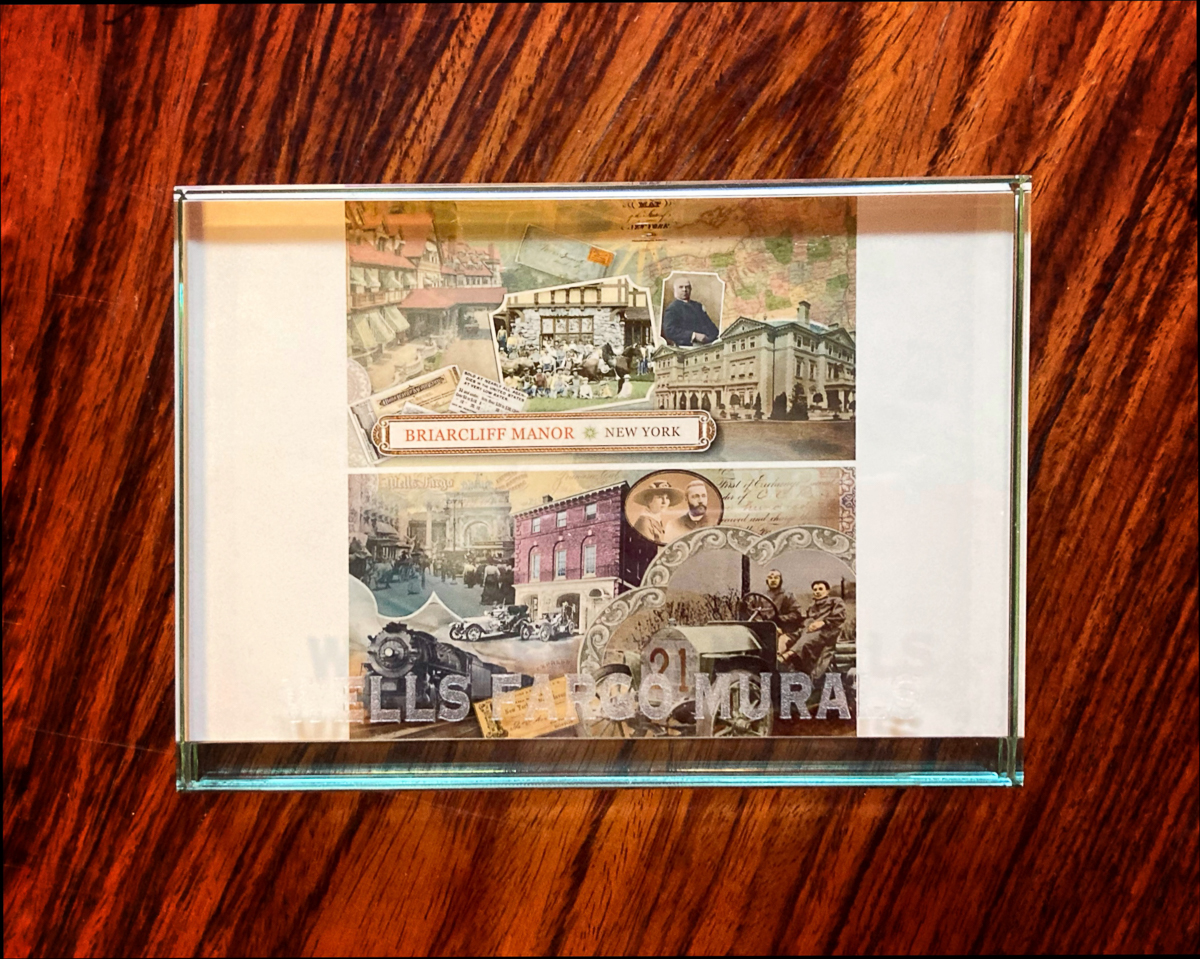
However, our Executive Director, Karen Smith was recently going through some boxes and she came across what we believe is a paperweight. On one side it has a picture of the mural with the words: “Wells Fargo Mural” and on the other side an index to all the elements used in making the mural. Everything is encased in glass.
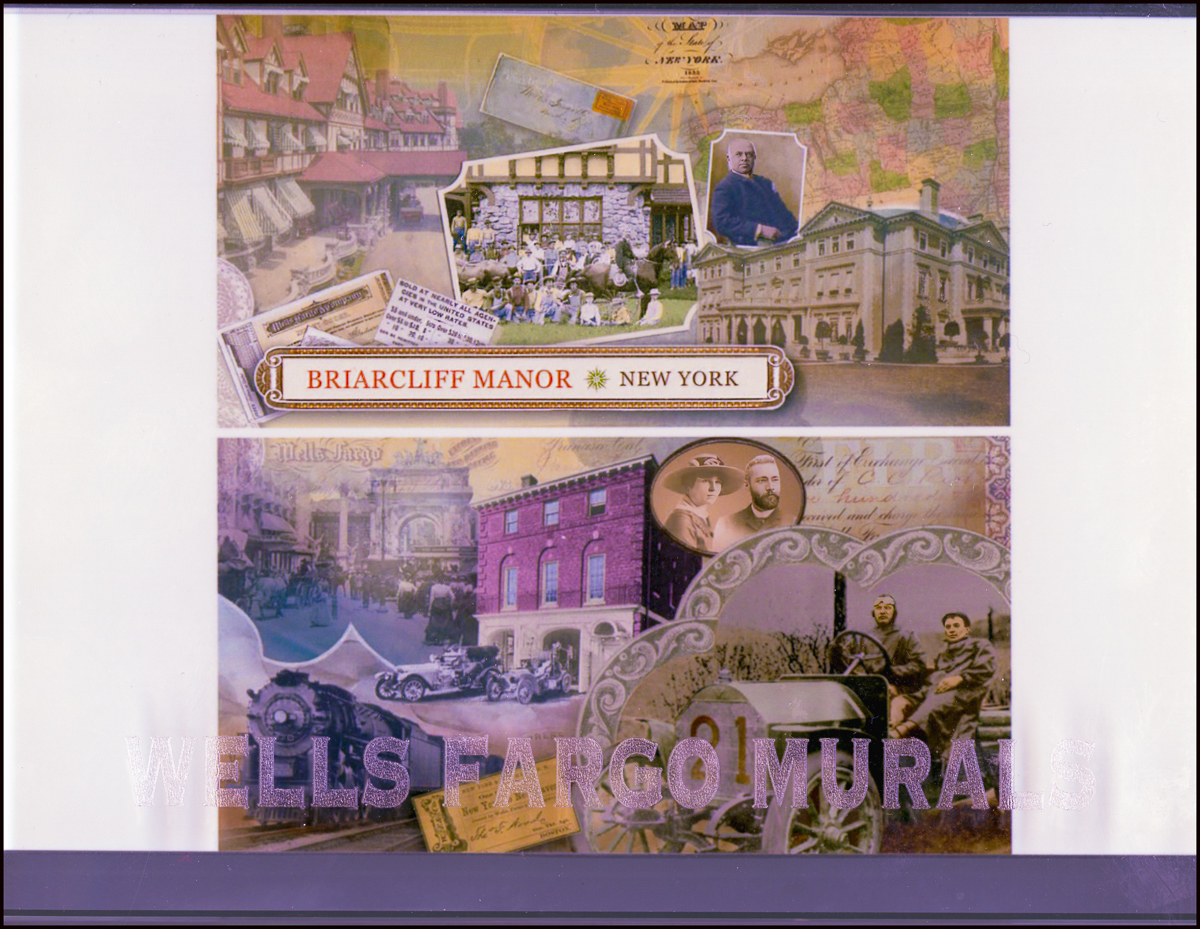
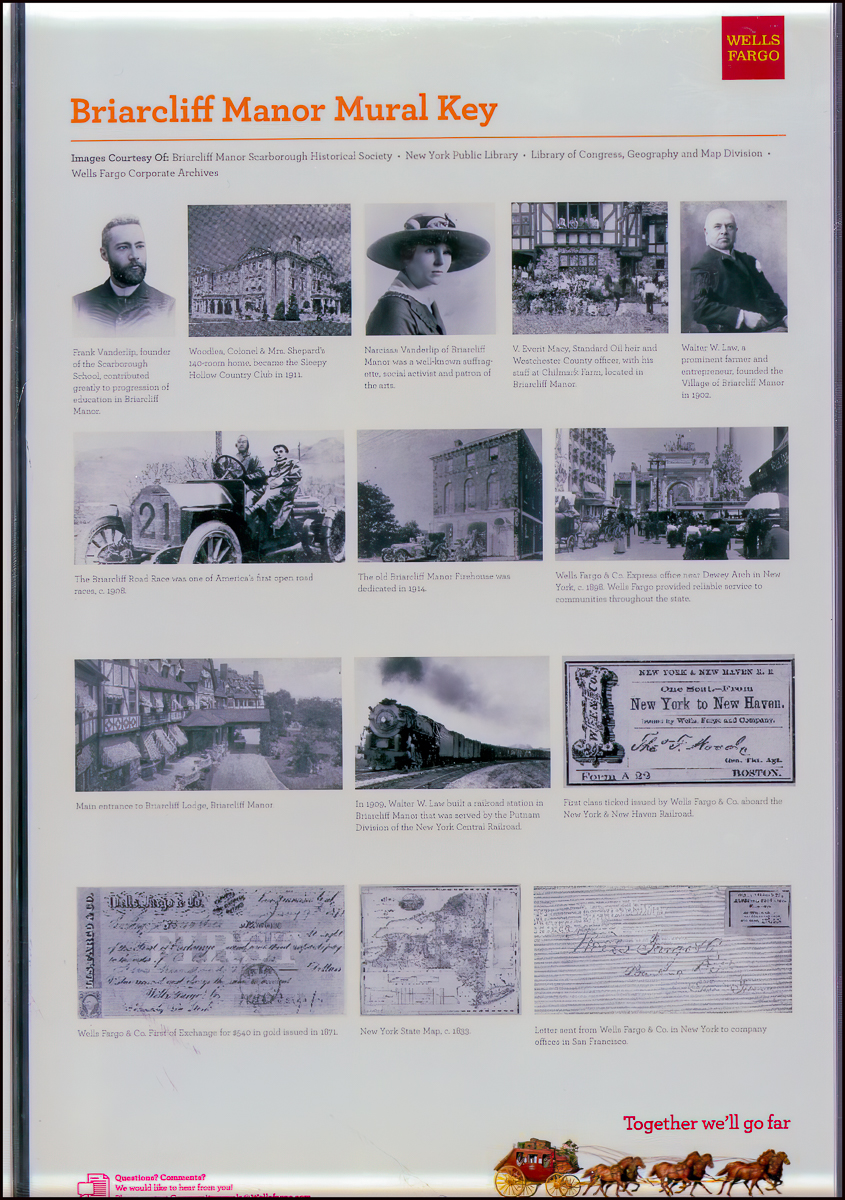
Taken with an iPhone SE II (first two pictures, remaining pictures scanned).
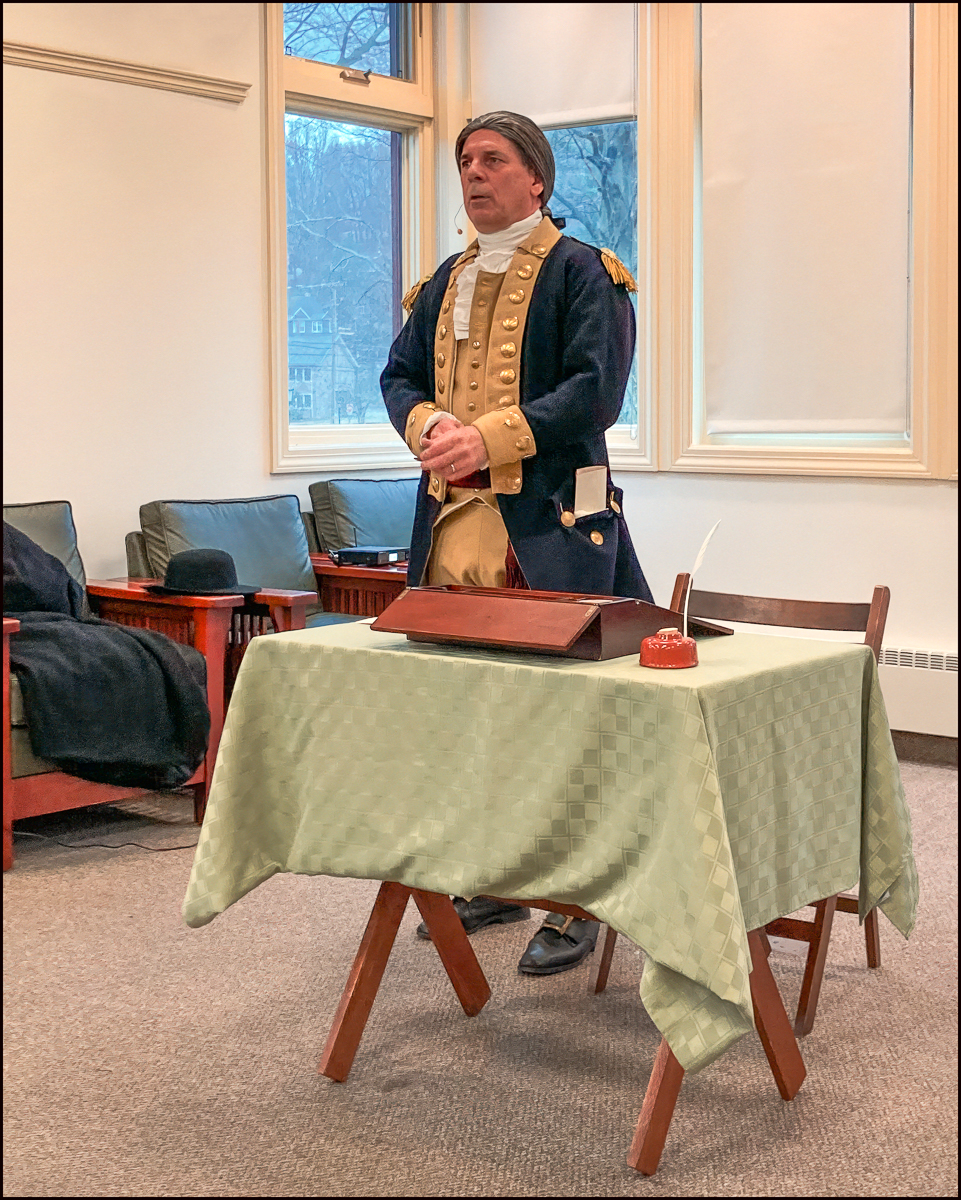
Yesterday I attended an interesting (for those who are interested in US Revolutionary War History, of course) presentation (actually more of a re-enactment) of The Trial of Major John André. It was organized by Revolutionary Westchester 250 as one of the many events and programs commemorating the American Revolution in Westchester County, in the run up to the 250 Anniversary in 2026. The two excellent performers were from “Drama From the Past, LLC. First Person Historical Performances”. The re-enactment was hosted by the Briarcliff Manor Public Library.
For those (particularly my friends in the UK) who may not be familiar with the story I’ll include this short quote from a recent article:
“It is September 29, 1780, the start of André’s trial. General George Washington has just learned the devastating news that American General Benedict Arnold has betrayed his Country and was about to surrender Fortress West Point to the British. Arnold’s accomplice, British Major John André, was captured in Tarrytown, by militiamen John Paulding, David Williams and Isaac Van Wart. André now faces a military tribunal at the Old Dutch Church in Tappan, NY. A Board of Officers has been appointed to decide whether or not he is an officer of the British Army or a spy. Having been captured behind enemy lines, out of uniform and carrying incriminating documents, André is faced with a monumental task of wriggling free from the grim fate that awaits.”
Great fun. I really enjoyed it.
Above: Gary Petagine plays Judge Advocate John Laurence, who prosecuted.
Below: Sean Grady (who portrays Major André). I was sorely tempted to ask him if I could try on his jacket.😀He did a great British accent too.
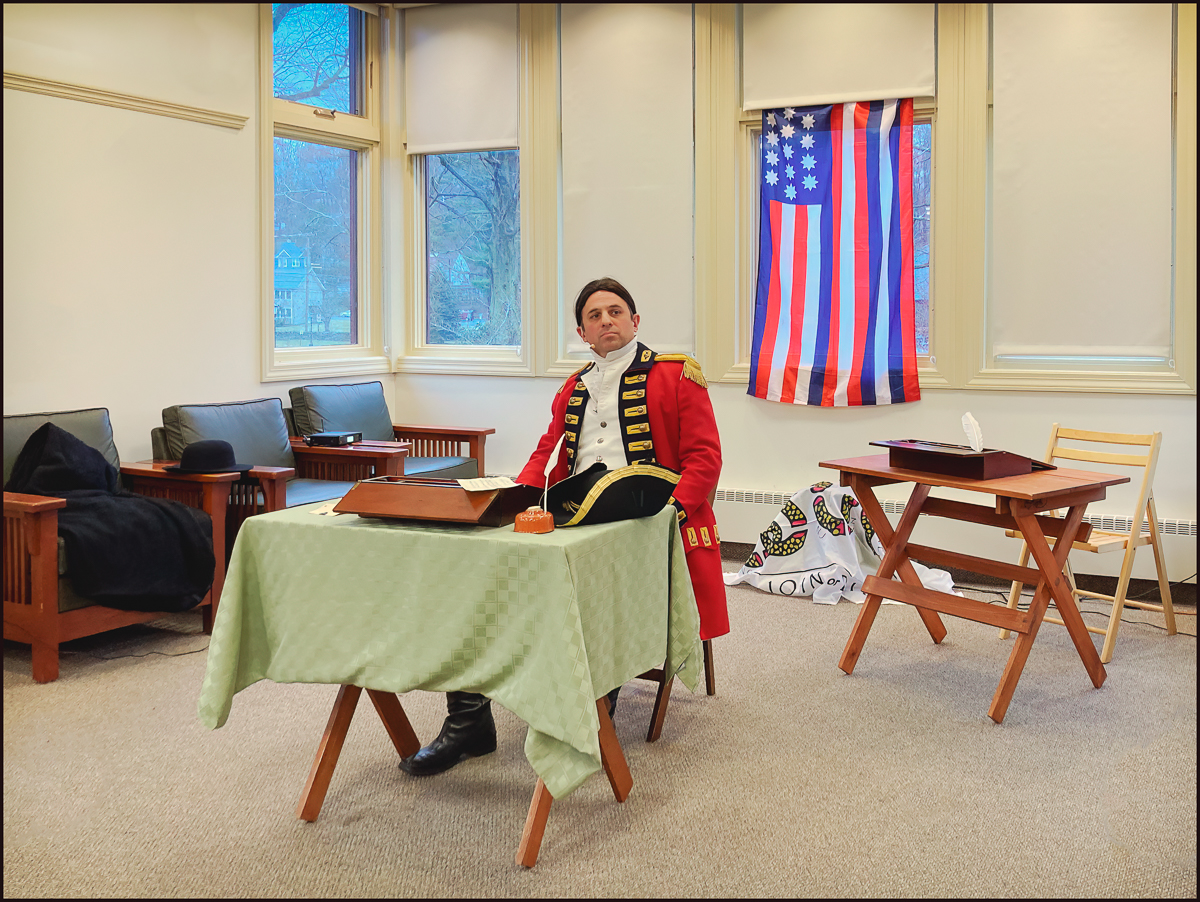
Taken with an iPhone SE II.

I follow a number of landscape photographers on YouTube. I’ve noticed a trend in the way they are using the words “fine-art”. They usually use it to describe a particular type of image:
Something like the above, but not quite. The above image is one of mine and I don’t do that kind of photography. This is probably the closest I come. Maybe a better illustration would the work of Theodore Kefalopoulos. Don’t get me wrong. I’m not criticizing this type of work. When done well I rather like some of it.
Rather I feel that labeling this type of photography as “fine art” is too limiting. Surely “fine art” photography is broader that this. Wikipedia provides the following definition, which I prefer even though I don’t altogether agree with it (why, for example can photojournalism not be considered “fine art”):
Fine-art photography is photography created in line with the vision of the photographer as artist, using photography as a medium for creative expression. The goal of fine-art photography is to express an idea, a message, or an emotion. This stands in contrast to representational photography, such as photojournalism, which provides a documentary visual account of specific subjects and events, literally representing objective reality rather than the subjective intent of the photographer; and commercial photography, the primary focus of which is to advertise products, or services.
Clearly I’ll have to think about this some more. I’m not sure that I fully understand what “fine art” photography is, but I think I know what it’s not: it’s not limited to black and white; minimalist; long exposure seascapes.
Taken with a Fuji X-E3 and Fuji XF 10-24mm f4