’76 House – Is it Haunted?

A couple of people have asked me if the ’76 House is haunted. According to an article in the Orangetown Daily Voice it is. The article states:

…ghost sightings and paranormal activity are commonplace at the popular establishment.

They occur, in fact, frequently enough that in staff meetings “when a glass or piece of cutlery falls off a table, someone just gets up to put it back,” said Taylor.

There are reports from staff and patrons seeing apparitions, said Taylor, retelling what Robert Norden, the restaurant’s owner for 30 years, told him about the phenomena.

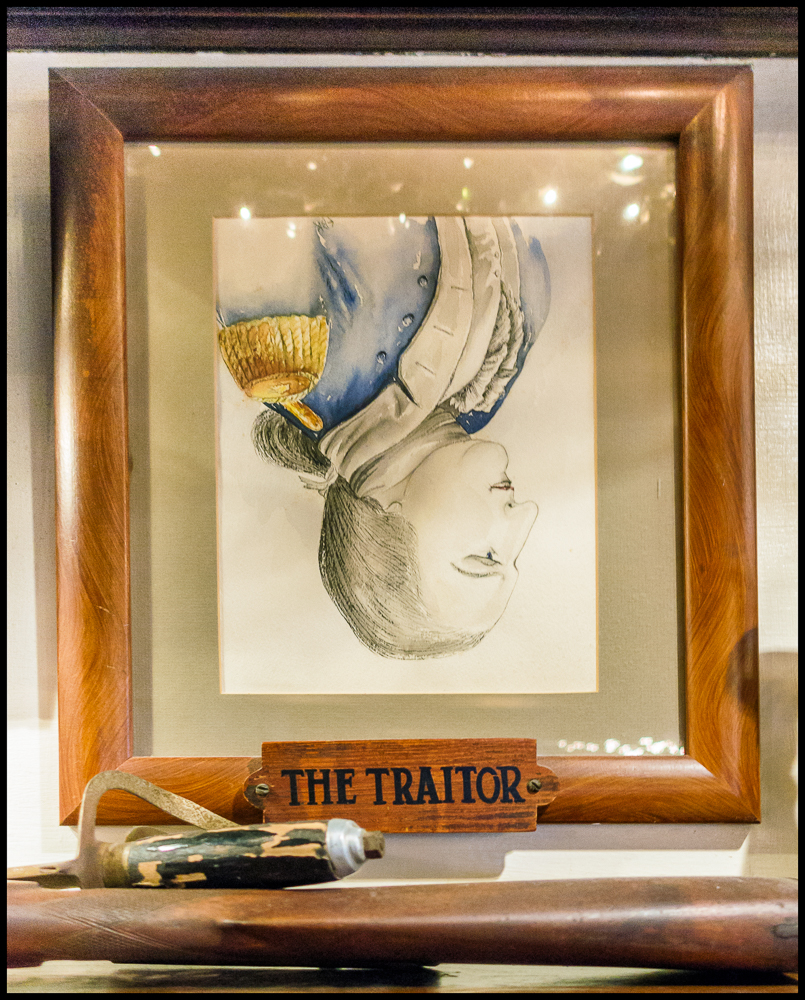
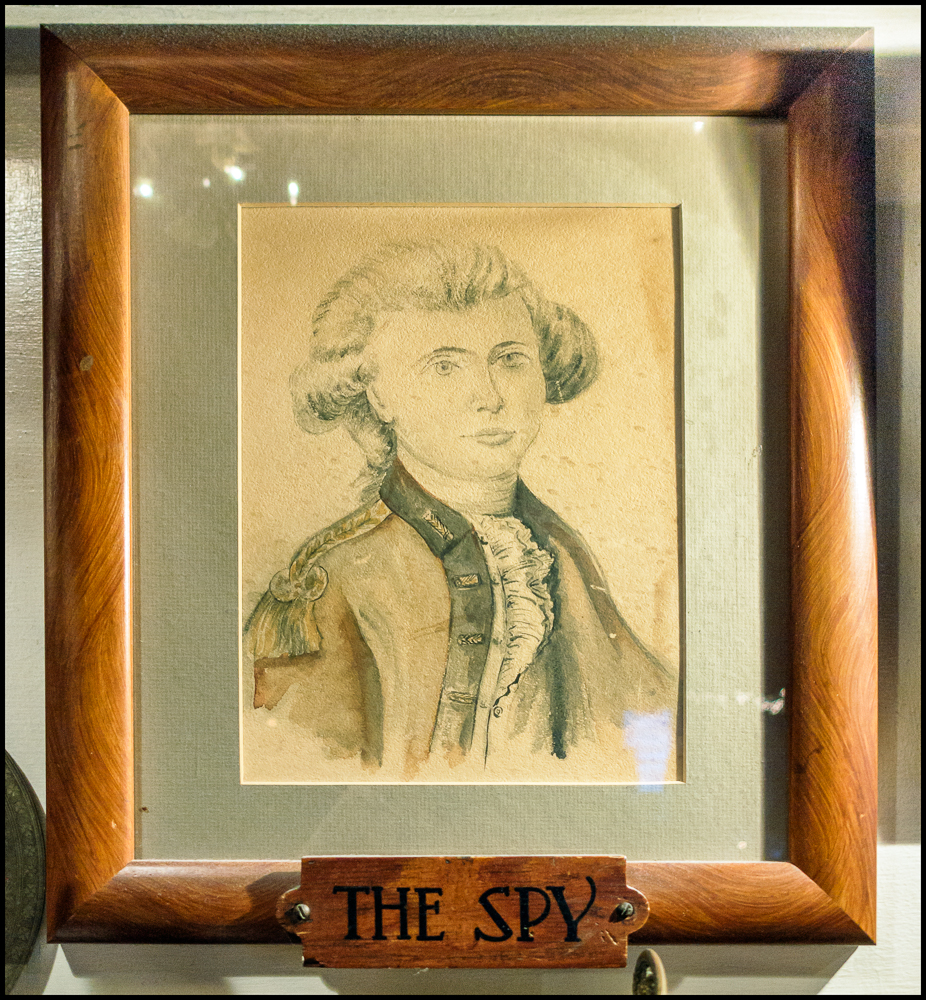
The alleged figures people have reported seeing are a man dressed in military-style clothing, like a Redcoat uniform (Note: or perhaps like the one in the picture above?), among “full-grown apparitions,” particularly in the dining room that was used as the old jail.

“People in the room have seen apparitions walking through the walls and when they walked over to look for themselves there would be nobody there,” said Taylor.

“The old jail used is one of the areas we use for the main dinner for our events. It was Andre’s prison. It’s got a very interesting history. People could sit in there and it could be very warm, yet they go stone cold in the room.”

Paranormal experts have gone in with their electronic recording devices and picked up data in the room, he claimed. Much of this activity centers on a corner table, according to Taylor.

“On a serious note, you never know what awaits you. Things change. Spirits come and go from that location. It could be a (deceased) patron who would go in once a month and that’s the place they go back to. It’s not just war men. There are children there as well that have no relevance whatsoever with the Revolutionary War. When you go there the paranormal experience is so unique.”

Rudy Zayas, the general manager of ’76 House recalled some of the odd things staff has seen over the 10 years he’s been working there.

On table two he’s seen a candle lit that he’s sure was put out the night before.

“We make sure everything is closed for the night before we leave. Sometimes I come in the morning and find it lit.”

Things mysteriously move on the table as well, Zayas continued. Staff routinely wipe down and set silverware in place and places a lantern on a pewter plate as a centerpiece.

“The lantern rolls down the table sometimes to a different spot. At first staff thought people were playing games with each other but after awhile realized nobody was doing it.”

And one night at table 11 on the other side in a corner of the same dining room he thinks he saw a ghost.

“I was turning the lights off and it was just me and the bartender still here. After I turned off the light I saw a man sitting at a table in the front of the dining room. I told her to buy him a drink and turned the light back on for the customer. She turned to me and said, “There’s no one there.'”

Taken with a Sony RX-100 M3.
’76 House – Blue and White

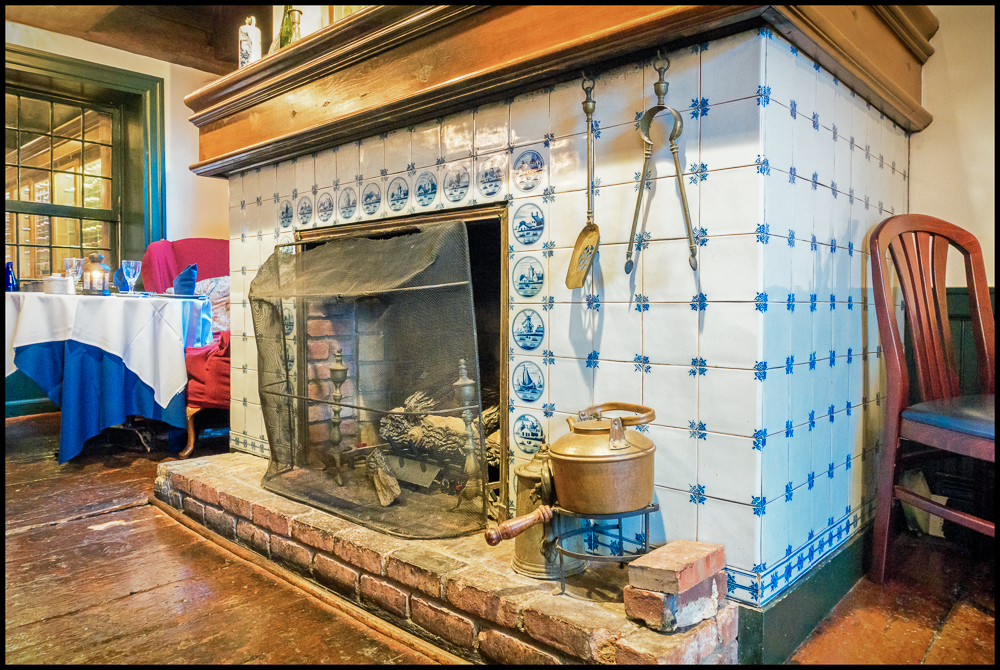
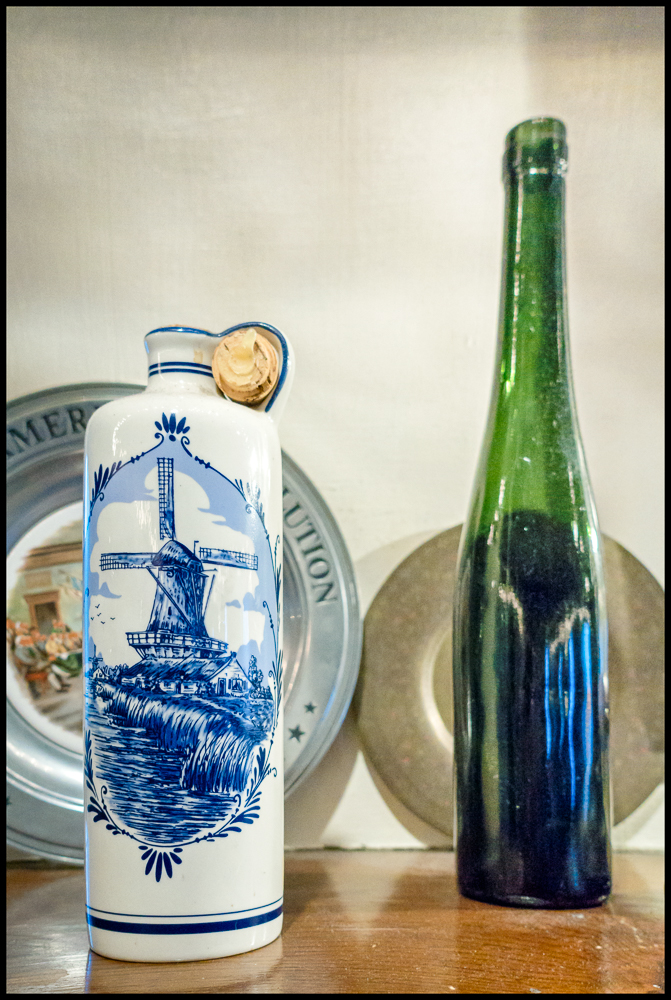
As I’ve mentioned in earlier posts my wife loves blue and white things (china, tiles, etc.) so she was pleased to see a few pieces scattered around the interior of the ’76 house, particularly the magnificent fireplace above and the Delft bottle below. The tavern had a rather dark interior featuring a lot of lovely dark wood and the blue and white pieces really stood out.

Taken with a Sony RX-100 M3.

’76 House – Exterior views

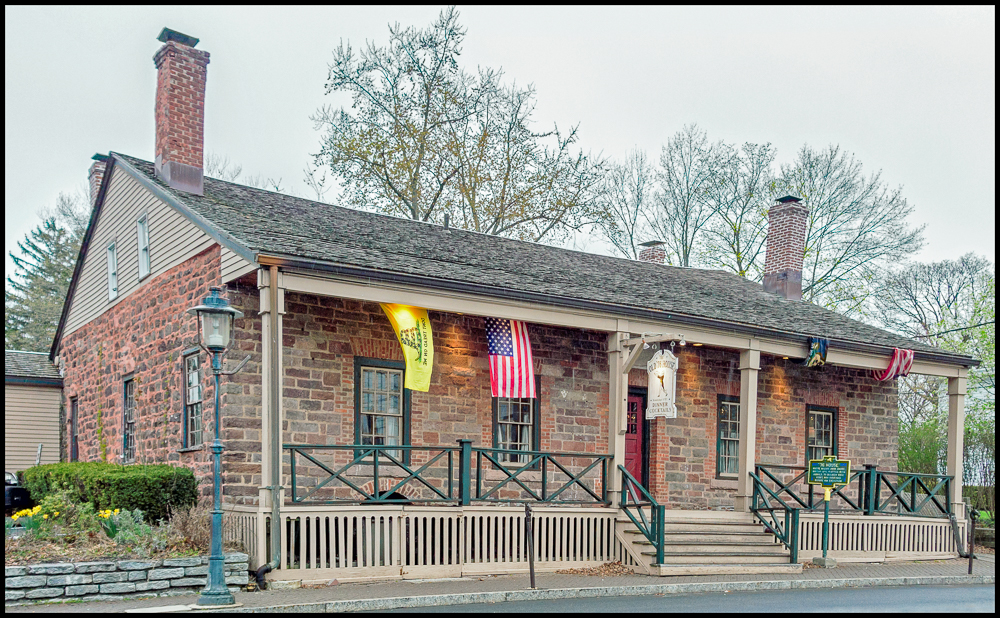
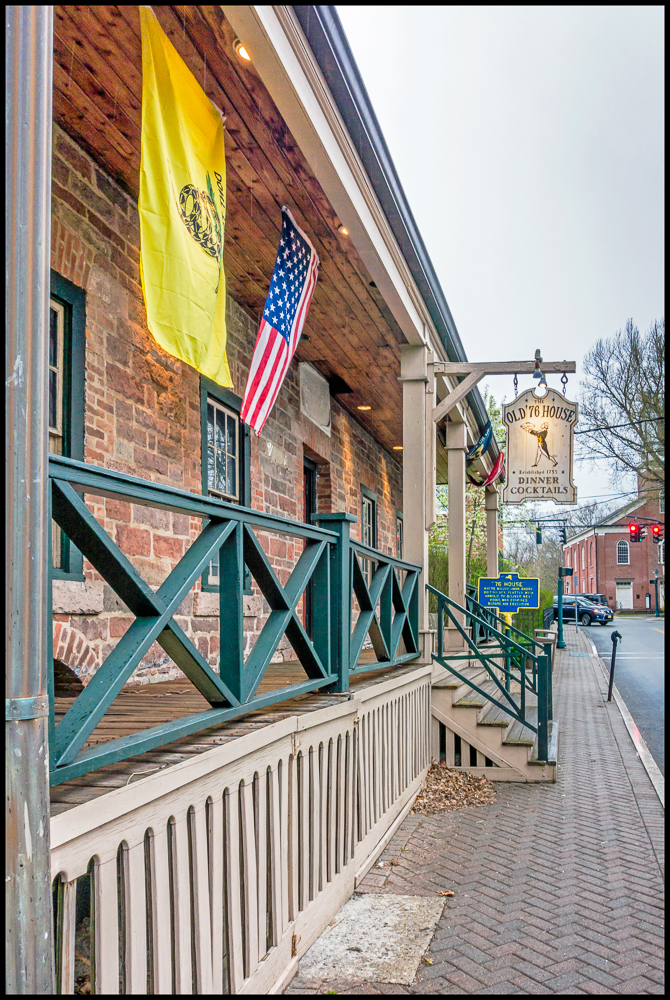
Yesterday was my birthday and we went to the ’76 House in Tappan, NY. It’s a great place, all dark wood, thick beams, muskets on the wall etc. It reminded me a lot of many of the pubs I used to frequent back in the UK. The menu was certainly different featuring items such as alligator empanadas (which I had), wild boar sausage, and red deer. We had a great time. It was a triple treat: good food, great friends and for me at least a location of some historical significance.

An historical marker outside reads: “Where Major John Andre, British spy, plotter with Arnold, to deliver West Point, was confined before his execution” (in Tappan, 2 October 1780). Apparently for once George Washington didn’t sleep here. He stayed at the nearby De Windt house. But he did eat here.

The ’76 House web site elaborates on it’s history:

The Old ’76 House is not simply one of America’s oldest taverns. Built in 1668, The Old ’76 House had a profound effect on the outcome of The Revolutionary War. Through its long use as a meeting place for patriots, The Old ’76 House established itself as safe ground for Americans when the air was rife with revolution and the tavern itself served as the “prison” of the Revolution’s most notorious spy, Major John Andre. That is why The Old ’76 House is often referred to as “Andre’s Prison”, not a real prison, in fact never having been a place of incarceration for anyone before or since. On the contrary, The Old ’76 House has been a haven for many a weary traveler for more than two hundred years. This great tavern has accommodated on various occasions, every General of the west wing of the Continental Army including Commander-in-Chief General George Washington who, with his chief provisioner Samuel Fraunces, dined in the comfortable atmosphere of The Old ’76 House.

The story of Major Andre and Benedict Arnold is one strewn with deception, fateful remorse, and mortal consequences. It is also a story which could have changed the outcome of the Revolution. Andre, a charming, handsome, young man, was adjutant general to General Sir Henry Clinton, Commander-in-Chief of the British forces in North America. Arnold was a brilliant and respected general as well as a great friend of General Washington.

General Benedict Arnold, having been severely reprimanded by Congress and, in fact, court martialed, had become embittered and ready to betray his country. Truly a brilliant general, he realized the strategic importance of West Point and, drawing on his longterm friendship with Washington, sought to secure the command of the fortress. Washington, who regretted the treatment and reprimand of Arnold, granted his request and thus Benedict Arnold was placed in a position to betray his country.

Arnold began to correspond secretly with General Clinton about his plan to let West Point fall into British hands. As a result, Clinton sent Major Andre up the Hudson in the British Sloop-of- War, Vulture, on September 20, 1780 to meet with Benedict Arnold. Andre was rowed ashore at the long cove just south of Haverstraw, where the two men conferred until sunrise. Their plans for the handing over of West Point still not complete, they rode on horseback to the home of Joshua Hett Smith, which stood on what is now known as Treason Hill. There it was agreed that Arnold should have one of the links removed from the great iron chain which stretched across the Hudson from West Point to King’s Ferry to prevent the passage of British ships up the river. Arnold planned to replace the iron link with rope, on the pretext that the chain needed mending.

Plans were completed and Andre hid his papers, showing the fortifications of West Point and the placement of soldiers, between his “stockings and feet”. Toward evening he asked to be rowed back to the Vulture, but Smith said it was too dangerous and persuaded Andre to cross the Hudson at Stony Point and proceed to the British lines by land. Near Tarrytown he was stopped by three American soldiers who discovered the incriminating papers and took him to the nearest commanding officer. From there he was taken to Tappan, where Washington had placed his headquarters, and imprisoned in The Old ’76 House – then called Mabie’s Inn.

After a trial in the Dutch Church in Tappan, a court of inquiry reported that Andre ought “to be considered a spy from the enemy and that, agreeable to the law and usage of nations, it is their opinion he ought to suffer death.” He was marched up the hill to a gallows at noon on October 2, 1780. As he stood beneath the gibbet he said: “All I request gentlemen is that while I acknowledge the propriety of my sentence, you will bear me witness that I die like a brave man.” In 1820 Andre’s remains were brought to rest in Westminster Abbey, London where he is regarded as a hero. Benedict Arnold died in London in 1801, shunned by friend and foe alike.

Taken with a Sony RX-100 M3.

Hudson View from Rockwood Hall

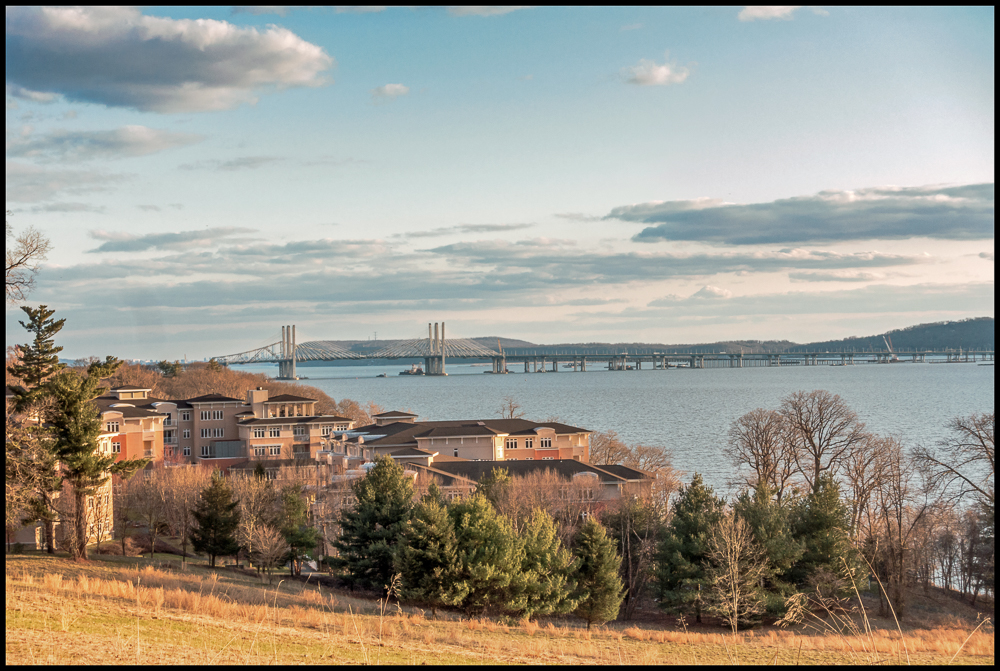
I posted a similar shot back in September 2014 (See: A Walk to Rockwood Hall). If you look look at it you’ll see that something is different. Specifically it’s the bridge. In the first picture you’re seeing the Tappan Zee Bridge, in the second its replacement the Mario Cuomo Bridge.

The name is, however, somewhat controversial as explained in the second Wikipedia article:

During construction, the project’s website referred to the crossing as the “New NY Bridge”. However, other sources referred to the crossing as the “New Tappan Zee Bridge”.

Governor Andrew Cuomo was successful in passing legislation to name the bridge after his father, former Governor Mario Cuomo, on June 29, 2017. This has been met with stiff criticism as a Reclaim New York Initiative poll of Rockland and Westchester county residents found only 14.7% of respondents support the new name. Many have cited the timing of the New York State legislature vote at the last session before the summer term ended and the last chance to enact a state budget. As of November 29, 2017, over 100,000 people have signed a Change.org petition called “Return the Cuomo Bridge its original name: The Tappan Zee. That bridge is our history.”

On December 6, 2017, State Assemblyman Kevin Byrne, a Republican from Mahopac in Putnam County, announced that he would introduce legislation to revert the name of the bridge to “Malcolm Wilson Tappan Zee Bridge”, after former Governor Malcolm Wilson. The old Tappan Zee Bridge had been named for Wilson from 1994 to June 2017

I shall continue to refer to it as the Tappan Zee Bridge.

Taken with a Sony RX-100 M3.