I’m not sure what these purple flowers are, but the overall effect reminds me a little of fields of lavender I’ve seen in Provence. I like the multiple layers: the brightly colored flowers in the foreground, the more muted colors of the grasses, the darker shades of the land on the other side of Croton Bay; and finally the lighter colors of the sky. You can just see St. Augustine’s Catholic Church on the other side of the bay. It was the subject of one of my earlier posts (See: St. Augustine’s Church, Ossining, NY)
Croton Point – The HMS Vulture Incident
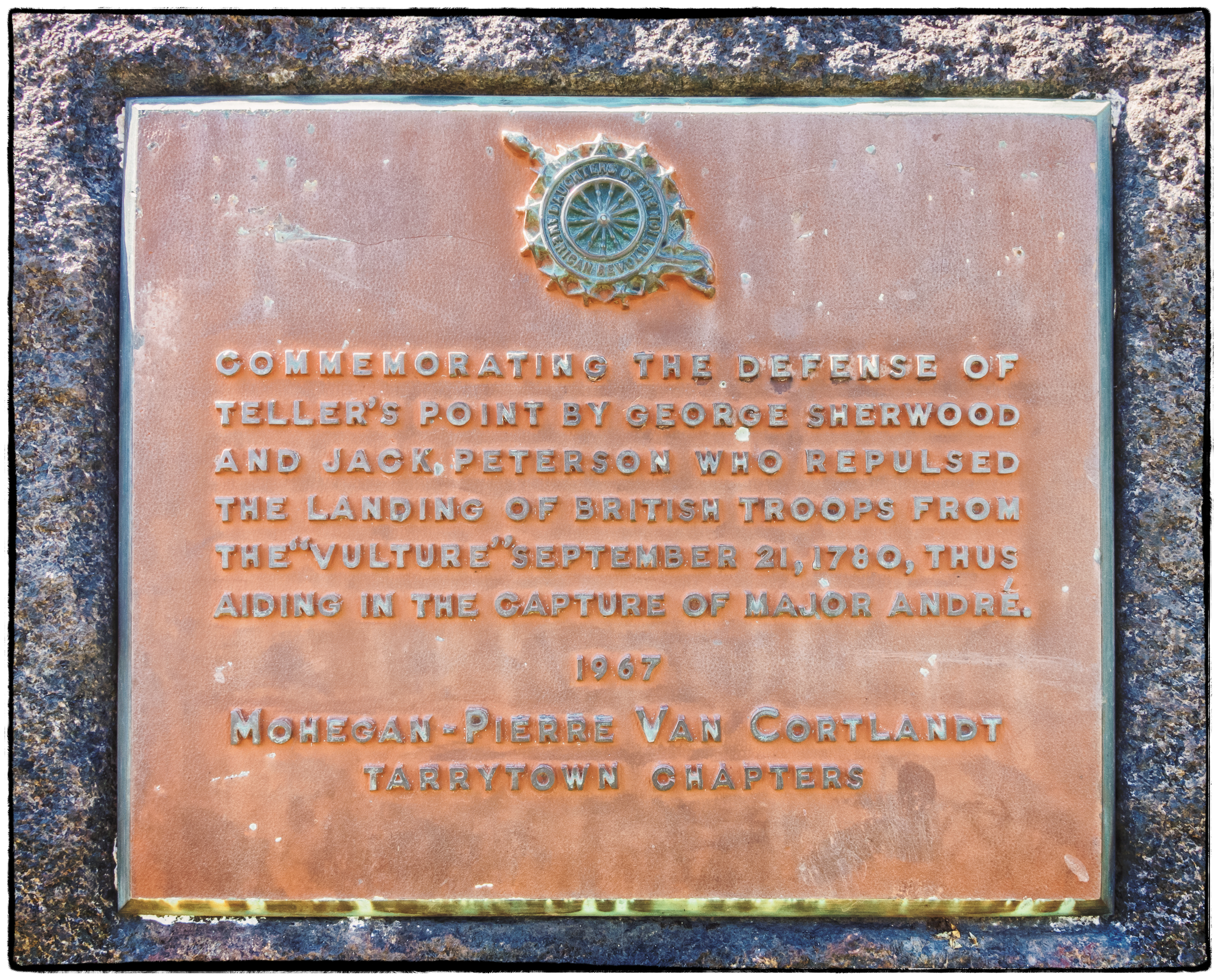
The plaque above is attached to a boulder not far from the Pavilion. It reads: “Commemorating the defense of Teller’s Point by George, Sherwood and Jack Peterson who repulsed the landing of British troops from the “Vulture” September 21, 1780, thus aiding in the Capture of Major Andre.” (Note: Croton Point was once known as Teller’s Point, however nowadays Tellers Point refers to the southernmost tip of Croton Point). I’ve documented the story of Benedict Arnold, Major Andre, HMS Vulture and the attempt by Arnold to sell out West Point to the British in few earlier posts:
Sparta Cemetery, Ossining NY
South Redoubt, Garison, NY
Glenclyffe 3 – An Historic Trail
.
Westchestergov.com has a page providing a short history of Croton Point. It describes the Revolutionary War period as follows:
It is not surprising that this prominent site played a role in the American War for Independence. Although several military actions took place here, many involving invasions by the British, the most notorious was connected with the attempted betrayal of West Point by Benedict Arnold and the capture of his British confederate, Major John Andre. Andre had conspired to meet with Arnold on board the British frigate, Vulture, which had anchored off the western end of Teller’s Point in September of 1780. Fearing for his safety, Arnold sent word for Andre to meet him on the western shore of the Hudson River at Haverstraw. While they were meeting on the opposite side of the river, American militiamen on Verplanck’s Point (Note. I think this reference is an error. It should read Teller’s Point not Verplanck’s point. Verplanck’s point is about 10 miles north of Teller’s Point. If HMS Vulture was off Teller’s Point it’s impossible that a “small cannon” could have fired on her from Verplanck’s Point) fired upon the Vulture with a small cannon, forcing her to move downstream. Major Andre, separated from his means of escape, crossed the river at King’s Crossing, Verplanck, clad in an American uniform and carrying a pass stating he was on official business for General Arnold. He was captured in Tarrytown and subsequently hung as a spy. The cannon that fired upon the Vulture is on display at the Peekskill Museum.
Croton Point – Overview
I’ve often been to Croton Point, usually to walk the dog, but I’d never really given much thought to its history. To me it was just a piece of land jutting out into the River Hudson, which someone had at some point decided to turn into a park. It turns out that it is much more than that. At various times in its history Croton Point has been the site of a significant Revolutionary War event; the home of a magnificent mansion; the ocation of a brickworks and a winery. There was once even a small town or village (now long gone) on the point, built to house the workers at the various businesses. According to the New York Times (See: Hill of Flowers Sprouts Above Toxic Landfill)
Today it’s a spot for walkers, campers, swimmers and the like. It’s also the venue for a well-known annual Music Festival: Clearwater’s Great Hudson River Revival. A few traces of its history still remain, however.
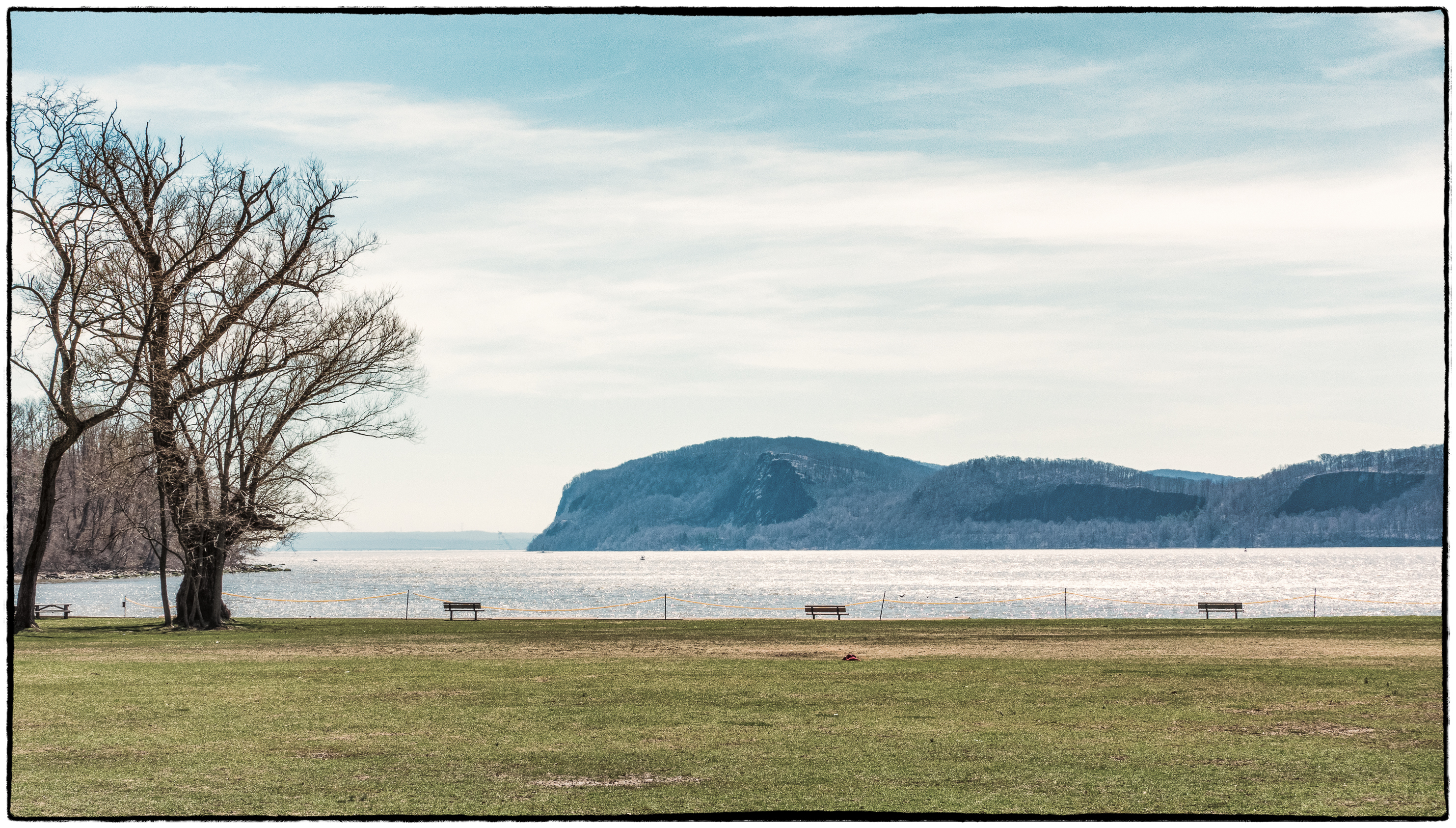
Above: View from Croton Point towards the Hook Mountain State Park on the other side.
According to Wikipedia:
Hook Mountain was known to Dutch settlers of the region as Verdrietige Hook, meaning “Tedious Point”, which may have been a reference to how long the mountain remained in view while sailing past it along the Hudson River, or for the troublesome winds that sailors encountered near the point. Hook Mountain has also been known in the past as Diedrick Hook.
Like other areas of the Hudson River Palisades, the landscape now included in Hook Mountain State Park was threatened by quarrying in the late 19th and early 20th centuries. To ensure the land’s protection, the property was acquired to be a part of the Palisades Interstate Park in 1911.
Portions of Hook Mountain State Park and nearby Nyack Beach State Park were designated as a National Natural Landmark in 1980 for their portion of the Palisades Sill.
Hook Mountain was designated by the New York Audubon Society as an Important Bird Area in 1997, due to its importance as a feeding area for migratory songbirds and hawks. It has been utilized annually as a hawk monitoring station since 1971. The park is currently designated as a “Bird Conservation Area” by the New York State Office of Parks, Recreation and Historic Preservation.
In May 2015, the Sisters of Our Lady of Christian Doctrine announced that they were considering allowing their 38-acre (0.15 km2) property to become a part of Hook Mountain State Park. The order’s property, which is adjacent to the southern portion of the park, could be sold to The Trust for Public Land, who would then transfer the property to New York State
Memories of the Dambusters

The Mohne dam in north-west Germany, pictured before the attacks, was broken after five planes dropped “bouncing bombs”. Source: ‘Secret’ Dambusters photos go under hammer – BBC News
A number of earlier posts related to the New Croton Dam and co-incidentally this post too deals with dams, specifically a raid during World War II (WWII) officially called Operation Chastise, but which to many of us is better known as just “The Dambusters” after the book by Paul Brickhill and the 1955 film. When I read about the sale of these photographs it brought back a flood of memories.
A set of rare photographs showing the impact of the Dambusters’ “bouncing bomb” raids have been sold at auction.The raids by 19 RAF Lancaster bombers destroyed two strategically significant German dams and damaged a third.Taken by the Nazi authorities before and after the raids – on 16 and 17 May 1943 – the aerial images are stamped “Secret Command Document”.The photographs were sold in Nottingham for £2,100 – considerably more than the list price of £1,200.As well as the time and date of the images, they also carry a warning forbidding them to be copied.
I was born only a few years after the end of WWII and the war was still very much a part of the British psyche at that time. My father had been a soldier in the British army and my mother had worked in a munitions factory. As a child I was enthralled by the war, particularly the Royal Air Force (RAF). The story of The Dambusters is, along with the Battle of Britain, one of the most compelling stories of the RAF during WWII.

The crew of Lancaster ED285/’AJ-T’ sitting on the grass, posed under stormy clouds. Left to right: Sergeant G Johnson; Pilot Officer D A MacLean, navigator; Flight Lieutenant J C McCarthy, pilot; Sergeant L Eaton, gunner. In the rear are Sergeant R Batson, gunner; and Sergeant W G Ratcliffe, engineer. Label: Flight Lieutenant Joe McCarthy (fourth from left) and his crew of No. 617 Squadron (The Dambusters) at RAF Scampton, 22 July 1943. Royal Air Force official photographer – This is photograph TR 1128 from the collections of the Imperial War Museums
The picture above shows one the crews participating in the raid. The figure on the far left is Sergeant George “Johnny” Johnson. At 95 he’s that last British survivor of Operation Chastise. For an interesting 2014 Daily Telegraph interview with him see: The last British Dambuster: ‘Don’t call me a hero’.
My friends and I were fascinated by World War II aircraft. We even went as far as going up onto the nearby moors to look for the remains of aircraft that had crashed there during the war. Of course the Supermarine Spitfire, the hero of The Battle of Britain was a favorite, but I think we were even more taken by the aircraft used in this raid: The Avro Lancaster (see below). I recall that one of my friends had a huge book, lavishly illustrated, that gave details of every variant of Lancaster ever made.
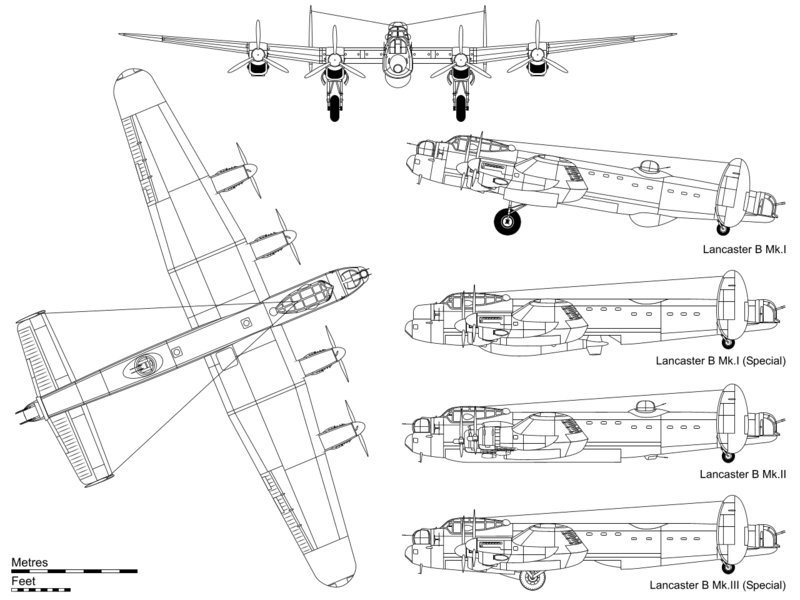
Lancaster B Mk.I drawing with extra side views for the B Mk.I (Special) with Grand Slam bomb, Hercules-powered B Mk.II with bulged bomb bay doors and FN.64 ventral turret and the B Mk.III (Special) with the Upkeep store. Source: Emoscopes – Own work

A Hike. Part 2
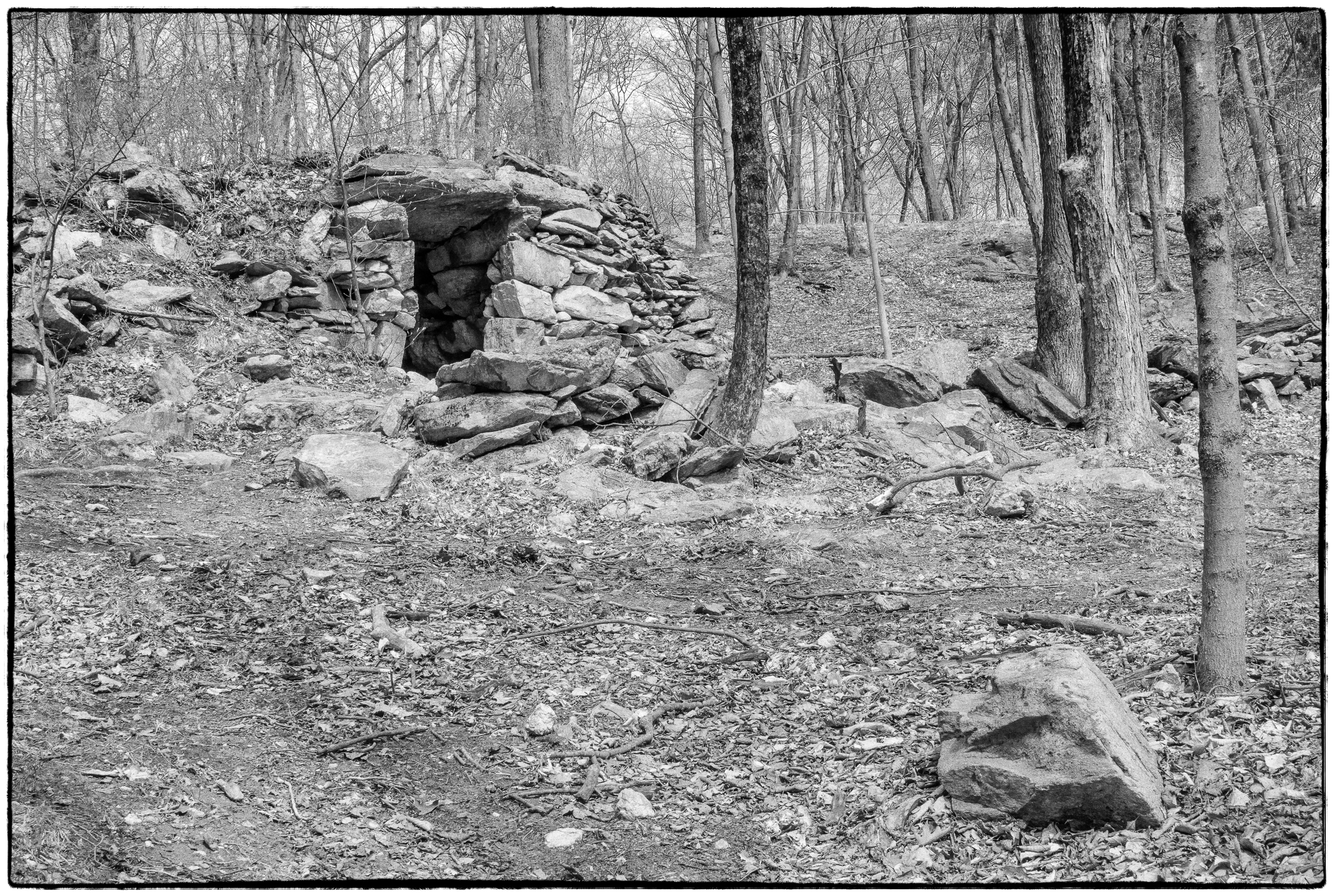
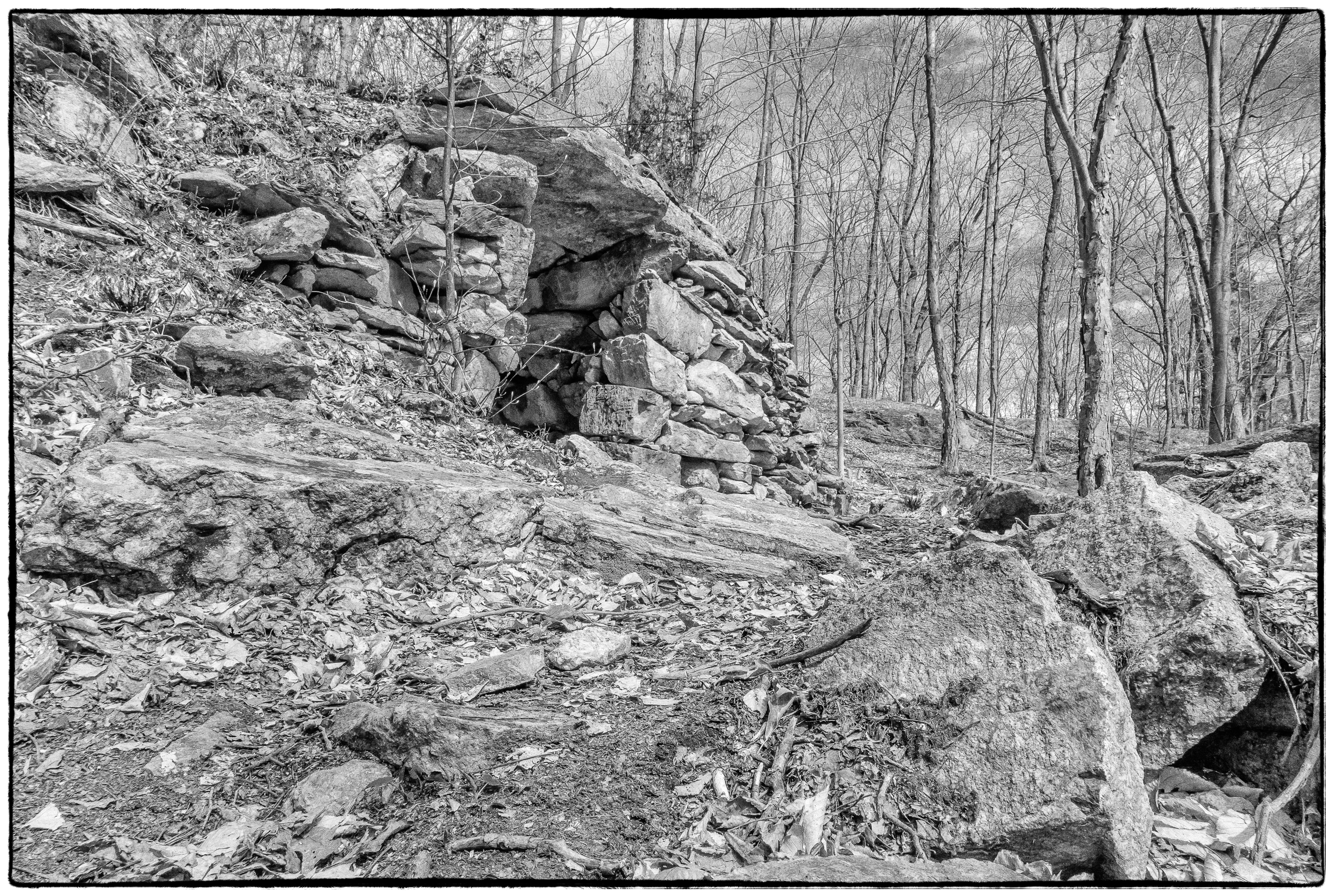
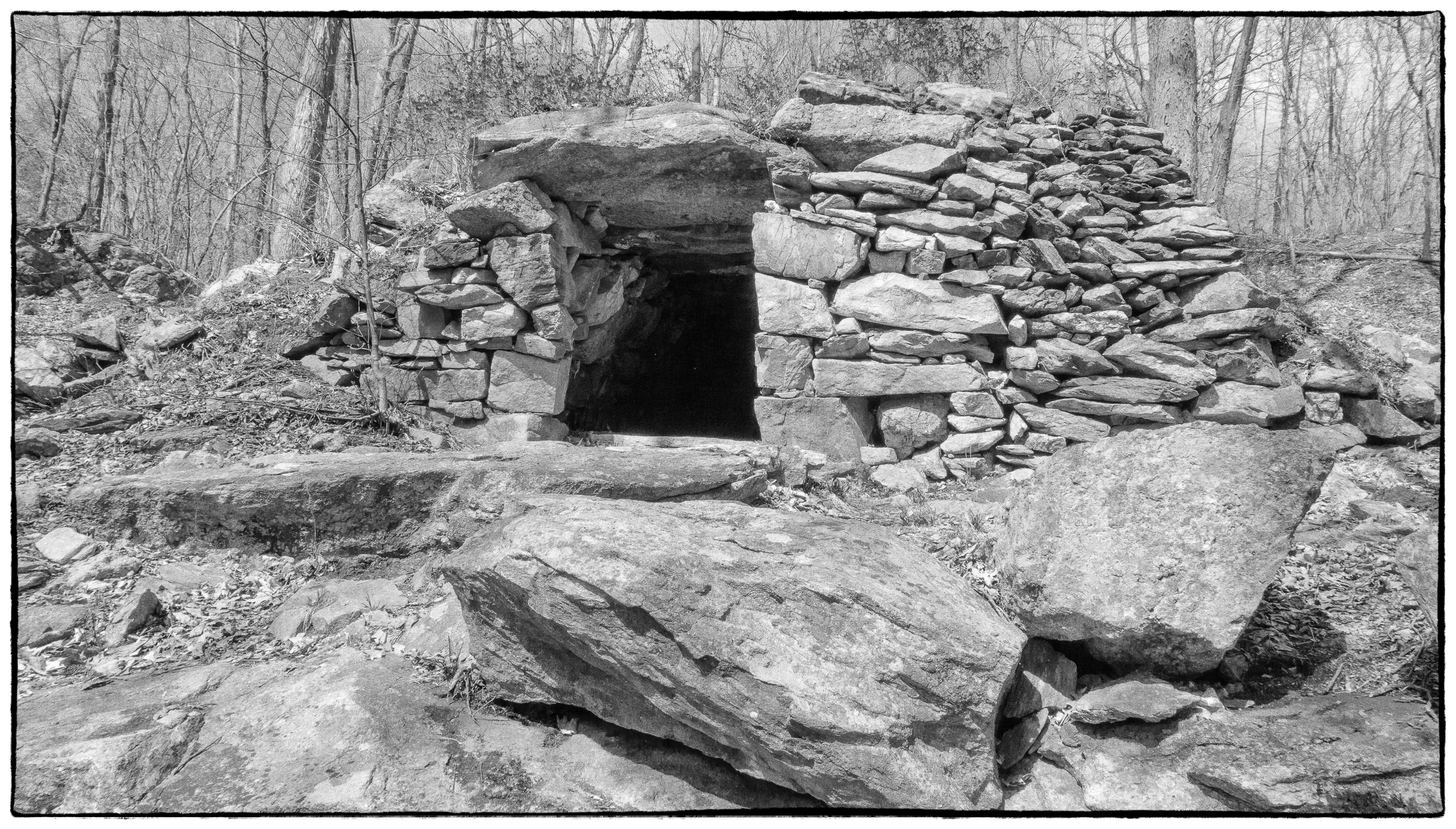
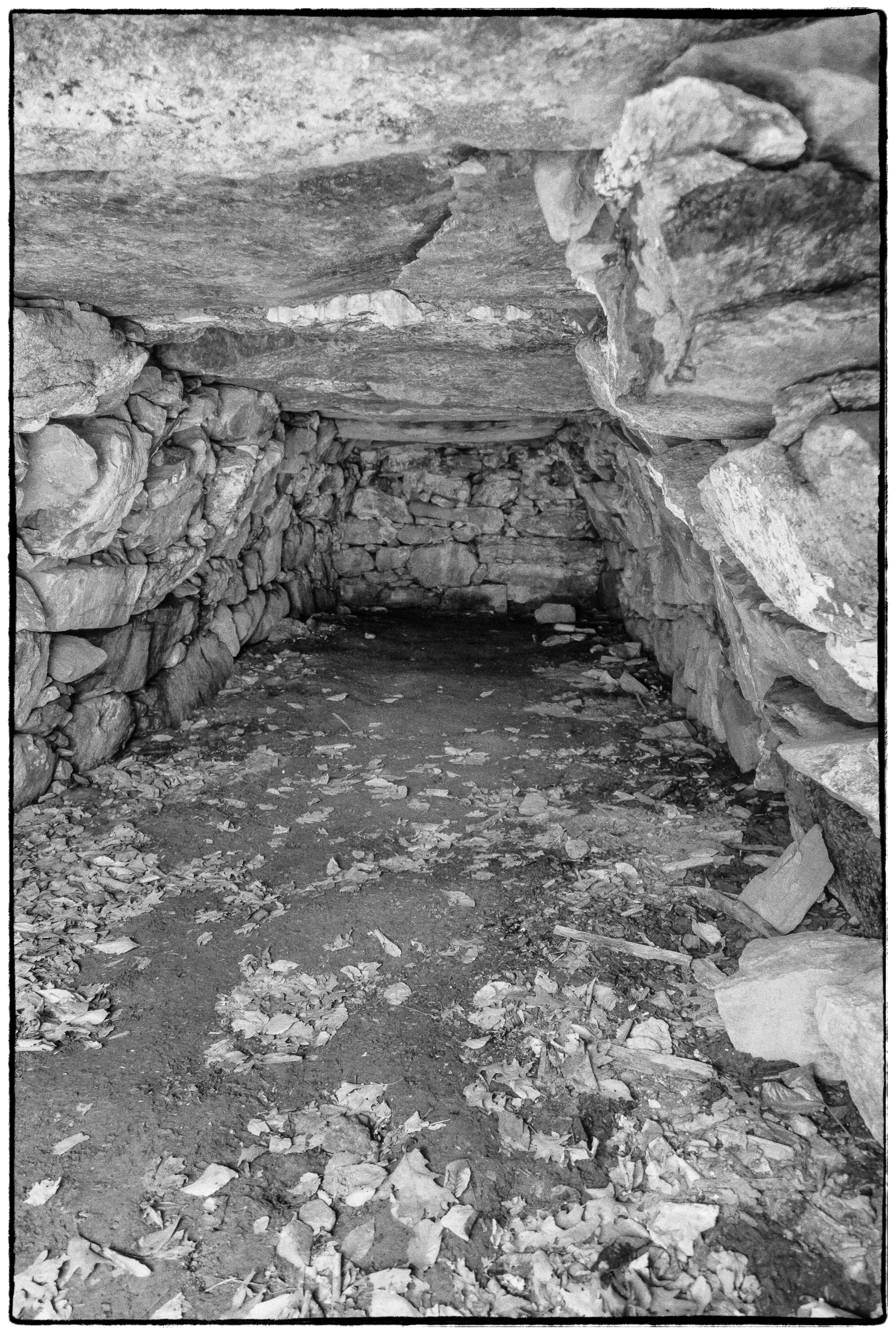
I mentioned in the previous post that that there was something I really wanted to see along this hike. This was it. It’s called the King’s Chamber and it’s one of the largest of the many stone chambers in Putnam County. I’d been trying to find it ever since we moved up here five years ago, but had not been successful. Because of this hike I’d finally located it.
Taken with a Sony RX100M3
For more posts on the Putnam County Stone Chambers (as well as additional information on these strange structures) see:
Mysterious stone chambers of Putnam County.
Another Stone Chamber.
Yet another stone chamber.
A bit of a disappointment.
A walk up Nimham Mountain.