Last night I dreamt I went to Manderley again

My friend, Antonio, is an Art Director and and Graphic Artist who likes to create concept art (posters, CD covers etc.) by blending photographs and other graphic elements. He usually gets the photographs from friends and then builds the graphics around them himself.

Lasts night I got a message from him which read:

Howard think of story, novel or poem you have read, and pick one of your images from your Instagram that you think reflects the words. And once you do I will make a design with the image you pick and the title you choose. Take your time it’s a fun project and you act like the art director and I am your graphic designer

My initial reaction was that I would find this difficult. I usually take photographs because there was something about the subject that caught my attention. I don’t think “Oh, that would look nice on a Vogue cover”.

I quickly realized, however, that I did have something that might fit the bill.

The other day, while browsing YouTube videos I’d come across an audio book or Daphne du Maurier’s Rebecca. I’d read the book and seen the 1940s Hitchcock movie (A 2020 Netflix version is available. I watched it last night and didn’t like it much) several times and liked them both. While browsing YouTube recently I came across an audiobook version of the Novel. I thought I might like to hear someone reading the book aloud so I watched the video. I was really enjoying myself when the video suddenly came to an end. I quickly realized that the audio book covered only one Chapter. This left me feeling frustrated that I hadn’t been able to listen until the end. I found other audio books that contained the full text, but by then I was feeling annoyed and didn’t want to watch any of them.

Over the next few days the haunting words of the first sentence of the book: “Last night I dreamt I went to Manderley again” kept going round and round in my head so when I got Antonio’s message I immediately thought of “Rebecca”.

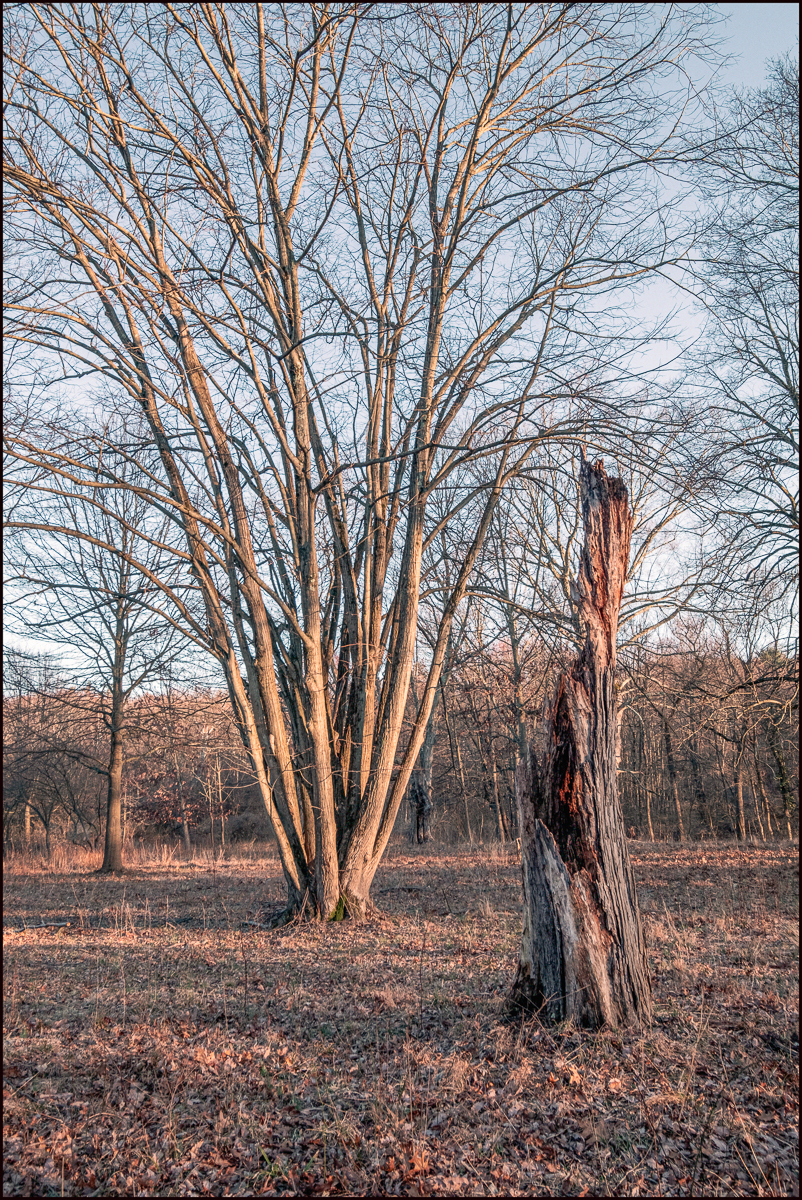
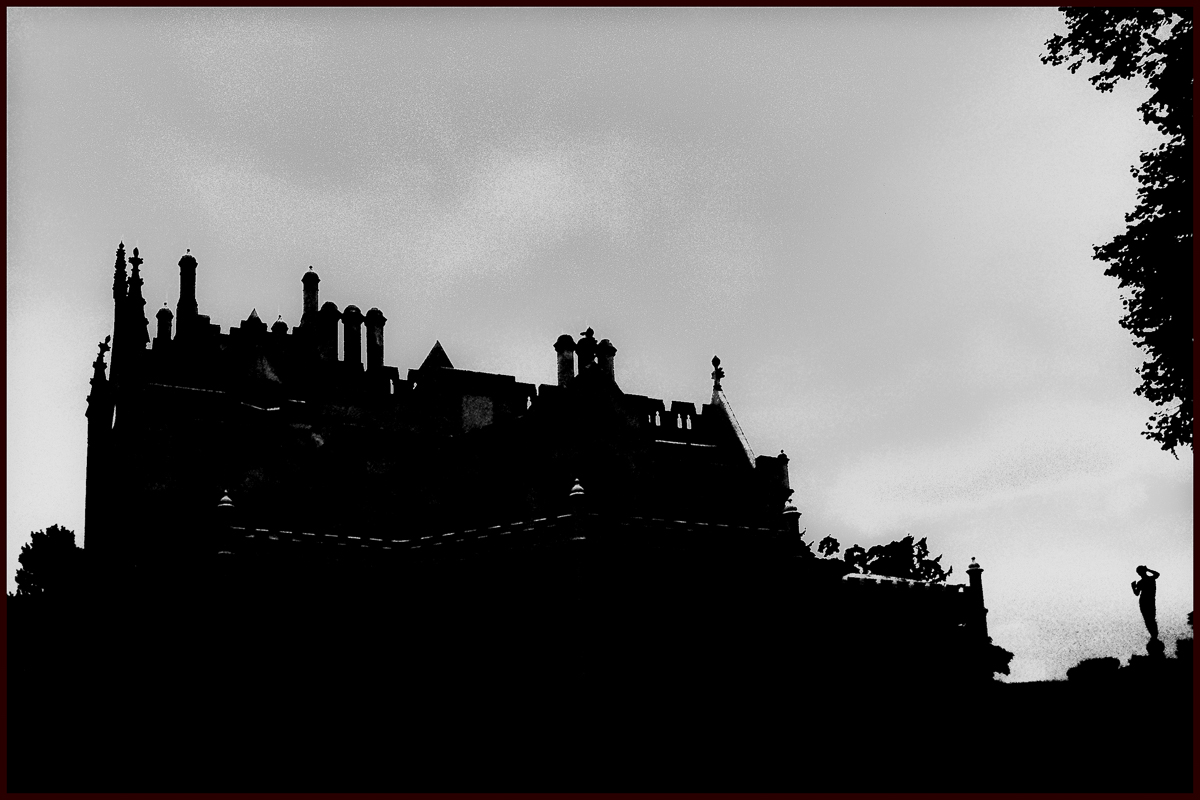
Now, did I have a photograph that I could use. I quickly realized that I did: the photograph above. While far from being my best work I thought it would do. For those who don’t know it “Rebecca” is a Gothic novel, much of which takes place in a spooky old house in England, the “Manderley” of the first line. The house above is not in England, but it is suitably spooky. It’s the former Jay Gould Mansion, Lyndhurst in Tarrytown, NY and it was used It was used for the exterior shots in the two early Dark Shadows movies, House of Dark Shadows (1970) and Night of Dark Shadows (1971).

I’m now keen to see what he does with the concept and the image.

Picture taken with a Konica C35 film camera.

Peter Lindbergh on Fashion Photography

I haven’t shown a lot of interest in Fashion photography. It’s not that I don’t appreciate it – I do, and I have a number of photobooks by/about well known Fashion photographers including Irving Penn, Helmut Newton, Annie Leibovitz and Edward Steichen. I’m also somewhat familiar with the work of others including Cecil Beaton, Richard Avedon, David Bailey, Horst P. Horst, William Klein, David LaChapelle, Lord Snowden, and Mario Testino. It’s just that I don’t think, much as I might like to take pictures of gorgeous women on a beach I don’t think I’ll ever have the opportunity to do so. Moreover, I’m not really comfortable taking pictures of people in general.

However, my interest was piqued when I saw this video on one of my favorite YouTube channels: Alex Kilbee’s: The Photographic EyeThe Photoshoot Which Changed Fashion Photography

I’d heard of Peter Lindbergh, but had not really appreciated how influential he had been. So I immediately ordered “Peter Lindbergh. On Fashion Photography“, Taschen Books, 2020. In his introduction Lindbergh says:

In 1987, I got a call from Alexander Liberman then the creative director of Condé Nast

I’ve got a couple of books by/about him too. I decided that I would get them after being invited over to the house of, as it turned out, someone who used to work for him). But back to the post:

He couldn’t understand why I didn’t want to work for American Vogue. I told him, “I just can’t take the types of photographs of women that are in your magazine.” I simply felt uninspired by the ways women were being photographed”. He said: “OK, show me what you mean, show me what kind of women you’re talking about.” I wanted a change from a formal, particularly styled, supposedly “perfect” woman – too concerned about social integration and acceptance – to a more outspoken and adventurous woman, in control of her own life and emancipated from masculine control. A woman who could speak for herself.

A few months later, following Mr. Liberman’s proposition, I put together a group of young and interesting models and we went to the beach in Santa Monica. I shot very simple images; the models wore hardly any makeup, and I wanted everyone to be dressed the same, in white shirts. This was quite unusual at the time. Linda Evangelista, Christy Turlington, Tatjana Patitz, and Karen Alexander were all there that day.

Back in New York, Vogue’s editor in chief at the time, Grace Mirabella, refused to print the images. But six months later, Anna Wintour became the the magazine’s editor and discovered the proofs somewhere in a drawer. She put one of them in Condé Nast’s big retrospective book “On the Edge: Images from 100 years of Vogue (1992)”, calling it the most important photograph of the decade. The “supermodel” would go on to represent the powerful woman that I had articulated, and their images dominated fashion visuals for the next 15 years.

The book consists of two distinct parts: a short, but very interesting introduction by Lindbergh himself followed by the heart of the book – Over 300 hundred images (that’s what the book’s sleeve says, but the book actually has 505 pages and the introduction – in English, German, and French – takes up only about 30 of them, and itself contains a number of photographs). Such a large number of images requires some kind of organization and in this case it’s alphabetical by client e.g. Azzedine Alaïa, Heider Ackermann, Giorgio Armani etc.

I like this series of Taschen books. Most photobooks are quite expensive, large format, heavy and difficult to hold. This series is more compact (6×9 inches) and fairly inexpensive. I have a number of them. I guess the only problem with them is that the photographs are relatively speaking rather small, but they’re good enough to provide a thorough overview of his work. Taschen also has a larger format series. I have a few of them too (e.g. Sebastião Salgado‘s wonderful “Genesis” (10×14 inches, but still quite inexpensive for a photobook of this quality), but I find them too big and too heavy to comfortably hold and read.

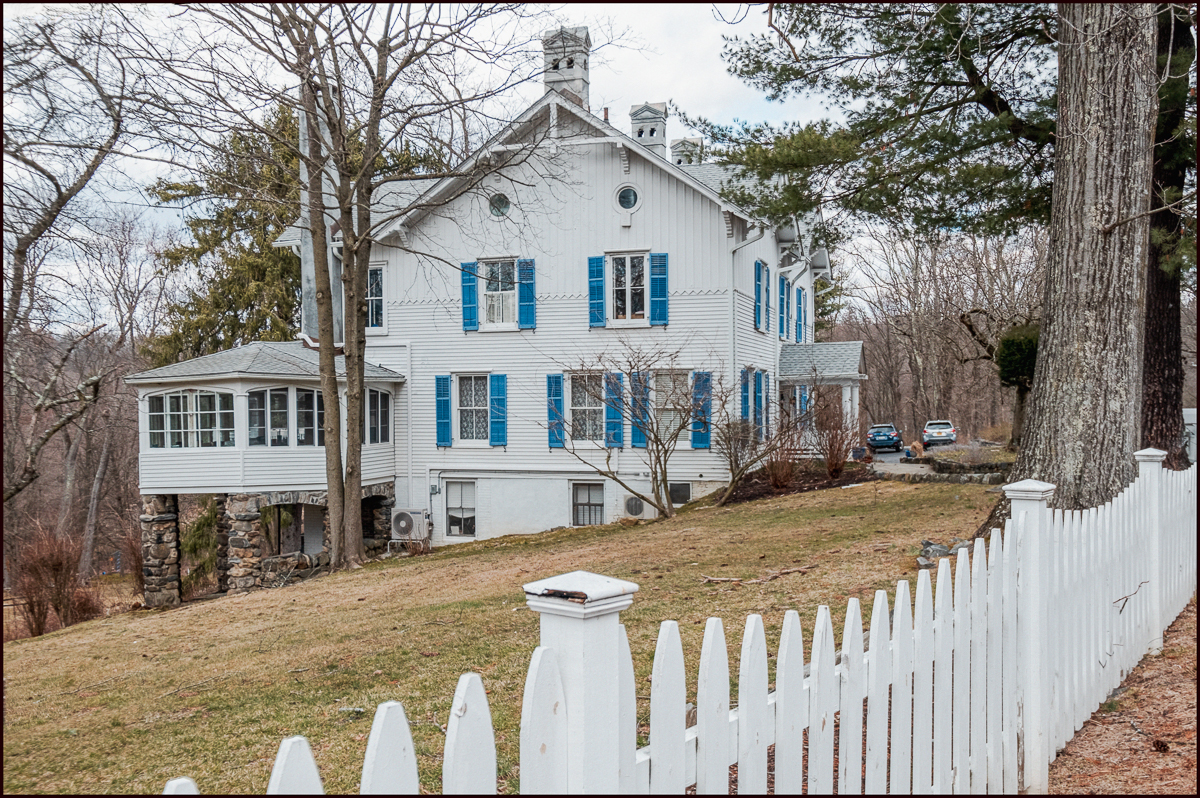
House on Old Briarcliff Road

I love this house. It’s on the corner of Scarborough Road and Old Briarcliff Road – opposite All Saints Church and about a five minute walk from my house.

It was built around 1830 on property even older, possibly going back to the 17th century.

According one of the houses owners, it has secret rooms in the basement and the attic and is reputed to have been a stop on the “Underground Railroad.”

Taken with a Fuji X-E3 and Fuji XF 10-24mm f4

Cornelia

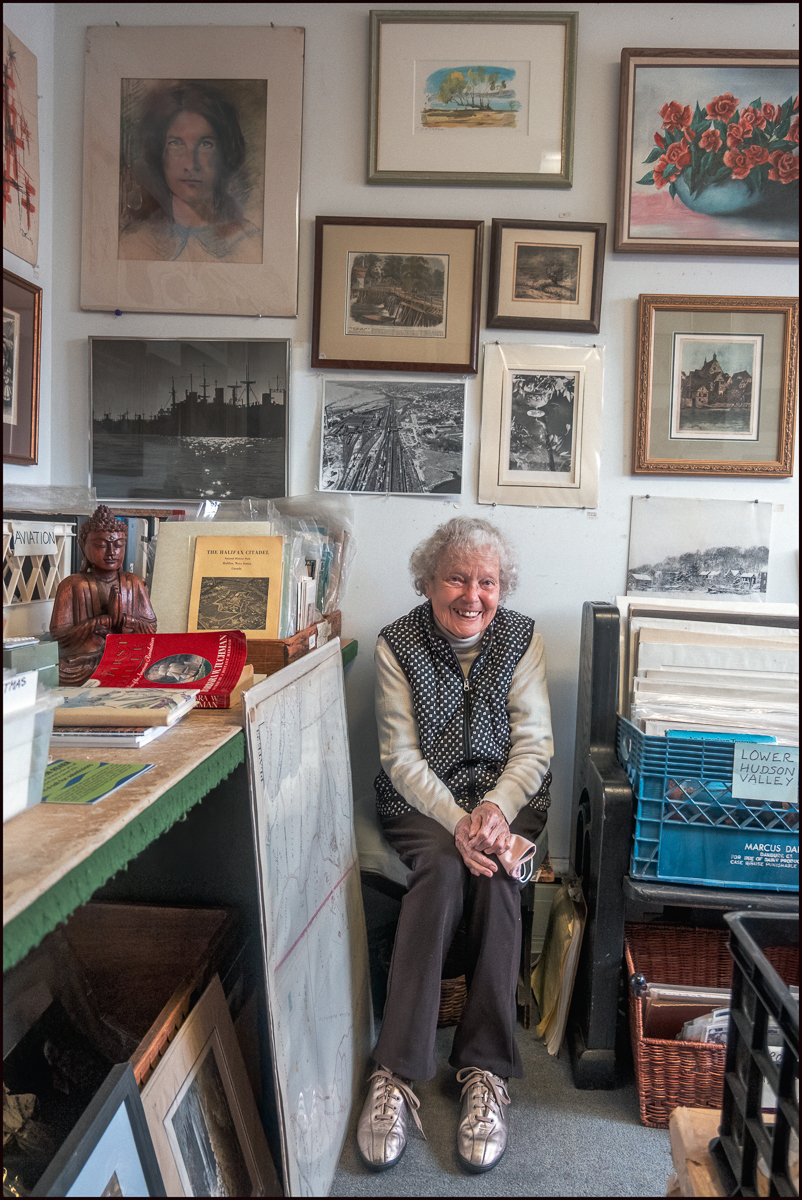
This is Cornelia Cotton. She opened an art gallery in Croton-on-Hudson in 1979. One of the earliest gallery shows was called “Croton Water” – the first time that prints, maps, and ephemera of the Old Croton Aqueduct were shown as an art exhibit. Cornelia was active on behalf of the Aqueduct early on, and after the Friends of the Old Croton Aqueduct was founded, served on its board for many years.

She has worked as a portrait photographer, is a life-long singer, and has won recognition as a historian and writer. She is the mother of three daughters and the grandmother of three grandsons.

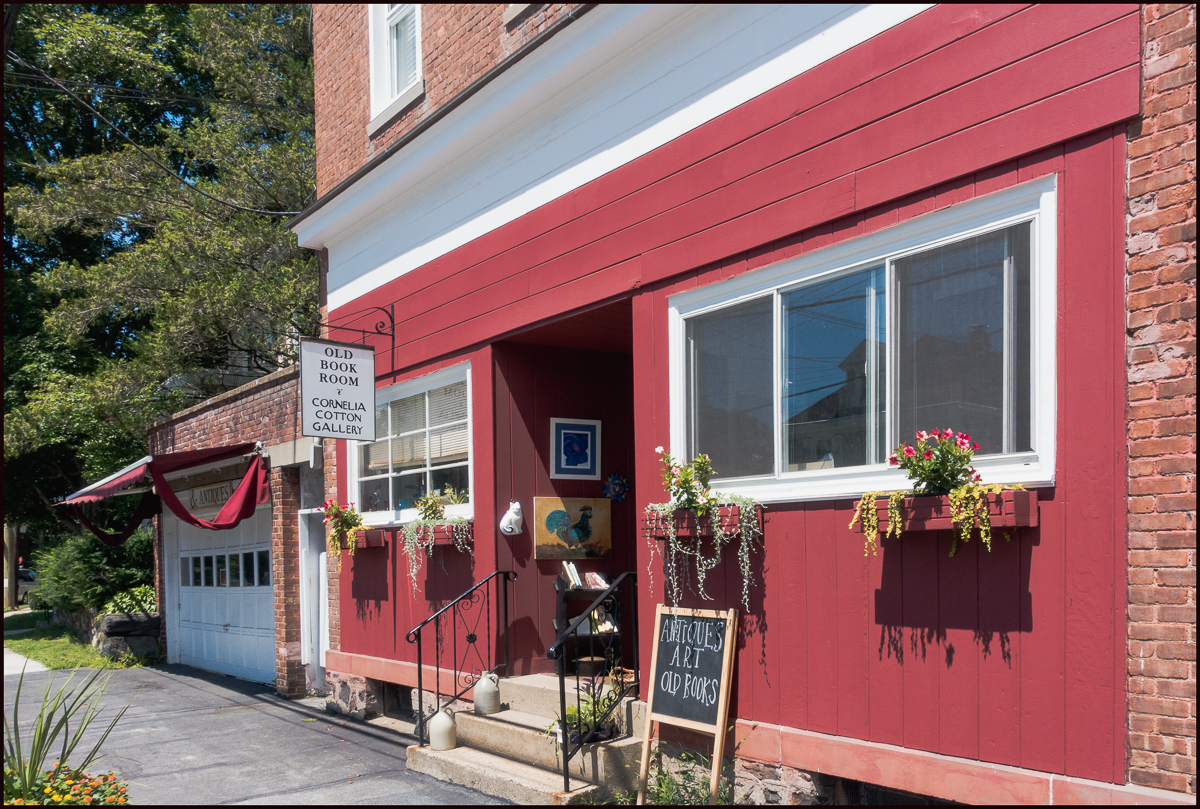
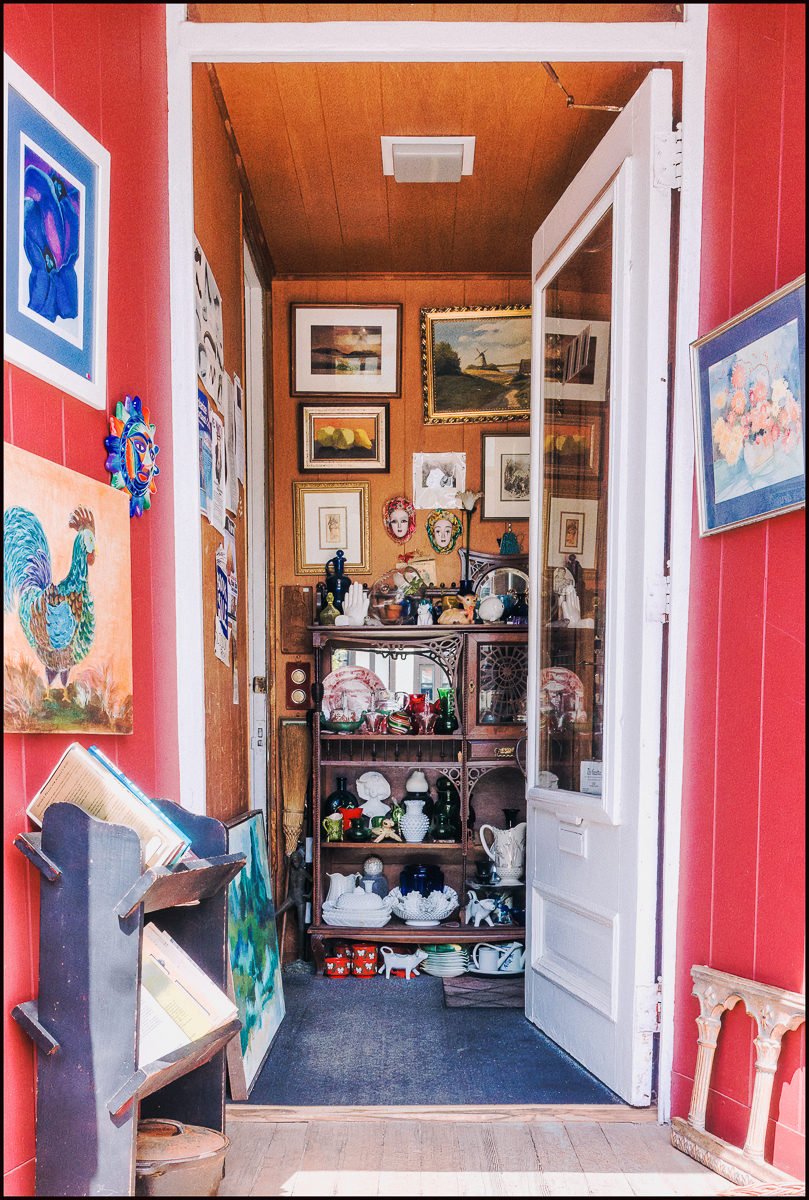
Curiously I discovered that I had already taken pictures of her gallery/bookstore – back in 2017. My wife had something to do in Croton-on-Hudson and I was hanging around waiting for her to finish. Since I had my trusty camera I walked around taking some pictures. Her shop caught my attention, hence the two pictures below.


While I was at her store I picked up a copy of her book: Stepping Stones.

Amazon describes it as follows:

Thirty-two vividly observed, beautifully crafted stories from a woman who lived through extraordinary times. Cornelia Cotton was born in the last years of Weimar Germany. Her father was a violinist, her mother, a dancer with a Jewish family legacy. She saw the first signs of the Nazi movement. As a child, in the city of Jena she watched an early Nazi torchlight parade from her bedroom window. She witnessed the self-inflicted destruction of a once-civilized society, the multiple losses of family and friends who died or fled Germany, and the retreat into the inner emigration. Unable to contemplate living her adult life among former Nazis and the many Germans who either applauded or accepted Hitler’s policies, Cotton came to America as a college student in 1948, stayed on, married an artist/teacher, raised a family, and has lived a life rich in music, art, and people. Over the years Cotton has been a member of many singing groups. She writes, “…joining with others to bring to life the magnificent creations of mankind at its best that otherwise lie silently on the page is not only deeply satisfying but lifts one into the realm of the divine. For me, it is as close to paradise as I can ever hope to get.”

I haven’t quite finished it yet, but what I’ve read I’ve really enjoyed.

The Briarcliff Manor-Scarborough Historical Society is organizing a presentation on the Croton Aqueduct to be given by Cornelia on April 16 at the Vescio Community Center in the library building (1 Library Road) in Briarcliff Manor.

Taken with a Fuji X-E3 and Fuji XF 10-24mm f4 R OIS