The Cloisters – Tapestries

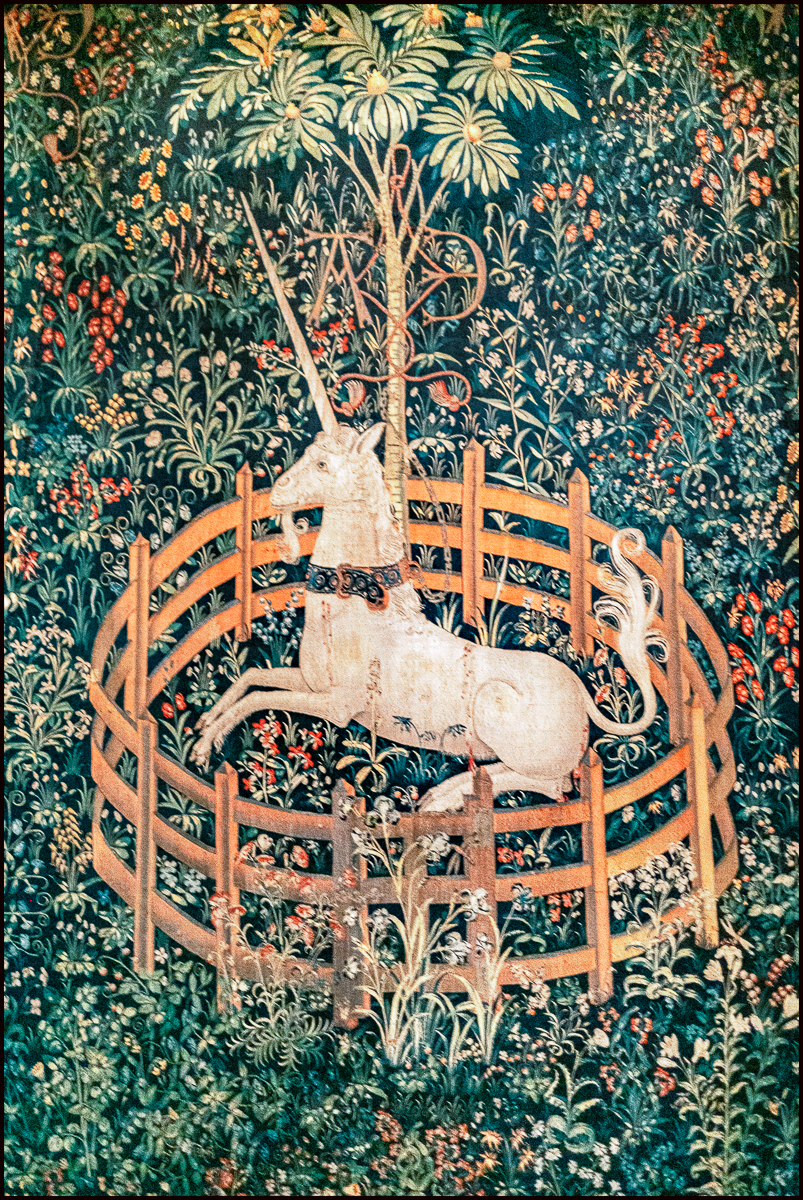
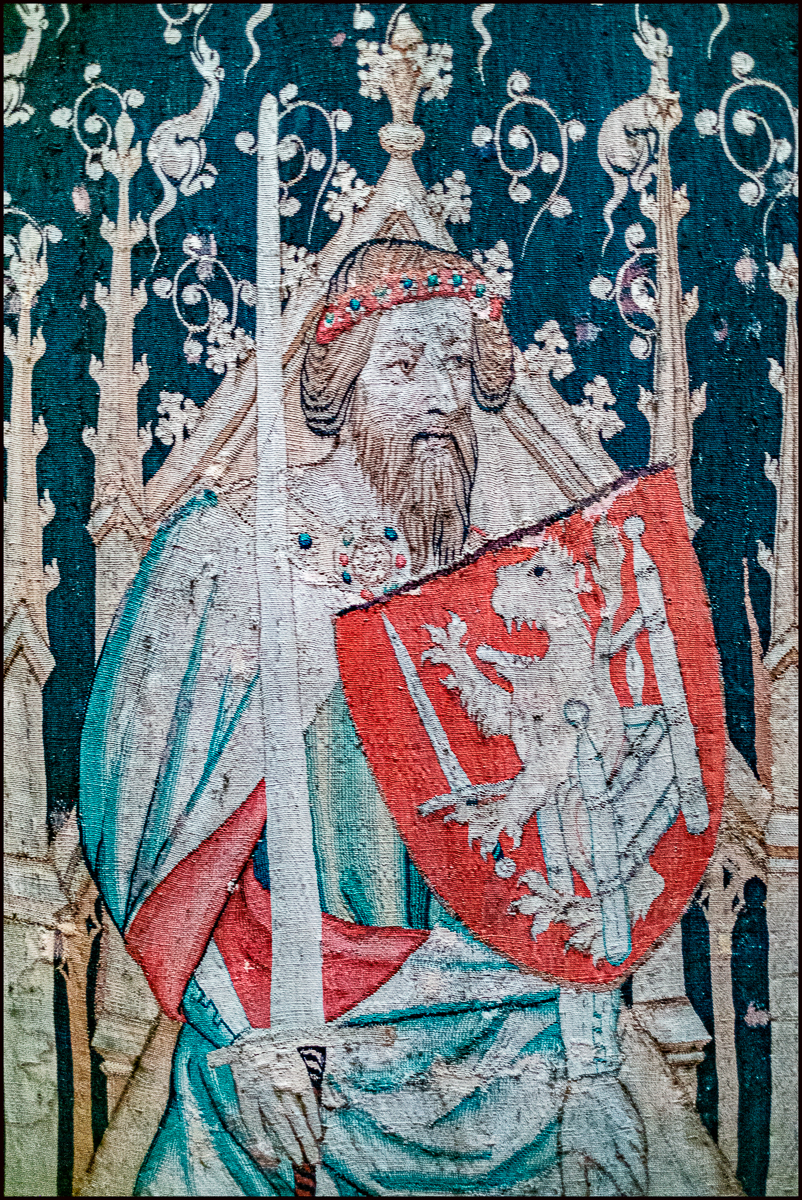
“While examples of textile art are displayed throughout the museum, there are two dedicated rooms given to individual series of tapestries, the South Netherlandish Nine Heroes (c. 1385) and Flemish The Hunt of the Unicorn (c. 1500). The Nine Heroes room is entered from the Cuxa cloisters. Its 14th-century tapestries are one of the earliest surviving examples of tapestry, and are thought to be the original versions following widely influential and copied designs attributed to Nicolas Bataille. They were acquired over a period of twenty years, involving the purchase of more than 20 individual fragments which were then sewn together during a long reassembly process. The chivalric figures represent the scriptural and legendary Nine Worthies, who consist of three pagans (Hector, Alexander the Great and Julius Caesar), three Jews (Joshua, David and Judas Maccabeus) and three Christians (King Arthur, Charlemagne and Godfrey of Bouillon). Of these, five figures survive: Hector, Caesar, Joshua, David and Arthur. They have been described as representing “in their variety, the highest level of a rich and powerful social structure of later fourteenth-century France”.

The Hunt of the Unicorn room can be entered from the hall containing the Nine Heroes via an early 16th-century door carved with representations of unicorns. The unicorn tapestries consist of a series of large, colourful hangings and fragment textiles designed in Paris and woven in Brussels or Liège. Noted for their vivid colourization—dominated by blue, yellow-brown, red, and gold hues—and the abundance of a wide variety of flora, they were produced for Anne of Brittany and completed c. 1495–1505. The tapestries were purchased by Rockefeller in 1922 for about one million dollars, and donated to the museum in 1937. They were cleaned and restored in 1998, and are now hung in a dedicated room on the museum’s upper floor.

The large “Nativity” panel (also known as “Christ is Born as Man’s Redeemer”) from c. 1500, South Netherlandish (probably in Brussels), Burgos Tapestry was acquired by the museum in 1938. It was originally one of a series of eight tapestries representing the salvation of man, with individual scenes influenced by identifiable panel paintings, including by van der Weyden. It was badly damaged in earlier centuries: it had been cut into several irregular pieces and undergone several poor-quality restorations. The panel underwent a long process of restoration from 1971, undertaken by Tina Kane and Alice Blohm of the Metropolitan’s Department of Textile Conservation. It is today hung in the Late Gothic hall.” (Wikipedia).

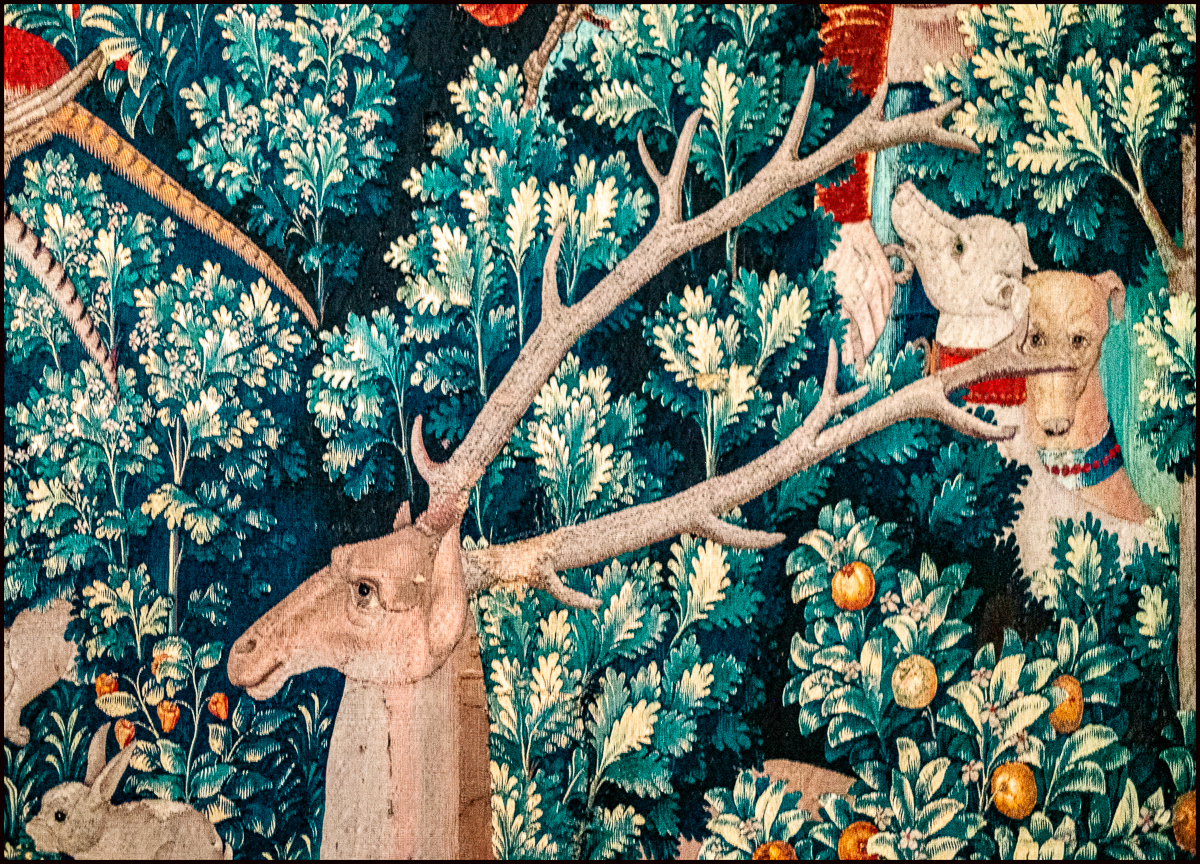


Taken with a Fuji X-E1 and Fuji XF 35mm f1.4 R
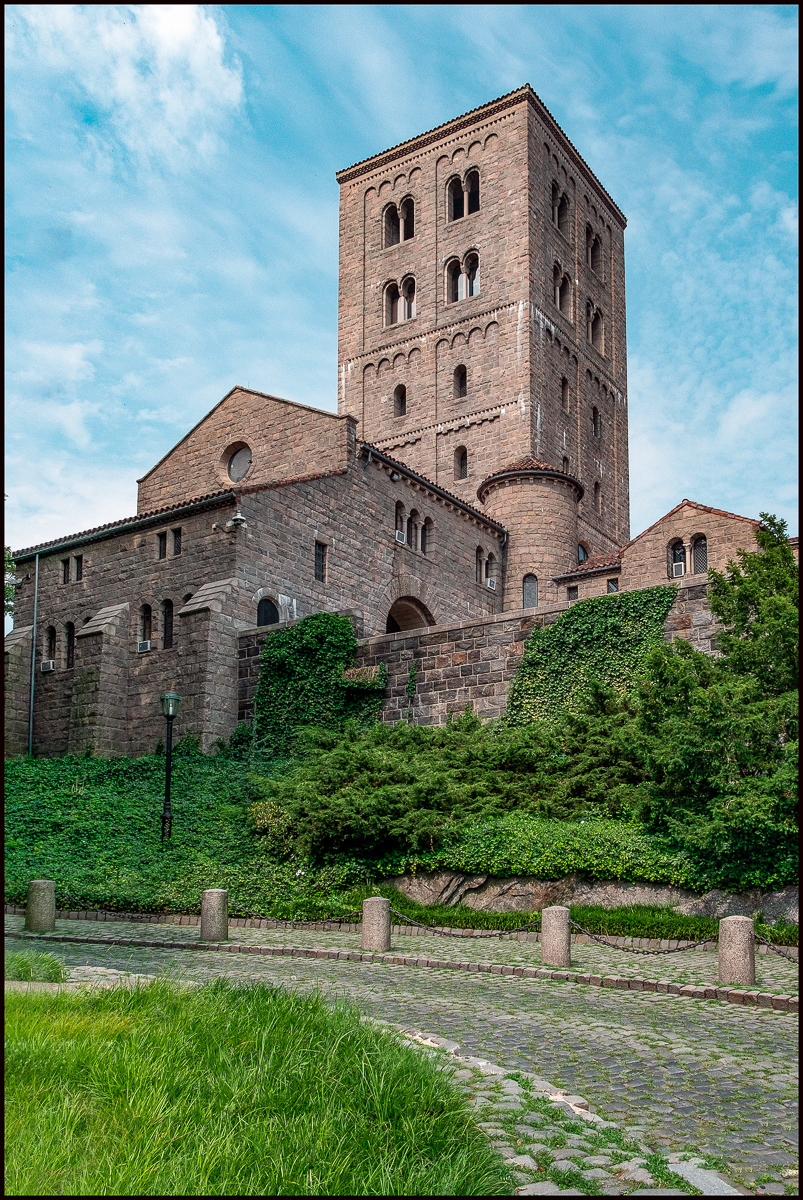

The Cloisters – Overview

Back in July I went with a friend to The Cloisters. For any non New Yorkers reading this The Cloisters “is a museum in Fort Tryon Park in Washington Heights, Manhattan, New York City, specializing in European medieval art and architecture, with a focus on the Romanesque and Gothic periods. Governed by the Metropolitan Museum of Art, it contains a large collection of medieval artworks shown in the architectural settings of French monasteries and abbeys. Its buildings are centered around four cloisters—the Cuxa, Saint-Guilhem, Bonnefont and Trie—that were acquired by American sculptor and art dealer George Grey Barnard in France before 1913, and moved to New York. Barnard’s collection was bought for the museum by financier and philanthropist John D. Rockefeller, Jr. Other major sources of objects were the collections of J. P. Morgan and Joseph Brummer.

The museum’s building was designed by the architect Charles Collens, on a site on a steep hill, with upper and lower levels. It contains medieval gardens and a series of chapels and themed galleries, including the Romanesque, Fuentidueña, Unicorn, Spanish and Gothic rooms. The design, layout, and ambiance of the building are intended to evoke a sense of medieval European monastic life. It holds about 5,000 works of art and architecture, all European and mostly dating from the Byzantine to the early Renaissance periods, mainly during the 12th through 15th centuries. The varied objects include stone and wood sculptures, tapestries, illuminated manuscripts and panel paintings, of which the best known include the c. 1422 Early Netherlandish Mérode Altarpiece and the c. 1495–1505 Flemish Hunt of the Unicorn tapestries.”

It’s taken me so long to post these because I took a lot of pictures – so many beautiful things.


View of the Hudson River from The Cloisters.

Taken with a Fuji X-E1 and Fuji XC 16-50mm f3.5-5.6 OSS II

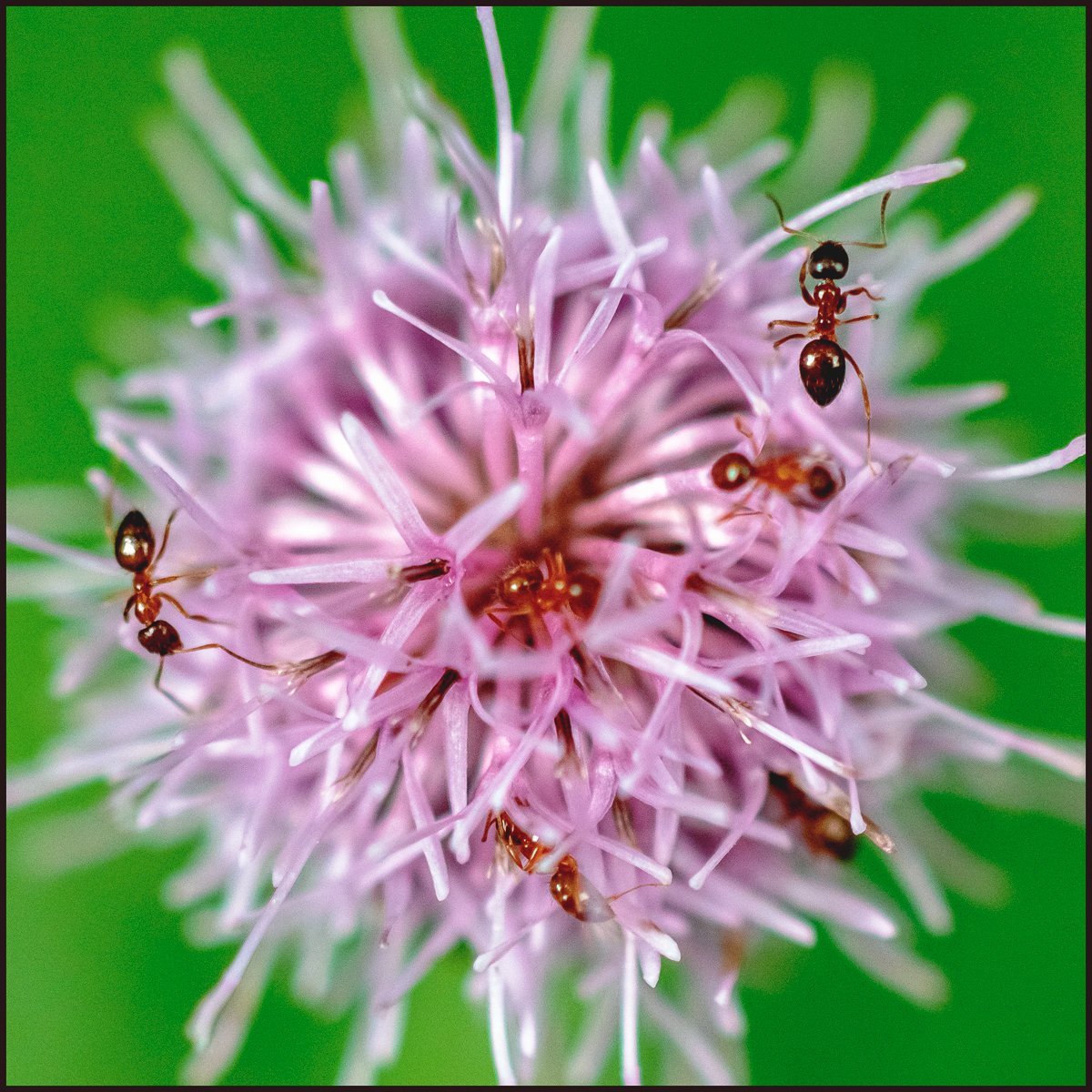
A universe in a thistle flower

One of the great joys of macro photography is that sometimes you see something which is not visible to the naked eye. I was walking around with a camera and a macro lens and not really finding any interesting subjects. Just as I was about to head off home I came across a small thistle flower, maybe 1/2 inch across. As I got close to it with the macro lens I noticed that it was teeming with these tiny ants.

Taken with a Sony A77II and Minolta 50mm f2.8 Macro lens

Clouds over the Hudson

My brother-in-law had been visiting for the past couple of weeks and it was the last day before he left for greener pastures. So we decided to go for a meal out at 3 Westerley, a nice restaurant by the Hudson River in Ossining, NY. We sat outside and while we were eating I noticed these spectacular clouds, with the sun peeping through from time to time. I lined up my composition and after that there was nothing much to do except to wait for interesting light and, with a little luck, for someone to pass by.

Taken with a Fuji X-E3 and Fuji XC 16-50mm f3.5-5.6 OSS II