Around the Neighborhood – Sparta Cemetery – The Ubiquitous HMS Vulture

It seems that whenever I look into Revolutionary War history in the Hudson Valley I come across a reference the HMS Vulture. In this picture my friend, Ken stands next to a plaque in Sparta Cemetery, which reads:

“This stone was pierced by a cannon shot fired from the British sloop-of-war Vulture commanded by Lieut. Sutherland, September 1780.”

This brings us back to the Ladew family plot mentioned in an earlier post. The Ossining Historic Cemeteries Conservancy states:

A key point of interest is the Ladew family plot. It is the only plot that is enclosed by a brick wall, the west façade of which incorporates all five headstones in the wall. Two of the most famous tombstones are those of Abraham and Anna Ladew’s children—five-year-old Sarah and seven-year-old Abraham. Sarah’s stone is noted as the oldest legible in the cemetery, but Abraham’s is even more famous for another reason: a hole in the surface. Legend has it that in 1780 the headstone was pierced by cannon fire from the British war ship Vulture, patrolling the Hudson River during the Revolutionary War. A plaque has been installed in its place.

I’m at a loss as to why HMS Vulture would fire on Sparta cemetery.

Taken with a Sony RX-100 M3.

Around the Neighborhood – Sparta Cemetery – Entrance and some gravestones

Sparta cemetery is a short (30 minutes or so) walk from our house in Briarcliff Manor. Even though it’s short I don’t often walk it because from the house it’s all downhill (which is fine) and back it’s all uphill (which isnt). I’ve posted about it before (See: Sparta Cemetery Ossining NY), but the photographs in that post are in black and white; and were taken in winter. These show the cemeteryy in a rather different light. Also the last few times I’d been there the grass was rather short. Here the grass is longer and mixed in are a number of lovely wildflowers again giving the cemetery a rather different feel.

According to the Ossining Historic Cemeteries Conservancy:

Two hundred yards north of the intersection of Rte. 9 and Revolutionary Rd. lies a two-acre parcel of land where some of Ossining’s earliest history is buried. Sparta Cemetery is the oldest organized burial ground in Ossining, begun before the Revolutionary War. It is the final resting place of many of Ossining’s first settlers of English, Dutch, and French Huguenot heritage, Revolutionary War through World War II veterans, and the Old Leather Man. The oldest legible tombstone is that of five-year-old Sarah Ladew from 1764. The most recent interment was in 2007.

The cemetery originally served as the burial ground for the First Presbyterian Church of Mount Pleasant, the forerunner of the First Presbyterian Church of Ossining. The first church building was built in 1768 next to the burial ground. Both were located on the tenant farmland of Arnold Hunt, and the land was exempt from his land purchase (that is, set aside for the Church) by the Commissioners of Forfeiture in 1785. Although damaged in the Revolutionary War, the church building served its purpose until around 1800, when the congregation moved to a new church built in the village of Sing Sing. Moses Ward, one of Sing Sing’s founding fathers, had donated land for that purpose in Pleasant Square (the intersection of Highland, Croton, Main, and Broadway). Both Arnold Hunt and Moses Ward are buried in Sparta.


The broken column in the background indicates a life cut short, a memorial to the death of someone who died young or in the prime of life, before reaching old age.

Taken with a Sony RX-100 M3.

A regular lunch meetup


My friend and I have a regular Wednesday lunch meetup. We usually have lunch somewhere and then continue on to check out some location of historical significance – so far usually related to the Revolutionary War.

This week we were a bit constrained for time so we decided to have lunch by the Hudson River in Ossining, NY at 3 Westerley followed by a flying visit to Sparta cemetery near where we both live.

Above 3 Westerley, a relatively new (It opened only a few years ago) restaurant on the river. It has a lovely location, and the food is decent. It can get crowded in the evenings – and quite noisy, but sitting outside for lunch on a weekday was perfect especially since the weather was gorgeous: sunny, but not too hot.

Below a broad view of Sparta Cemetery showing the only walled plot in the cemetery: The Ladew Plot about which more will be said in a later post.

Taken with a Sony RX-100 M3.

A Birthday Present


In an earlier post (See: Croton Landing – Killdeer) I expressed an interest (with some reservations) about trying bird photography:

I’m quite interested in wildlife photography, but I’ve always shied away from it. There are a couple of reasons for this. First I lack the patience. Second I don’t really have the right “gear”. While I would normally make the point the “gear” shouldn’t matter that much in this case I think it does. It seems to me that without a very long and fast telephone lens taking pictures of distant animals is very difficult. And acquiring such a lens seems to be very expensive. This picture was taken at the entirely inadequate 70mm equivalent maximum zoom of the Sony RX-100. It was then heavily cropped.

Still it did stimulate my interest. Maybe I’ll see if I can find an old Minolta AF lens at a reasonable price. Then I’ll only have to come to terms with the “lack of patience” issue. It might be a good challenge.

In pursuit of this goal my wife bought me this lens for my birthday. It’s a Sigma 400mm f5.6.

I realized that it wouldn’t be a good lens in low/dull light and when it arrived we were going through a period of gloomy, rainy days so I decided to wait for a sunny day to try it out. Unfortunately, there were no birds around so I did a few test shots around our garden.

It’s quite a solid lens, but at the same time not all that heavy (all of the pictures in this post were hand held). As many of the reviews I’d read pointed out it’s really an f8 lens as anything wider than that suffers from lack of sharpness. All of the pictures here were taken at f8 or smaller. It also has really bad chromatic aberration, which thankfully can be corrected fairly easily in Lightroom.

It has a built in lens shade and a sliding cover over the manual focus ring (so you don’t damage the lens by trying to manually focus the lens when the camera is in autofocus mode I imagine). It also has it’s own tripod mount. Mine also came with a polarizing filter.

I’d read that there might be compatibility problems with modern Sony cameras, but I didn’t have any problems with my Sony A77II. I’d also read that had been problems related to stripping the gears on the autofocus motor so, as advised in the articles I’d read I set the AF drive speed to slow. So far so good.

All things considered I was quite pleased (particularly since it was my first attempt with this lens). The results were better than I’d thought they would be. Now to find some birds.


Blossoms on one of our trees.

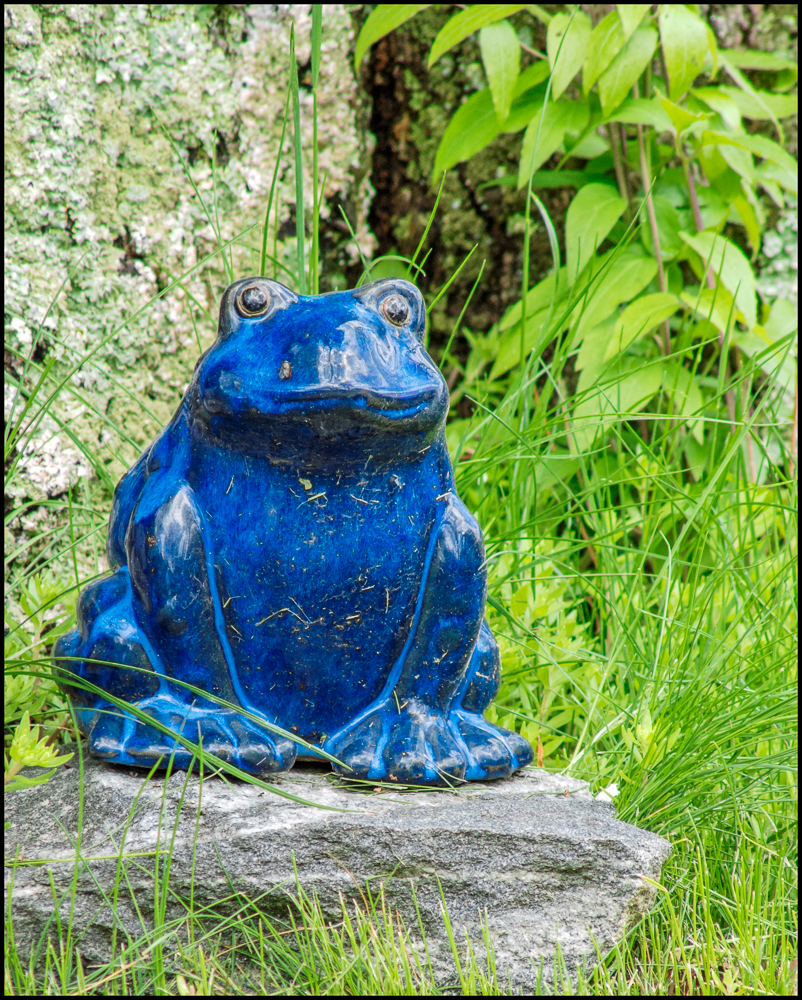
Newly acquired garden statue.

Our dog Harley.

A garden ornament.

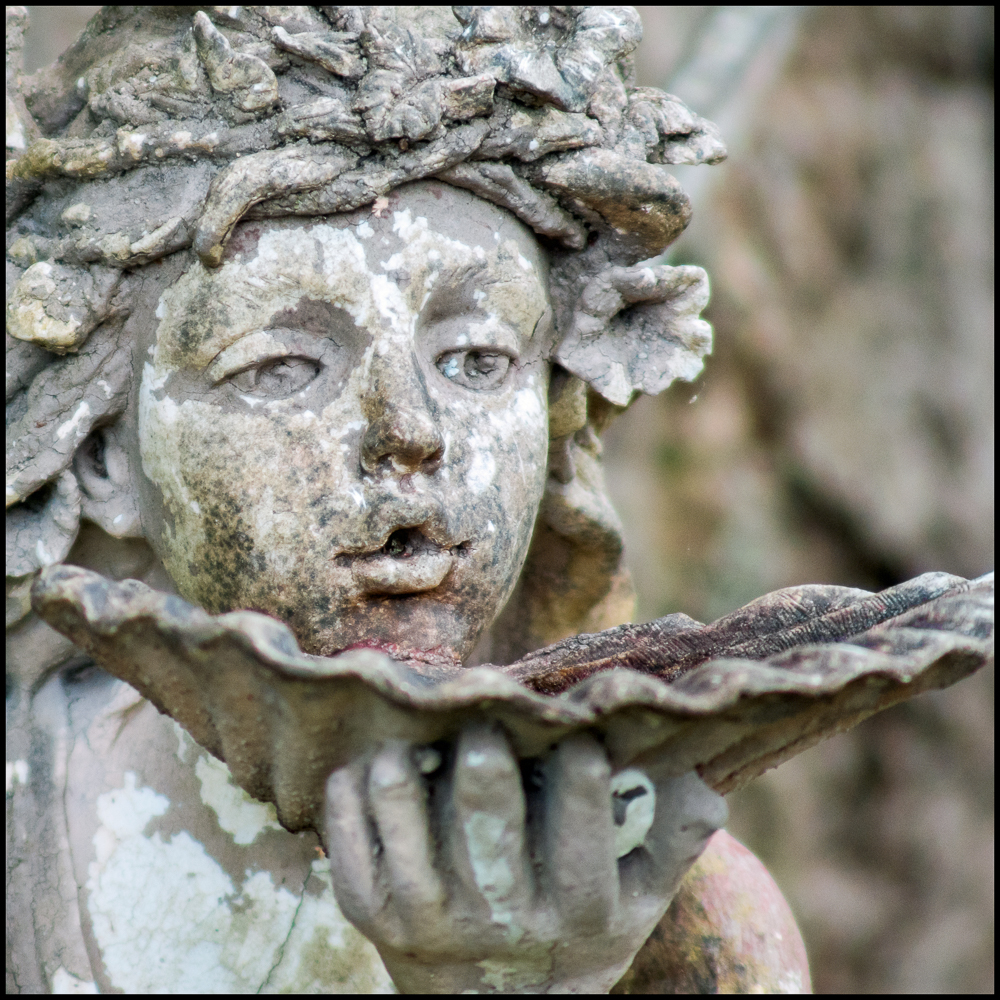
Another garden statue. We’ve had this one for decades.

A tulip.

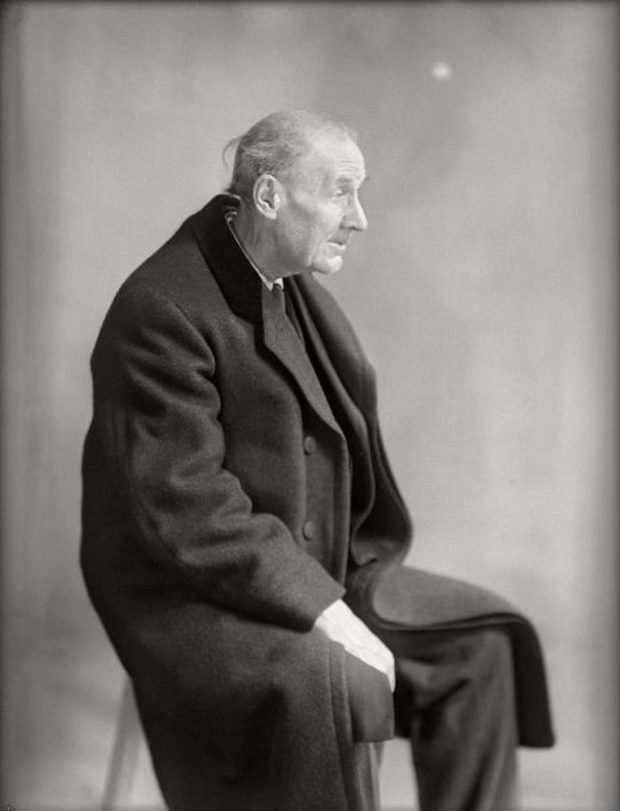
Eugène Atget and Berenice Abbott

Berenice Abbott (American, 1898-1991), Eugene Atget, 1927.
Gelatin silver print. Courtesy of the Philadelphia Museum of Art:
Gift of Mr. and Mrs. Carl Zigrosser, 1968, 1968-162-38

Interesting article (From Paris to New York: The Story of Eugène Atget and Berenice Abbott) on the occasion of the publication of a new book by Kevin Moore: Old Paris and Changing New York: Photographs by Eugène Atget and Berenice Abbott (Yale University Press).

According to Yale University Press:

An insightful new look at two renowned photographers, their interconnected legacies, and the vital documents of urban transformation that they created

In this comprehensive study, Kevin Moore examines the relationship between Eugène Atget (1857–1927) and Berenice Abbott (1898–1991) and the nuances of their individual photographic projects. Abbott and Atget met in Man Ray’s Paris studio in the early 1920s. Atget, then in his sixties, was obsessively recording the streets, gardens, and courtyards of the 19th-century city—old Paris—as modernization transformed it. Abbott acquired much of Atget’s work after his death and was a tireless advocate for its value. She later relocated to New York and emulated Atget in her systematic documentation of that city, culminating in the publication of the project Changing New York.

This engaging publication discusses how, during the 1930s and 1940s, Abbott paid further tribute to Atget by publishing and exhibiting his work and by printing hundreds of images from his negatives, using the gelatin silver process. Through Abbott’s efforts, Atget became known to an audience of photographers and writers who found diverse inspiration in his photographs. Abbott herself is remembered as one of the most independent, determined, and respected photographers of the 20th century.

Kevin Moore is an independent curator and writer and is artistic director and curator of FotoFocus, Cincinnati. He is the author of Starburst: Color Photography in America 1970-1980 and Jacques Henri Lartigue: The Invention of an Artist.