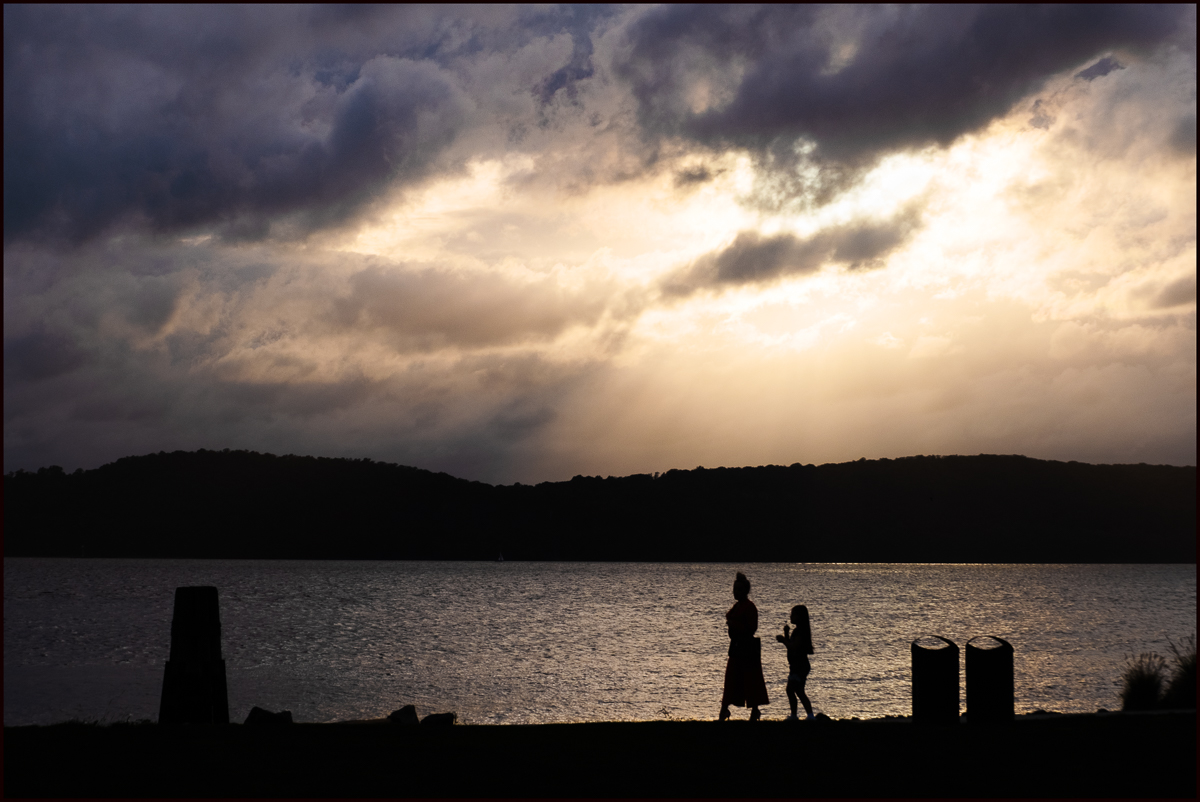
Clouds over the Hudson

My brother-in-law had been visiting for the past couple of weeks and it was the last day before he left for greener pastures. So we decided to go for a meal out at 3 Westerley, a nice restaurant by the Hudson River in Ossining, NY. We sat outside and while we were eating I noticed these spectacular clouds, with the sun peeping through from time to time. I lined up my composition and after that there was nothing much to do except to wait for interesting light and, with a little luck, for someone to pass by.

Taken with a Fuji X-E3 and Fuji XC 16-50mm f3.5-5.6 OSS II

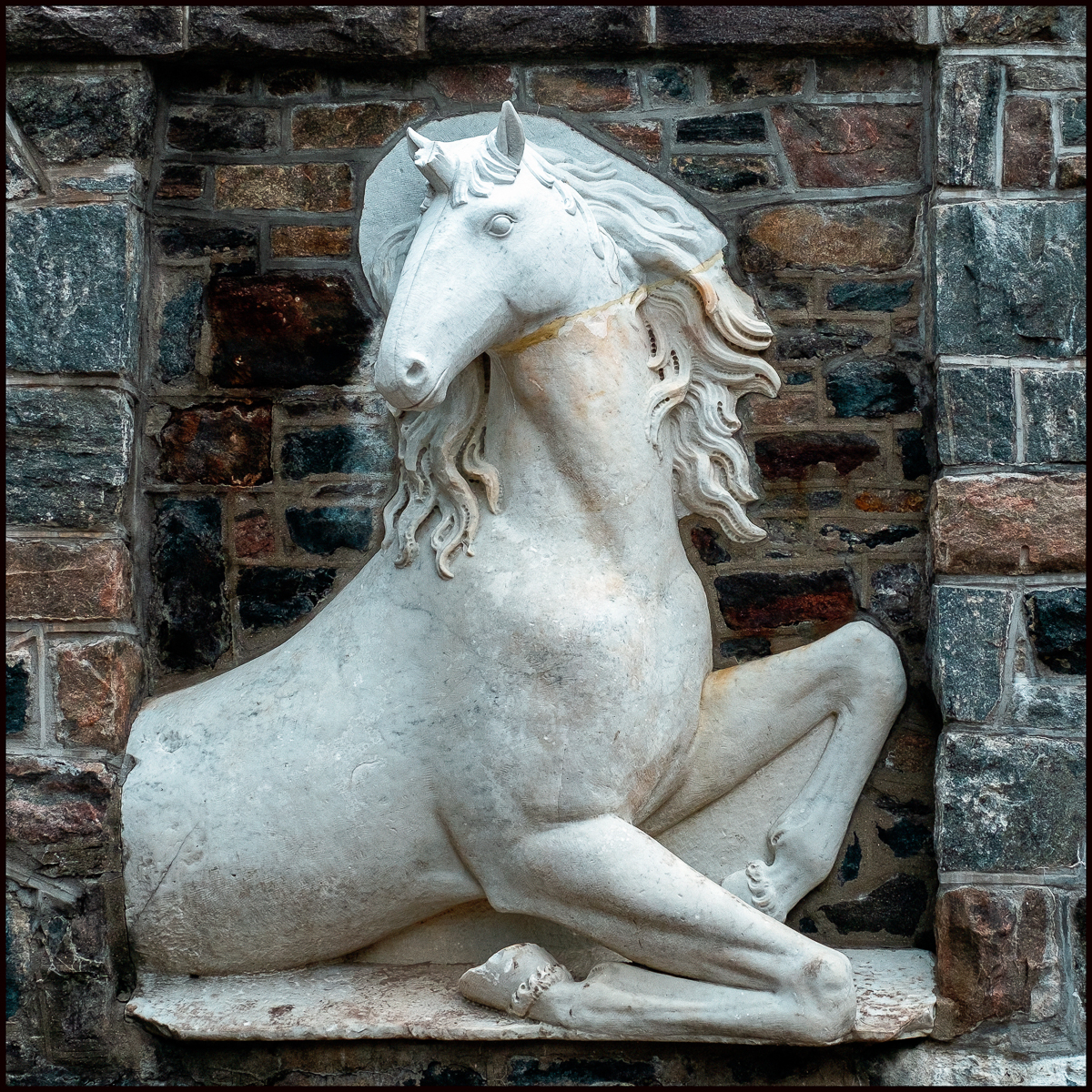
A Walk along the Old Croton Aqueduct – Untermyer Gardens, A lion and a unicorn

I’ve been to Untermyer a couple of times before, once in 2012 (See: Untermyr Park, Yonkers, NY) and again in 2016 (See the series of posts starting with: Untermyr Gardens Revisited – Overview). The restoration work has made great progress. When I first went quite a lot of structures were virtual ruins, now they’ve mostly been partially or fully restored. Great Work.

For years I’ve been trying to find these two statues. The first time I went I couldn’t find them because I didn’t really know where they were (they’re right at the lowest part of the property where it meets the Old Croton Aqueduct trail). Once I discovered that they were next to the trail I figured I would find them if I walked South on the trail from Tarrytown. Unfortunately my legs gave up before I got to them. I’m glad that I was finally able to get there.

Also in the picture are the deliberately only partially restored Gate House on the left and the overlook from The Vista on the right.

An information board nearby reads:

Opposite the gates along the Old Croton Aqueduct are a pair of monumental structures, a lion and a unicorn, symbols of the United Kingdom. From this point the mile-long carriage trail gradually climbs south up the hill past a ruined circular fountain at the lower switchback, past a meadow at the upper switchback, up to the site of the mansion, now demolished [for a glimpse of how it once looked see here. It’s a shame that it’s now gone].

.

Untermyer died in 1940. He had wished to give the gardens to the United States, to New York State or failing that, to the City of Yonkers, but because of the great cost of the upkeep of the gardens, which were not accompanied by an endowment, the bequest was initially refused by all three bodies. Finally, in 1946, 16 acres (6.5 ha) of the land was accepted as a gift by the City of Yonkers, and became a city public park. The mansion itself was eventually torn down.

Because of inadequate funding, much of the property was not maintained; a number of structures gradually fell into disrepair, and parts of the site became overgrown, reverting to woodland. In the 1970s an effort was made to restore the garden by Yonkers Mayor Angelo Martinelli, architect James Piccone and Larry Martin, but the campaign was short-lived and the property deteriorated again. In the 1990s community leaders such as Nortrud Spero and Joe Kozlowski and the Open Space Institute persuaded Mayor Terence Zaleski to purchase more of the original estate’s land with the help of the Trust for Public Land, resulting in the 43 acres (17 ha) of the park today.

Untermyer Park and Gardens was added to the National Register of Historic Places in 1974. Since 2011, the Untermyer Gardens Conservancy, a non-profit organization, has been working on restoring the gardens, in partnership with the Yonkers Parks Department. Grants from New York state of $100,000 in 2005 and $65,000 in 2009 helped to finance the renovation and rehabilitation of the park.(Wikipedia).

For more information on both the gardens as a whole and these statues in particular see “A Forgotten Part of a Once Forgotten Garden” by Barbara Israel. You can see some of the progress achieved here. In the article the unicorn is lacking a head. It has since been replaced as seen in the second picture below.

I’ve recently discovered a darker side to the Untermyr property. During the period when it was virtually abandoned and not maintained it is alleged that it became a base for satanic rituals involving, among others, infamous Son of Sam killer David Berkowitz. For more information see: Ritualistic Sacrifice and the Son of Sam: Satanic Worship in America’s Greatest Forgotten Garden: by Megan Roberts on Atlas Obscura.


First picture Taken with a Taken with a Fuji X-E1 and Fuji XC 16-50mm f3.5-5.6 OSS II and the last two with a and Fuji XF 35mm f1.4 R

Film Camera 2021 -3 Pentax Espio 115G – Results

I liked the appearance of this camera with its brushed silver and black look and it was quite a pleasant camera to use.

The zoom to 115mm was a bit intimidating and extended for quite a distance from the front of the camera. I suspected that it was probably quite soft a the longer end of the zoom so I tended to avoid the telephoto end. Unfortunately I hadn’t realized that the wide end suffers a lot from pincushion distortion.

I took the camera out on a pretty bad day: it was overcast and dark with quite a bit of haze. Also I was using an old film (of course I didn’t know how old it was). So the resulting pictures needed a bit of tweaking in terms of exposure and contrast, but bearing in mind that the film was probably quite old they weren’t too bad.

The review I mentioned in the preceding post (See: Film Camera 2021 -3 Pentax Espio 115G) concludes:

I really enjoy using the 115G — it’s a lot of camera packed into a little package, and for me at least, the pluses are definitely more significant than the minuses. It’s a solidly built little machine that produces nice, sharp images. If you happen to see one turn up at your local thrift store at a reasonable price, grab it. I think you’ll find, as I have, that it’s a very capable shooter.

I’d agree: all things considered it’s a decent camera, but unfortunately I have other point and shoot cameras that I like more so I don’t think I’ll be using it again.

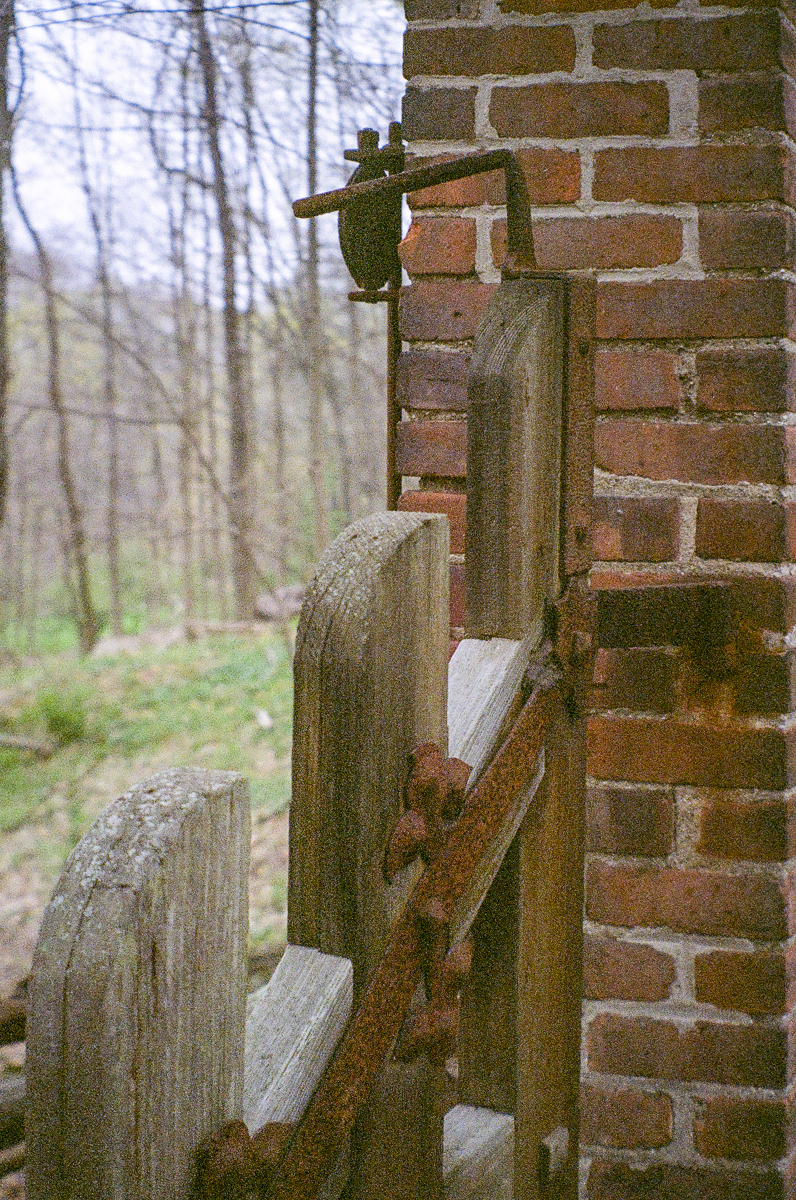
Above the brick wall of the former Speyer Estate.


A gate in the wall.


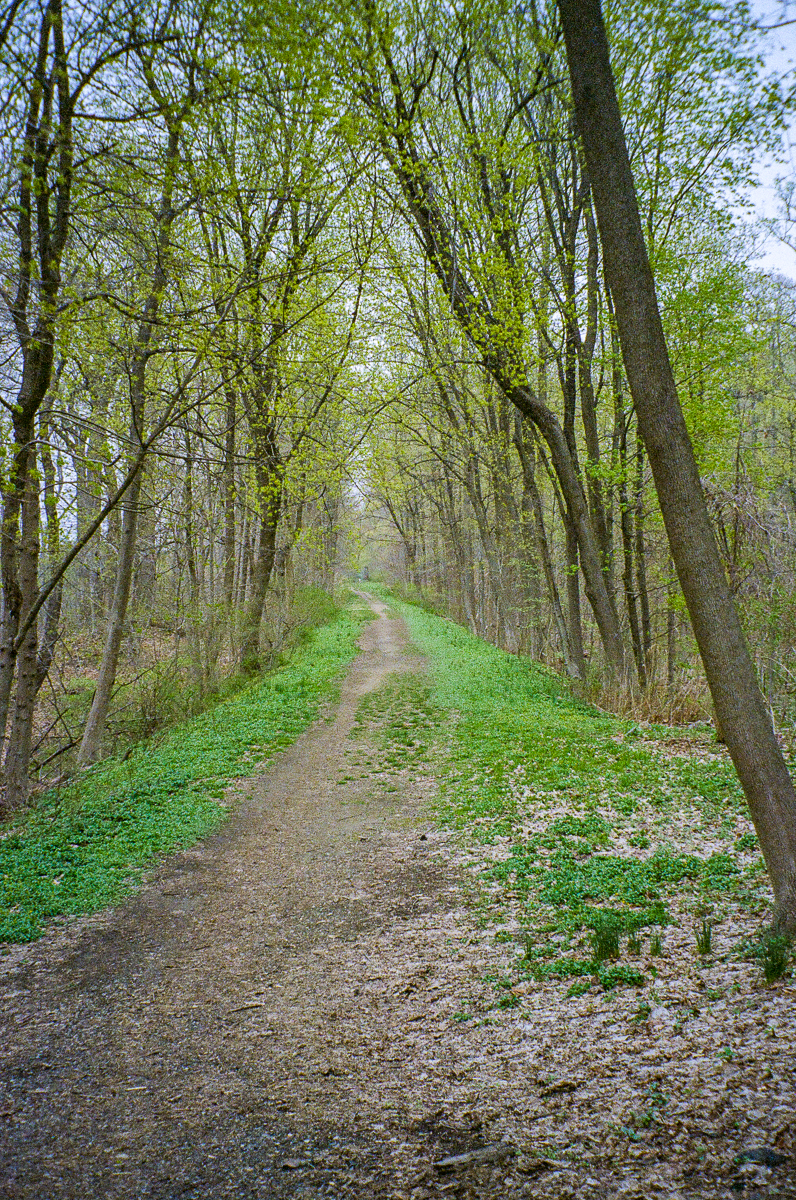
Passing the Old Croton Aqueduct trail.


A garden at the intersection of Albany Post Road (Route 9) and Scarborough Station Road.


Another garden, this time at the intersection of Albany Post Road and Revolutionary Road.


Entrance to Scarborough Presbyterian Church.


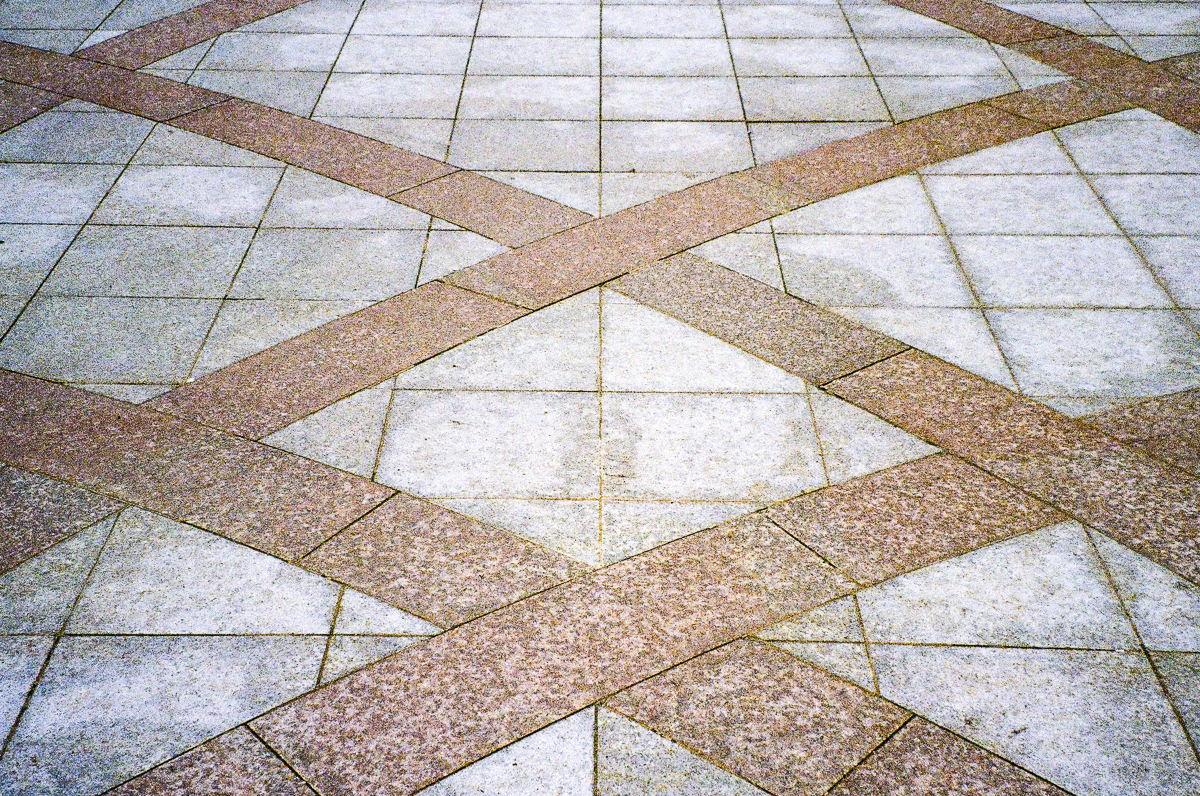
Crisscrossing patterns.


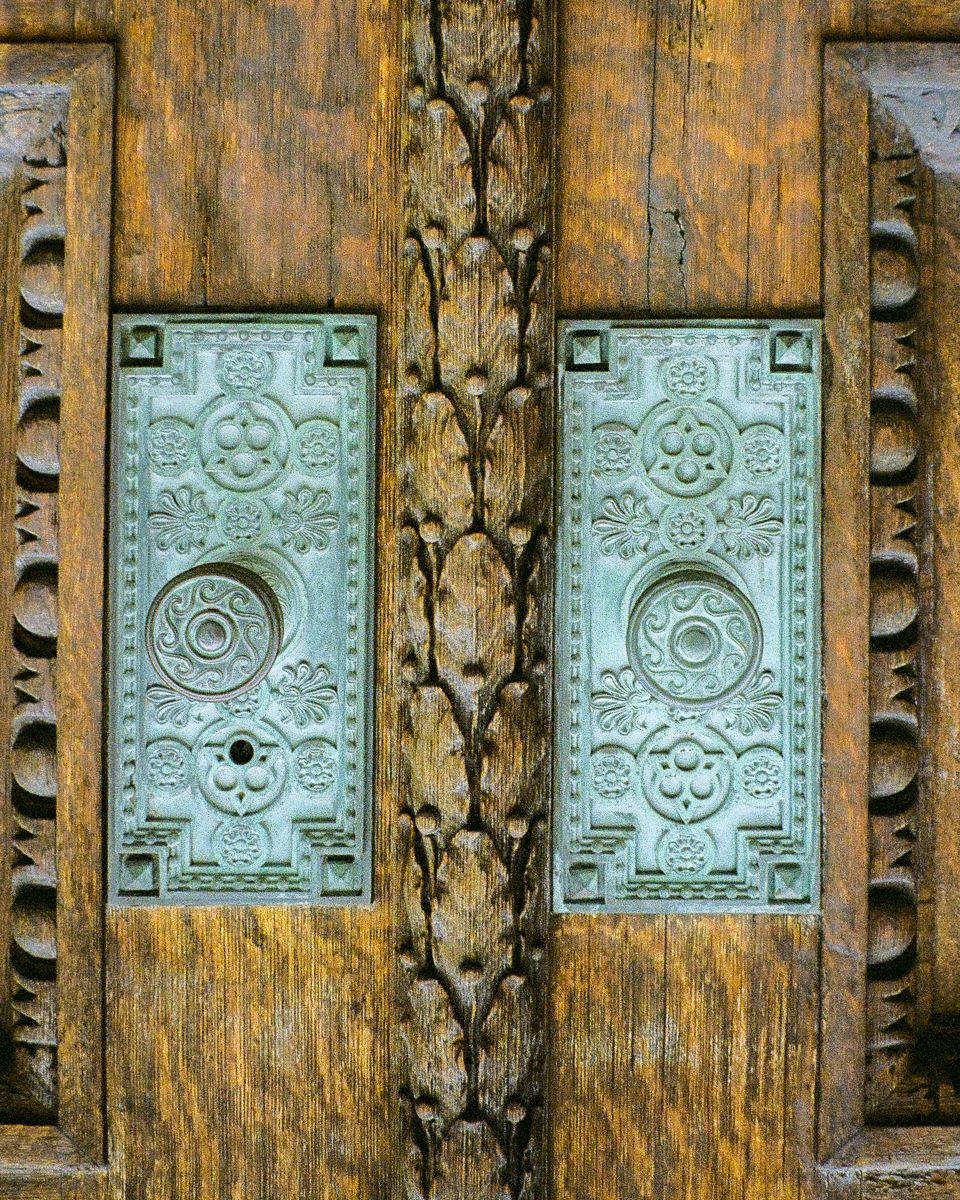
Detail of the door of Scarborough Presbyterian Church.


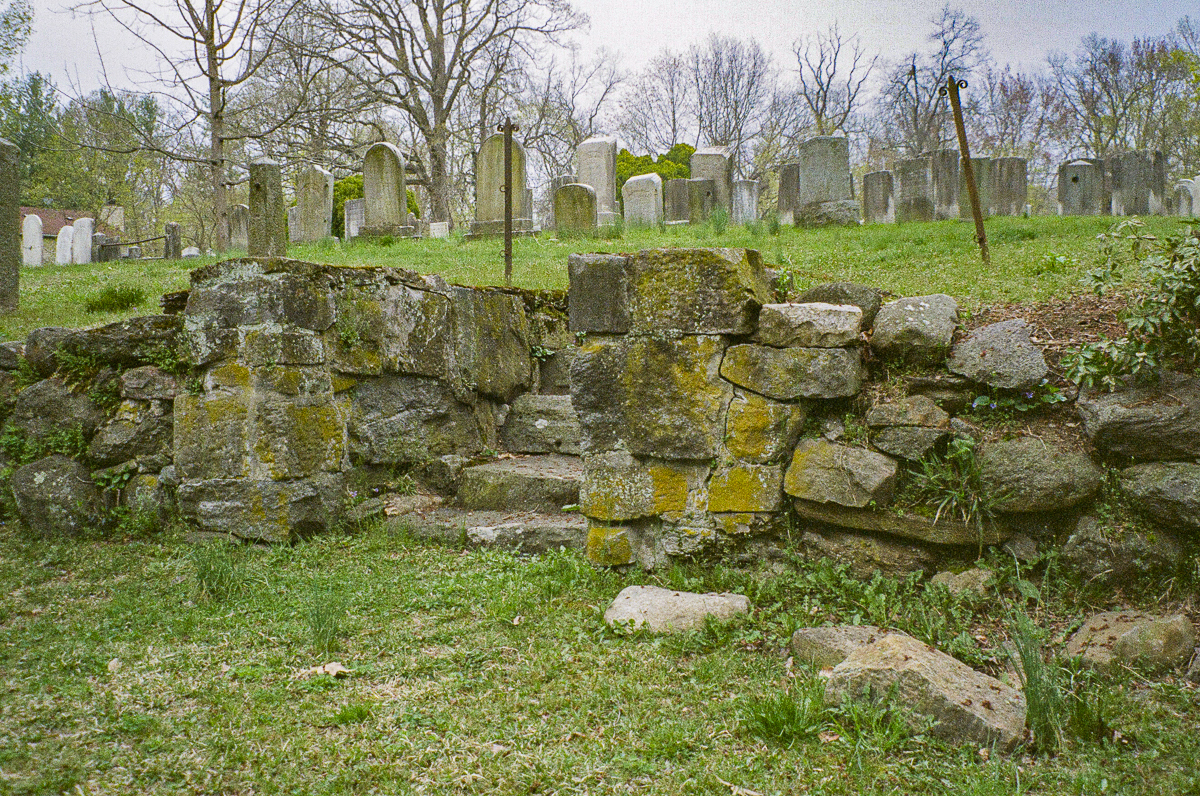
Historic (1764) Sparta Cemetery.


Tree at Sparta Cemetery.


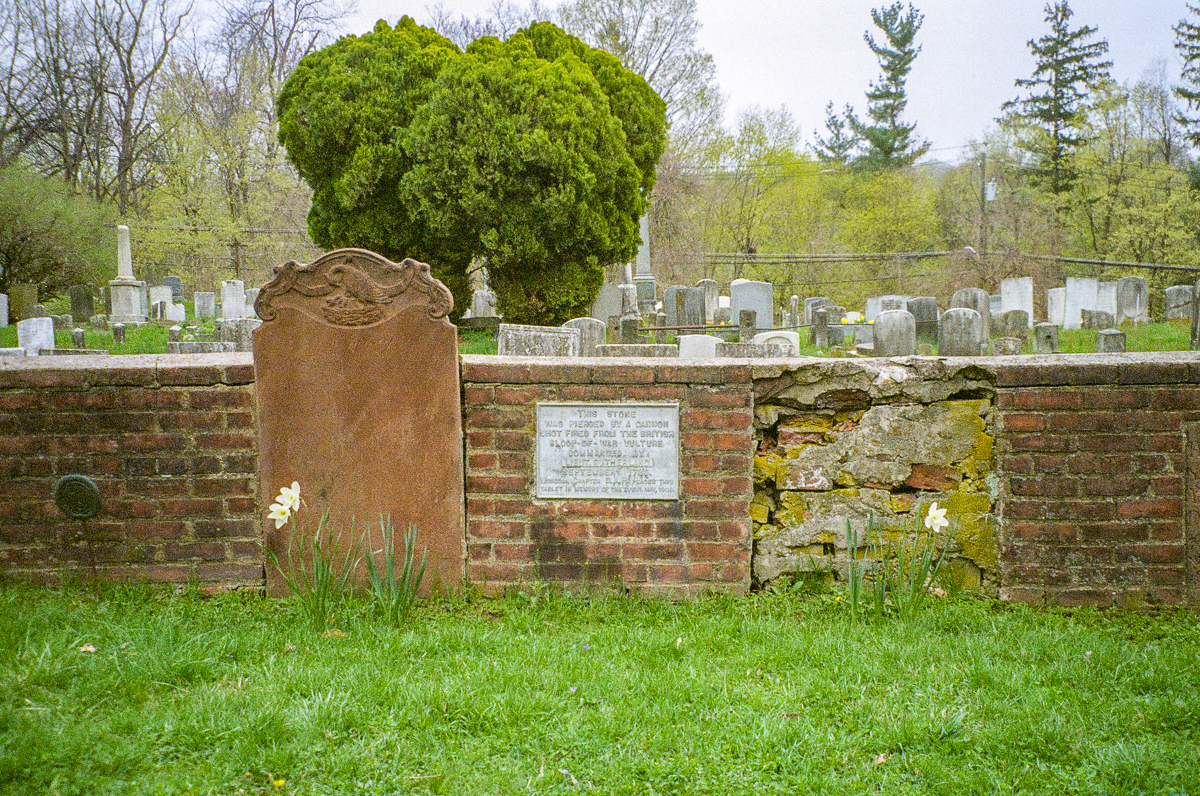
The plaque reads in part: “This stone was pierced by a cannon shot fired from the British sloop-of-war Vulture commanded by Lieutenant Sutherland, 1780”.


Interesting detail of a headstone.


Gravestones and a monument.


Same tree as above, different angle.


A brick wall at the corner of Scarborough Road and Ridgecrest Road.


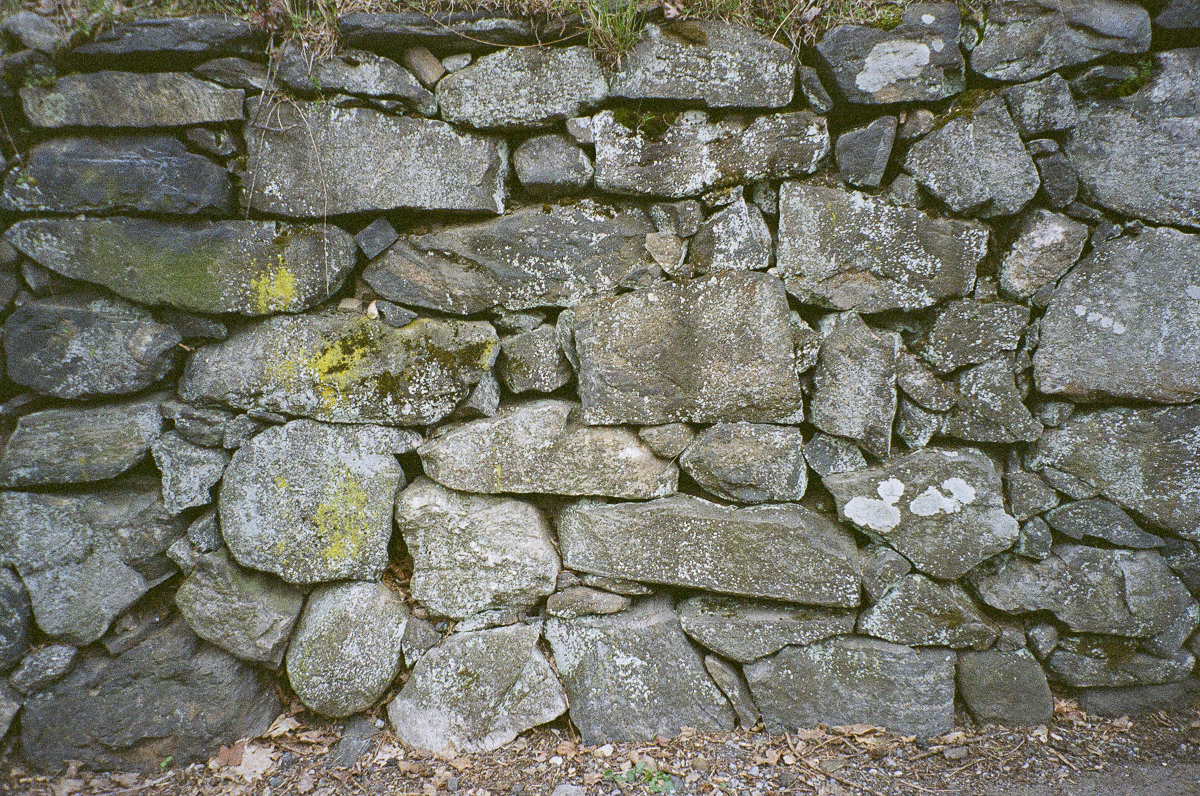
Another brick wall, this time with tree roots.

On the Balcony – Reading Walker Evans

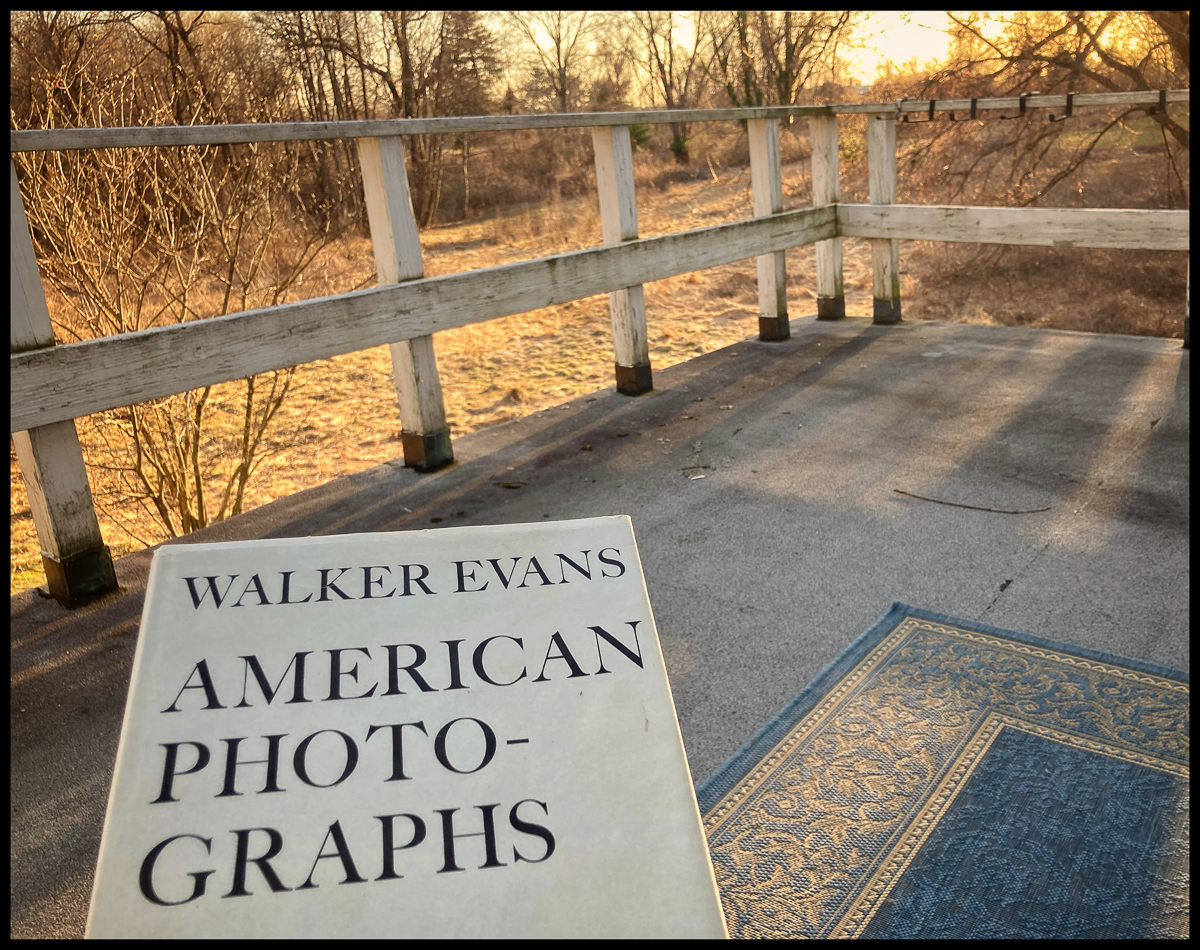
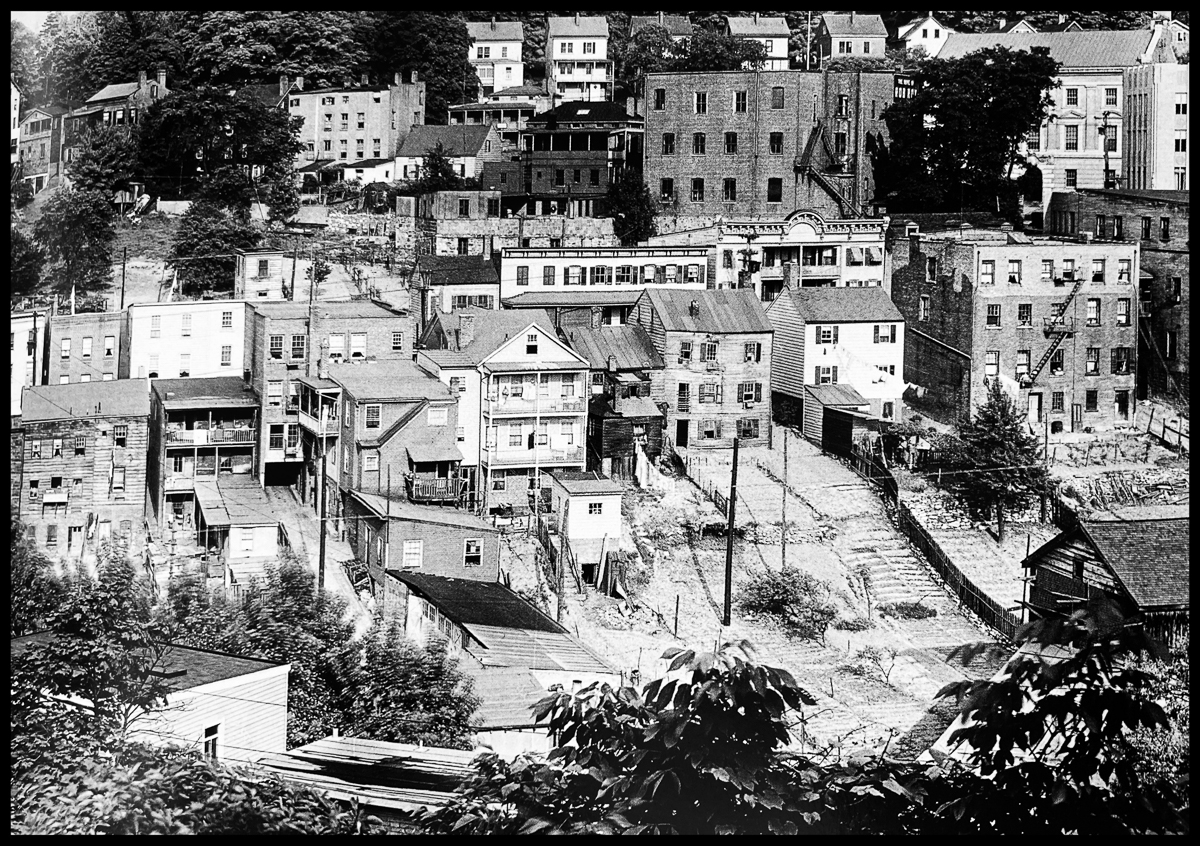
I was sitting on the balcony last night reading American Photographs by Walker Evans, one of my top 5 photographic heroes. I came across a photograph captioned: “View over Ossining”. Briarcliff Manor, the village where I live is part of the town of Ossining. A quick Google search and I discovered that Evans lived and worked in Ossining between June and October 1928, and intermittently over the next several years. How about that?

An article on “Walker Evans in Ossining” states:

Walker considered the photographs he took in Ossining to be among his best. This is demonstrated by their inclusion in shows and publications for the next fifty years—including the five in American Photographs.”

Throughout his early times in Ossining he worked with a vest-pocket camera and his father’s Kodak Tourist. He and Hanns would hike all over town, photographing whatever they came upon. They often walked down by Sing Sing prison, although the prison was notably absent from his subject matter. Also absent were any photographs of the spectacular views of the Hudson River from the Ossining shoreline. He had very specific ideas about what was and was not worthy. Walker felt some things were just not proper subjects for photography. He spelled it out in one letter:

  • “Valid photography, like humor, seems to be too serious a matter to talk about seriously. If, in a note it can’t be defined weightily, what it is not can be stated with the utmost finality. It is not the image of Secretary Dulles descending from a plane. It is not cute cats, nor touchdowns, nor nudes; motherhood; arrangements of manufacturers’ products. Under no circumstances is it anything ever anywhere near a beach. In short it is not a lie, a cliche, somebody else’s idea. It is prime vision combined with quality of feeling, no less”.

To be sure, he mostly adhered to this code throughout his career, though exceptions to those forbidden subjects (every single one except for sports) were found among the 10,000 images in the Metropolitan Museum of Art Walker Evans archive (WE archive). In his Ossining photographs there are none of the expected images of the stark prison gun turrets, the dramatic vistas of the Hudson River, or the imposing mansions of the rich and famous overlooking the river from atop the sand bluffs or buried deep in the Ossining woods near his sister’s house, like the Frankensteinian castle of the Abercromby’s (of Abercromby and Fitch, merchants in New York). Instead, he depicted a few ordinary people in midstep.

In a letter to Skolle in April of 1933, he said,

I have done some more things around Ossining, which grows better and better as a subject for camera

The article also discusses Evans’s friendship with fellow Ossining residents Aaron Copeland and John Cheever.

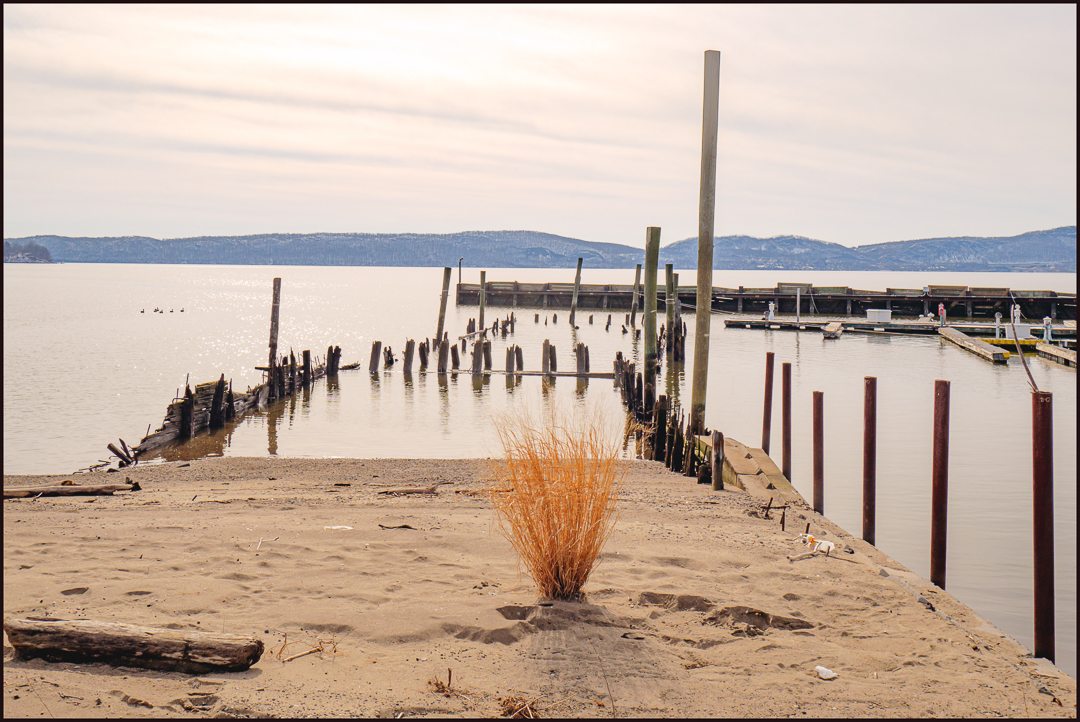
On the River at Croton Landing – Abandoned Jetty

There’s something about the pictures in this series that makes me very sad. Treasured things lost and washed up on beaches possibly remote from where they were last in the hands of people who treasured them.

In the dialogue Cratylus, Plato refers to a saying of Heraclitus’s that has become famous:

“Heraclitus, I believe, says that all things pass and nothing stays, and comparing things to the flow of a river, he says you could not step twice into the same river.”

That’s certainly true, but I wish it were not.

Taken with an Olympus OM-D EM-10 and Panasonic Lumix G Vario 14-42 f3.5-4.6 II